The 2026 Tesla Model Y "Juniper" refresh brought the changes buyers have been asking for: a quieter cabin, ventilated seats, a rear touchscreen, and ambient lighting that finally makes the interior feel premium rather than sparse. But beyond the cosmetics, the updated Model Y remains the best-selling EV in America for a reason — it pairs strong efficiency with access to the most reliable DC fast-charging network in the country. Here's a complete look at what you get when you step inside a 2026 Model Y, along with the range, charging, and pricing data you need before signing a purchase agreement.
What's Inside the 2026 Tesla Model Y?
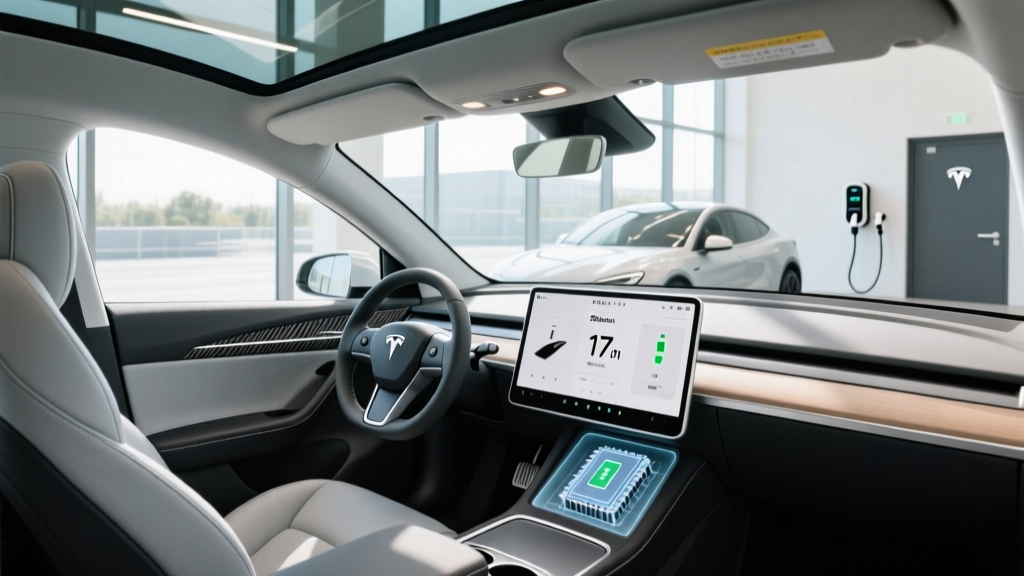
The Juniper update transformed a cabin that critics called "too minimalist" into something closer to a luxury compact SUV. The dashboard now features a continuous ambient light strip that runs door-to-door, a 15.4-inch center touchscreen (slightly larger than the outgoing model), and a new 8-inch rear touchscreen for passengers to control climate, media, and gaming. Tesla replaced the stalk-based turn signals with steering-wheel-mounted buttons — a controversial choice that takes roughly a week of daily driving to build muscle memory for.
Material quality has noticeably improved. The synthetic leather (Tesla calls it "vegan leather") on the seats feels softer and more durable, and the door panels now use a textile-and-wood trim combination instead of the previous all-plastic approach. Ventilated front seats are now standard across all trims, a welcome addition for warm-climate buyers who previously had to option them or go without.
Cargo space remains generous for the segment. Behind the second row, you get 30.2 cubic feet of storage. Fold the 60/40 split rear seats flat, and that expands to 72.1 cubic feet. The front trunk (frunk) adds another 4.1 cubic feet — enough for a charging cable bag and a small duffel. Rear legroom measures 41.6 inches, which accommodates adults comfortably on longer trips.
Spec Table: 2026 Tesla Model Y Long Range AWD
| Specification | 2026 Model Y Long Range AWD |
|---|---|
| EPA Range | 320 miles |
| Battery Capacity | 78.1 kWh (usable), NMC chemistry |
| Drivetrain | Dual-motor AWD |
| Horsepower | 384 hp (combined) |
| 0–60 mph | 4.8 seconds |
| Efficiency | 111 MPGe combined / 27 kWh/100 mi |
| Max DC Fast Charge | 250 kW peak |
| 10–80% DC Charge Time | ~25 minutes |
| Level 2 Home Charge Rate | 11.5 kW (~44 mi/hr) |
| Cargo Volume (rear seats up) | 30.2 cu ft |
| Cargo Volume (rear seats folded) | 72.1 cu ft |
| Rear Legroom | 41.6 in |
| Battery Warranty | 8 years / 120,000 miles |
| Base MSRP | $44,990 |
Real-World Range: What the EPA Number Doesn't Tell You
Real-World Expectation: 270–295 miles highway (70–80 mph); 240–265 miles in freezing temperatures (below 32°F)
City / Stop-and-Go: 300–320 miles — regenerative braking recovers significant energy in traffic
The 320-mile EPA figure for the Long Range AWD is achievable in mixed suburban driving at moderate speeds with temperatures between 55°F and 80°F. On a 75-mph highway run in summer conditions, expect roughly 280–295 miles before the battery hits 10%. In winter, cold-soaked batteries and cabin heating can drop usable range by 15–25%, putting realistic winter highway range in the 240–265 mile window.
Tesla's heat pump (standard on all 2026 trims) mitigates some of this loss. Unlike resistive heaters, the heat pump scavenges ambient thermal energy, reducing HVAC power draw by roughly 30–40% in moderate cold (30°F–45°F). Below 15°F, the advantage narrows as the system supplements with resistive heating.
If range predictability matters to you, the in-car navigation system's energy prediction is among the most accurate in the industry. It factors elevation changes, temperature, and driving speed into arrival-state-of-charge estimates, and in my experience, it's typically within 2–3% of the actual number at arrival.
Charging Speed: Home and DC Fast Charging
| Charging Level | Power | Speed (Miles Added per Hour) | Typical Use Case |
|---|---|---|---|
| Level 1 (120V) | ~1.4 kW | ~5 mi/hr | Emergency / overnight trickle |
| Level 2 (240V, 48A) | 11.5 kW | ~44 mi/hr | Daily home charging |
| DC Fast Charge | 250 kW peak | ~1,000 mi/hr (peak) | Road trips / Superchargers |
At a Tesla V4 Supercharger (250 kW capable), the 2026 Model Y Long Range can add up to 200 miles of range in approximately 15 minutes under ideal conditions. The charge curve peaks near 250 kW from roughly 10% to 30% state of charge, then tapers progressively — dropping to around 100 kW by 60% and below 50 kW past 85%. A full 10–80% session takes approximately 25 minutes.
For home charging, Tesla's Wall Connector on a 60-amp circuit delivers up to 11.5 kW (48 amps continuous). That's enough to replenish the entire 78.1 kWh usable battery in roughly 7.5 hours — easily covering any daily driving within an overnight session. Most owners driving 40–60 miles per day need only 1.5 to 2 hours of Level 2 charging to recover their daily use.
One important note: the Model Y uses the NACS (North American Charging Standard) connector natively. This gives you direct access to over 20,000 Tesla Superchargers in North America. With the broader industry adopting NACS for 2025+ models, the Model Y's charging-network advantage remains intact.
Pricing, Trims, and Federal Tax Credit Eligibility
| Trim | Base MSRP | Est. After §30D Credit | Drivetrain |
|---|---|---|---|
| Long Range AWD | $44,990 | ~$37,490* | Dual-motor AWD |
| Performance | $51,490 | ~$43,990* | Dual-motor AWD |
*Estimated after the $7,500 federal tax credit, assuming buyer eligibility. Tesla now offers point-of-sale transfer of the credit, meaning the $7,500 reduction can be applied at purchase rather than waiting for a tax refund.
The 2026 Model Y qualifies for the full $7,500 federal EV tax credit under IRS §30D, provided the buyer meets income requirements. According to IRS guidelines, eligibility requires:
- Modified Adjusted Gross Income at or below $150,000 (single), $225,000 (head of household), or $300,000 (joint filers)
- Vehicle MSRP at or below $80,000 for SUVs (both trims qualify)
- Battery sourcing and critical minerals requirements — Tesla's Fremont and Austin-built Model Y currently meets both thresholds for the full credit
- The vehicle must be new (not previously titled) and purchased for personal use, not resale
Tax rules can shift, and battery-sourcing requirements tighten annually. Always confirm current-year eligibility on fueleconomy.gov or consult a tax professional before finalizing your purchase.
Performance and Driving Impressions
The Long Range AWD's 384 combined horsepower and 4.8-second 0–60 time make it quick by any measure, but the real story is how composed the Juniper chassis feels. Tesla retuned the suspension for the refresh, adding frequency-selective dampers that noticeably reduce low-speed harshness over expansion joints and potholes. Cabin noise is substantially lower — Tesla claims a 20% reduction in road noise, and the difference is obvious above 60 mph.
The Performance trim cuts the 0–60 time to 3.5 seconds (441 hp) and adds a lowered sport suspension, 21-inch wheels, and track mode. The trade-off is roughly 10 miles of EPA range (310 miles) and a firmer ride that communicates more road texture into the cabin.
Regenerative braking remains strong and predictable. Tesla's one-pedal driving mode allows most drivers to avoid the friction brake pedal entirely in daily driving, reducing brake wear and recapturing energy efficiently. The friction brakes are there when you need them, but in 15,000 miles of typical driving, many owners report barely using them.
Tech, Driver Assistance, and Notable Drawbacks
The 15.4-inch center display runs Tesla's latest infotainment software, which includes native navigation with Supercharger routing, Netflix/YouTube streaming (while parked), a surprisingly good web browser, and over-the-air updates that continue to add features years after purchase. The new rear 8-inch screen lets back-seat passengers control their own climate zone and select entertainment independently.
Autopilot comes standard and includes adaptive cruise control, lane centering, automatic emergency braking, and blind-spot monitoring. Full Self-Driving (Supervised) is a $8,000 add-on (or $99/month subscription) that adds automated lane changes, traffic-light recognition, and city-street navigation assistance.
Notable drawbacks:
- Steering-wheel turn-signal buttons remain divisive — roundabout navigation and three-point turns require extra thought until the new controls become habit
- No Apple CarPlay or Android Auto — Tesla's native system is capable, but drivers deeply invested in either ecosystem will miss familiar interfaces
- Rear visibility is compromised by the sloping roofline; the digital rearview camera helps, but a traditional mirror view would be preferable for some
- Insurance costs tend to run higher than segment averages due to Tesla's repair-cost profile — get quotes before purchasing
Pros and Cons at a Glance
- 320-mile EPA range covers most weekly driving without mid-week charging
- Access to 20,000+ Superchargers with native NACS — no adapter needed
- Significantly improved cabin quietness and material quality post-refresh
- Class-leading efficiency (111 MPGe) keeps per-mile energy cost low
- Strong over-the-air update track record adds features post-purchase
- Generous cargo capacity with a usable frunk
- Steering-wheel turn-signal buttons have a steep learning curve
- No Apple CarPlay or Android Auto support
- FSD subscription cost adds up without delivering true autonomy
- Higher insurance premiums than comparable non-Tesla EVs
- Rear headroom is tight for passengers over 6'2"
Who Should Buy the 2026 Tesla Model Y?
- You want a practical family EV with 300+ miles of real-world range and fast road-trip charging
- You have access to home Level 2 charging and value waking up to a "full tank" daily
- Supercharger network reliability matters for your highway driving patterns
- You need Apple CarPlay or Android Auto for your daily workflow
- You prefer physical controls and a traditional instrument cluster
- You want a more aggressive exterior design or a hatchback/wagon form factor
For daily commuters covering 30–60 miles, the Model Y Long Range is nearly impossible to fault — a single nightly charge session covers your week. Families will appreciate the cargo flexibility and rear-seat entertainment screen. Road-trippers benefit from the Supercharger network's reliability, which continues to outperform third-party networks in uptime metrics.
Frequently Asked Questions
What is the real-world range of the 2026 Tesla Model Y?
The EPA rates the Long Range AWD at 320 miles. In real-world highway driving at 70–80 mph during moderate temperatures, expect 270–295 miles. In freezing conditions, that drops to roughly 240–265 miles. City driving with regenerative braking can return close to the EPA sticker figure.
How fast does the Model Y charge at home and on the road?
On a 48-amp Level 2 home charger (11.5 kW), the Model Y adds approximately 44 miles of range per hour, fully replenishing overnight. At a 250 kW Tesla Supercharger, a 10–80% charge takes about 25 minutes, adding up to 200 miles in roughly 15 minutes under ideal conditions.
How much does the 2026 Model Y cost after the federal tax credit?
The Long Range AWD starts at $44,990 MSRP. With the $7,500 federal EV tax credit applied at point of sale, the effective price drops to approximately $37,490 — assuming you meet IRS §30D income and eligibility requirements. The Performance trim starts at $51,490, or roughly $43,990 after the credit.
Does the 2026 Model Y qualify for the $7,500 federal EV tax credit?
Yes, as of the 2026 model year, both the Long Range and Performance trims qualify for the full $7,500 credit under §30D, provided the buyer's income falls within IRS limits ($150K single / $300K joint). Battery sourcing and critical-mineral requirements are currently met. Always verify current eligibility at fueleconomy.gov or with a tax professional.
Is the Model Y worth buying over the Hyundai Ioniq 5 or Ford Mach-E?
The Model Y wins on charging-network access (native Supercharger), efficiency, and cargo volume. The Ioniq 5 offers faster peak charging (350 kW on 800V architecture), Apple CarPlay/Android Auto, and a more distinctive design. The Mach-E provides a more traditional cockpit layout. Test-drive all three — the best choice depends on which trade-offs matter most to you.
What is the battery warranty on the 2026 Model Y?
Tesla covers the battery and drive unit for 8 years or 120,000 miles (whichever comes first) on the Long Range AWD, with a minimum 70% capacity retention threshold during the warranty period. Real-world degradation data from Tesla's fleet suggests most Model Y batteries retain 88–92% capacity after 100,000 miles.