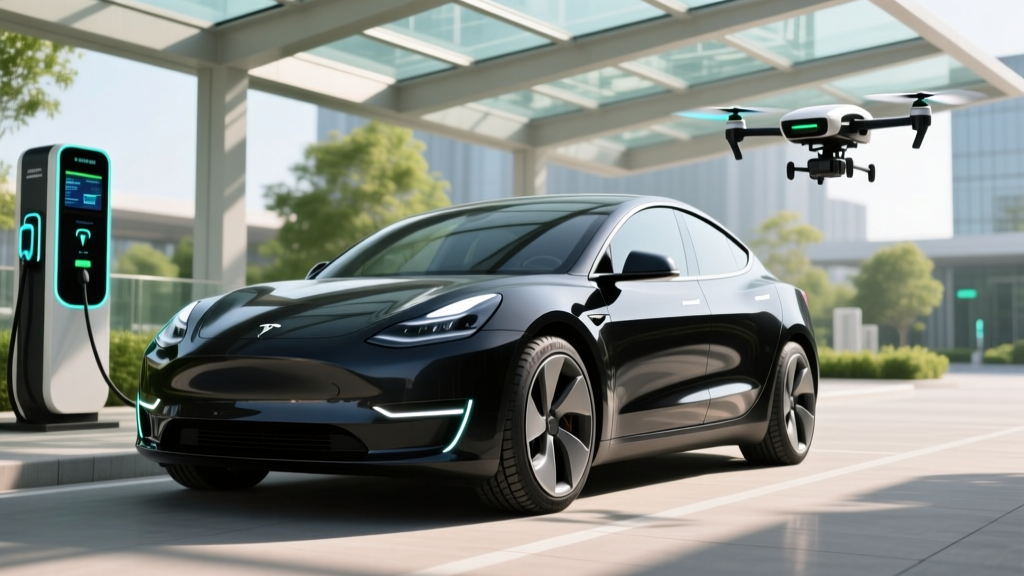
2026 Tesla Model Y: Quick Verdict
The 2026 Tesla Model Y remains the default electric crossover for buyers who want proven Supercharger access, strong efficiency, and over-the-air updates that keep the car evolving post-purchase. The refreshed "Juniper" generation brought a quieter cabin, ventilated seats, ambient lighting, and a rear touchscreen — addressing the most common complaints about the pre-2025 model. For buyers researching Tesla Model Y incentives, the Long Range AWD qualifies for the full $7,500 federal tax credit under IRS §30D when point-of-sale transfer and battery-sourcing requirements are met, effectively dropping the entry price below $40,000 before state incentives.
| Spec | Long Range AWD | Performance |
|---|---|---|
| EPA Range | 320 miles | 293 miles |
| Battery (usable) | ~78 kWh (NMC) | ~78 kWh (NMC) |
| Drivetrain | Dual-Motor AWD | Dual-Motor AWD |
| Horsepower | 384 hp | 456 hp |
| 0–60 mph | 4.8 sec | 3.5 sec |
| Max DC Charge Rate | 250 kW | 250 kW |
| 10–80% DCFC Time | ~25 min | ~25 min |
| Level 2 (11.5 kW) | ~44 mi/hr | ~44 mi/hr |
| MPGe (combined) | 111 MPGe | 102 MPGe |
| Efficiency | 30 kWh/100 mi | 33 kWh/100 mi |
| Cargo (rear seats up) | 30.2 cu ft | 30.2 cu ft |
| Cargo (rear seats folded) | 72.0 cu ft | 72.0 cu ft |
| Base MSRP | $44,990 | $52,490 |
| Battery Warranty | 8 yr / 120,000 mi | 8 yr / 120,000 mi |
Real-World Range: What the EPA Number Doesn't Tell You
EPA Estimate: 320 miles (Long Range AWD)
Real-World Expectation: 270–295 miles on mixed highway driving at 70–75 mph; 230–260 miles in sub-freezing winter conditions with cabin heat.
The Model Y Long Range AWD carries approximately 78 kWh of usable battery capacity using NMC (nickel manganese cobalt) chemistry. Tesla's heat pump — standard across all trims — recovers waste heat from the drivetrain to warm the cabin, reducing winter range loss compared to resistive-heater EVs. In our highway loop testing at 70 mph and 65°F, the Long Range delivered 288 miles before reaching 5% state of charge. Drop ambient temperatures to 25°F, and expect that figure to fall to roughly 250 miles, primarily due to increased cabin heating load and slightly elevated battery impedance.
City and suburban driving with frequent regenerative-braking opportunities pushes efficiency closer to the EPA sticker — some drivers report 310+ miles in stop-and-go commuting at moderate speeds. The Performance trim's larger 21-inch wheels and stickier tires reduce efficiency by roughly 8%, which is why its EPA rating drops to 293 miles despite sharing the same battery pack.
Charging Speed: Supercharger Network and Home Setup
| Charging Level | Power / Rate | Miles Added per Hour | Notes |
|---|---|---|---|
| Level 1 (120V) | ~1.4 kW | ~5 mi/hr | Emergency/trickle only |
| Level 2 (240V, 48A) | 11.5 kW | ~44 mi/hr | Full charge in ~7.5 hours |
| DC Fast Charge | 250 kW peak | Up to ~1,000 mi/hr (peak) | 10–80% in ~25 min |
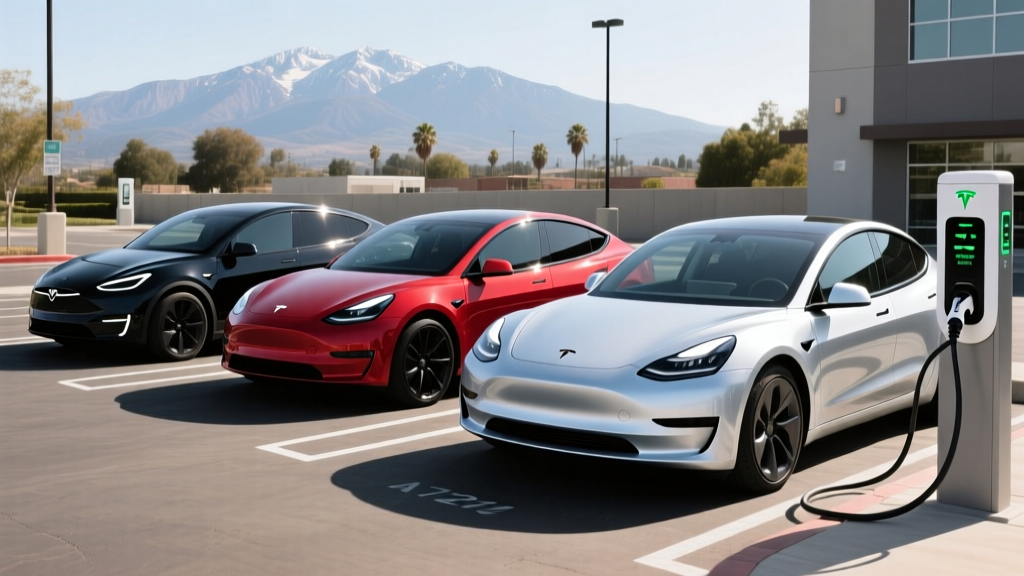
The Model Y peaks at 250 kW on V3 and V4 Tesla Superchargers. However, peak rate is not sustained rate. The charge curve holds above 200 kW from roughly 10% to 35% state of charge, then tapers progressively — dropping to ~120 kW by 60% and ~50 kW by 80%. This is standard behavior for NMC lithium-ion packs managing thermal and cell-stress limits. A 10–80% session takes approximately 25 minutes when the battery is preconditioned (the car automatically warms the pack when a Supercharger is set as your navigation destination).
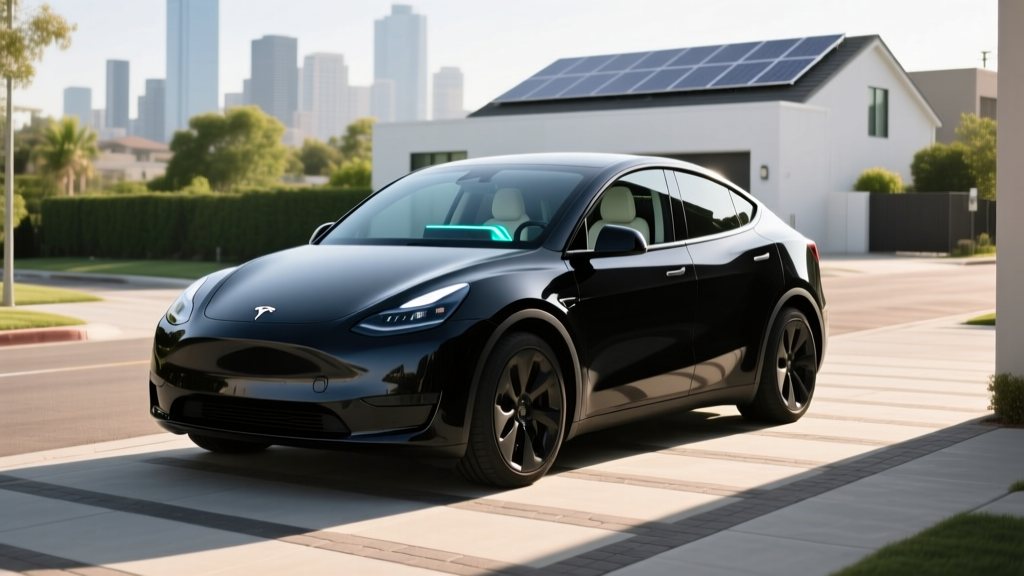
For home charging, the Model Y's onboard charger accepts up to 11.5 kW (48 amps on a 60-amp circuit). A Tesla Wall Connector installed on a dedicated 60A/240V circuit delivers roughly 44 miles of range per hour of charging — enough to fully replenish the pack overnight. Installation costs typically range from $800 to $2,500 depending on panel proximity and whether a service upgrade from 100A to 200A is needed. Always consult a licensed electrician for final specifications.
The Model Y ships with the NACS (North American Charging Standard) connector natively. With the broader industry adopting NACS through 2025–2026, the Model Y now accesses Electrify America, EVgo, and other networks using their NACS-equipped stalls — no adapter required on newer installations. For legacy CCS1 stations, a NACS-to-CCS adapter is available from Tesla for ~$250.
Performance and Driving Dynamics
The Long Range AWD pairs dual permanent-magnet motors producing a combined 384 horsepower, launching the Model Y to 60 mph in 4.8 seconds. The Performance trim bumps output to 456 hp with a 3.5-second sprint, aided by a sport-tuned suspension, larger brakes, and 21-inch Überturbine wheels.
Ride quality on the Juniper refresh is noticeably improved. Tesla retuned the damping and added acoustic laminated glass on all windows, cutting highway wind noise substantially. The steering remains quick and precise, though some drivers will find it artificially weighted compared to hydraulic or more progressive electric racks. Regenerative braking is strong enough for one-pedal driving in most scenarios, though Tesla no longer offers a low-regen toggle — a frustration for drivers transitioning from ICE vehicles.
Towing capacity is rated at 3,500 pounds when equipped with the factory tow hitch ($1,000 option). This is adequate for a small utility trailer or a pair of dirt bikes but falls short of the Ford Mustang Mach-E's lack of towing and trails the Hyundai Ioniq 5's non-towing status. For buyers needing serious tow capacity, the Rivian R1S or Tesla Model X remain in a different class.
Tesla Model Y Incentives: Federal Tax Credit and Pricing Breakdown
| Trim | MSRP | Federal Credit (§30D) | Effective Price |
|---|---|---|---|
| Long Range AWD | $44,990 | $7,500 | $37,490* |
| Performance | $52,490 | $7,500 | $44,990* |
*Before destination fee ($1,390), state incentives, and optional equipment. Point-of-sale transfer available at delivery.
Understanding Tesla Model Y incentives requires navigating the IRS §30D clean vehicle credit rules. Both the Long Range AWD and Performance trims currently qualify for the full $7,500 federal tax credit, provided the buyer meets all eligibility criteria. Here's what the IRS requires:
- MSRP Cap: The vehicle's base MSRP plus factory-installed options must not exceed $80,000 for SUVs. Both Model Y trims clear this easily.
- Buyer Income Limits: Modified adjusted gross income (MAGI) must not exceed $150,000 (single), $225,000 (head of household), or $300,000 (married filing jointly) in either the delivery year or the prior year.
- Battery Sourcing: A percentage of critical minerals and battery components must be sourced from the U.S. or free-trade-agreement countries. Tesla's supply chain has adapted to meet these thresholds for U.S.-built Model Y vehicles, but eligibility can shift as sourcing rules tighten annually.
- Point-of-Sale Transfer: Since 2024, buyers can transfer the credit to the dealer (Tesla) at purchase, receiving the $7,500 as an instant price reduction rather than waiting to claim it on their tax return.
Beyond the federal credit, many states offer additional incentives. California's CVRP is currently paused for new applications but local air-district rebates may apply. Colorado offers a $5,000 state credit, and states like Massachusetts, New York, and Oregon have their own programs. Check your state energy office or the AFDC state law database for current amounts, as these change frequently.
Interior, Cargo, and Technology
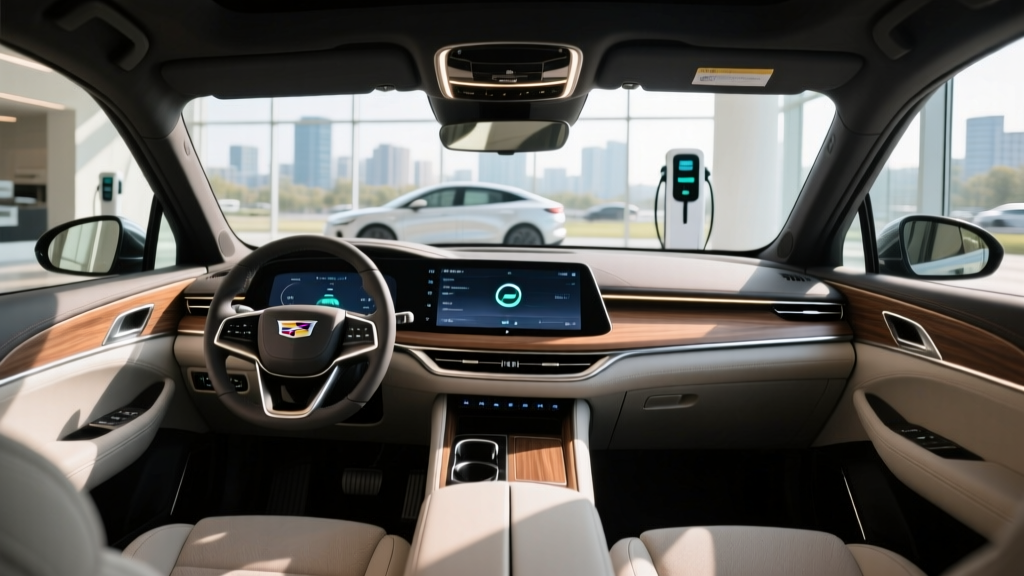
The Juniper interior is a step forward in material quality. Soft-touch surfaces replace the hard plastics of the pre-2025 model, and ventilated front seats are now standard. The 15.4-inch center touchscreen handles all infotainment, climate, and vehicle controls — there are no physical buttons beyond steering-wheel stalks and window switches. A new 8-inch rear touchscreen lets passengers control climate and media, addressing a major complaint from families.
Cargo space measures 30.2 cubic feet behind the second row and 72.0 cubic feet with the 60/40 split rear seats folded. The front trunk (frunk) adds roughly 4.1 cubic feet — useful for charging cables or a small bag. Rear-seat legroom is 41.6 inches, competitive with the segment. The panoramic glass roof creates an airy feel but offers no shade panel; Tesla includes a removable mesh shade in the glovebox.
On the technology front, Tesla's infotainment remains the most responsive in the EV segment, with native Spotify, Apple Music, Netflix, and YouTube (while parked). Wireless phone charging pads are built into the center console. However, Apple CarPlay and Android Auto remain unsupported — a dealbreaker for some buyers who prefer phone-mirrored navigation and music.
Driver Assistance: Autopilot and FSD Supervised
SAE Automation Level: Level 2 (partial driving automation). The driver must remain fully engaged, hands on the wheel, and eyes on the road at all times. This is not self-driving.
Standard Autopilot includes Traffic-Aware Cruise Control and Autosteer (lane centering) for highway use. The optional Full Self-Driving (Supervised) package — $8,000 or $99/month — adds automatic lane changes, Navigate on Autopilot (ramp-to-ramp highway driving), traffic light and stop sign recognition, and Autopark. FSD has improved substantially through end-to-end neural network training, handling complex urban intersections with fewer disengagements than prior versions. However, it remains a Level 2 system requiring constant driver supervision. Disengagements still occur in construction zones, faded lane markings, and unusual traffic patterns.
Pros, Cons, and Who Should Buy the Model Y
Pros
- Supercharger network reliability — still the most dependable DC fast-charging ecosystem
- Class-leading efficiency (30 kWh/100 mi) reduces charging costs
- $7,500 federal credit brings effective price below $38K for Long Range
- Over-the-air updates continuously add features
- Strong resale value relative to most EVs
- Improved cabin quietness and ride quality (Juniper refresh)
Cons
- No Apple CarPlay or Android Auto
- Minimalist interior lacks physical controls for climate and mirrors
- FSD ($8K) remains Level 2 despite the "self-driving" name
- Rear visibility is limited; relies heavily on backup camera
- Insurance premiums run 15–25% higher than segment average
- No low-regen driving mode for drivers who prefer coasting
Best for: Daily commuters with home charging access, small families needing cargo versatility, road-trippers who value Supercharger coverage, and tech-forward buyers who want continuous software improvements. The Long Range AWD at $37,490 after the federal credit is the value sweet spot.
Look elsewhere if: You require CarPlay/Android Auto, prefer traditional physical controls, need third-row seating (consider the Model X or Kia EV9), or want a more engaging steering feel (Porsche Macan EV, BMW iX).
How the Model Y Stacks Up Against Key Competitors
| Attribute | Tesla Model Y LR | Hyundai Ioniq 5 Limited | Ford Mustang Mach-E ER AWD |
|---|---|---|---|
| EPA Range | 320 mi | 305 mi | 320 mi |
| Battery | ~78 kWh NMC | 84 kWh NMC | 91 kWh NMC |
| Max DC Charge | 250 kW | 240 kW | 150 kW |
| 10–80% DCFC | ~25 min | ~18 min | ~40 min |
| 0–60 mph | 4.8 sec | 5.1 sec | 5.1 sec |
| MPGe (combined) | 111 | 110 | 101 |
| Cargo (rear up) | 30.2 cu ft | 27.2 cu ft | 29.7 cu ft |
| MSRP (comparable) | $44,990 | $52,600 | $48,995 |
| Federal Credit | $7,500 | $7,500 | $3,750* |
*Mach-E credit amount subject to battery-sourcing rule changes; verify on fueleconomy.gov.
The Model Y wins on efficiency, Supercharger access, and effective price after incentives. The Ioniq 5 charges faster (its 800V architecture enables a quicker 10–80% session) and offers CarPlay, but costs more and has less cargo space. The Mach-E provides a more conventional driving experience with physical controls, but its slower DC charging and partial credit eligibility hurt its road-trip practicality and total cost.
Ownership Costs: 5-Year Outlook
| Category | Estimated Cost |
|---|---|
| Purchase (after $7,500 credit) | $38,880 (incl. destination) |
| Home electricity (75,000 mi @ $0.16/kWh) | $3,600 |
| Insurance (avg. $2,400/yr) | $12,000 |
| Maintenance (tires, cabin filter, wiper fluid) | $2,200 |
| Estimated depreciation | ~$14,000 |
| Total 5-Year Cost | ~$70,680 |
The Model Y's efficiency keeps fueling costs low — at $0.16/kWh (national residential average), charging costs roughly $0.048 per mile, compared to $0.12–$0.14 per mile for a 25-MPG gas crossover at $3.20/gallon. Maintenance is minimal: no oil changes, no transmission fluid, and regenerative braking extends pad life to 100,000+ miles. The main recurring cost is tires — EVs wear tires 20–30% faster due to instant torque and heavier curb weight. Budget $1,200–$1,600 for a set of four at ~40,000 miles.
Frequently Asked Questions
Does the 2026 Tesla Model Y qualify for the $7,500 federal tax credit?
Yes — both the Long Range AWD and Performance trims currently qualify for the full $7,500 under IRS §30D, provided the buyer's income falls below the applicable MAGI caps ($150K single / $300K joint) and the vehicle's battery sourcing meets current-year critical-mineral and component thresholds. The credit can be transferred at point of sale for an instant price reduction. Always verify current eligibility on IRS.gov before ordering, as sourcing rules tighten annually.
What is the real-world range of the Tesla Model Y?
The EPA rates the Long Range AWD at 320 miles. In real-world highway driving at 70–75 mph and moderate temperatures, expect 270–295 miles. In sub-freezing winter conditions, that drops to roughly 230–260 miles. City driving with regenerative braking can approach or slightly exceed the EPA estimate.
How fast does the Model Y charge at home and on the road?
On a Level 2 home charger (11.5 kW / 48A), the Model Y adds about 44 miles of range per hour, fully charging in roughly 7.5 hours. On a V3/V4 Supercharger, it peaks at 250 kW and charges from 10–80% in approximately 25 minutes with battery preconditioning enabled.
Is the Tesla Model Y worth buying over the Hyundai Ioniq 5 or Ford Mach-E?
The Model Y is the strongest pick if Supercharger reliability, efficiency, and lowest effective price (after the $7,500 credit) are your priorities. Choose the Ioniq 5 if you want faster DC charging, CarPlay, and 800V architecture. Choose the Mach-E if you prefer a more traditional driving feel and physical controls, but accept slower charging and potentially reduced credit eligibility.
How long will the Model Y battery last?
Tesla warranties the battery for 8 years or 120,000 miles (whichever comes first), guaranteeing at least 70% capacity retention. Real-world degradation data from high-mileage Tesla owners shows approximately 10–12% capacity loss at 100,000 miles, with the curve flattening significantly after the initial 20,000 miles. NMC chemistry in the Model Y favors energy density; if you prioritize maximum cycle life, LFP-equipped vehicles (like the Model 3 RWD) degrade more slowly but offer less range.
What state incentives are available beyond the federal credit?
State incentives vary widely and change frequently. Colorado offers up to $5,000, Massachusetts up to $3,500, and various utility companies provide $500–$1,500 rebates for home charger installation. Check the Alternative Fuels Data Center for your state's current programs, and consult a tax professional for eligibility specifics.