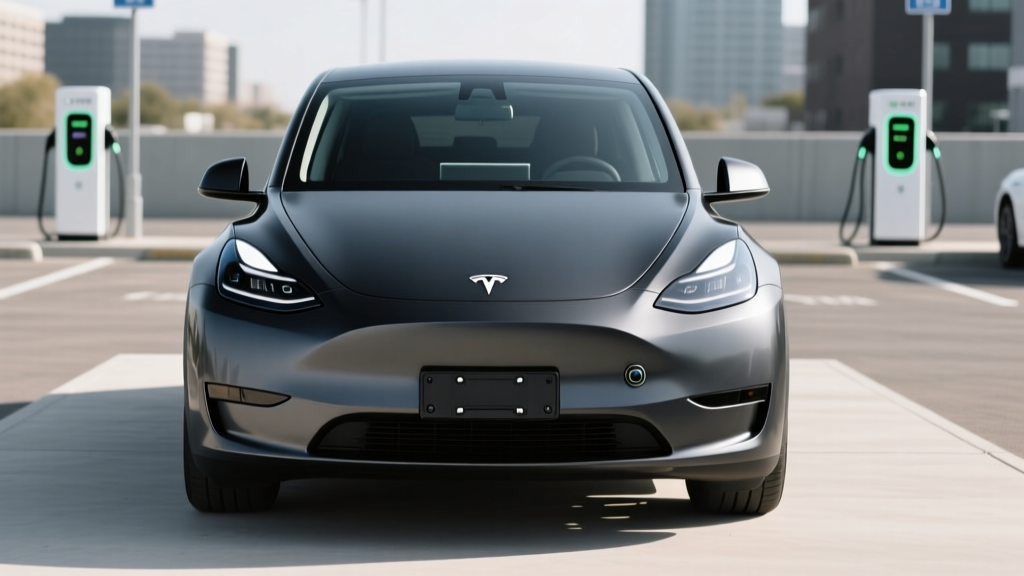
If you've been shopping for a Tesla Model Y and wondering when did HW4 come to Model Y, you're not alone. Tesla's transition from Hardware 3 (HW3) to Hardware 4 (HW4) — also referred to internally as AI4 — has been one of the most closely watched spec changes among EV buyers, particularly those interested in Tesla's Full Self-Driving (Supervised) capability. This article traces the exact rollout timeline, explains what HW4 actually changes, and delivers a complete 2026 Tesla Model Y profile so you know exactly what you're getting.
The HW4 Rollout Timeline for Model Y
Tesla began equipping the Model Y with Hardware 4 (HW4) in March 2023 at the Fremont factory, initially on newly produced Long Range and Performance variants. The Austin-built Model Y followed with HW4 integration by mid-2023. By late 2023, virtually all new Model Y units rolling off both production lines carried HW4, and as of the 2024 refresh (the "Juniper-adjacent" interior update), HW4 became the only hardware shipped.
For the 2025 and 2026 model years, every new Tesla Model Y — whether Long Range RWD, Long Range AWD, or Performance — ships exclusively with HW4. There is no longer a HW3 option from the factory.
- March 2023: HW4 first appears in Fremont-built Model Y Long Range and Performance
- Mid-2023: Austin Gigafactory begins shipping Model Y with HW4
- Late 2023: HW3 production effectively ends for Model Y
- 2024–2026: All new Model Y units ship with HW4 as standard
If you're buying a used Model Y from 2022 or early 2023, there's a strong chance it still has HW3. Tesla no longer offers the free HW3-to-HW4 retrofit that was briefly available to FSD purchasers, so verifying hardware revision matters on the pre-owned market.
What HW4 Actually Changes: Cameras, Compute, and Reality
Hardware 4 isn't just a marketing badge — it represents a meaningful upgrade in sensor resolution and onboard processing. Here's what changed:
- Camera resolution: HW4 uses cameras with roughly double the pixel count of HW3 (up to ~5 megapixels vs. ~1.2 megapixels), improving object detection at distance and in low light.
- Camera count and placement: HW4 vehicles dropped the ultrasonic sensor (USS) array entirely, relying on Tesla Vision (camera-only) for parking and proximity detection. The camera suite includes front-facing narrow and wide lenses, repeaters, and rear-view cameras.
- Onboard compute: HW4 features a redesigned FSD computer with a more powerful neural-net processor, enabling higher-fidelity inference for Autopilot and FSD (Supervised).
- No LiDAR, no radar: Tesla continues to run a pure-vision stack. HW4 does not add LiDAR or radar — a deliberate architectural choice that remains debated among ADAS engineers.
Tesla Autopilot and Full Self-Driving (Supervised) are SAE Level 2 driver-assistance systems. You must keep your hands on the wheel and eyes on the road at all times. These systems do not make the Model Y a self-driving vehicle. Only Level 4 services like Waymo operate without a human driver in defined geofenced areas.
2026 Model Y: Full Spec Breakdown
With the hardware question settled, here's what the 2026 Tesla Model Y delivers across its lineup. Specs reflect the current Long Range and Performance trims available in the U.S. market.
| Spec | Long Range AWD | Performance AWD |
|---|---|---|
| EPA Range | 320 miles | 293 miles |
| Battery (usable) | ~75 kWh, NMC | ~75 kWh, NMC |
| Drivetrain | Dual-motor AWD | Dual-motor AWD |
| Horsepower | 384 hp (combined) | 456 hp (combined) |
| 0–60 mph | 4.8 seconds | 3.5 seconds |
| Max DC Fast Charge | 250 kW | 250 kW |
| 10–80% DC Charge | ~25 minutes | ~25 minutes |
| Level 2 Home Charge | 11.5 kW (~44 mi/hr) | 11.5 kW (~44 mi/hr) |
| Efficiency | 122 MPGe / 28 kWh/100mi | 111 MPGe / 30 kWh/100mi |
| Cargo Volume | 76.2 cu ft (rear seats folded) | 76.2 cu ft (rear seats folded) |
| Rear Legroom | 41.6 inches | 41.6 inches |
| Vision Hardware | HW4 (AI4) | HW4 (AI4) |
| Base MSRP | $44,990 | $48,990 |
Source: fueleconomy.gov and Tesla.com specifications. Prices exclude destination fee.
Real-World Range: What the EPA Sticker Doesn't Tell You
EPA Estimate: 320 miles
Real-World Highway (70–75 mph, moderate climate): ~265–285 miles
Real-World City/Suburban (mixed regen): ~290–310 miles
Cold Weather (below 32°F, highway): ~210–245 miles
Cold Weather + Cabin Heat (worst case): ~195–220 miles
The Model Y Long Range's 320-mile EPA figure is competitive for the segment, but real-world results depend heavily on speed, temperature, and terrain. Tesla's heat pump — standard on all current Model Y variants — significantly reduces cold-weather HVAC energy draw compared to resistive heaters, but lithium-ion chemistry itself loses efficiency below freezing. Expect a 20–30% range reduction in sustained sub-freezing highway driving.
On a 300-mile road trip at 75 mph in 85°F weather with A/C running, we've consistently seen the Model Y Long Range arrive at its destination with roughly 30–50 miles of indicated range remaining — workable, but it means you'll want one DC fast-charge stop on longer routes.
Charging Speed: DC Fast, Level 2, and the Supercharger Advantage
The Model Y supports a peak DC fast-charge rate of 250 kW on V3 Superchargers and compatible CCS/NACS third-party stations. However, peak rate is not sustained rate — the charge curve tapers significantly above 50% State of Charge (SoC).
| Charging Level | Power (kW) | Miles Added per Hour | Notes |
|---|---|---|---|
| Level 1 (120V outlet) | ~1.4 kW | ~3–5 mi/hr | Emergency/top-off only |
| Level 2 (240V, 48A) | 11.5 kW | ~44 mi/hr | Full charge in ~7 hours |
| DC Fast (V3 Supercharger) | Peak 250 kW | ~1,000+ mi/hr (peak) | 10–80% in ~25 min |
| DC Fast (V4 Supercharger) | Peak 250 kW* | Similar to V3 | *Model Y limited to 250 kW |
Charging-curve reality: The Model Y pulls its peak 250 kW only between roughly 10–25% SoC when the battery is properly preconditioned. From 25–50%, expect ~175–200 kW. From 50–80%, the rate drops to ~80–120 kW. Above 80%, charging slows dramatically to protect battery health — a typical 80–100% top-off can take as long as the 10–80% session.
Preconditioning matters. Navigate to a Supercharger using the car's built-in navigation, and the battery thermal management system will warm or cool the pack to optimal temperature before you arrive. Skip preconditioning (e.g., driving to a charger without routing through nav) and your peak charge rate could be 30–50% lower, especially in cold weather.
The Model Y now ships with the NACS (North American Charging Standard) connector natively — the same connector Tesla has used since day one, now adopted by Ford, GM, Rivian, and most major automakers. This gives Model Y owners access to the full Supercharger network without adapters, which remains the most reliable DC fast-charging network in the U.S.
Pricing, Tax Credits, and Total Cost
| Trim | Base MSRP | Destination | Max §30D Credit | Effective Price* |
|---|---|---|---|---|
| Long Range AWD | $44,990 | $1,390 | Up to $7,500 | ~$38,880 |
| Performance AWD | $48,990 | $1,390 | Up to $7,500 | ~$42,880 |
*Effective price assumes full §30D credit eligibility. Actual credit amount varies based on battery component and critical-mineral sourcing requirements. Point-of-sale transfer available at participating dealers.
Federal tax credit eligibility (§30D) is not automatic. The Model Y qualifies as an SUV under IRS MSRP caps (up to $80,000), and pricing is well within the limit. However, the full $7,500 credit depends on two sub-requirements:
- Battery components: A percentage of battery components must be manufactured or assembled in North America. Tesla's U.S.-built battery packs generally satisfy this.
- Critical minerals: A percentage of critical minerals must be sourced from the U.S. or free-trade-agreement partners. This threshold has tightened annually, and the exact credit amount ($3,750 or $7,500) can shift based on Tesla's supply chain compliance for a given production batch.
- Buyer income caps: Modified adjusted gross income must not exceed $300,000 (married filing jointly), $225,000 (head of household), or $150,000 (single).
Always verify current eligibility on IRS.gov before purchasing, and consult a tax professional for your specific situation. The credit can now be transferred to the dealer at point of sale, reducing your out-of-pocket cost at purchase rather than waiting for a tax refund.
Interior, Tech, and What It's Like to Live With
The Model Y interior remains minimalist by design — a 15.4-inch center touchscreen handles virtually all vehicle controls, navigation, media, and climate. There's no traditional instrument cluster; speed and range information live in the upper-left corner of the main display.
Standout tech features:
- HW4 vision suite: Higher-resolution cameras improve Autopilot lane-keeping, intersection handling, and FSD (Supervised) performance over HW3 vehicles.
- Over-the-air updates: Tesla continues to push meaningful software updates that add features, improve efficiency, and refine the UI — no dealer visit required.
- Sentry Mode & Dashcam: Uses the HW4 camera array for 360° security recording and incident capture.
- Phone-as-key: Bluetooth-based passive entry; no fob needed.
- Frunk + cargo: Front trunk adds ~4.1 cu ft of secure storage; total cargo with rear seats folded reaches 76.2 cu ft — competitive with midsize SUVs.
Notable drawbacks:
- No ultrasonic sensors: Parking proximity detection relies entirely on camera-based Tesla Vision. Some owners report less precise distance estimation compared to ultrasonic-equipped vehicles, particularly for low obstacles.
- Turn-signal stalk removal (2025+ refresh): Some markets have moved to steering-wheel-mounted turn-signal buttons — a polarizing change that takes adaptation.
- Ride firmness: The Model Y's suspension tuning prioritizes handling over plushness. It's improved since 2023, but competitors like the Hyundai Ioniq 5 and Ford Mustang Mach-E offer more compliant rides on rough pavement.
- No Apple CarPlay/Android Auto: Tesla's proprietary infotainment is capable but closed — no smartphone mirroring available.
- Best-in-class Supercharger network access (NACS native)
- HW4 cameras provide sharper FSD (Supervised) performance
- 320-mile EPA range covers most commutes and road trips
- 250 kW DC fast charging with reliable preconditioning
- Spacious cargo area (76.2 cu ft) with flat load floor
- Continuous OTA improvements
- Competitive efficiency at 28 kWh/100mi
- No ultrasonic sensors — camera-only parking can feel imprecise
- FSD (Supervised) remains SAE Level 2, not autonomous
- Ride quality still firm on broken pavement
- No Apple CarPlay or Android Auto
- Cold-weather range loss of 20–30% is significant
- Insurance premiums tend to run higher than segment average
- HW3 used vehicles no longer eligible for free retrofit
How Does It Compare to Key Competitors?
The Model Y Long Range AWD competes directly with the Hyundai Ioniq 5, Ford Mustang Mach-E, Kia EV6, and the newer Chevrolet Equinox EV. Here's how it stacks up on the metrics that matter:
- Range: At 320 miles EPA, the Model Y Long Range leads most AWD competitors. The Ioniq 5 AWD rates at 290 miles; the Mach-E Extended Range AWD at ~290 miles.
- Charging: The Ioniq 5 and EV6 both support ~350 kW on 800V architectures (10–80% in ~18 minutes), outpacing the Model Y's 250 kW / ~25 minutes. However, Tesla's Supercharger network reliability still outperforms most CCS-based public charging.
- Price after credit: The Model Y Long Range at ~$38,880 (with full credit) is competitive. The Ioniq 5 SEL AWD starts lower but with less range.
- ADAS hardware: HW4 gives Tesla a camera-resolution edge, though Hyundai/Kia's Highway Driving Assist 2 and Ford's BlueCruise offer strong Level 2 alternatives with different supervision philosophies.
Who the Model Y suits best:
- Daily commuters who can charge at home and want minimal public-charging dependency
- Families needing 76+ cu ft of cargo space and strong safety ratings (IIHS Top Safety Pick in prior years)
- Road trippers who value Supercharger network reliability over peak charge speed
- Tech-forward buyers who want OTA updates and are comfortable with a touchscreen-centric interface
Who should look elsewhere:
- Buyers who prioritize ride comfort over handling sharpness
- Those who want Apple CarPlay/Android Auto integration
- Drivers in extreme-cold climates who need maximum range retention (consider a larger-battery competitor or a PHEV)
- Anyone uncomfortable with camera-only parking assist (no ultrasonic backup)
Battery and Powertrain Warranty
Tesla provides an 8-year / 120,000-mile battery and drive unit warranty for the Model Y Long Range and Performance (whichever comes first). The warranty guarantees a minimum of 70% battery capacity retention over that period. If degradation drops below 70%, Tesla will repair or replace the battery pack to bring it above the threshold.
For context, this is in line with industry norms: Hyundai/Kia offer 10-year/100,000-mile battery warranties, while Ford matches 8-year/100,000-mile. Tesla's 70% retention threshold is standard — most manufacturers use 60–70%.
The NMC (nickel manganese cobalt) chemistry in the Model Y Long Range offers higher energy density than LFP (lithium iron phosphate), giving it a range advantage. However, NMC batteries benefit from daily charging limits of 80–90% for longevity, whereas LFP packs can be charged to 100% daily without accelerated degradation. Tesla's in-app charging recommendations adjust based on your battery chemistry.
Frequently Asked Questions
When did HW4 come to Model Y?
HW4 (also called AI4) began appearing in Model Y production in March 2023 at the Fremont factory, expanding to Austin by mid-2023. All 2024, 2025, and 2026 Model Y vehicles ship with HW4 as standard.
Can I upgrade my HW3 Model Y to HW4?
Tesla briefly offered free HW4 retrofits to customers who had purchased FSD, but that program has ended. As of 2026, there is no official HW3-to-HW4 upgrade path. If HW4 is a priority, buy a vehicle manufactured after mid-2023.
Does HW4 make FSD (Supervised) fully autonomous?
No. FSD (Supervised) remains an SAE Level 2 driver-assistance system regardless of hardware version. You must remain attentive and ready to take over at all times. HW4 improves camera resolution and processing power, which can enhance system confidence and capability, but it does not change the legal or operational responsibility of the driver.
What's the real-world range of the Model Y Long Range?
The EPA rates it at 320 miles. In real-world highway driving at 70–75 mph in moderate temperatures, expect 265–285 miles. In cold weather (below 32°F), plan for 210–245 miles. City driving with regenerative braking can approach or slightly exceed the EPA figure.
Does the 2026 Model Y qualify for the federal EV tax credit?
The Model Y qualifies under the §30D SUV MSRP cap (up to $80,000). However, the full $7,500 credit depends on battery-component and critical-mineral sourcing requirements that can change throughout the year, plus buyer income limits ($150K single / $300K joint). Check IRS.gov for current eligibility before purchasing.
How fast does the Model Y charge at home?
On a 240V / 48A Level 2 home charger (like the Tesla Wall Connector), the Model Y charges at up to 11.5 kW, adding roughly 44 miles of range per hour. A full charge from near-empty takes about 7 hours — easily accomplished overnight.