Tesla Model Y Height and Exterior Dimensions Explained
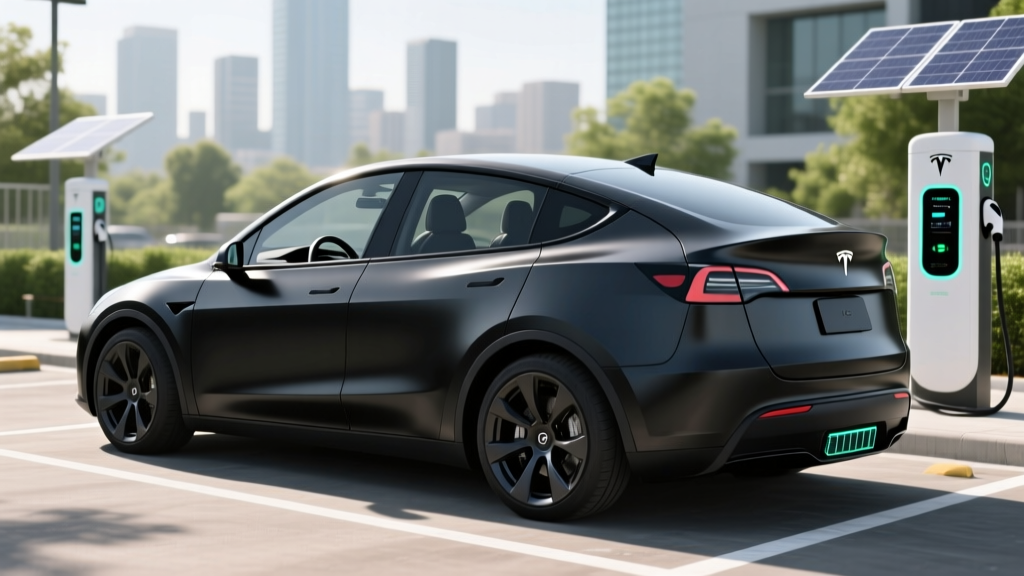
The Tesla Model Y sits at the intersection of compact crossover and midsize SUV, and buyers consistently search for its exact exterior dimensions before committing to a purchase — particularly the Model Y height, which determines garage fitment, roof-rack clearance, and overall proportions. Let's establish the hard numbers first, then contextualize what they mean for daily ownership.
| Dimension | Measurement |
|---|---|
| Overall Height | 63.9 inches (1,623 mm) |
| Overall Length | 187.0 inches (4,750 mm) |
| Overall Width (mirrors folded) | 75.6 inches (1,921 mm) |
| Wheelbase | 113.8 inches (2,890 mm) |
| Ground Clearance | 6.6 inches (167 mm) |
| Curb Weight (Long Range AWD) | 4,363 lbs |
| Drag Coefficient | 0.23 Cd |
At 63.9 inches, the Model Y is roughly 5.5 inches shorter than a Toyota RAV4 and about 2 inches taller than a Model 3 sedan. This low-slung crossover profile contributes to its class-leading 0.23 drag coefficient but creates a trade-off: ingress and egress require more of a "drop-in" motion compared to boxier SUVs like the Hyundai Ioniq 5 or Ford Mustang Mach-E. For garage owners, the 63.9-inch height clears standard 7-foot garage doors with ample margin, but if you're stacking a roof cargo box (Thule or Yakima), expect a total height around 72-74 inches — measure before committing to low-clearance parking structures.
The 6.6-inch ground clearance is notably low for an SUV. This improves aerodynamics and handling but means the Model Y scrapes more readily on steep driveways and snow-packed roads than competitors offering 7.5+ inches. Tesla does not offer an air suspension option on the Model Y, so this clearance is fixed across all trims.
Range, Efficiency, and Real-World Expectations
The 2025 Model Y lineup offers three trims with distinct range profiles. The Long Range AWD dominates sales volume, and for good reason: it balances range, performance, and price better than any other electric crossover on the market.
| Trim | EPA Range | Real-World Highway (70 mph) | Cold Weather (30°F) |
|---|---|---|---|
| Long Range AWD | 320 miles | ~265-280 miles | ~220-240 miles |
| Performance AWD | 293 miles | ~245-260 miles | ~200-220 miles |
| RWD (Standard Range) | 279 miles | ~235-250 miles | ~195-215 miles |
The Long Range AWD's EPA-estimated 320 miles is achievable in mixed city/suburban driving at moderate speeds. On a sustained 70 mph highway run in 65-75°F conditions, expect to cover approximately 265-280 miles before hitting 10% state of charge. Cold weather (30°F or below) compounds range loss through cabin heating demands and increased battery internal resistance — plan for 220-240 miles of usable range and precondition the battery whenever possible.
Efficiency ratings from fueleconomy.gov list the Long Range AWD at 122 MPGe combined (127 city / 117 highway), translating to approximately 27 kWh per 100 miles. This is among the most efficient vehicles in its class, thanks to the heat pump (standard since 2021), octovalve thermal management system, and low drag coefficient. For comparison, the Ford Mustang Mach-E Extended Range AWD achieves 101 MPGe combined, and the Hyundai Ioniq 5 AWD lands at 110 MPGe.
Battery Chemistry, Capacity, and Longevity
The 2025 Model Y Long Range and Performance trims use a ~75 kWh usable (approximately 82 kWh gross) nickel-manganese-cobalt (NMC) lithium-ion battery pack with a structural pack design that contributes to chassis rigidity. The RWD Standard Range trim has shifted to a ~60 kWh usable lithium iron phosphate (LFP) pack.
| Attribute | Long Range / Performance (NMC) | RWD Standard Range (LFP) |
|---|---|---|
| Usable Capacity | ~75 kWh | ~60 kWh |
| Energy Density | Higher | Lower |
| Recommended Charge Limit | 80% daily / 100% trips | 100% regularly (Tesla recommends weekly 100%) |
| Cycle Life | ~1,500-2,000 cycles to 80% SoH | ~3,000+ cycles to 80% SoH |
| Cold Performance | Better | Reduced (LFP less tolerant below freezing) |
The LFP chemistry in the RWD trim is a significant ownership consideration. LFP cells tolerate regular 100% charging without accelerated degradation — Tesla explicitly recommends charging LFP packs to 100% at least weekly for calibration. This makes the RWD trim ideal for owners with home charging who can top off nightly. However, LFP cells lose more capacity in extreme cold than NMC, so buyers in northern climates should weigh this trade-off against the lower purchase price.
NMC packs in the Long Range and Performance trims follow the conventional 80% daily charge recommendation to preserve longevity, with 100% reserved for road trips. Tesla's battery management system and thermal preconditioning help mitigate degradation, and real-world data from high-mileage Model Y owners shows approximately 8-12% degradation at 100,000 miles, depending on charging habits and climate exposure.
Charging Speed: DC Fast, Level 2, and Level 1
Charging infrastructure access remains a top buyer concern, and the Model Y benefits from Tesla's native Supercharger network — now the largest and most reliable DC fast-charging network in North America. Beginning in 2025, new Model Y vehicles ship with the NACS (North American Charging Standard) connector natively, eliminating the need for adapters at Tesla Superchargers.
| Charging Level | Max Power | Speed / Time | Notes |
|---|---|---|---|
| DC Fast Charge (Supercharger V3/V4) | 250 kW peak | 10-80% in ~25 min | Curve tapers significantly above 60% SoC |
| DC Fast Charge (CCS adapter, non-Tesla) | ~150-175 kW typical | 10-80% in ~32-38 min | Depends on station output; CCS adapter required for older vehicles |
| Level 2 Home (Tesla Wall Connector, 48A) | 11.5 kW | ~44 miles/hr of range | Requires 60A circuit; full charge ~7-8 hours |
| Level 2 Public (J1772/NACS) | 7.2-19.2 kW | ~30-44 miles/hr | Vehicle accepts up to 11.5 kW (48A) |
| Level 1 (120V household) | ~1.4 kW | ~4-5 miles/hr | Emergency/trickle only; ~60+ hours for full charge |
The DC fast-charging curve is the critical detail most spec sheets omit. The Model Y Long Range peaks at 250 kW only between approximately 10-30% state of charge, then progressively tapers: ~175 kW at 40%, ~120 kW at 60%, and ~50 kW at 80%. This means a 10-80% session takes roughly 25 minutes, but a 10-95% session stretches past 45 minutes. Plan road-trip charging stops around the 10-80% window for optimal time efficiency.
For home charging, the Tesla Wall Connector at 48 amps (11.5 kW) adds approximately 44 miles of range per hour — enough to replenish a full day's driving in roughly 30-45 minutes of plug-in time. Installation typically requires a 60-amp dedicated circuit and a NEMA 14-50 outlet or hardwired connection. Budget $800-$2,000 for professional installation depending on panel proximity and local permit requirements.
Performance, Drivetrain, and Driving Dynamics
The Model Y's performance credentials remain strong across the lineup, with dual-motor all-wheel drive standard on Long Range and Performance trims.
| Trim | Drivetrain | Horsepower | 0-60 mph | Top Speed |
|---|---|---|---|---|
| Long Range AWD | Dual Motor AWD | ~384 hp | 4.8 seconds | 135 mph |
| Performance AWD | Dual Motor AWD | ~456 hp | 3.5 seconds | 155 mph |
| RWD (Standard Range) | Single Motor RWD | ~295 hp | 6.6 seconds | 135 mph |
The Long Range AWD's 4.8-second 0-60 time is brisk for a family crossover, and the instant torque delivery makes highway merging and passing effortless. The Performance trim's 3.5-second run enters sports-car territory, though the trade-off is a firmer ride, reduced range, and a $10,000+ premium. The RWD trim's 6.6 seconds is adequate for commuting but noticeably less urgent than the dual-motor variants.
One-pedal driving via regenerative braking remains strong in the Model Y, though Tesla removed the adjustable regen setting several years ago. The regen force is aggressive enough to handle most stop-and-go traffic without touching the brake pedal, and it contributes to reduced brake wear — many owners report original brake pads lasting well past 80,000 miles.
Towing capacity is rated at 3,500 lbs across all trims when equipped with the factory tow package ($1,000). This covers small trailers, bike racks, and lightweight campers but falls short of body-on-frame SUVs. Tongue weight is limited to 350 lbs.
Interior Space, Cargo, and Practicality
The Model Y's 187-inch length and 113.8-inch wheelbase translate to generous interior volume, though the sloping roofline (that 63.9-inch height) compromises rear headroom for taller passengers.
| Measurement | Specification |
|---|---|
| Front Headroom | 41.0 inches |
| Rear Headroom | 37.7 inches |
| Front Legroom | 41.8 inches |
| Rear Legroom | 35.3 inches |
| Cargo Volume (rear seats up) | 30.2 cu ft |
| Cargo Volume (rear seats folded) | 72.1 cu ft |
| Frunk (front trunk) | 4.1 cu ft |
| Total Storage (max) | 76.2 cu ft |
The 30.2 cubic feet of cargo space behind the second row is competitive with the segment, and the 72.1 cu ft maximum with seats folded is excellent. The rear hatch opening is wide and the load floor is flat, making it practical for furniture, camping gear, or bicycle transport (with front wheel removed). The 4.1 cu ft frunk is useful for charging cables, groceries, or a small bag but won't hold a full suitcase.
Optional third-row seating ($3,000, available on Long Range only) adds two small jump seats suitable for children under approximately 5'4". With the third row deployed, cargo space behind it shrinks to approximately 12.4 cu ft. Most buyers skip this option, and the two-row configuration is the more practical choice for families with older children.
The minimalist interior centers on a 15.4-inch touchscreen that controls virtually all vehicle functions — there are no physical buttons for climate, media, or glovebox release. This design polarizes buyers: enthusiasts appreciate the clean aesthetic and rapid OTA software updates, while critics note that adjusting fan speed or mirror position while driving requires taking your eyes off the road. A rear 8-inch touchscreen for second-row passengers controls climate and entertainment.
Pricing, Trim Levels, and Federal Tax Credit Eligibility
The 2025 Model Y lineup has been simplified to three trims following the discontinuation of the previous Standard Range and Long Range RWD configurations.
| Trim | Base MSRP | Destination | Est. After §30D Credit | Eligible for $7,500 Credit? |
|---|---|---|---|---|
| RWD (Standard Range) | $44,990 | $1,390 | ~$38,880* | Yes (MSRP under $80K cap) |
| Long Range AWD | $48,990 | $1,390 | ~$42,880* | Yes (MSRP under $80K cap) |
| Performance AWD | $52,990 | $1,390 | ~$46,880* | Yes (MSRP under $80K cap) |
*Estimated after-tax-credit price assumes buyer qualifies for full $7,500 §30D credit. Actual eligibility depends on income, sourcing, and tax liability. Consult a tax professional.
The Model Y qualifies as an SUV under IRS §30D rules, which sets the MSRP cap at $80,000 for SUVs, pickups, and vans — all three trims fall well below this threshold. However, the full $7,500 credit is not automatic. Buyers must meet adjusted gross income limits ($150,000 single / $225,000 head of household / $300,000 joint filers) and the vehicle's battery must satisfy critical-mineral and battery-component sourcing requirements that tighten annually. As of 2025, Tesla's North American battery sourcing has generally allowed Model Y buyers to claim the full credit, but rules evolve — verify eligibility on IRS.gov before purchase.
Since January 2024, buyers can elect to transfer the credit at point of sale, reducing the purchase price directly rather than waiting for a tax refund. This requires the dealer (Tesla) to register the sale through the IRS Energy Credits Online portal, and the buyer must attest to income eligibility at delivery.
Driver Assistance, Technology, and Safety
Every Model Y ships with Tesla Autopilot as standard — a Level 2 driver-assistance system per SAE International that provides adaptive cruise control, lane centering, and automatic emergency braking. This is not autonomous driving; the driver must maintain hands-on-wheel awareness and is fully responsible for vehicle operation at all times.
ADAS Limitation Notice: Tesla Autopilot and Full Self-Driving (Supervised) are SAE Level 2 systems. They require continuous driver supervision and do not make the vehicle self-driving. FSD (Supervised) adds capabilities like traffic light/stop sign response and city street navigation but still demands active driver oversight. The $8,000 FSD purchase or $99/month subscription is optional and does not eliminate the need for an attentive driver.
Standard technology includes over-the-air software updates (which regularly add features and refinements), a built-in dashcam and Sentry Mode surveillance system, phone-as-key functionality, a premium 14-speaker audio system, wireless phone charging, and access to Tesla's in-car app ecosystem (Spotify, Netflix, YouTube while parked). Navigation with real-time Supercharger routing and battery preconditioning is included.
Safety ratings are exemplary: the Model Y earned a 5-star overall rating from NHTSA and has consistently scored Top Safety Pick+ from IIHS in prior model years. The structural battery pack contributes to a low center of gravity and excellent rollover resistance.
Warranty Coverage
| Coverage Area | Term |
|---|---|
| Basic Vehicle (bumper-to-bumper) | 4 years / 50,000 miles |
| Battery & Drive Unit (Long Range/Performance) | 8 years / 120,000 miles |
| Battery & Drive Unit (RWD) | 8 years / 100,000 miles |
| Battery Capacity Retention Threshold | 70% minimum SoH during warranty period |
The battery warranty guarantees that the pack will retain at least 70% of its original capacity over the warranty period. If degradation exceeds 30% within 8 years or 120,000 miles (Long Range/Performance), Tesla will repair or replace the battery at no cost. Real-world data suggests this threshold is rarely breached under normal use — most owners report 90%+ capacity retention at 100,000 miles.
Who the Model Y Suits Best
Choose the Model Y Long Range AWD if: You need 300+ mile range for road trips, dual-motor AWD for inclement weather, and access to the Supercharger network for hassle-free long-distance travel. Ideal for suburban families with home charging who take 2-4 road trips per year.
Choose the RWD Standard Range if: You primarily commute under 50 miles daily, have reliable home Level 2 charging, live in a mild climate, and want the lowest entry price with LFP battery longevity.
Choose the Performance if: Acceleration thrills matter more than range efficiency, you want the track-oriented suspension, and you're willing to pay a ~$10,000 premium over Long Range for 3.5-second 0-60 runs.
Look elsewhere if: You need serious ground clearance for off-road or deep-snow driving, you prefer physical controls and traditional instrument clusters, or you require 7,500+ lb towing capacity.
Pros and Cons at a Glance
Pros
- Class-leading efficiency (122 MPGe combined) and 320-mile EPA range
- Access to Tesla Supercharger network — most reliable DC fast-charging in North America
- Strong performance across all trims; 4.8s 0-60 on Long Range
- Excellent cargo capacity (72.1 cu ft max) with flat load floor
- Continuous OTA updates add features post-purchase
- Low cost of ownership: minimal maintenance, no oil changes, reduced brake wear
Cons
- Low ground clearance (6.6 in) limits rough-road and deep-snow capability
- Minimalist interior lacks physical controls — everything routes through the touchscreen
- Rear headroom (37.7 in) tight for passengers over 6'2"
- FSD (Supervised) remains a Level 2 system despite the "self-driving" branding
- Build quality inconsistencies reported by some owners (panel gaps, paint)
- No Apple CarPlay or Android Auto integration
Frequently Asked Questions
What is the exact height of the Tesla Model Y?
The 2025 Tesla Model Y measures 63.9 inches (1,623 mm) in overall height. This is consistent across all trims (RWD, Long Range, Performance). With a roof cargo box installed, total height typically reaches 72-74 inches.
What is the real-world range of the Model Y Long Range?
While the EPA rates the Long Range AWD at 320 miles, real-world highway driving at 70 mph in moderate temperatures yields approximately 265-280 miles. In cold weather (below 30°F), expect 220-240 miles due to cabin heating demands and increased battery resistance.
How fast does the Model Y charge at a Supercharger?
The Model Y Long Range peaks at 250 kW DC fast charging, achieving a 10-80% charge in approximately 25 minutes. The charging curve tapers significantly above 60% state of charge, so plan road-trip stops around the 10-80% window for best time efficiency.
Does the Model Y qualify for the $7,500 federal EV tax credit?
All three 2025 Model Y trims fall under the $80,000 MSRP cap for SUVs under IRS §30D rules. However, full credit eligibility also depends on buyer income limits ($150K single / $300K joint) and battery critical-mineral sourcing requirements. As of 2025, the Model Y has generally qualified for the full credit, but verify current rules on IRS.gov before purchasing.
Is the Model Y worth buying over the Ford Mustang Mach-E or Hyundai Ioniq 5?
The Model Y wins on range efficiency, Supercharger network access, and cargo space. The Mach-E offers a more engaging driving experience and physical controls. The Ioniq 5 charges faster on non-Tesla DC networks (up to 350 kW capability) and has a more distinctive design. If Supercharger access is a priority for road trips, the Model Y holds the advantage.
What is the Model Y's ground clearance?
The Model Y has 6.6 inches (167 mm) of ground clearance across all trims. This is lower than most competing crossovers and can lead to scraping on steep driveways or snow-packed roads. Tesla does not offer adjustable air suspension on the Model Y.