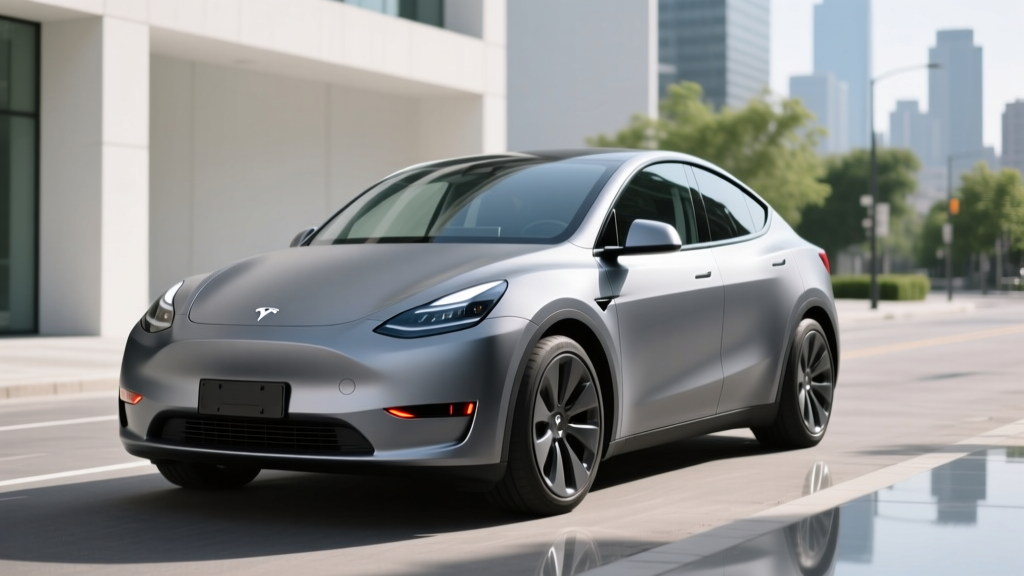
If you've spent any time scrolling EV forums or Tesla configurators, you've likely noticed one color dominating the order queue: grey. Specifically, Tesla's Stealth Grey (introduced in late 2023 to replace Midnight Silver Metallic) has become the de facto choice for Model Y buyers who want something more understated than white but don't want to pay the $2,000 premium for Quicksilver or Ultra Red. But color is just the wrapper — what matters is the machine underneath.
This review covers the 2026 Tesla Model Y (post-refresh "Juniper" generation) with a focus on the specs, range, charging behavior, and ownership economics that actually drive purchase decisions. Whether you're eyeing the Long Range AWD or the Performance variant, here's the data you need.
2026 Tesla Model Y: Core Specifications at a Glance
| Specification | Long Range AWD | Performance |
|---|---|---|
| EPA Estimated Range | 320 miles | 285 miles |
| Battery Capacity (usable) | ~75 kWh (NMC) | ~75 kWh (NMC) |
| Drivetrain | Dual-Motor AWD | Dual-Motor AWD |
| Horsepower | ~384 hp | ~456 hp |
| 0–60 mph | 4.8 seconds | 3.5 seconds |
| Peak DC Fast Charge | 250 kW | 250 kW |
| 10–80% DC Charge Time | ~25 minutes | ~25 minutes |
| Level 2 Home Charge Rate | 11.5 kW (~44 mi/hr) | 11.5 kW (~44 mi/hr) |
| MPGe (combined) | 111 MPGe | 102 MPGe |
| Energy Consumption | 30 kWh/100 mi | 33 kWh/100 mi |
| Base MSRP | $44,990 | $51,490 |
| Battery/Drive Unit Warranty | 8 yr / 120,000 mi | 8 yr / 120,000 mi |
Source: fueleconomy.gov, Tesla.com official specifications (2026 model year).
Real-World Range: What the EPA Sticker Doesn't Tell You
Long Range AWD: EPA 320 miles — Expect ~270–290 miles in mixed highway driving (70–75 mph), ~240–260 miles in sustained cold weather (below 32°F), and up to ~310 miles in city/regen-heavy driving at moderate temperatures.
Performance: EPA 285 miles — Expect ~240–260 miles highway, ~215–235 miles in winter conditions.
The Juniper-refreshed Model Y benefits from improved aerodynamics (drag coefficient reduced to approximately 0.22 Cd) and a more efficient heat pump system, which narrows the gap between EPA and real-world figures compared to the pre-2025 generation. However, physics remains undefeated: sustained 80 mph highway driving in winter with cabin heat will cut your usable range by 25–30%. If your commute is 60 miles round-trip with Level 2 home charging, this is a non-issue. If you regularly drive 250+ mile stretches between chargers in northern winters, plan your stops conservatively.
The onboard navigation's trip planner accounts for elevation, temperature, and traffic when estimating arrival SoC, and it's generally accurate within 2–3 percentage points — one of Tesla's genuine strengths for road-trip confidence.
Charging Speed: DC Fast, Level 2, and the Curve Reality
The 2026 Model Y retains the NACS (North American Charging Standard) connector natively, giving it seamless access to Tesla's Supercharger network — now exceeding 20,000 stalls in North America — without adapters. Here's what charging actually looks like:
| Charging Level | Power (kW) | Rate / Time | Notes |
|---|---|---|---|
| Level 1 (120V household) | ~1.4 kW | ~5 miles/hour | Emergency/trickle only |
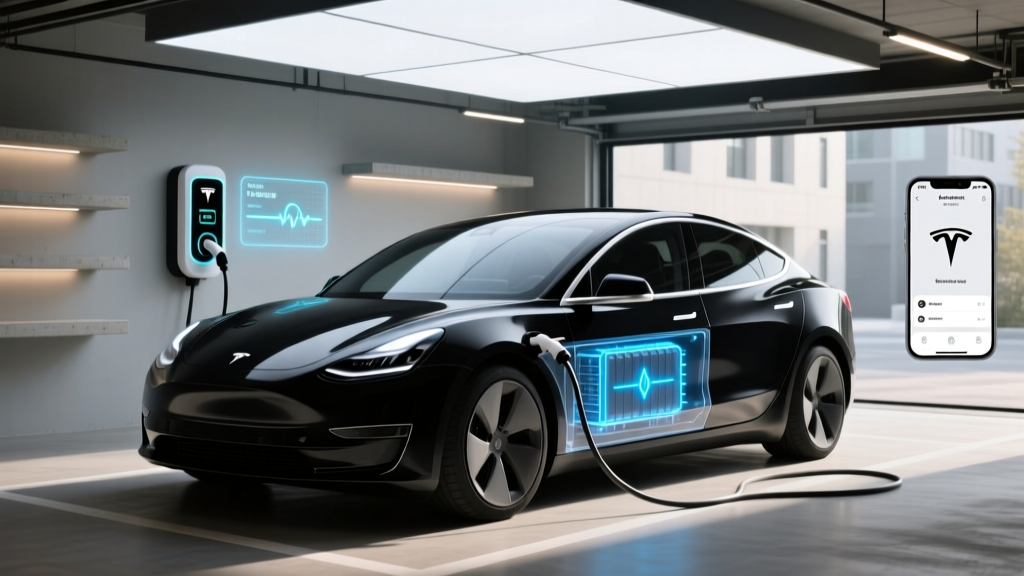
| Level 2 (240V home, 48A) | 11.5 kW | ~44 miles/hour | Full charge in ~7 hours |
| DC Fast (Supercharger V3/V4) | Peak 250 kW | 10–80% in ~25 min | Peak rate held to ~55% SoC, then tapers |
| DC Fast (CCS adapter on non-Tesla networks) | Up to ~170 kW | 10–80% in ~35 min | Adapter required (Magic Dock or third-party) |
Charging curve reality: The 250 kW peak is achieved between roughly 10–55% State of Charge. Above 60%, the rate tapers progressively — you'll see ~120 kW at 70% and ~50 kW above 85%. This is why Tesla (and every other manufacturer) quotes 10–80% times rather than 0–100%. Charging from 80–100% at a Supercharger can add another 25–30 minutes and is rarely worth the wait on a road trip. Preconditioning the battery (initiated automatically when you navigate to a Supercharger) is essential for hitting peak rates in cold weather.
Performance, Efficiency, and Driving Dynamics
The Juniper refresh brought a revised suspension tune that addresses the most common complaint about pre-2025 Model Ys: ride harshness over broken pavement. The 2026 model absorbs small impacts noticeably better while retaining the responsive steering that Tesla owners expect. The Long Range AWD's 4.8-second 0–60 time is genuinely quick for a family crossover, and the dual-motor setup provides confident all-weather traction.
Efficiency is where Tesla's engineering advantage shows. At 30 kWh/100 miles (Long Range), the Model Y remains one of the most energy-efficient vehicles in its class. For context, the Ford Mustang Mach-E Extended Range AWD consumes approximately 34 kWh/100 miles, and the Hyundai Ioniq 5 AWD sits at ~34 kWh/100 miles. Over 12,000 miles/year at a national average electricity rate of $0.16/kWh, that efficiency gap translates to roughly $75–$100/year in savings — modest per year, but it compounds over ownership.
Pricing, Tax Credits, and Total Cost
The 2026 Model Y lineup starts at $44,990 for the Long Range AWD. Here's how the pricing breaks down with potential incentives:
| Item | Long Range AWD | Performance |
|---|---|---|
| Base MSRP | $44,990 | $51,490 |
| Stealth Grey Paint | Included ($0) | Included ($0) |
| Destination Fee | $1,390 | $1,390 |
| FSD (Supervised) Add-on | +$8,000 | +$8,000 |
| As-Tested (w/ FSD, Grey) | $54,380 | $60,880 |
| Federal §30D Tax Credit (max) | Up to $7,500* | Up to $7,500* |
| Effective Price After Max Credit | From ~$38,880 | From ~$45,380 |
*§30D Tax Credit Eligibility — Critical Caveats: Under current IRS rules for 2026, the full $7,500 credit requires meeting both critical mineral sourcing and battery component manufacturing requirements, which shift annually. The Model Y (Fremont-built) has historically qualified for the full amount, but battery sourcing rules tighten each year. Additionally, buyer income caps apply ($150,000 single / $300,000 joint AGI), and the vehicle MSRP must not exceed $80,000 for SUVs. The credit can now be transferred at point-of-sale to the dealer, reducing your purchase price directly. Always verify current eligibility at IRS.gov and consult a tax professional.
Interior, Cargo, and Technology
Cargo space: The 2026 Model Y offers 30.2 cu ft behind the second row and 72.1 cu ft with the rear seats folded (per Tesla's official specs). The front trunk (frunk) adds approximately 4.1 cu ft — useful for charging cables and groceries. Rear legroom measures 40.5 inches, adequate for adults on longer trips.
Tech highlights:
- 15.4-inch center touchscreen (slightly larger post-Juniper refresh, with reduced bezel)
- 8-inch rear passenger touchscreen for climate and media control
- Ambient lighting strip (new for Juniper, replacing the stark minimalism of pre-2025 models)
- Ventilated front seats (now standard on Long Range and Performance)
- Power-folding second-row seats (Performance trim)
- Native NACS port — no adapter needed for Superchargers
- Over-the-air updates continue to add features post-purchase
Driver Assistance:
Tesla's Autopilot (standard) and FSD Supervised ($8,000 option) are SAE Level 2 systems. They provide steering, acceleration, and braking assistance but require continuous driver attention and hands-on-wheel monitoring. They are not self-driving. The driver is legally responsible for the vehicle at all times.
Basic Autopilot (traffic-aware cruise control + autosteer) is included on all trims. FSD Supervised adds automated lane changes, traffic light/stop sign recognition, and navigation-guided on/off-ramp handling. Real-world reliability of FSD varies significantly by geography and road complexity — it's competent on well-marked highways but still requires frequent interventions on construction zones, unmapped roads, and complex urban intersections.
Pros, Cons, and Who Should Buy the Grey Model Y
✓ Pros
- Best-in-class Supercharger network access (native NACS)
- Top-tier efficiency: 30 kWh/100 mi (Long Range)
- Strong real-world range: ~270–290 mi highway
- Stealth Grey included at no extra cost
- Juniper refresh fixes ride quality complaints
- Class-leading OTA update cadence
- Low 5-year maintenance cost (no oil, minimal brake wear from regen)
✗ Cons
- No physical stalks — turn signals on steering wheel (love/hate)
- Rear visibility limited by sloping roofline
- Insurance premiums run 15–25% higher than segment average
- FSD ($8,000) remains a Level 2 system despite the price and name
- Minimal dealer network for body repair after collisions
- 250 kW peak charge rate trails Hyundai/Kia 800V architecture (350 kW)
- No Apple CarPlay / Android Auto — Tesla ecosystem only
Best for: Daily commuters with home Level 2 charging, tech-forward buyers who value OTA updates and Supercharger convenience, and small families needing ~30 cu ft of cargo without stepping into a full-size SUV. The Long Range AWD at ~$38,880 (after max tax credit) is the value sweet spot.
Look elsewhere if: You frequently tow (Model Y is rated for only 3,500 lbs), you want Apple CarPlay integration, you need third-row seating, or you live in an area with limited Supercharger coverage and no home charging option.
Frequently Asked Questions
Is Stealth Grey the same as the old Midnight Silver Metallic?
No. Stealth Grey (introduced late 2023) is a darker, more neutral grey without the blue undertone of Midnight Silver Metallic. It's a standard (no-cost) color, whereas Midnight Silver was also standard but was discontinued. If you see "Grey" on a 2026 configurator, it refers to Stealth Grey.
Does the 2026 Tesla Model Y qualify for the $7,500 federal tax credit?
As of early 2026, the US-built Model Y has qualified for the full $7,500 §30D credit, transferable at point-of-sale. However, eligibility depends on your AGI (income caps: $150K single / $300K joint), battery sourcing compliance (which tightens annually), and MSRP limits ($80K for SUVs). Verify at IRS.gov before purchase.
How does the Model Y compare to the Hyundai Ioniq 5 or Ford Mach-E?
The Ioniq 5 charges faster (up to 350 kW on 800V architecture, 10–80% in ~18 min) and offers Apple CarPlay, but has less range (EPA 303 mi Long Range AWD) and no native Supercharger access. The Mach-E offers a more traditional interior with physical controls and comparable range, but trails in efficiency and charging network convenience. The Model Y wins on network access and efficiency; the Ioniq 5 wins on charging speed and interior ergonomics.
What does it cost to charge a Model Y at home vs. Superchargers?
At the US average residential rate of ~$0.16/kWh, a full 75 kWh charge costs approximately $12, yielding ~$0.037/mile. Supercharger pricing varies by location and time but averages ~$0.28–$0.36/kWh nationally, translating to ~$0.08–$0.11/mile. For comparison, a 25 MPG gas vehicle at $3.40/gallon costs ~$0.136/mile.
How long will the Model Y battery last?
Tesla warranties the battery and drive unit for 8 years or 120,000 miles (whichever comes first) with a minimum 70% capacity retention threshold. Real-world degradation data from Tesla's fleet suggests NMC packs lose approximately 10–12% capacity over the first 100,000 miles, with degradation slowing significantly after the initial break-in period. Many high-mileage Teslas exceed 200,000 miles on original packs.