If you've searched for a gaming Tesla, you've probably seen viral clips of someone playing Cyberpunk 2077 on a Model S Plaid's 17-inch touchscreen while parked at a Supercharger. The appeal is real: Tesla's infotainment hardware has evolved into a legitimate portable gaming rig, and for families with kids, road-trippers, or anyone who spends 20 minutes waiting for a charge, in-car gaming is more than a gimmick — it's a daily-use feature. But a Tesla is still a car first. This review of the 2026 Tesla Model Y Long Range AWD evaluates both its credentials as a practical electric SUV and as a gaming platform, with the exact range, charging, pricing, and ownership data you need before buying.
Quick Verdict: The Model Y as a Gaming EV
The 2026 Model Y Long Range AWD remains Tesla's volume seller for good reason: 320 miles of EPA range, access to the most reliable DC fast-charging network in North America, and an infotainment system built around a Ryzen-powered processor that handles full Steam-library games (while parked). It's the most practical gaming Tesla in the lineup — cheaper than the Model S, roomier than the Model 3, and far better supported by public charging infrastructure than any competitor. The tradeoffs? A firm ride, panel-gap inconsistencies, and an all-touchscreen interface that still frustrates some drivers.
Range, Efficiency & Real-World Expectations
| Spec | Value |
|---|---|
| EPA Range (Long Range AWD) | 320 miles |
| Usable Battery Capacity | ~75 kWh (NMC chemistry) |
| EPA Efficiency | 122 MPGe combined / 28 kWh/100 mi |
| Drivetrain | Dual-Motor AWD |
| Heat Pump | Standard (improves cold-weather efficiency) |
The Model Y Long Range uses NMC (nickel manganese cobalt) battery chemistry, which prioritizes energy density over the LFP (lithium iron phosphate) chemistry found in the Standard Range RWD variant. NMC gives you more miles per charge but is more sensitive to sitting at 100% state of charge for extended periods — Tesla recommends daily charging to 80% for NMC packs, saving 100% for road trips.
Charging Speed: DC Fast, Level 2 & Home Setup
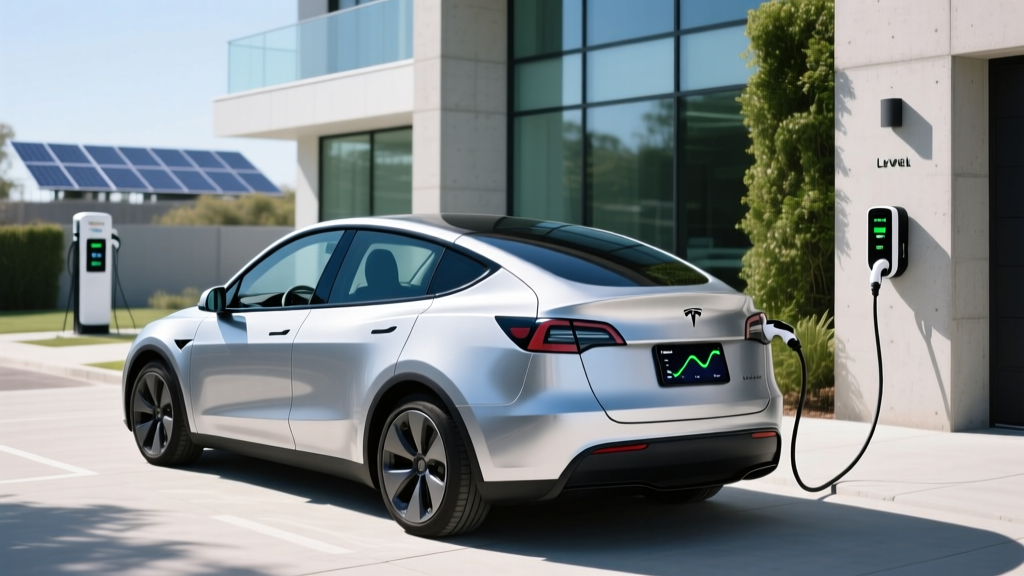
Charging speed is the metric that defines road-trip usability — and the Model Y's NACS connector gives it native access to over 20,000 Tesla Superchargers across North America, now supplemented by NACS-equipped stations from Electrify America and others.
| Charging Level | Power / Rate | Speed | Notes |
|---|---|---|---|
| Level 1 (120V outlet) | ~1.4 kW | ~3–4 miles/hour | Emergency/trickle only |
| Level 2 (240V home, 48A) | 11.5 kW | ~37 miles/hour | Fully charges overnight (~8 hrs) |
| DC Fast Charge (V3 Supercharger) | Peak 250 kW | 10–80% in ~25 minutes | Sustained rate tapers above 60% |
| DC Fast Charge (V4 Supercharger) | Peak 250–350 kW* | 10–80% in ~20 minutes* | *Model Y may not reach full V4 peak |
Charging curve reality: The "250 kW peak" figure is just that — a peak. The Model Y Long Range sustains its highest charge rate between roughly 10–40% state of charge, then tapers progressively. From 60–80%, you're looking at ~70–90 kW, which is why the 10–80% time is ~25 minutes rather than the ~15 minutes that sustained peak power would suggest. Preconditioning the battery (triggered automatically when you navigate to a Supercharger) is essential — arriving at a fast charger with a cold battery can cut your charge rate in half.
Performance: 0-60, Power & Drivetrain
| Performance Spec | Long Range AWD |
|---|---|
| 0–60 mph | 4.8 seconds |
| Horsepower | ~384 hp (combined dual-motor) |
| Top Speed | 135 mph |
| Drivetrain | Dual-motor AWD (permanent magnet rear + induction front) |
The dual-motor setup provides confident all-weather traction and a 4.8-second sprint that still surprises passengers unfamiliar with EV torque delivery. The front induction motor can disconnect under light loads to improve efficiency — a detail that matters for highway-range maximization. For the Performance trim, expect 0–60 in 3.5 seconds, though at a ~$5,000 premium and a slight range reduction.
Gaming & Infotainment: The Tesla Entertainment System
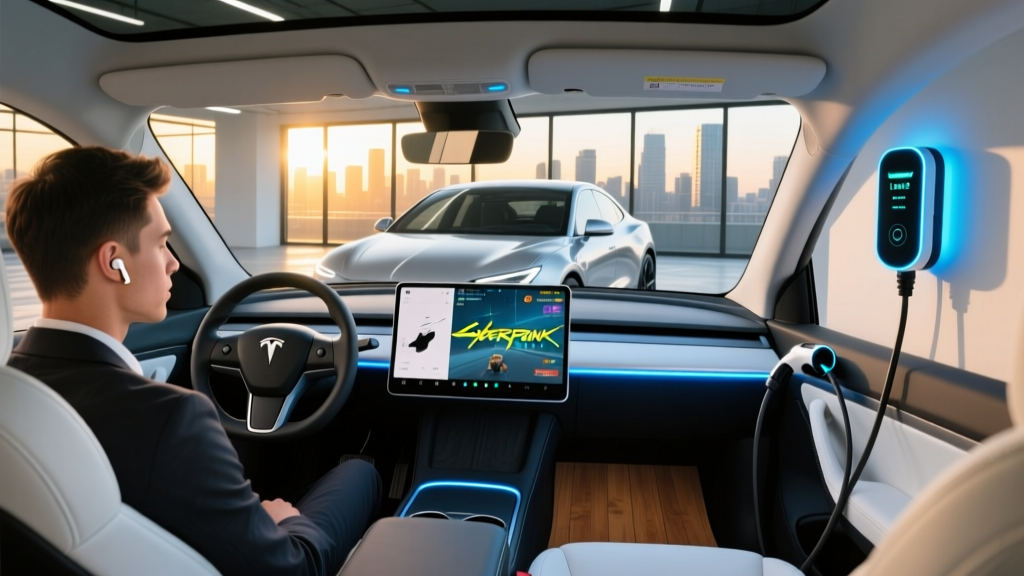
Here's where the gaming Tesla angle earns its name. The 2026 Model Y's 15.4-inch center touchscreen is powered by an AMD Ryzen processor with RDNA 2 GPU architecture — essentially the same silicon family found in the Steam Deck and PlayStation 5. The result is an in-car gaming experience that leaves every other automaker's infotainment system in the dust.
What you can actually play:
- Tesla Arcade: Built-in titles including Cyberpunk 2077 (yes, really), Stardew Valley, Cuphead, and various casual games — playable with the touchscreen, paired Bluetooth controllers, or the steering wheel/yoke for racing titles.
- Full Steam integration (parked only): Log into your Steam account and access your library. Performance handles most indie and mid-tier titles smoothly; AAA games may require lowered settings.
- Streaming: Netflix, YouTube, Disney+, and Twitch are all available on the main screen while parked.
- Toybox: Camp mode keeps climate control running while you game, making Supercharger stops genuinely comfortable.
Audio for gaming: The optional Premium Interior includes a 14-speaker immersive sound system that makes gaming and media consumption genuinely impressive. Bass response and spatial audio are a clear step above competitors in this price class.
Interior Space, Cargo & Practicality
| Dimension | Measurement |
|---|---|
| Cargo Volume (rear seats up) | 30.2 cu ft |
| Cargo Volume (rear seats folded) | 72.1 cu ft |
| Front Legroom | 41.8 inches |
| Rear Legroom | 38.4 inches |
| Front Trunk (Frunk) | 4.1 cu ft |
| Seating Capacity | 5 passengers (optional 7-seat available) |
The Model Y's crossover form factor delivers SUV-competitive cargo space with a low load floor thanks to the flat battery pack. The 72.1 cu ft maximum with seats folded is enough for camping gear, a full Costco run, or a family road trip's worth of luggage. The optional third row is best suited for small children — adults will find it cramped on anything beyond short trips.
Pricing, Trims & Federal Tax Credit Eligibility
| Trim | Base MSRP | Est. After §30D Credit |
|---|---|---|
| Long Range AWD | $44,990 | ~$37,490* |
| Performance AWD | $49,990 | ~$42,490* |
*Tax credit estimates assume full eligibility. See caveats below.
The federal EV tax credit under IRS §30D can reduce your effective cost by up to $7,500, and since 2024, this credit can be transferred to the dealer at the point of sale — meaning you get the discount upfront rather than waiting to claim it on your tax return. However, eligibility is not automatic:
- MSRP cap: SUVs/crossovers must have an MSRP at or below $80,000. The Model Y qualifies on all trims.
- Buyer income cap: Modified adjusted gross income must not exceed $150,000 (single), $225,000 (head of household), or $300,000 (joint filers).
- Battery sourcing requirements: The $7,500 credit is split into two $3,750 halves — one for critical minerals sourcing and one for battery component manufacturing. Tesla's evolving supply chain means eligibility can shift; always verify current status on fueleconomy.gov before purchasing.
- Point-of-sale transfer: You can elect to transfer the credit to Tesla at purchase, reducing your out-of-pocket cost immediately.
Consult a tax professional for your specific situation — incentive rules are subject to change and individual circumstances vary.
Warranty, Ownership Costs & Who Should Buy
| Warranty Coverage | Terms |
|---|---|
| Basic Vehicle | 4 years / 50,000 miles |
| Battery & Drive Unit | 8 years / 120,000 miles (min 70% capacity retention) |
Tesla's battery warranty guarantees that the pack will retain at least 70% of its original capacity over 8 years or 120,000 miles — whichever comes first. Real-world degradation data from high-mileage Model Y owners suggests most NMC packs lose approximately 8–12% capacity over the first 100,000 miles, well within warranty thresholds. A full battery replacement out of warranty currently ranges from $12,000–$16,000 depending on service center and pack variant.
Who the Model Y suits best:
- Families: Roomy interior, excellent safety ratings (NHTSA 5-star overall), and Supercharger access make it ideal for school runs and road trips.
- Tech-forward commuters: Over-the-air updates, gaming during charge stops, and Autopilot for highway commutes (with hands-on supervision) deliver a tech experience no legacy automaker matches.
- Apartment dwellers with Supercharger access: If you can't charge at home, Tesla's network reliability makes public-only charging more viable than with any other brand — though home Level 2 remains dramatically cheaper per mile.
Who should look elsewhere:
- Buyers prioritizing ride comfort — the Hyundai Ioniq 5 and Kia EV6 offer softer suspensions.
- Those who want physical buttons for climate/audio — Tesla's touchscreen-only approach is polarizing.
- Towing-focused buyers — the 3,500-lb tow rating is modest; the Rivian R1S or Ford F-150 Lightning are better choices.
Pros & Cons
- 320-mile EPA range with real-world usability
- Best-in-class DC fast-charging network access
- Genuine AAA gaming capability while parked
- OTA updates continuously add features
- Strong resale value relative to EV segment
- Spacious cargo area with flat load floor
- Firm ride quality on rough pavement
- All-touchscreen controls lack redundancy
- Panel gap quality still inconsistent
- No Apple CarPlay / Android Auto
- Insurance premiums above segment average
- NMC battery requires 80% daily charge discipline
Frequently Asked Questions
What is the real-world range of the 2026 Tesla Model Y?
The EPA rates the Long Range AWD at 320 miles. In real-world highway driving at 75 mph, expect approximately 265–285 miles. In cold weather (below freezing), plan for 220–250 miles. City driving with regenerative braking can exceed the EPA figure in mild conditions.
How fast does the Model Y charge at home and on the road?
At home on a 240V Level 2 charger (48A), the Model Y adds ~37 miles per hour, fully charging overnight in about 8 hours. On a V3 Supercharger (250 kW peak), a 10–80% charge takes approximately 25 minutes, with the rate tapering significantly above 60% state of charge.
Does the Tesla Model Y qualify for the $7,500 federal tax credit?
The Model Y's MSRP is below the $80,000 SUV cap, so it can qualify. However, buyer income limits ($300K joint / $150K single), battery sourcing requirements, and individual tax liability all affect final eligibility. Verify on fueleconomy.gov and consult a tax professional before relying on the credit.
Can you really play AAA games in a Tesla?
Yes — while parked. The AMD Ryzen infotainment processor handles titles like Cyberpunk 2077, Stardew Valley, and your full Steam library. You'll want a paired Bluetooth controller for the best experience. Gaming is disabled while the vehicle is in Drive.
Is the Model Y worth buying over the Hyundai Ioniq 5 or Kia EV6?
The Model Y wins on Supercharger network access, gaming/infotainment, and software updates. The Ioniq 5 and EV6 win on ride comfort, physical controls, and 800V charging architecture (faster peak rates on compatible chargers). If Supercharger access matters to your road-trip patterns, the Tesla advantage is significant.
What does the battery warranty cover?
Tesla covers the battery and drive unit for 8 years or 120,000 miles, guaranteeing a minimum of 70% capacity retention. If degradation exceeds this threshold within the warranty period, Tesla will repair or replace the battery at no cost.
Sources: fueleconomy.gov (EPA range/efficiency data), IRS §30D Clean Vehicle Credit, NHTSA safety ratings. All specs reflect 2026 model year as published by Tesla. Pricing and credit eligibility subject to change — verify before purchase.