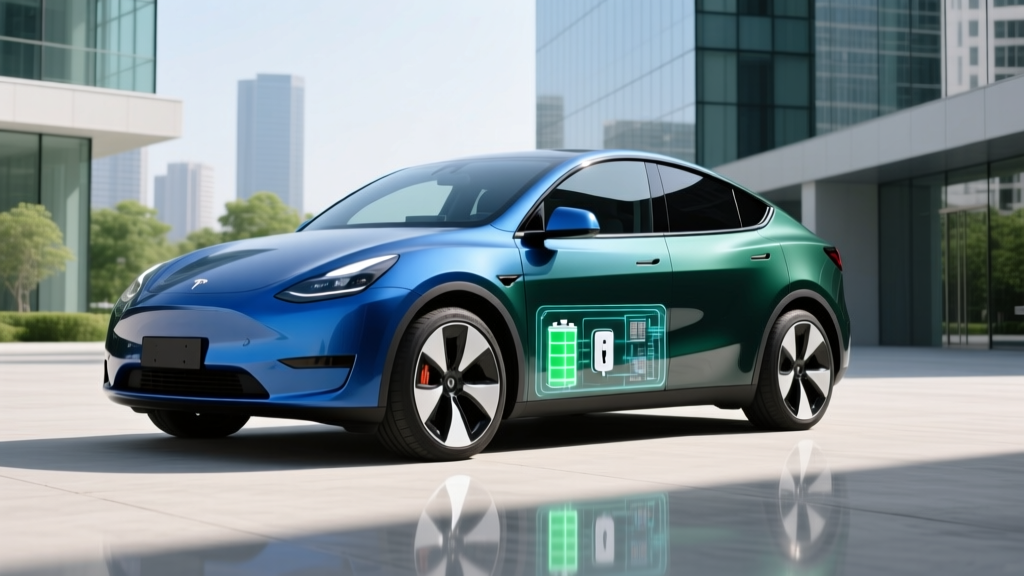
Search "Tesla on fire" and you'll find no shortage of dramatic social-media clips and sensational headlines. But as EV analysts who have tracked thermal-incident data across the industry for years, we can tell you the reality is far more nuanced — and far less alarming — than the viral footage suggests. The National Highway Traffic Safety Administration (NHTSA) and independent fire-department data consistently show that electric vehicles, including the Tesla Model Y, catch fire at a significantly lower rate per billion vehicle-miles than internal-combustion-engine (ICE) vehicles.
That said, when a lithium-ion battery pack does experience thermal runaway, the fire behaves differently than a gasoline fire: it can burn hotter, reignite hours later, and requires specialized suppression tactics. Understanding this distinction — along with the Model Y's actual engineering safeguards — is essential for any buyer researching this best-selling EV. Below, we pair a thorough safety analysis with the full 2026 Tesla Model Y spec breakdown you need to make an informed purchase decision.
Tesla Fire Incident Data: What the Numbers Actually Show
Let's start with hard data. According to a comprehensive analysis by the Swedish Civil Contingencies Agency (MSB) covering 2022 data, electric vehicles caught fire at a rate of roughly 3.8 incidents per 100,000 vehicles, compared to 1,529 incidents per 100,000 ICE vehicles. In the United States, NHTSA's own investigations and EV safety guidance have not identified systemic fire-risk defects in the Model Y platform.
Tesla's own quarterly safety reports claim approximately one vehicle fire per 130 million miles driven across its fleet, compared to the national average of roughly one fire per 19 million miles for all vehicles (predominantly ICE). While Tesla self-reports these figures, third-party insurance and fire-department data broadly corroborate the trend: EVs are less likely to ignite than gasoline vehicles.
Lithium-ion battery fires produce dense white smoke and can be harder for firefighters to extinguish than gasoline fires, making them visually dramatic and newsworthy. A gasoline car fire on a highway shoulder rarely makes the evening news; a Tesla battery fire does. This selection bias skews public perception. The underlying rate, however, remains lower for EVs.
Model Y Battery Safety Engineering and Structural Protections
The 2026 Tesla Model Y uses a structural battery pack with a ~75 kWh usable capacity (Long Range AWD) employing NMC (nickel manganese cobalt) chemistry in the Long Range and Performance trims, while the Standard Range RWD variant uses LFP (lithium iron phosphate) chemistry at approximately 60 kWh usable. LFP chemistry is inherently more thermally stable than NMC — its thermal-runaway onset temperature is roughly 270°C compared to approximately 210°C for NMC — giving it a meaningful safety margin.
Tesla's pack architecture includes:
- Cell-level thermal barriers: Fire-retardant material between individual cells to slow propagation if one cell fails.
- Vent paths to the exterior: Hot gases are directed downward and away from the cabin rather than inward.
- High-voltage disconnect: Pyrotechnic fuses cut the pack from the vehicle electrical system within milliseconds of a detected fault or collision.
- Titanium and aluminum underbody shield: Protects the pack from road-debris puncture — one of the most common battery-fire triggers historically.
2026 Model Y Full Specifications: Range, Charging, and Performance
| Spec | Standard Range RWD | Long Range AWD | Performance AWD |
|---|---|---|---|
| EPA Range | 260 mi | 320 mi | 293 mi |
| Battery (usable) | ~60 kWh (LFP) | ~75 kWh (NMC) | ~75 kWh (NMC) |
| Drivetrain | RWD, single motor | Dual-motor AWD | Dual-motor AWD |
| Horsepower | 295 hp | 384 hp | 456 hp |
| 0-60 mph | 6.6 sec | 4.8 sec | 3.5 sec |
| Peak DC Fast Charge | 170 kW | 250 kW | 250 kW |
| 10-80% DCFC Time | ~30 min | ~23 min | ~23 min |
| Level 2 Home Charge | 11.5 kW (~44 mi/hr) | 11.5 kW (~44 mi/hr) | 11.5 kW (~44 mi/hr) |
| EPA Efficiency (MPGe) | 129 MPGe | 117 MPGe | 111 MPGe |
| kWh/100 mi | 26 | 29 | 30 |
| Base MSRP | $44,990 | $48,990 | $53,990 |
The Long Range AWD's EPA sticker reads 320 miles. In real-world highway driving at 70-75 mph in mild conditions (65-75°F), expect approximately 270-290 miles. In freezing temperatures (below 32°F), range can drop to 220-250 miles due to cabin heating demand and increased battery internal resistance. City driving with regenerative braking often matches or slightly exceeds the EPA figure. Use preconditioning — warming the battery via the Tesla app before driving or charging — to recoup 5-10% of cold-weather range and enable faster DC charging.
Charging Deep Dive: DC Fast, Home Level 2, and the Supercharger Advantage
The Model Y's native connector is now NACS (North American Charging Standard), meaning direct compatibility with the Tesla Supercharger network — over 6,000 stalls in North America as of early 2026 — without an adapter. This remains a significant practical advantage, as Supercharger reliability consistently outpaces third-party networks in user surveys.
| Charging Level | Power | Miles Added per Hour | Typical Use Case |
|---|---|---|---|
| Level 1 (120V outlet) | ~1.4 kW | ~3-5 mi/hr | Overnight trickle, emergencies |
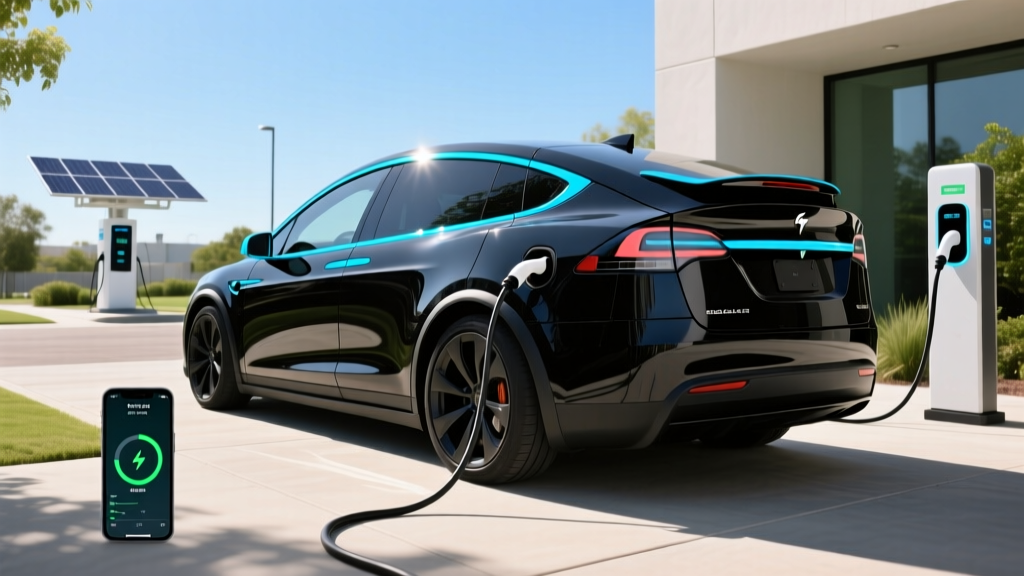
| Level 2 (240V, 48A) | 11.5 kW | ~44 mi/hr | Home daily charging (7-8 hr full charge) |
| DC Fast Charge (V3 Supercharger) | Up to 250 kW | ~1,000+ mi/hr peak | Road trips; 10-80% in ~23 min |
A critical detail many reviews gloss over: the charging curve. The 250 kW peak on the Long Range and Performance trims is sustained only between roughly 10-40% state of charge. Above 50%, power tapers to approximately 120 kW, and above 80% it drops further to around 40-50 kW. This is standard for NMC packs and is why the 10-80% metric matters more than peak kW alone. If you arrive at a Supercharger at 5% SoC, you'll gain roughly 175 miles in the first 15 minutes.
For home charging, a 48-amp Level 2 wall connector on a 60-amp circuit adds roughly 44 miles of range per hour. Most owners who charge overnight never visit a public charger except on road trips. Installation of a dedicated 240V/60A circuit typically costs $800-$2,000 depending on panel proximity and local permit requirements — always hire a licensed electrician to assess your panel's capacity.
Pricing, Tax Credits, and Total Cost of Ownership
| Trim | Base MSRP | As-Tested (typical) | §30D Credit Eligible? | Effective Price (est.) |
|---|---|---|---|---|
| Standard Range RWD | $44,990 | $45,990 | Likely (under MSRP cap) | ~$37,490 - $38,490 |
| Long Range AWD | $48,990 | $50,490 | Likely (under MSRP cap) | ~$41,490 - $42,990 |
| Performance AWD | $53,990 | $55,990 | Likely (under MSRP cap) | ~$46,490 - $48,490 |
Federal tax credit eligibility under IRS §30D for 2026 requires meeting several conditions simultaneously:
- MSRP cap: SUVs must be priced at or below $80,000 — all Model Y trims qualify.
- Buyer income cap: Modified AGI must not exceed $150,000 (single), $225,000 (head of household), or $300,000 (joint).
- Battery sourcing: A percentage of critical minerals and battery components must be sourced from the U.S. or free-trade-agreement partners. Tesla's shift to LFP cells from CATL for Standard Range trims has created periodic sourcing-rule complications; verify current eligibility on the IRS qualified vehicles list before purchase.
- Point-of-sale transfer: As of 2024, you can transfer the credit to the dealer at purchase, reducing your out-of-pocket cost immediately rather than waiting for tax filing.
Tesla does not include destination fees or optional paint/wheels in base MSRP. A typical Long Range AWD with metallic paint ($1,500) and 19" wheels comes to roughly $50,490 before credit. Consult a tax professional to confirm your personal eligibility.
Interior, Cargo, and Technology
The 2026 Model Y "Juniper" refresh brought meaningful interior upgrades: ventilated front seats, ambient lighting, a rear-seat touchscreen, and improved acoustic glass reducing cabin noise by approximately 2-3 dB over the pre-refresh model.
- Cargo volume: 30.2 cu ft behind the second row; 72.1 cu ft with rear seats folded. A front trunk (frunk) adds 4.1 cu ft.
- Rear legroom: 41.6 inches — competitive with midsize crossover benchmarks.
- Towing capacity: 3,500 lbs (Long Range and Performance, with tow hitch).
The 15.4-inch center touchscreen runs Tesla's proprietary infotainment OS — no Apple CarPlay or Android Auto, but native navigation, Spotify, and over-the-air updates are robust. The driver-assistance suite includes:
- Basic Autopilot (included): Adaptive cruise control and lane-centering on highways. This is SAE Level 2 — you must keep hands on the wheel and eyes on the road at all times.
- Enhanced Autopilot ($6,000 option): Adds automatic lane change, Navigate on Autopilot, Smart Summon, and AutoPark.
- Full Self-Driving (Supervised) ($8,000 option): Adds traffic-light recognition and city-street navigation. Despite the name, this remains SAE Level 2. The driver is legally and practically responsible for all driving decisions.
No Tesla driver-assistance system, including FSD (Supervised), is autonomous or self-driving. SAE Level 2 systems require continuous driver supervision. You must remain alert, keep hands on the steering wheel, and be prepared to take over instantly. Misuse of these systems has contributed to NHTSA-investigated incidents. Never treat Level 2 assist as a substitute for attentive driving.
Pros and Cons: The Honest Assessment
- Class-leading Supercharger network access (NACS native)
- 320-mile EPA range on Long Range; efficient at 29 kWh/100 mi
- Low fire incident rate vs. ICE vehicles per NHTSA and third-party data
- Over-the-air updates continuously improve the vehicle
- 3,500-lb towing for a compact electric crossover
- Strong resale value relative to most EV competitors
- No Apple CarPlay or Android Auto
- FSD (Supervised) is expensive and still Level 2 — not autonomous
- NMC battery chemistry in Long Range/Performance is less thermally stable than LFP
- Firm ride quality on larger wheel options (20"/21")
- Insurance premiums run 15-30% higher than comparable ICE crossovers
- Single-screen interface requires menu diving for climate and mirror adjustments
Who Should Buy the 2026 Tesla Model Y?
Choose the Model Y if: You want access to the most reliable DC fast-charging network in North America, need 300+ miles of EPA range for regular road trips, value continuous OTA software improvements, and can install a Level 2 home charger. It's ideal for tech-forward commuters, small families, and couples who take 200-400-mile road trips several times per year.
Look elsewhere if: You prioritize traditional physical controls and Apple CarPlay, you cannot install home charging and rely entirely on public infrastructure, you need three-row seating, or you want a vehicle with a more plush, luxury-oriented ride (consider the Genesis GV70 Electrified or BMW iX).
Model Y vs. Key Competitors: Quick Comparison
| Attribute | Tesla Model Y LR | Ford Mustang Mach-E ER | Hyundai Ioniq 5 Long Range |
|---|---|---|---|
| EPA Range | 320 mi | 312 mi | 305 mi |
| Peak DC Charge | 250 kW | 150 kW | 238 kW |
| 10-80% Time | ~23 min | ~38 min | ~18 min |
| Base MSRP (AWD) | $48,990 | $48,495 | $50,100 |
| NACS Native? | Yes | No (CCS, adapter avail.) | No (CCS, adapter avail.) |
| Cargo (rear up) | 30.2 cu ft | 29.7 cu ft | 27.2 cu ft |
The Model Y's combination of range, Supercharger access, and cargo space keeps it at the top of this segment. The Ioniq 5 charges faster (thanks to its 800V architecture), and the Mach-E offers a more conventional interior layout. But for road-trip convenience, Tesla's NACS ecosystem remains unmatched in 2026.
Warranty and Long-Term Battery Durability
Tesla provides a 5-year/60,000-mile limited vehicle warranty and an 8-year/120,000-mile battery and drive unit warranty for the Model Y (Long Range and Performance). The Standard Range RWD carries an 8-year/100,000-mile battery warranty. Tesla guarantees the battery will retain at least 70% of its original capacity during the warranty period.
Real-world degradation data from fleet analyses suggests NMC packs lose approximately 5-8% capacity in the first 50,000 miles, then stabilize. LFP packs in the Standard Range variant typically show slower initial degradation (3-5%) and can be charged to 100% daily without accelerating wear — a practical advantage for commuters who need maximum daily range. Battery replacement out of warranty remains expensive: estimates range from $12,000-$16,000 for a full pack replacement at a Tesla service center, though individual module repairs can be significantly less.
Frequently Asked Questions
Are Teslas more likely to catch fire than gas cars?
No. Multiple data sets from NHTSA, European safety agencies, and insurance industry analyses show EVs catch fire at a substantially lower rate per vehicle-mile than internal-combustion vehicles. The perception gap exists because EV battery fires are more newsworthy and harder to extinguish, creating outsized media coverage.
What causes a Tesla battery fire?
The most common triggers are severe collisions that physically breach the battery pack enclosure, manufacturing defects in individual cells (rare and typically addressed via recall), and extreme underbody impacts from road debris. Tesla's titanium and aluminum skid plate is designed specifically to mitigate debris-related punctures.
How fast does the 2026 Model Y charge at home?
On a Level 2 home charger (240V, 48A), the Model Y charges at 11.5 kW, adding approximately 44 miles of range per hour. A full charge from near-empty takes about 7-8 hours, easily accomplished overnight. Level 1 (standard 120V outlet) adds only 3-5 miles per hour and is practical only for low-mileage days or emergencies.
Does the 2026 Model Y qualify for the $7,500 federal tax credit?
All Model Y trims fall under the $80,000 SUV MSRP cap. However, full eligibility under IRS §30D also depends on your income (AGI caps apply), and on battery mineral/component sourcing requirements that can change. The Standard Range with CATL-sourced LFP cells has faced periodic sourcing-rule scrutiny. Always check the current fueleconomy.gov qualified vehicle list and consult a tax professional before relying on the credit.
Is the Model Y worth buying over the Ford Mach-E or Hyundai Ioniq 5?
If Supercharger network access, maximum range, and cargo space are your priorities, the Model Y remains the segment leader. If you prefer faster DC charging (Ioniq 5's 800V architecture), physical buttons, or Apple CarPlay, the competitors offer compelling alternatives. Test-drive all three before deciding — the differences in ride quality and interface philosophy are significant in person.