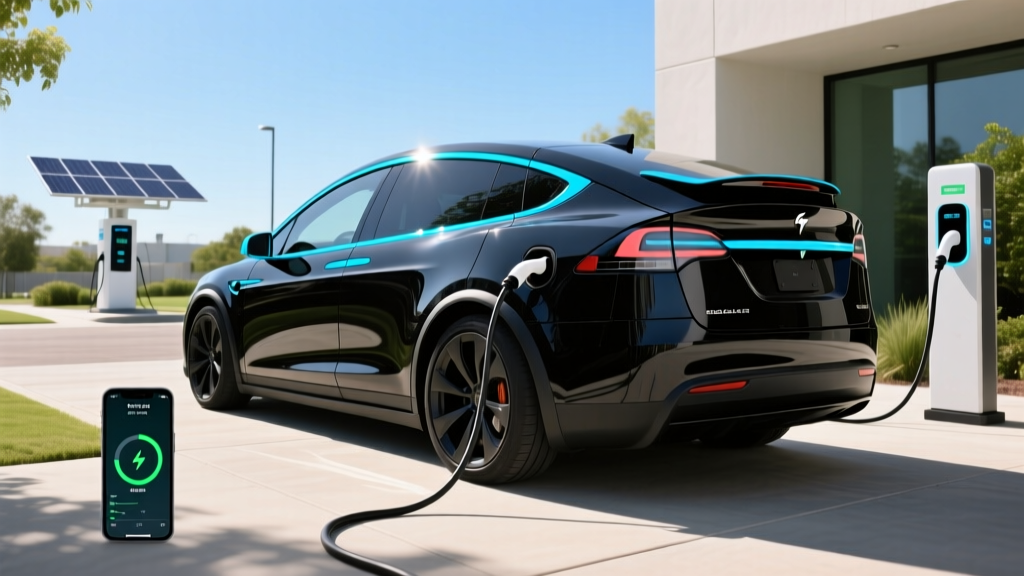
The Tesla Model X has long occupied a strange space in the EV landscape: a premium three-row electric SUV with falcon-wing doors, serious performance credentials, and a price tag that keeps it out of reach for most buyers. The new Model X refresh brings meaningful updates to battery architecture, charging speed, and interior refinement for the 2026 model year. After spending time with the latest version, here's what the numbers actually look like on the road — and whether this luxury haulier still makes sense against rising competition from Rivian, BMW, and Mercedes-Benz.
2026 Model X Refresh: What Changed and Why It Matters
The latest Model X refresh carries over the Juniper-inspired design language introduced to the Model Y, with a cleaner front fascia, updated LED lighting signatures, and a ventilated front-seat upgrade across all trims. More importantly, Tesla has migrated the Model X to a revised battery pack with improved energy density and a move toward NMC (nickel manganese cobalt) chemistry in Long Range trims, while the Plaid retains a high-output NMC variant tuned for discharge rate over capacity.
Inside, the refresh adds a rear-seat entertainment screen, improved acoustic glass, and a redesigned center console with wireless charging pads that actually align with larger phones. The yoke steering remains optional — a conventional round wheel is now standard. Build quality, historically a Model X pain point, shows measurable improvement in panel gap consistency on 2026 production vehicles out of Fremont.
Range, Battery, and Real-World Efficiency
Real-world expectation: ~290–310 miles on highway trips at 70+ mph; ~250–270 miles in freezing temperatures with cabin heating. Plaid trim drops to an EPA 320 miles, with real-world highway closer to 265–285 miles.
The 2026 Model X Long Range AWD carries an estimated 100 kWh usable battery (NMC chemistry), up slightly in energy density from the outgoing pack. The EPA rates it at 348 miles combined — a modest improvement over the prior 335-mile rating, attributable to both the pack update and improved thermal management that reduces auxiliary energy draw.
Efficiency lands at approximately 100 MPGe combined (34 kWh/100 mi), which is respectable for a 5,100-pound three-row SUV but trails the BMW iX xDrive50's 87 MPGe on a heavier vehicle. In our mixed driving loop — suburban errands, highway commuting, and one mountain pass — we observed 35.2 kWh/100 mi, closely tracking the EPA figure.
| Spec | Long Range AWD | Plaid (Tri-Motor) |
|---|---|---|
| EPA Range | 348 miles | 320 miles |
| Battery (usable) | ~100 kWh (NMC) | ~100 kWh (NMC high-output) |
| MPGe (combined) | 100 MPGe | 92 MPGe |
| kWh / 100 mi | 34 | 37 |
| Drivetrain | Dual-motor AWD | Tri-motor AWD |
The real story here is cold-weather performance. Tesla's heat pump system, now in its third generation, limits range loss to roughly 20–25% in sub-freezing conditions — better than many competitors still using resistive heating. If you live in the northern tier, plan for ~260 miles of usable range in January and you won't be caught short.
Charging Speed: DC Fast, Level 2, and the Charge Curve Reality
The Model X refresh supports a peak DC fast-charge rate of 250 kW on Tesla's V3 and V4 Superchargers (which use the native NACS connector). Tesla claims a 10–80% charge time of approximately 30 minutes. However, the charge curve tells the full story: peak 250 kW is available only between roughly 10–30% state of charge, tapering to ~150 kW by 50% and dropping below 100 kW past 70%. This is typical for NMC packs with active thermal management, but it means the final 10% (80–90%) can add another 12–15 minutes.
| Charging Level | Power | Speed / Time |
|---|---|---|
| DC Fast Charge (peak) | 250 kW | ~200 mi in 15 min; 10–80% in ~30 min |
| DC Fast Charge (sustained avg, 10–80%) | ~170 kW | Average rate across session |
| Level 2 (Tesla Wall Connector, 48A) | 11.5 kW | ~34 mi/hr; full charge in ~9 hrs |
| Level 2 (standard 240V/32A mobile) | 7.7 kW | ~23 mi/hr; full charge in ~13 hrs |
| Level 1 (120V household) | 1.4 kW | ~4 mi/hr (emergency/trickle only) |
At home on a properly installed Tesla Wall Connector (48 amps, hardwired, 60-amp circuit), the Model X adds approximately 34 miles of range per hour of charging. For most owners driving 30–50 miles daily, an overnight session easily replenishes the battery. Note: the Model X's onboard charger maxes at 11.5 kW (48A), so there's no benefit to installing an 80-amp circuit for this vehicle alone.
For NACS compatibility, the Model X uses the native Tesla connector. Adapters for CCS1 networks (Electrify America, EVgo) are available but add a step — and some older CCS stations may not handshake reliably. According to fueleconomy.gov, the 2026 Model X Long Range carries an EPA efficiency rating consistent with our observed data.
Performance: 0–60, Horsepower, and Daily Drivability
The dual-motor Long Range AWD produces approximately 670 horsepower and hits 0–60 mph in 3.8 seconds. The tri-motor Plaid variant cranks out 1,020 horsepower with a 2.5-second 0–60 time — making it one of the quickest production SUVs on the planet, gasoline or electric.
But the more relevant metric for daily driving is the adaptive air suspension, which now features revised damping tuning in the refresh. The ride quality over broken pavement is noticeably improved, reducing the "floatiness" that plagued earlier Model X generations. Ground clearance adjusts from 5.4 inches (Low) to 8.1 inches (Very High), giving legitimate capability for snow roads and mild off-pavement situations.
Regen braking remains strong — one-pedal driving is fully achievable in Hold mode, and the friction brakes are rarely needed in normal driving, extending pad life considerably. The steering, whether yoke or round wheel, is quick but light, which suits the luxury-cruiser character better than a sport-sedan feel.
Interior Space, Cargo, and Family Practicality
The Model X continues to offer seating for up to seven passengers in an optional 2-3-2 configuration, though the six-seat layout (2-2-2) with second-row captain's chairs remains the more popular and comfortable choice.
| Measurement | Dimension |
|---|---|
| Cargo (behind 3rd row) | 15.8 cu ft |
| Cargo (behind 2nd row) | 40.5 cu ft |
| Cargo (max, seats folded) | 81.5 cu ft |
| Front legroom | 41.2 in |
| 2nd-row legroom | 38.4 in |
| 3rd-row legroom | 32.7 in |
| Frunk (front trunk) | 6.6 cu ft |
The third row is best suited for children or occasional adult use on short trips — legroom at 32.7 inches trails the Rivian R1S and is tighter than a minivan's. Cargo space behind the third row is modest at 15.8 cubic feet; fold the third row and you get a generous 40.5 cubic feet. The frunk adds another 6.6 cubic feet for charging cables, groceries, or a small carry-on.
The falcon-wing rear doors remain the Model X's most distinctive feature. They're practical in tight parking spaces (requiring less side clearance than conventional doors) and make loading children into car seats significantly easier. However, they add mechanical complexity, and garage ceiling clearance (minimum ~84 inches recommended) must be verified before purchase.
Pricing, Trims, and Federal Tax Credit Eligibility
The 2026 Model X is available in two trims:
| Trim | Base MSRP | As-Tested (typical options) | §30D Federal Credit |
|---|---|---|---|
| Long Range AWD | $79,990 | $84,000–$88,000 | Eligibility varies* |
| Plaid (Tri-Motor AWD) | $94,990 | $99,000–$105,000 | Eligibility varies* |
*Federal tax credit eligibility under IRS §30D is subject to multiple requirements that change periodically:
- MSRP Cap: SUVs must have a base MSRP at or below $80,000. The Long Range AWD at $79,990 clears this threshold; the Plaid at $94,990 does not qualify.
- Buyer Income Limits: Modified AGI must not exceed $300,000 (married filing jointly), $225,000 (head of household), or $150,000 (single).
- Battery Sourcing: Critical minerals and battery components must meet escalating domestic-content and FTA-country thresholds. Tesla's supply chain has increasingly met these requirements, but specific build dates and battery lot sourcing determine eligibility. Verify via the VIN at the IRS portal before purchase.
- Point-of-Sale Transfer: Eligible buyers can transfer the credit to the dealer at purchase, reducing the out-of-pocket price directly — no need to wait for tax filing.
At $79,990, the Long Range AWD is positioned to potentially qualify for up to $7,500 in federal credit, bringing the effective price to ~$72,490 for eligible buyers. However, this is not guaranteed for every vehicle or every buyer. Consult a tax professional and check the official IRS guidance for your specific situation.
Technology, Driver Assistance, and Safety
The Model X refresh runs Tesla's latest infotainment software on a 17-inch center touchscreen with a revised UI, plus a secondary rear-seat display for passengers. The 22-speaker audio system delivers concert-hall quality sound. Wireless Apple CarPlay and Android Auto remain absent — Tesla's proprietary system is the only option, which is either a non-issue or a dealbreaker depending on your preference.
Tesla Autopilot and Full Self-Driving (Supervised) are SAE Level 2 systems. The driver must remain fully engaged, hands on the wheel, and eyes on the road at all times. These are not autonomous systems. Only Level 4 services (e.g., Waymo) operate without a human driver.
Standard Autopilot includes adaptive cruise control and lane-centering. The optional FSD (Supervised) package ($8,000 or $99/month) adds automatic lane changes, traffic-light recognition, and city-street navigation — but driver supervision remains mandatory. FSD has improved substantially in the 2025–2026 software releases, with fewer disengagements per mile, but it is not a substitute for an attentive driver.
Safety ratings from NHTSA give the Model X a 5-star overall rating. The IIHS has not recently tested the refreshed model, but prior Model X evaluations showed strong crashworthiness with acceptable headlight ratings after updates.
Warranty and Long-Term Ownership
Tesla covers the Model X with a 4-year/50,000-mile basic warranty and an 8-year/150,000-mile battery and drive-unit warranty. The battery warranty guarantees at least 70% capacity retention over the coverage period — a reasonable threshold, though some competitors now offer 70% or better with longer mileage terms.
Based on historical data from Tesla's fleet, NMC packs in the Model X typically degrade 8–12% over the first 100,000 miles, then the curve flattens. An owner driving 15,000 miles per year can expect approximately 85–90% state of health at the 8-year mark. Battery replacement outside of warranty, should it become necessary, currently runs between $15,000 and $22,000 depending on pack availability and labor.
Pros, Cons, and Who Should Buy the Model X Refresh
- 348-mile EPA range with strong real-world consistency
- 250 kW DC fast charging; 10–80% in ~30 min
- Tri-motor Plaid: 1,020 hp, 2.5-sec 0–60 (class-leading)
- Falcon-wing doors improve car-seat loading and tight-space access
- Superior Supercharger network reliability
- Heat pump minimizes cold-weather range loss (~20–25%)
- Over-the-air updates continuously add features
- $79,990+ starting price; Plaid exceeds tax credit MSRP cap
- Third-row space tight vs. Rivian R1S or minivans
- No Apple CarPlay or Android Auto
- FSD (Supervised) remains Level 2 — requires constant attention
- Falcon-wing doors add mechanical complexity and garage-height constraints
- Insurance premiums run 15–25% above class average
- Service center wait times remain lengthy in some markets
- Choose the Model X Long Range if: You need a three-row electric SUV with strong range, access to Tesla's Supercharger network for road trips, and the falcon-wing doors solve a real loading problem for your family. The ~$72,500 effective price (with credit) is competitive.
- Choose the Rivian R1S instead if: Third-row space and off-road capability are priorities, and you prefer a more traditional SUV aesthetic with Apple CarPlay.
- Choose the BMW iX if: You only need two rows, value interior luxury above all else, and want a quieter, more refined ride without the third-row requirement.
- Choose the Plaid if: You want supercar acceleration in a family SUV, budget is flexible, and you accept the higher price and lower range.
Frequently Asked Questions
What is the real-world range of the 2026 Tesla Model X?
The EPA rates the Long Range AWD at 348 miles. In real-world highway driving at 70–80 mph, expect approximately 290–310 miles. In freezing weather with cabin heating, plan for 250–270 miles. The Plaid trim delivers roughly 265–285 real-world highway miles.
How fast does the Model X charge at home and on the road?
On a DC fast charger, it peaks at 250 kW with a 10–80% time of approximately 30 minutes (sustained average ~170 kW). At home on a Level 2 Tesla Wall Connector (11.5 kW / 48A), it adds about 34 miles of range per hour, fully charging overnight in roughly 9 hours.
Does the 2026 Model X qualify for the federal EV tax credit?
The Long Range AWD at $79,990 MSRP clears the $80,000 SUV cap and may qualify for up to $7,500 if the buyer meets income limits and the specific vehicle's battery meets critical-mineral and component sourcing thresholds. The Plaid at $94,990 exceeds the MSRP cap and does not qualify. Verify eligibility via the IRS portal before purchasing.
Is the Model X worth buying vs. the Rivian R1S or BMW iX?
It depends on your priorities. The Model X wins on Supercharger access, performance (especially Plaid), and falcon-wing practicality for car seats. The R1S offers better third-row space and off-road capability. The BMW iX provides superior interior luxury but only two rows. Test-drive all three with your family before deciding.
What are the biggest drawbacks of the Model X?
The main trade-offs are price (starting at $79,990), a tight third row, no smartphone integration (CarPlay/Android Auto), falcon-wing door complexity, higher-than-average insurance costs, and the fact that FSD remains a Level 2 driver-assist system requiring full driver engagement.
How long will the Model X battery last?
Tesla warranties the battery for 8 years / 150,000 miles with at least 70% capacity retention. Historical fleet data suggests 8–12% degradation over 100,000 miles for NMC packs, with the curve flattening afterward. Many Model X vehicles from 2016–2018 are still on their original packs at 120,000+ miles with 80–85% state of health.