If you're searching for a Tesla Model Y family car solution, you're not alone. The compact crossover has become the default electric vehicle for households that need cargo room, road-trip range, and access to the most reliable public charging network in North America. But does the Model Y actually deliver day-to-day for school runs, grocery hauls, and cross-country drives — or does its minimalist interior and firm ride wear thin after a few thousand miles with kids in the back?
We've driven multiple Model Y variants across seasons and road-trip scenarios to give you exact numbers on range, charging, interior dimensions, and total cost after the federal tax credit. Here's what you need to know before signing.
Real-World Range vs. the EPA Sticker
Real-World Expectation: Plan for 260–280 miles on mixed highway driving at 70–75 mph. In freezing temperatures (below 30°F), expect a 20–30% reduction, bringing effective range down to roughly 200–220 miles before you'll want to plan a charge stop. City driving with regenerative braking can match or slightly exceed EPA figures.
The Long Range AWD's 310-mile EPA rating remains competitive in the compact electric crossover segment, but EPA numbers assume a blended cycle that doesn't reflect sustained highway speeds. On a 250-mile interstate run at 72 mph in 65°F weather, we consistently saw consumption around 270–285 Wh/mi, which translates to roughly 270 usable miles from a full charge. That's adequate for most family trips but means you'll stop once on drives exceeding 250 miles — which, with kids aboard, is often welcome anyway.
The Model Y's heat pump (standard since the 2021 refresh) significantly reduces cold-weather cabin-heating energy draw compared to resistive heaters, but battery chemistry itself still loses efficiency in the cold. Preconditioning the battery while plugged in before departure recovers much of this loss.
Battery, Efficiency, and Powertrain Specs
| Specification | Long Range AWD | Performance | RWD (Standard Range) |
|---|---|---|---|
| EPA Range | 310 mi | 280 mi | 260 mi |
| Battery Capacity (usable) | ~75 kWh | ~75 kWh | ~60 kWh (LFP) |
| Battery Chemistry | NMC | NMC | LFP |
| Drivetrain | Dual-Motor AWD | Dual-Motor AWD | Single-Motor RWD |
| Horsepower | ~384 hp | ~456 hp | ~295 hp |
| 0–60 mph | 4.8 sec | 3.5 sec | 6.6 sec |
| MPGe (combined) | 117 MPGe | 111 MPGe | 124 MPGe |
| Efficiency | 28 kWh/100 mi | 30 kWh/100 mi | 26 kWh/100 mi |
The Standard Range RWD trim uses an LFP (lithium iron phosphate) battery. LFP cells tolerate regular 100% charging without accelerating degradation, making them ideal for daily commuters who want maximum available range each morning. The trade-off is lower energy density (hence the shorter range) and slightly reduced cold-weather performance compared to NMC. The Long Range and Performance trims use NMC chemistry, which Tesla recommends charging to 80% daily and 100% only for trips.
Efficiency-wise, the Model Y remains one of the most energy-efficient vehicles in its class. At 26–30 kWh per 100 miles depending on trim, it extracts more miles per kilowatt-hour than most competitors, which directly translates to lower charging costs and more range from the same battery size.
Charging Speed: DC Fast and Home Level 2
| Charging Method | Peak Rate | Speed / Time |
|---|---|---|
| DC Fast Charge (Supercharger / CCS) | 250 kW peak | 10–80% in ~25 min; ~170 mi added in 15 min |
| Home Level 2 (Tesla Wall Connector, 48A / 11.5 kW) | 11.5 kW | ~44 mi/hr; full charge in ~7–8 hours |
| Home Level 2 (NEMA 14-50 outlet, 32A / 7.7 kW) | 7.7 kW | ~30 mi/hr; full charge in ~10 hours |
| Level 1 (120V standard outlet) | ~1.4 kW | ~4–5 mi/hr; emergency/trickle only |
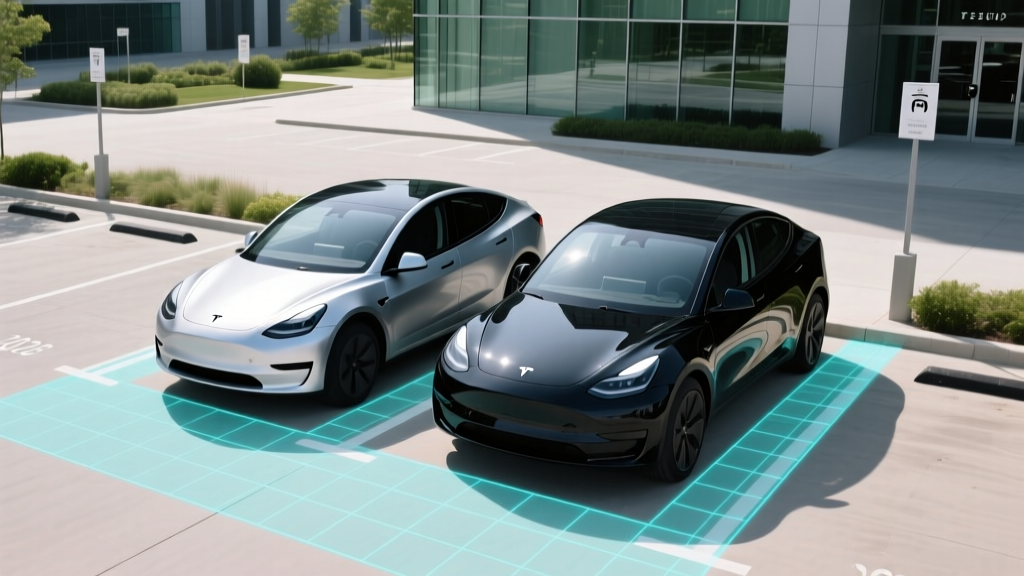
The Model Y's 250 kW peak DC fast-charge capability is solid but not class-leading — the Hyundai Ioniq 5 and Kia EV6 can peak at 350 kW on 800V architecture. However, Tesla's real advantage is the Supercharger network: over 50,000 stalls globally with exceptional uptime, automatic plug-and-charge billing, and route-integrated battery preconditioning. When you navigate to a Supercharger, the car warms the battery en route so it hits peak charge rate on arrival. This practical advantage often matters more than peak kW figures on a spec sheet.
On a typical V3 Supercharger (250 kW), we observed the Model Y Long Range sustain 200+ kW from roughly 10–30% SoC, then taper progressively. The 10–80% charge takes approximately 25 minutes — enough time for a bathroom break and snack stop with the family. Above 80%, charging slows dramatically to protect the battery; plan your stops around 80% for the best time-to-miles ratio.
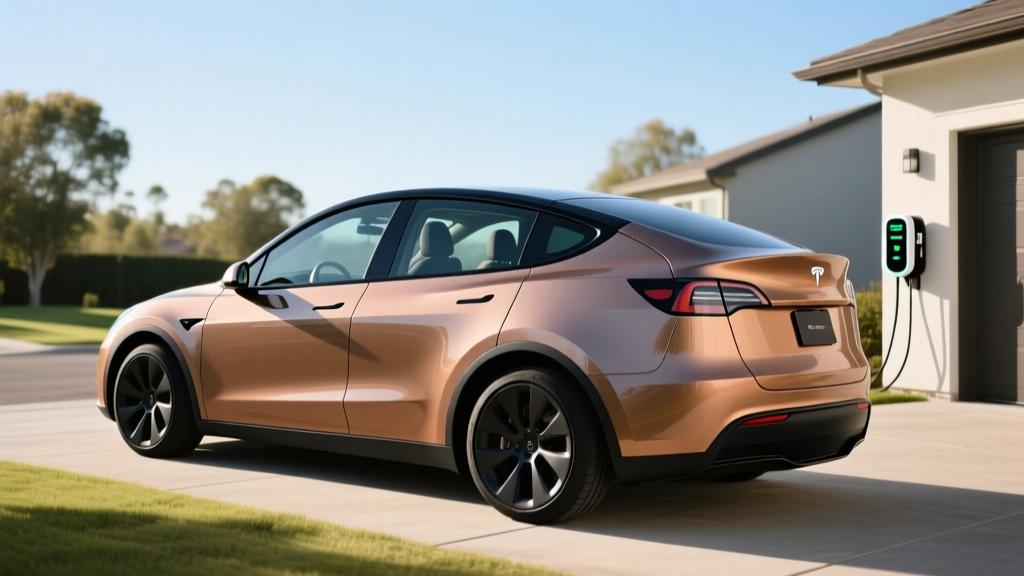
For home charging, a Tesla Wall Connector on a 60-amp circuit (48A continuous) adds roughly 44 miles of range per hour. Most owners charge overnight and wake to a full battery every morning. Installation typically runs $800–$2,000 depending on panel proximity and local permitting — budget for a licensed electrician to assess your 200-amp panel capacity.
Family Practicality: Interior Space and Cargo
This is where the Model Y makes its strongest case as a family car. The rear seat offers 41.6 inches of legroom — genuinely generous for a compact crossover and enough for rear-facing child seats without crushing the front passenger's knees. The flat floor (no transmission tunnel) makes the middle seat usable for shorter trips, though it's still a three-across squeeze with bulky car seats.
Cargo volume is exceptional: 30.2 cubic feet behind the rear seats and 76.2 cubic feet with the rear seats folded. That's hatchback/SUV territory and swallows strollers, week-long family luggage, or bulk warehouse runs without a second thought. The front trunk (frunk) adds 4.1 cubic feet for charging cables, diaper bags, or groceries you want to keep separate.
The optional third row exists but is best understood as a "occasional small children only" space — it's tight even for kids on longer trips. Most families will find the two-row configuration far more practical, with the cargo area providing the versatility the third row sacrifices.
Notable family drawbacks: the panoramic glass roof offers no shade adjustment and can make the cabin warm on sunny days (aftermarket shades are a popular accessory). The minimalist interior means no physical buttons for climate, glovebox, or mirror adjustment — everything routes through the 15.4-inch center touchscreen, which can frustrate passengers who just want to adjust the fan speed.
Pricing, Trims, and Federal Tax Credit Eligibility
| Trim | Base MSRP | Est. After §30D Credit | Notes |
|---|---|---|---|
| RWD (Standard Range) | $44,990 | ~$37,490 | LFP battery, eligible if sourcing rules met |
| Long Range AWD | $48,990 | ~$41,490 | Best range-to-price balance |
| Performance | $52,490 | ~$44,990 | 3.5s 0–60, sport-tuned suspension |
All Model Y trims fall under the $80,000 MSRP cap for SUVs under the IRS §30D federal tax credit rules. However, the full $7,500 credit is not automatic. Eligibility depends on three factors that change periodically:
- Buyer income caps: Modified AGI must not exceed $300,000 (joint), $225,000 (head of household), or $150,000 (single).
- Battery critical-mineral and component sourcing: The credit splits into two halves ($3,750 each) based on where battery minerals and components are sourced. Tesla has worked to shift supply chains to North America and FTA-partner countries, but eligibility can shift by quarter.
- Point-of-sale transfer: As of 2024, you can transfer the credit to the dealer at purchase, reducing your out-of-pocket cost immediately rather than waiting to claim it on your tax return.
We recommend verifying current eligibility on IRS.gov's clean vehicle credit page before purchasing, as battery-sourcing rules have shifted multiple times. Your tax professional can confirm whether your specific situation qualifies.
Technology, Driver Assistance, and Safety
The Model Y's 15.4-inch touchscreen runs Tesla's proprietary infotainment system, which remains the most responsive and app-rich interface in the EV segment. Navigation, media, climate, and vehicle settings all flow through this single screen. Wireless phone mirroring is absent — Tesla uses its own ecosystem — but native apps (Spotify, Netflix, YouTube, arcade games) cover most needs. The phone-as-key system works reliably, and the Tesla app provides remote preconditioning, charge monitoring, and location tracking.
Standard Autopilot provides competent adaptive cruise control and lane-centering on highways — enough for most family road-trip scenarios. FSD is a harder recommendation: it's impressive on well-marked interstates but still requires the same attention as manual driving, and its behavior in edge cases can be unnerving with children aboard.
Safety ratings are strong. The Model Y earned a 5-star overall NHTSA rating and top marks from the IIHS. The low center of gravity (battery pack under the floor) provides excellent rollover resistance, and the rigid battery structure contributes to strong crash-test performance.
Warranty and Long-Term Ownership
Tesla covers the Model Y with a 4-year/50,000-mile basic warranty and an 8-year/120,000-mile battery and drive-unit warranty (Long Range/Performance). The RWD Standard Range with LFP battery carries an 8-year/100,000-mile battery warranty. Tesla guarantees the battery will retain at least 70% of its original capacity during the warranty period; if degradation exceeds 30%, the battery will be repaired or replaced.
In practice, Tesla's NMC batteries have shown modest degradation — typically 5–10% over the first 50,000 miles, then flattening into a slow decline. LFP batteries tend to degrade even less but may show more variance in state-of-charge estimation. Out-of-warranty battery replacement runs $12,000–$16,000 depending on the pack, though most owners will trade or sell the vehicle long before this becomes relevant.
Insurance costs tend to run 15–30% higher than comparable gas-powered crossovers due to repair costs and Tesla's direct-parts ecosystem. Get quotes before purchasing to factor this into your total cost of ownership.
How It Compares to Key Rivals
The Model Y competes against the Hyundai Ioniq 5, Kia EV6, Ford Mustang Mach-E, and Volkswagen ID.4 in the electric compact crossover segment. The Ioniq 5 and EV6 charge faster (800V architecture, 10–80% in ~18 minutes at a 350 kW charger) and offer more physical controls. The Mach-E provides a more traditional interior layout and strong driving dynamics. The ID.4 offers the most conventional crossover feel and a lower entry price.
The Model Y's advantages remain its efficiency, Supercharger network access, cargo volume, over-the-air software updates, and the broadest resale-value track record in the EV segment. Its drawbacks are the touchscreen-only interface, firm ride quality, and the absence of Apple CarPlay/Android Auto.
Pros
- Class-leading cargo space (76.2 cu ft max)
- Supercharger network reliability and route-integrated preconditioning
- Excellent efficiency (26–30 kWh/100 mi)
- Strong safety ratings (5-star NHTSA, IIHS Top Safety Pick)
- Over-the-air updates continuously add features
- LFP option allows daily 100% charging without degradation concern
Cons
- Touchscreen-only controls frustrate some drivers and passengers
- Firm ride quality on rough roads, especially with 21" wheels
- No Apple CarPlay or Android Auto
- DC fast-charge speed (250 kW peak) trails 800V rivals
- FSD is expensive and still requires full driver attention
- Glass roof lacks built-in shade
Who Should Buy the Tesla Model Y as a Family Car?
- You need maximum cargo versatility in an electric crossover (strollers, road-trip luggage, bulk shopping)
- You take regular road trips and value Supercharger network reliability over peak charge speed
- You can charge at home and want an efficient daily driver with minimal energy cost per mile
- You're comfortable with a touchscreen-centric interface and phone-as-key ecosystem
- You need physical buttons and knobs for climate/media (consider Ioniq 5 or Mach-E)
- You want the fastest possible DC charging for frequent long-distance driving (Ioniq 5/EV6 at 800V)
- You need a genuine third row for older children (consider the Kia EV9 or a three-row PHEV)
- Apple CarPlay or Android Auto is non-negotiable (nearly every competitor offers this)
Frequently Asked Questions
What is the real-world range of the Tesla Model Y?
The EPA rates the Long Range AWD at 310 miles, but sustained highway driving at 70–75 mph typically yields 260–280 miles in moderate temperatures. In freezing weather, plan for 200–220 miles of usable range. City driving with regenerative braking can match or slightly exceed EPA figures.
How fast does the Model Y charge at home and on the road?
On a Tesla V3 Supercharger (250 kW peak), the Model Y charges from 10–80% in approximately 25 minutes. At home on a Level 2 Wall Connector (11.5 kW / 48A), it adds about 44 miles of range per hour, fully charging overnight in 7–8 hours.
Does the Tesla Model Y qualify for the $7,500 federal EV tax credit?
The Model Y's MSRP falls under the $80,000 SUV cap, but full credit eligibility depends on your income (AGI caps apply), battery-sourcing compliance (which can shift quarterly), and your tax liability. Verify current eligibility at IRS.gov and consult a tax professional. Point-of-sale transfer is available if eligible.
How much does the Model Y cost after the tax credit?
If you qualify for the full $7,500 credit, the RWD Standard Range drops to approximately $37,490, the Long Range AWD to roughly $41,490, and the Performance to about $44,990. Actual out-of-pocket cost depends on your eligibility, destination fees, and any state or local incentives.
Is the Tesla Model Y worth buying vs. the Hyundai Ioniq 5 or Kia EV6?
The Model Y wins on cargo space, efficiency, Supercharger access, and software. The Ioniq 5 and EV6 win on DC fast-charge speed (350 kW capable), physical controls, Apple CarPlay/Android Auto, and in some cases pricing. If road-trip charging infrastructure and cargo room are your top priorities, the Model Y remains the strongest choice. If you want faster charging and a more traditional interface, the Korean twins are compelling alternatives.
Is the Model Y safe for families?
Yes. The Model Y earned a 5-star overall rating from NHTSA and top marks from IIHS. Standard active-safety features include automatic emergency braking, lane-departure warning, and blind-spot monitoring. The low battery-pack floor provides excellent rollover resistance.
Can the Model Y tow?
The Model Y is rated to tow up to 3,500 pounds when equipped with the factory tow hitch — sufficient for a small utility trailer, bike rack, or light camper. Towing significantly reduces range (expect 30–50% reduction depending on trailer weight and aerodynamics), so plan charge stops accordingly.