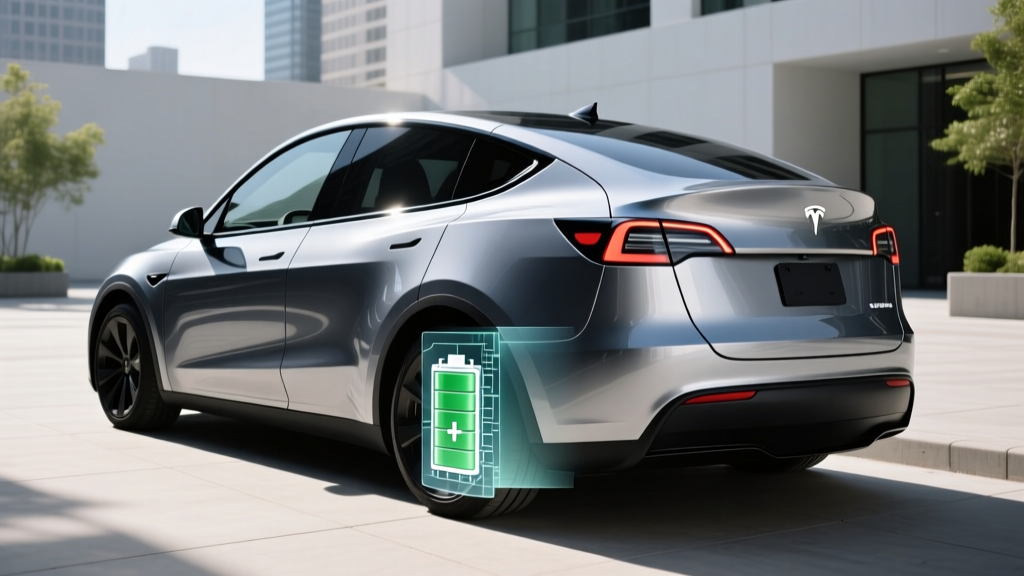
The Tesla Model Y remains one of the most popular electric vehicles on American roads, and for good reason: strong efficiency, access to the Supercharger network, and practical crossover packaging. But as the platform matures and more examples age past their factory coverage, buyers and owners are asking a critical question: does a Tesla Model Y extended warranty make financial sense?
This review covers the 2026 Tesla Model Y's full spec profile — range, charging, performance, and pricing — before diving deep into what the factory warranty covers, where the gaps are, and whether purchasing extended protection is a smart move or an unnecessary expense.
2026 Tesla Model Y: Quick Specs at a Glance
| Spec | Long Range AWD | Performance |
|---|---|---|
| EPA Range | 320 miles | 295 miles |
| Battery (usable) | ~75 kWh (NMC) | ~75 kWh (NMC) |
| Peak DC Fast Charge | 250 kW | 250 kW |
| 10–80% DC Time | ~27 min | ~27 min |
| Level 2 Home Charging | 11.5 kW (~44 mi/hr) | 11.5 kW (~44 mi/hr) |
| 0–60 mph | 4.8 sec | 3.5 sec |
| Horsepower | 384 hp | 456 hp |
| Drivetrain | Dual-Motor AWD | Dual-Motor AWD |
| Efficiency | 122 MPGe / 28 kWh/100mi | 111 MPGe / 30 kWh/100mi |
| Base MSRP | $44,990 | $48,990 |
| Battery Warranty | 8 yr / 120,000 mi | 8 yr / 120,000 mi |
Source: fueleconomy.gov, Tesla specifications (2026 model year).
Real-World Range: What the EPA Sticker Doesn't Tell You
Real-World Expectation: ~260–290 miles on highway road trips at 70+ mph; ~220–250 miles in sub-30°F winter conditions; ~300+ miles in mixed city/regenerative driving in mild weather.
The Model Y Long Range AWD carries an EPA rating of 320 miles, which is competitive among midsize electric crossovers. But real-world results depend heavily on driving style, terrain, and temperature.
In highway testing at sustained 70–75 mph speeds, expect to lose roughly 10–15% from the EPA figure due to aerodynamic drag dominating at higher velocities. Cold weather compounds this further: lithium-ion batteries lose efficiency in freezing temperatures, and cabin heating (even with the Model Y's heat pump) draws significant energy. Owners in northern climates should budget for a 20–30% range reduction in deep winter.
The Model Y uses NMC (nickel manganese cobalt) battery chemistry, which offers high energy density but is more sensitive to extreme cold than LFP (lithium iron phosphate). Tesla's thermal management system actively preconditions the battery — a critical feature that warms the pack before fast charging or hard driving, preserving both range and charging speed.
Charging Speed: DC Fast Charging and Home Level 2
| Charging Level | Power | Speed (approx.) | Use Case |
|---|---|---|---|
| Level 1 (120V) | ~1.4 kW | ~4–5 mi/hr | Emergency / overnight trickle |
| Level 2 (240V, 48A) | 11.5 kW | ~44 mi/hr | Home daily charging |
| DC Fast (Supercharger V3) | 250 kW peak | 10–80% in ~27 min | Road trips |
The Model Y peaks at 250 kW on Tesla V3 Superchargers, but that peak only holds for a narrow portion of the charge curve — typically between 10–30% state of charge. Above 50%, the rate tapers progressively. This is why the 10–80% time is approximately 27 minutes rather than a theoretical 18 minutes at sustained peak.
For home charging, a Wall Connector on a 60-amp circuit delivers up to 11.5 kW, adding roughly 44 miles of range per hour. Most owners plug in overnight and wake up with a full battery. A typical 200-amp home electrical panel can support this without an upgrade, but older homes with 100-amp service may need a panel upgrade — a $1,500–$3,000 expense factored into total ownership cost.
The Model Y uses the NACS (North American Charging Standard) connector natively. With adapters, it can also access CCS1-equipped networks like Electrify America, though Tesla's own Supercharger network remains the most reliable DC option in the U.S.
Performance, Efficiency, and Practicality
The Long Range AWD model delivers 384 horsepower and a 4.8-second 0–60 time — brisk by any measure and more than adequate for highway merging and passing. The Performance trim pushes to 456 hp and 3.5 seconds, rivaling sports sedans at a fraction of their price.
Efficiency is where the Model Y truly shines. At 122 MPGe combined (28 kWh per 100 miles), it extracts more miles per kilowatt-hour than nearly every competing electric SUV. This efficiency advantage means lower charging costs at home and on the road, and it partially explains why the Model Y achieves 320 miles from a relatively modest ~75 kWh usable battery.
Cargo space is generous: 76.2 cubic feet with the second row folded, and 30.2 cubic feet behind the rear seats. The front trunk (frunk) adds 4.1 cubic feet. Rear legroom measures 41.6 inches — comfortable for adults on longer trips. The Model Y remains one of the most practical EVs for families who need cargo flexibility without stepping up to a three-row vehicle.
Factory Warranty Coverage and the Extended Warranty Question
Understanding Tesla's factory warranty is essential before deciding whether an extended warranty adds value. Here is what comes standard on a new 2026 Model Y:
- Basic Vehicle Limited Warranty: 4 years / 50,000 miles (bumper-to-bumper, covers most components excluding wear items)
- Battery and Drive Unit Warranty: 8 years / 120,000 miles (covers battery degradation below 70% capacity retention, plus drive unit failure)
- Restraint System: 5 years / 60,000 miles
- Corrosion Perforation: 12 years / unlimited miles
The gap that concerns most owners is the period after the 4-year/50,000-mile basic warranty expires. From year 5 through year 8, the battery and drive units remain covered, but components like the touchscreen, HVAC system, power windows, suspension, and 12V auxiliary system fall outside coverage. Tesla repair bills for these items can be significant — a touchscreen replacement has been reported in the $1,500–$2,500 range, and suspension work on the Model Y can exceed $1,000 per axle.
What Does the Tesla Model Y Extended Warranty Actually Cover?
Tesla offers an Extended Service Agreement (ESA) that can be purchased before the basic warranty expires. Coverage tiers vary, but a comprehensive plan typically extends protection on:
- Infotainment and MCU (media control unit)
- HVAC compressor and heat pump system
- Power windows, mirrors, and seat motors
- Suspension components (control arms, struts)
- Electrical distribution and wiring harnesses
Pricing for Tesla's ESA has historically ranged from approximately $3,000 to $5,500 depending on coverage tier and deductible, though Tesla adjusts pricing periodically and does not publish a fixed rate sheet. Third-party extended warranty providers also offer EV-specific plans, but coverage exclusions and claim processes vary widely.
Is the Extended Warranty Worth the Cost?
The answer depends on your ownership timeline and risk tolerance:
- You plan to keep the Model Y past 50,000 miles and beyond year 4
- You want predictable repair costs and dislike surprise bills
- You drive in harsh conditions (rough roads, extreme temps) that stress components
- You value the convenience of Tesla-approved repairs without negotiation
- You lease or plan to sell before 50,000 miles
- You're comfortable self-insuring (setting aside $3,000–$5,000 for potential repairs)
- You primarily drive gently in moderate climates
- The battery and drive unit coverage (8yr/120k) already addresses your biggest concern
From a purely statistical standpoint, Tesla vehicles have fewer moving parts than internal combustion vehicles — no transmission, no timing belt, no exhaust system. However, the Model Y's complexity lies in its electronics, thermal management, and suspension. Industry data suggests that EV repair costs are increasingly concentrated in these areas rather than the powertrain itself, making the basic warranty's expiration a genuine financial inflection point.
Pricing, Tax Credits, and Total Cost
| Trim | MSRP | Federal Credit (§30D) | Effective Price |
|---|---|---|---|
| Long Range AWD | $44,990 | Up to $7,500* | ~$37,490 |
| Performance | $48,990 | Up to $7,500* | ~$41,490 |
*The IRS §30D clean vehicle credit is subject to buyer income caps ($150K single / $300K joint MAGI), MSRP caps ($80,000 for SUVs — Model Y qualifies), and critical mineral/battery component sourcing requirements that change annually. The credit can now be transferred at point of sale as a purchase-price reduction. Verify eligibility with a tax professional before relying on this figure.
The Model Y qualifies for the full $7,500 credit for eligible buyers in 2026, provided the battery sourcing requirements are met for the specific build. Tesla's supply chain has shifted to meet these requirements, but the IRS updates eligible vehicle lists periodically — always confirm on the official fueleconomy.gov tax credit page before purchasing.
When factoring in home charging savings (roughly $0.04–$0.06 per mile on residential electricity vs. $0.12–$0.18 per mile for a comparable gas crossover at current fuel prices), the Model Y's total cost of ownership over five years is competitive with or lower than gasoline alternatives like the Toyota RAV4 or Honda CR-V, especially when the tax credit is applied.
Technology, Driver Assistance, and Drawbacks
The Model Y's technology suite remains a core selling point. The 15.4-inch touchscreen handles all vehicle controls, navigation, and entertainment. Over-the-air updates continuously add features and refinements — a capability most legacy automakers still cannot match.
Standard Autopilot includes adaptive cruise control and lane-centering on highways. Tesla's Full Self-Driving (Supervised) package, a $8,000 add-on (or $99/month subscription in 2026), adds automated lane changes, traffic-light recognition, and city-street navigation.
Both Autopilot and FSD (Supervised) are SAE Level 2 driver-assistance systems. The driver must remain fully engaged, with hands on the wheel and eyes on the road, at all times. These systems do not make the Model Y a self-driving vehicle. Only SAE Level 4 services (e.g., Waymo robotaxis in geofenced areas) operate without a human driver.
- Best-in-class efficiency (122 MPGe)
- Access to 6,000+ Supercharger stalls nationwide
- Strong 0–60 performance across all trims
- Generous cargo space (76.2 cu ft max)
- Over-the-air updates add features post-purchase
- 8-year/120,000-mile battery warranty
- Ride quality is firm; some find it harsh on rough pavement
- No Apple CarPlay or Android Auto
- Touchscreen-dependent controls (no physical buttons for climate)
- FSD remains Level 2 despite its name — buyer expectations often mismatch reality
- Panel gaps and build quality inconsistency still reported
- Insurance premiums above segment average
Who Should Buy the 2026 Tesla Model Y?
The Model Y is best suited for:
- Daily commuters who can charge at home and want minimal operating costs
- Families of four or fewer who need cargo flexibility without a larger SUV
- Road-trip enthusiasts who value the Supercharger network's reliability and coverage
- Tech-forward buyers who appreciate OTA updates and integrated software
It is less ideal for buyers who prioritize ride comfort over performance, those who want Apple CarPlay integration, or households that regularly need to carry more than five passengers or tow more than 3,500 pounds.
Frequently Asked Questions
What is the real-world range of the 2026 Tesla Model Y?
The EPA rates the Long Range AWD at 320 miles. In real-world highway driving at 70+ mph, expect 260–290 miles. In sub-freezing winter conditions, plan for 220–250 miles. City driving with frequent regenerative braking can approach or slightly exceed the EPA figure in mild weather.
How fast does the Model Y charge at home and on the road?
At home on a Level 2 Wall Connector (11.5 kW), it adds approximately 44 miles of range per hour — enough to fully recharge overnight. On a Tesla V3 Supercharger, it peaks at 250 kW and charges from 10–80% in roughly 27 minutes, though the charge rate tapers significantly above 50%.
Does the Tesla Model Y qualify for the federal EV tax credit?
Yes, the Model Y is eligible for up to $7,500 under IRS §30D for qualifying buyers. Eligibility requires meeting income caps ($150K single / $300K joint), the $80,000 SUV MSRP cap (both trims qualify), and critical mineral/battery component sourcing rules that update annually. The credit can be applied as a point-of-sale reduction. Confirm current eligibility at irs.gov and with your tax advisor.
Is the Tesla Model Y extended warranty worth buying?
It depends on your ownership timeline. If you plan to keep the vehicle past 50,000 miles and year 4, the extended service agreement can protect against costly electronics, HVAC, and suspension repairs. If you sell or trade before the basic warranty expires, or if you're comfortable self-insuring, the $3,000–$5,500 cost may not justify the coverage. The 8-year battery and drive unit warranty already covers the most expensive components.
How does the Model Y compare to competitors like the Hyundai Ioniq 5 or Ford Mustang Mach-E?
The Model Y leads in efficiency (122 MPGe vs. 114 for the Ioniq 5 AWD and 101 for the Mach-E Extended Range AWD) and charging network access. The Ioniq 5 offers faster peak charging (350 kW on 800V architecture) and a more comfortable ride. The Mach-E provides a more traditional interior layout with physical controls. All three are strong choices — the Model Y wins on total cost of ownership and Supercharger convenience.
What battery chemistry does the Model Y use, and does it affect longevity?
The 2026 Model Y Long Range and Performance use NMC (nickel manganese cobalt) chemistry, which prioritizes energy density. NMC batteries typically retain 85–90% capacity after 100,000 miles based on fleet data. Tesla's warranty guarantees at least 70% retention at 8 years / 120,000 miles. For maximum longevity, avoid routinely charging to 100% on NMC — Tesla recommends a daily charge limit of 80–90%.