Why Tesla Model Y Europe Sales Keep Breaking Records
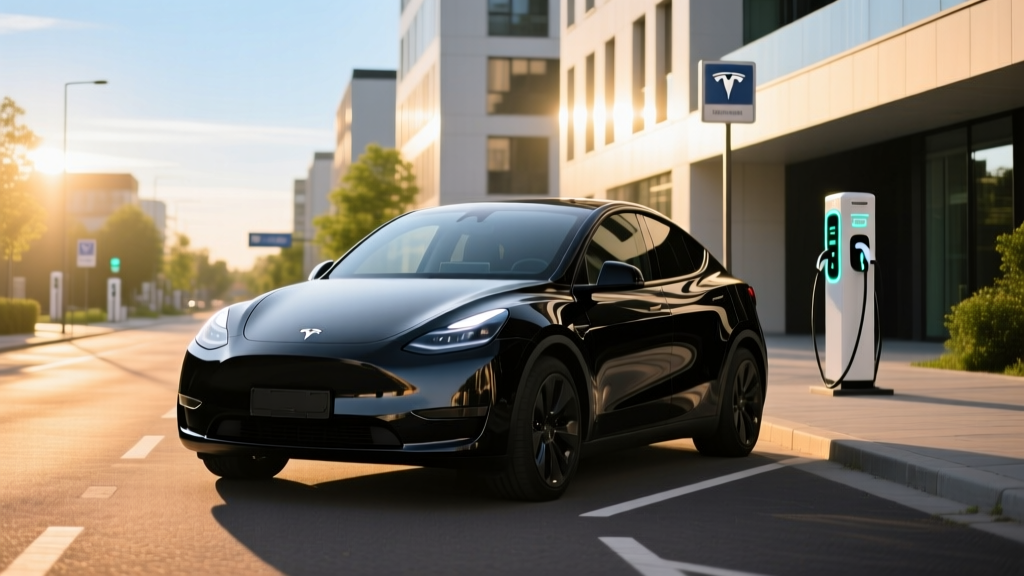
The Tesla Model Y has been the best-selling vehicle of any powertrain in Europe for multiple running years, and its dominance shows no signs of cracking in 2026. Built at Giga Berlin for the European market, the crossover has captured buyers across Norway, Germany, the UK, and the Netherlands by offering a rare combination: genuine long-range capability, access to the Supercharger network, and a price point that undercuts most European premium rivals. But Tesla Model Y Europe sales success doesn't automatically translate to the same value proposition for US buyers, where different trims, tax-credit rules, and competitive dynamics apply. This review breaks down exactly what the 2026 Model Y delivers — range, charging, pricing, and ownership reality — so you can decide if the crossover behind the sales numbers is right for your garage.
2026 Model Y Specs at a Glance
| Spec | Long Range RWD | Long Range AWD | Performance |
|---|---|---|---|
| EPA Range | 320 mi | 310 mi | 285 mi |
| Battery (usable) | ~75 kWh (NMC) | ~75 kWh (NMC) | ~75 kWh (NMC) |
| 0–60 mph | 5.8 sec | 4.8 sec | 3.5 sec |
| Horsepower | ~346 hp | ~384 hp | ~456 hp |
| Drivetrain | Rear-Wheel Drive | Dual-Motor AWD | Dual-Motor AWD |
| Max DC Fast Charge | 250 kW | 250 kW | 250 kW |
| 10–80% DC Time | ~25 min | ~25 min | ~25 min |
| Level 2 Home Charge | 11.5 kW (~37 mi/hr) | 11.5 kW (~37 mi/hr) | 11.5 kW (~37 mi/hr) |
| MPGe (combined) | 122 MPGe | 116 MPGe | 111 MPGe |
| Base MSRP | $44,990 | $47,990 | $52,490 |
Sources: fueleconomy.gov, Tesla.com. Specs reflect 2026 model year; always verify at purchase.
Real-World Range: What the EPA Sticker Doesn't Tell You
Tesla's efficiency advantage comes from a combination of low drag coefficient (0.23 Cd), heat pump standard on all trims, and tightly managed powertrain calibration. On mixed city/highway commutes in moderate weather, many owners report matching or slightly exceeding EPA numbers thanks to regenerative braking recapturing energy in stop-and-go traffic. However, sustained Interstate-speed road trips — especially through mountain passes or winter headwinds — will reveal the gap between laboratory and reality.
For European-market Model Ys (relevant to the Tesla Model Y Europe sales story), WLTP ratings run higher than EPA — the Long Range AWD is rated at 533 km (331 mi) WLTP, which roughly reconciles to the 310-mile EPA figure when accounting for the ~15–20% difference between test cycles.
Charging Speed: Home, Destination, and DC Fast Charging
| Level | Power | Miles Added per Hour | Typical Use Case |
|---|---|---|---|
| Level 1 (120V) | ~1.4 kW | ~4–5 mi/hr | Emergency / overnight trickle |
| Level 2 (240V, 48A) | 11.5 kW | ~37 mi/hr | Home daily charging |
| DC Fast (Supercharger V3) | Up to 250 kW | ~180 mi in 15 min | Road trips |
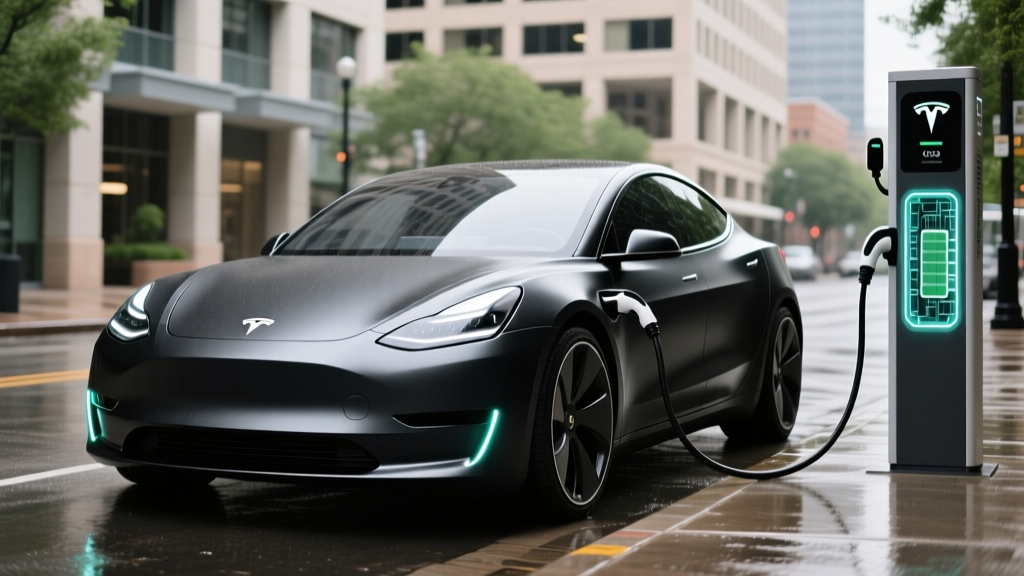
The Model Y's 250 kW peak charge rate on V3 Superchargers is among the fastest in its segment, though sustained charging follows a tapering curve. Expect peak rates from 10–30% SoC, with power stepping down through 50%, 70%, and sharply above 85%. A typical 10–80% session takes roughly 25 minutes under ideal thermal conditions.
Preconditioning matters. Navigate to a Supercharger via the car's built-in routing and the battery will warm to optimal temperature before arrival, shaving 5–10 minutes off the session and improving peak power. Cold-soak the battery (arriving without preconditioning in winter) and you may see peak rates cut in half initially.
At home, a Tesla Wall Connector on a 60A circuit delivers the full 11.5 kW (48A continuous), adding roughly 37 miles of range per hour — enough to fully replenish a depleted battery in about 7 hours. Most owners charging overnight from a daily 60–70% depletion wake to a full battery every morning.
Performance, Efficiency, and Daily Drivability
The base Long Range RWD's 5.8-second 0–60 time already outpaces most gas-powered compact SUVs, but the Performance trim's 3.5-second sprint puts it in sports-car territory. Dual-motor AWD variants provide confident all-weather traction without the efficiency penalty of a mechanical AWD system — the front induction motor freewheels when not needed, minimizing drag.
Efficiency, measured in kWh per 100 miles, is where the Model Y quietly shines. The Long Range AWD consumes roughly 28–30 kWh/100mi in mixed driving — translating to an electricity cost of approximately $0.04–$0.06 per mile at the US average residential rate of $0.16/kWh. Compare that to a 28 MPG gas SUV at $3.40/gallon ($0.12/mile), and the per-mile savings are substantial over a 15,000-mile year.
Ride quality in the post-refresh Model Y (sometimes called "Juniper") is noticeably improved over pre-2025 versions, with revised damper tuning that absorbs sharp pavement impacts without sacrificing cornering composure. Cabin noise is reduced thanks to acoustic glass and additional insulation.
Interior, Cargo, and Tech: Practical Family Crossover
The Model Y's cabin remains minimalist, dominated by a 15.4-inch center touchscreen that handles navigation, media, climate, and vehicle settings. The 2026 refresh adds ventilated front seats, ambient lighting, a rear-seat touchscreen for climate and media control, and power-folding second-row seats — addressing the most common criticisms of prior model years.
- Cargo volume: 30.2 cu ft behind second row; 72.1 cu ft with rear seats folded
- Front trunk (frunk): 4.1 cu ft — enough for a charging cable kit and small bag
- Rear legroom: 41.6 inches — genuinely adult-friendly for long trips
- Seating: 5-passenger standard; 7-seat option available on Long Range trims (third row best suited for small children)
Tech highlights include Tesla's native navigation with real-time Supercharger availability, over-the-air software updates that regularly add features, and the Tesla mobile app for remote preconditioning, location tracking, and Sentry Mode camera access. The optional FSD (Supervised) package remains an SAE Level 2 driver-assist system — meaning the driver must remain engaged and responsible at all times, despite the "Full Self-Driving" name.
Pricing, Tax Credits, and Ownership Cost
| Trim | Base MSRP | Est. As-Tested* | §30D Credit Eligibility |
|---|---|---|---|
| Long Range RWD | $44,990 | $46,500 | Up to $7,500 (subject to sourcing & income) |
| Long Range AWD | $47,990 | $49,500 | Up to $7,500 (subject to sourcing & income) |
| Performance | $52,490 | $54,000 | Up to $7,500 (subject to sourcing & income) |
*As-tested includes typical destination fee and common options. Verify current pricing at Tesla.com.
- MSRP must be ≤ $80,000 for SUVs — all Model Y trims qualify on price
- Buyer AGI limits: $150,000 single / $225,000 head of household / $300,000 joint
- Battery critical-mineral and component sourcing requirements apply — Tesla's US-built packs currently meet partial or full criteria, but eligibility shifts as supply chains evolve
- Credit can be transferred to the dealer at point of sale as an immediate price reduction
- Always verify current eligibility via the IRS Clean Vehicle provisions and your tax professional — rules change and are enforced at time of delivery
Source: IRS.gov §30D
Five-year total cost of ownership (TCO) for a Model Y Long Range AWD — factoring purchase price, electricity, insurance, maintenance, and projected depreciation — typically undercuts comparable BMW iX3, Audi Q4 e-tron, and Mercedes EQB rivals by $8,000–$15,000, largely due to lower fuel and maintenance costs plus strong Tesla resale values. Insurance premiums, however, run 15–25% higher than segment average; obtain quotes before committing.
Warranty, Safety, and Long-Term Ownership
Tesla backs the Model Y with a competitive warranty package:
- Basic vehicle: 4 years / 50,000 miles
- Battery & drive units: 8 years / 120,000 miles (Long Range); 8 years / 100,000 miles (RWD base)
- Battery retention threshold: Warranty covers degradation below 70% of original capacity during the term
Real-world battery degradation data from high-mileage fleets shows NMC packs in the Model Y typically retaining 88–92% capacity at 100,000 miles when charged primarily to 80–90% daily with occasional 100% sessions for road trips. The LFP chemistry available in some Standard Range variants (where offered) tolerates regular 100% charging and tends to degrade more slowly, though with lower energy density and thus shorter range.
Safety ratings remain excellent. The Model Y earned a 5-star overall rating from NHTSA and top marks from IIHS across crashworthiness categories. Standard automatic emergency braking, lane-departure warning, and blind-spot monitoring come on every trim.
Pros, Cons, and Who Should Buy the Model Y
- Class-leading efficiency (116–122 MPGe combined)
- Supercharger network access — still the most reliable DC fast-charging ecosystem in North America
- Strong cargo space (72.1 cu ft) and usable frunk
- Low per-mile operating cost
- Excellent safety ratings
- Frequent OTA updates add features over time
- Touchscreen-dominant controls frustrate some drivers (no physical climate knobs)
- Insurance premiums above segment average
- FSD (Supervised) is Level 2 — not autonomous despite branding
- Ride firmness on rough pavement (improved but not class-leading)
- Service center wait times in some metro areas
- No Apple CarPlay / Android Auto (Tesla-native stack only)
- Commuters: Home charging + 300+ mile range eliminates daily range stress entirely
- Young families: Cargo capacity, 5-seat comfort, and optional 7-seat config handle car seats and groceries
- Road-trip drivers: Supercharger network makes 500-mile days practical with one ~25-minute stop
- Tech-forward buyers: OTA updates and Tesla app integration appeal to software-savvy owners
Frequently Asked Questions
What is the real-world range of the 2026 Tesla Model Y?
EPA estimates 310–320 miles depending on trim. Real-world highway driving at 70–75 mph yields roughly 250–280 miles; cold weather (below 30°F) can reduce that to 210–240 miles without preconditioning. City driving with regen often matches or slightly exceeds EPA figures.
How fast does the Model Y charge at home and on the road?
On a Level 2 home charger (11.5 kW), expect ~37 miles of range per hour, or a full charge in ~7 hours. On a V3 Supercharger at peak 250 kW, 10–80% takes roughly 25 minutes with a preconditioned battery — adding about 180 miles in 15 minutes.
Does the 2026 Model Y qualify for the $7,500 federal EV tax credit?
All trims fall under the $80,000 SUV MSRP cap. Buyer income limits ($150K single / $300K joint) and battery sourcing requirements apply. Eligibility can shift with supply-chain changes — verify via the IRS and your tax professional at time of purchase. Point-of-sale transfer is available, applying the credit as an immediate price reduction.
Why are Tesla Model Y Europe sales so high compared to the US?
European buyers benefit from Giga Berlin production (lower shipping costs), stronger EV purchase incentives in countries like Norway and Germany, higher fuel prices that amplify EV cost savings, and fewer domestic competitors in the compact electric SUV segment. The Model Y is often the most affordable long-range family EV available in European markets.
Is the Model Y worth buying versus competitors like the Ioniq 5 or EV6?
The Model Y wins on efficiency, Supercharger access, and cargo volume. The Hyundai Ioniq 5 and Kia EV6 offer 800V charging architecture (faster peak speeds on compatible chargers) and more distinctive interior design. Choose Tesla for charging-network reliability and software; choose Hyundai/Kia for charging speed and cabin ergonomics.
How long will the Model Y battery last?
Tesla warranties the battery for 8 years / 120,000 miles with a 70% capacity retention threshold. Real-world fleet data suggests NMC packs retain 88–92% at 100,000 miles with sensible charging habits (daily 80–90%, occasional 100%). Full battery replacement, if ever needed out of warranty, currently runs $12,000–$18,000 depending on pack configuration.