The Quickest Production Sedan Tesla Has Ever Built
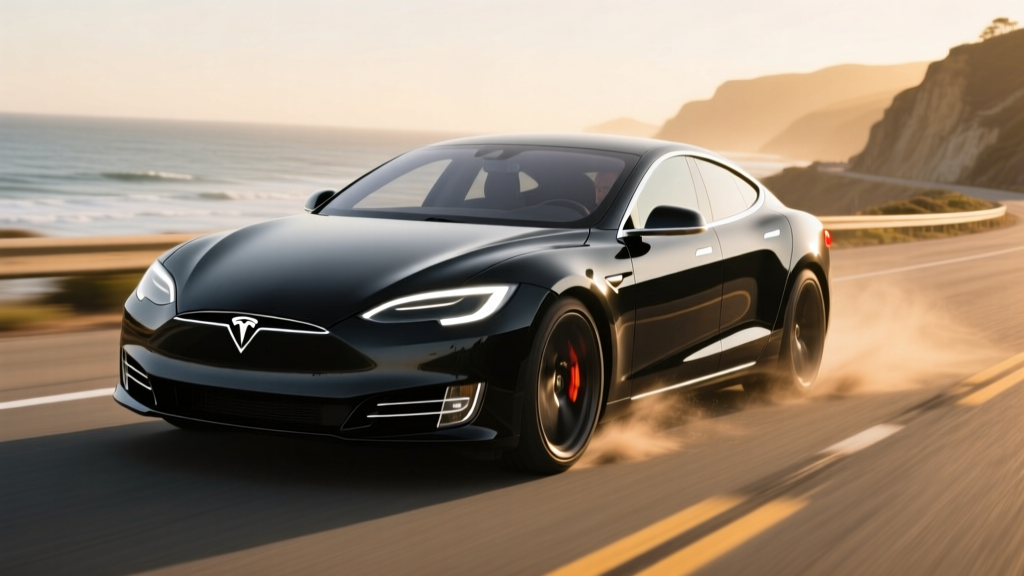
If you search for the fastest Tesla 0-60 time, one name dominates: the Model S Plaid. With a manufacturer-claimed 1.99-second sprint to 60 mph, it sits at the very top of Tesla's performance hierarchy and ranks among the quickest production cars ever sold at any price. But acceleration is just one axis of ownership. In this review, we break down the 2026 Model S Plaid's real-world range, charging behavior, daily livability, tax-credit eligibility, and whether its $89,990 starting price makes sense against rivals like the Lucid Air Sapphire and Porsche Taycan Turbo GT.
| Spec | Value |
|---|---|
| EPA Range | 396 miles (Long Range AWD) / 359 miles (Plaid) |
| Battery (usable) | ~95 kWh, NMC (nickel manganese cobalt) |
| Drivetrain | Tri-Motor AWD (1 front, 2 rear carbon-sleeved rotors) |
| Horsepower | 1,020 hp (peak) |
| 0-60 mph | 1.99 sec (with rollout subtracted); ~2.1 sec real-world |
| Top Speed | 200 mph |
| Max DC Fast Charge | 250 kW (Supercharger V3/V4) |
| 10-80% DC Time | ~27 minutes |
| Level 2 Home Charge | 11.5 kW / ~34 miles per hour |
| MPGe (combined) | 116 MPGe (Long Range AWD) / ~110 MPGe (Plaid) |
| Cargo Volume | 28 cu ft (rear seats up) + frunk ~3.1 cu ft |
| Base MSRP (Plaid) | $89,990 |
| Battery Warranty | 8 years / 150,000 miles (70% capacity retention) |
Real-World Range: What the EPA Sticker Doesn't Tell You
The Model S Plaid carries an EPA-estimated 359 miles of range on its ~95 kWh NMC battery pack. In real-world highway driving at 70-75 mph, expect roughly 290-320 miles depending on temperature, elevation, and tire condition. In cold weather (below 32°F), plan for a 20-30% reduction, bringing effective range closer to 250-280 miles before needing to stop.
Tesla's tri-motor Plaid powertrain prioritizes output over efficiency, and it shows. The Long Range AWD variant (dual-motor, 670 hp) squeezes out 396 EPA miles thanks to fewer motors and slightly lower curb weight, making it the efficiency pick. If your priority is maximum distance per charge rather than sub-2-second sprints, the Long Range AWD at $74,990 is the smarter buy.
Efficiency for the Plaid lands around 30 kWh/100 miles in mixed driving — roughly 10% thirstier than the Long Range AWD's ~28 kWh/100 mi. On road trips, Tesla's route planner accounts for elevation and temperature, and preconditioning the battery before a Supercharger stop is automatic when navigation is set to a charger. Skipping preconditioning in cold weather can add 10+ minutes to your charge session and cap peak kW well below 250.
Charging Speed: 250 kW Peak, but the Curve Matters
| Charging Level | Power (kW) | Miles Added per Hour | Notes |
|---|---|---|---|
| Level 1 (120V) | ~1.4 kW | ~4 mi/hr | Emergency/trickle only |
| Level 2 (240V, 48A) | 11.5 kW | ~34 mi/hr | Full charge in ~9 hours |
| DC Fast (Supercharger V3/V4) | 250 kW peak | ~75 mi in 5 min (peak) | 10-80% in ~27 min |
| CCS Adapter (non-Tesla DCFC) | Up to 250 kW | Varies by station | CCS adapter included |
The Model S Plaid peaked at 250 kW on V3 Superchargers since its 2021 refresh, and that remains the case for 2026. While competitors like the Hyundai Ioniq 5 and Porsche Taycan can accept 350 kW on compatible chargers, Tesla compensates with the density and reliability of the Supercharger network, which now serves NACS-equipped vehicles from Ford, Rivian, and others.
The critical nuance: the Plaid does not sustain 250 kW for long. The charge curve tapers noticeably past 50% SoC, and by 80%, you're seeing roughly 60-80 kW. For road trips, the practical strategy is to charge in the 10-60% sweet spot (roughly 15 minutes) and hop to the next Supercharger rather than waiting for a slow 80-100% top-off. This is how experienced Tesla owners minimize total trip time.
At home on a Wall Connector (48 amps, 11.5 kW), a full 10-100% charge takes about 9 hours — easily accomplished overnight. If your home electrical panel supports a 60-amp dedicated circuit, installation typically runs $800-$2,000 including the $400 Wall Connector unit, depending on run length and panel proximity. A 200-amp panel upgrade, if needed, adds $1,500-$3,000.
Performance: Beyond the 0-60 Number
The 1.99-second 0-60 claim requires specific conditions: a prepped surface, drag-strip mode engaged, and a 1-foot rollout subtracted (standard in drag racing but not in real-world stoplight-to-stoplight timing). Independent testing by outlets like Motor Trend and Car and Driver consistently clocks the Plaid at 2.1-2.3 seconds to 60 mph without rollout subtraction — still ferociously quick and firmly in hypercar territory.
The tri-motor setup uses one permanent-magnet motor on the front axle and two carbon-sleeved induction motors on the rear. The carbon sleeve allows the rotors to spin at extremely high RPM without expanding, enabling the 200-mph top speed and sustained high-power delivery that earlier Tesla dual-motor setups couldn't maintain. Quarter-mile times land in the 9.2-9.4 second range at 150+ mph trap speeds.
But straight-line speed is only part of the story. The Plaid's adaptive air suspension, torque-vectoring rear axle, and 265/35R21 front tires give it legitimate track capability. Tesla's Track Mode lets you adjust stability control, regen, and cooling behavior. Lap the car hard, though, and you'll watch the battery temperature climb — thermal management is good, but repeated full-power launches will trigger power limiting after 3-4 hard pulls.
Interior, Tech, and Daily Livability
Inside, the 2026 Model S retains the minimalist 17-inch landscape touchscreen (now with AMD Ryzen processor for responsive UI), a 12.3-inch driver display, and a rear-seat 8-inch screen for climate and entertainment controls. The yoke steering wheel remains standard on the Plaid — love it or hate it, it takes about a week of adaptation for most drivers, and low-speed parking maneuvers are its weakest use case.
Passenger and cargo space:
- Front legroom: 42.7 inches
- Rear legroom: 35.4 inches (tight for tall adults on long trips)
- Trunk: 28 cu ft with rear seats up, 79.3 cu ft folded
- Frunk: 3.1 cu ft (fits a charging cable bag or small backpack)
The hatchback-style trunk opening is genuinely practical — more usable than a traditional sedan's trunk lid and competitive with midsize SUVs. The rear seat is a two-plus-one configuration with a small center section; three adults across is tight.
Driver assistance: Tesla's Autopilot (SAE Level 2) is standard, with Full Self-Driving (Supervised) available as a $8,000 option or $99/month subscription. FSD Supervised handles highway lane changes, on/off-ramp navigation, and city street turns, but requires active driver supervision at all times. This is not a Level 4 autonomous system — you are the driver, and NHTSA continues to scrutinize Tesla's Autopilot/FSD engagement monitoring.
Pricing, Trims, and Federal Tax Credit Eligibility
| Trim | Base MSRP | Federal §30D Credit | Effective Price |
|---|---|---|---|
| Long Range AWD | $74,990 | $0 (exceeds MSRP cap) | $74,990 |
| Plaid | $89,990 | $0 (exceeds MSRP cap) | $89,990 |
| Plaid (as-tested w/ FSD, 21" wheels) | ~$99,490 | $0 | ~$99,490 |
Does the Model S Plaid qualify for the $7,500 federal EV tax credit? No. Under current IRS §30D rules, the federal tax credit for new EVs caps at an MSRP of $55,000 for sedans. Both the Model S Long Range ($74,990) and Plaid ($89,990) exceed this threshold, making neither eligible regardless of buyer income or battery sourcing. This is a hard disqualifier, not a paperwork issue.
Buyers should also be aware of income caps for the §30D credit ($150,000 single / $300,000 joint AGI), critical-mineral and battery-component sourcing requirements, and the option to transfer the credit to the dealer at point of sale — though none of these provisions matter here since the MSRP cap eliminates the Model S outright.
State-level incentives may still apply. California's CVRP program, Colorado's state credit, and various utility rebates can offset $1,000-$5,000 depending on your jurisdiction. Check your state's energy office and local utility for current programs.
Model S Plaid vs. the Competition
At nearly $90,000, the Plaid competes with a small but formidable group:
- Lucid Air Sapphire ($249,000): 1,234 hp, 0-60 in ~1.89 sec, 427-mile EPA range. More luxurious, more expensive, far lower production volume.
- Porsche Taycan Turbo GT ($230,000+): 1,019 hp with Launch Control, 0-60 in ~2.1 sec, 280-mile EPA range. Superior handling dynamics, weaker range and charging infrastructure.
- Tesla Model S Long Range AWD ($74,990): 670 hp, 0-60 in 3.1 sec, 396-mile EPA range. Same platform, far more range, $15,000 less.
The Plaid's value proposition is brutally simple: nothing else at its price point delivers sub-2-second 0-60 capability, Supercharger network access, and a 359-mile range simultaneously. If you want a luxury executive sedan with comparable acceleration, you'll spend two to three times more on the Lucid or Porsche. If you want a Tesla with similar practicality but don't need tri-motor insanity, the Long Range AWD is the rational choice.
- Fastest Tesla 0-60 time in the lineup (1.99 sec claimed, ~2.1 sec real-world)
- 359-mile EPA range despite 1,020 hp — exceptional efficiency-to-power ratio
- Supercharger network access (most reliable DC fast-charging infrastructure in the US)
- Hatchback cargo practicality (28 cu ft trunk + frunk)
- OTA updates continue to add features years after purchase
- Track Mode with adjustable torque vectoring and cooling profiles
- No federal tax credit eligibility (MSRP exceeds $55,000 sedan cap)
- Rear seat legroom (35.4 in) is tight for a $90K sedan
- Yoke steering is polarizing and impractical for low-speed maneuvers
- 250 kW peak charge rate trails 350 kW-capable rivals (Taycan, Ioniq 5)
- Build quality inconsistencies remain a Tesla pain point at this price
- FSD (Supervised) is Level 2 — not autonomous, still requires full attention
Who Should Buy the Model S Plaid?
The Plaid makes sense for a narrow buyer profile: someone who wants hypercar acceleration, daily-drivable range, Supercharger road-trip capability, and doesn't need executive rear-seat comfort. It's a weekend canyon car, a drag-strip toy, and a daily commuter rolled into one — provided you accept the yoke, the minimal rear-seat space, and the lack of a federal tax credit.
If your priorities lean toward maximum range and value, the Model S Long Range AWD at $74,990 with 396 EPA miles and a 3.1-second 0-60 is the better daily driver. If you need more passenger and cargo space, the Model X Plaid offers similar acceleration in an SUV form factor, though at a higher price and lower efficiency. And if you want a luxury sedan experience with comparable speed and don't mind spending more, the Lucid Air Grand Touring ($125,600, 516 EPA miles) is worth a test drive.
Frequently Asked Questions
What is the real-world 0-60 time for the Tesla Model S Plaid?
Tesla claims 1.99 seconds with a 1-foot rollout subtracted (drag-racing convention). Independent tests without rollout subtraction typically measure 2.1-2.3 seconds, depending on surface conditions, tire temperature, and battery state of charge. Below 20% SoC, power output drops noticeably.
Does the Model S Plaid qualify for any EV tax credits?
Not the federal §30D credit — the MSRP cap for sedans is $55,000, and the Plaid starts at $89,990. Some state incentives (California, Colorado, others) may apply, and certain utility companies offer time-of-use rate discounts or rebates for home charger installation. Consult a tax professional for your specific situation.
How does the Plaid's range hold up on road trips?
On highway-heavy road trips at 70-75 mph, expect 290-320 miles before needing to charge. In winter conditions, plan for 250-280 miles. Tesla's navigation-based battery preconditioning helps maximize charge speed at Superchargers — always route through the car's nav system for best results.
Is the Model S Plaid's 250 kW charging fast enough?
For most road trips, yes — the 10-80% time of ~27 minutes aligns with a typical rest stop. However, 350 kW-capable vehicles like the Porsche Taycan (on 800V architecture) or Hyundai Ioniq 5 can shave 5-8 minutes off a similar session at compatible chargers. Tesla's advantage is Supercharger network density and reliability, not peak charge rate.
What battery chemistry does the Model S Plaid use?
The Plaid uses an NMC (nickel manganese cobalt) lithium-ion pack with approximately 95 kWh of usable capacity. NMC offers higher energy density than LFP (lithium iron phosphate), which is why Tesla reserves LFP for standard-range, lower-cost models. For longevity, Tesla recommends charging NMC batteries to 80% for daily use and 100% only before long trips.
How does the warranty compare to competitors?
Tesla covers the Model S battery and drive unit for 8 years or 150,000 miles (whichever comes first) with a minimum 70% capacity retention guarantee. This is competitive with Lucid (8 yr/100,000 mi) and Porsche (8 yr/100,000 mi). The basic vehicle limited warranty is 4 years / 50,000 miles.
Sources: EPA Fuel Economy — Tesla Model S, IRS §30D Clean Vehicle Credit, Tesla Model S Specifications