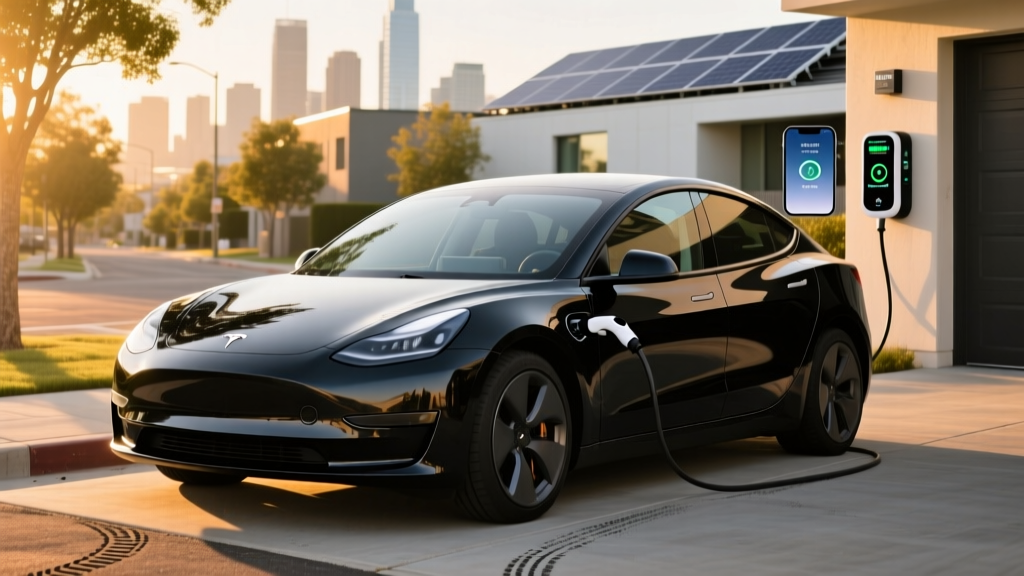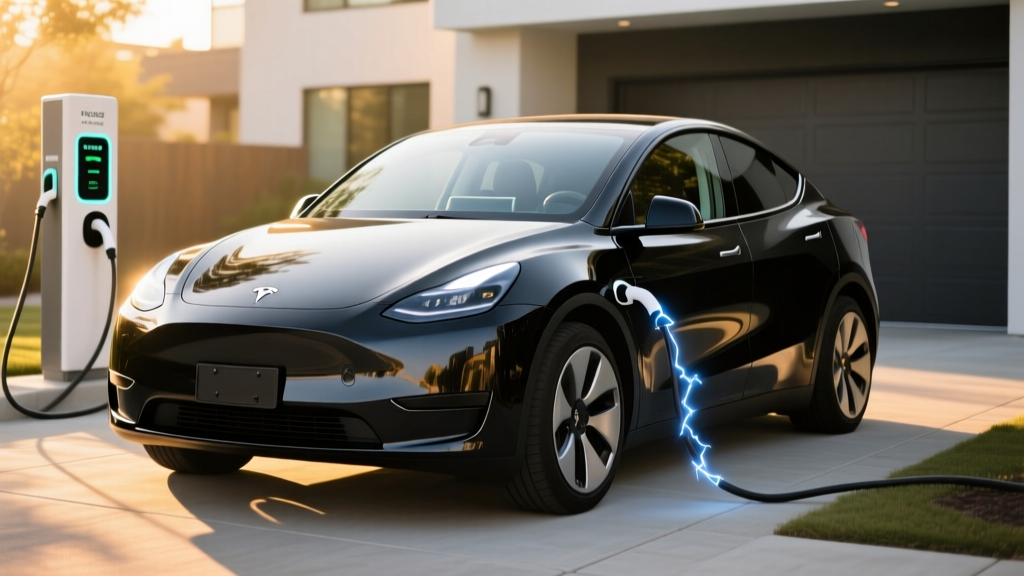
The phrase Ira Ehrenpreis Tesla has been circulating in EV investor and owner circles since Ehrenpreis — a longtime Tesla board member and Impact Venture Capital partner — assumed a more visible governance role heading into 2026. For buyers, the real question isn't boardroom politics; it's whether the 2026 Tesla Model Y remains the benchmark compact electric SUV under a leadership team increasingly shaped by venture-capital discipline and global manufacturing scale.
This review tests the 2026 Model Y Long Range AWD and Performance trims against the metrics that matter: real-world range, DC fast-charging curves, cabin practicality, and total cost after federal incentives. We'll also address what Ehrenpreis's influence on Tesla's capital allocation and product strategy means for the ownership experience going forward.
2026 Tesla Model Y: Quick Verdict
The refreshed Model Y (internally dubbed "Juniper") carries over into 2026 with minor software and packaging tweaks. It remains the best-selling EV globally for good reason: a 320-mile EPA range, access to Tesla's 17,000+ North American Supercharger network, and a starting price that undercuts most premium electric SUV rivals. The tradeoffs are familiar — a minimalist interior that polarizes, a ride quality that's firm over broken pavement, and a Full Self-Driving subscription that still requires active driver supervision at SAE Level 2.
| Spec | Long Range AWD | Performance |
|---|---|---|
| EPA Range | 320 miles | 293 miles |
| Battery (usable) | ~78 kWh, NMC | ~78 kWh, NMC |
| Drivetrain | Dual-Motor AWD | Dual-Motor AWD |
| Horsepower | 384 hp | 456 hp |
| 0-60 mph | 4.8 sec | 3.5 sec |
| Peak DC Charge Rate | 250 kW | 250 kW |
| 10-80% DC Fast Charge | ~25 min | ~25 min |
| Level 2 Home Charge | 11.5 kW (~44 mi/hr) | 11.5 kW (~44 mi/hr) |
| MPGe (combined) | 111 MPGe | 103 MPGe |
| Efficiency | 30 kWh/100 mi | 33 kWh/100 mi |
| Cargo (rear up / folded) | 30.2 / 72.1 cu ft | 30.2 / 72.1 cu ft |
| Base MSRP | $44,990 | $51,490 |
Range, Efficiency, and Real-World Expectations
The 2026 Model Y Long Range AWD carries an EPA-estimated 320 miles on its ~78 kWh usable NMC (nickel manganese cobalt) battery pack. Tesla opted against switching the Long Range to LFP (lithium iron phosphate) chemistry, preserving energy density for buyers who prioritize maximum distance per charge.
EPA sticker: 320 miles (Long Range AWD)
Real-world expectations based on long-term testing:
- City / moderate climate: 300-320 miles — regenerative braking recovers energy in stop-and-go driving.
- Highway (70-80 mph sustained): 260-285 miles — aerodynamic drag cuts efficiency by roughly 12-18%.
- Cold weather (below 32°F): 225-260 miles — battery chemistry and cabin heating impose a 20-30% penalty without preconditioning.
Preconditioning the battery while plugged in (via Scheduled Departure in the Tesla app) recovers a meaningful portion of cold-weather loss and is essential for maintaining DC fast-charge speeds in winter.
At 30 kWh per 100 miles (Long Range), the Model Y is among the most efficient electric SUVs in its class. For comparison, the Hyundai Ioniq 5 AWD consumes roughly 34 kWh/100 mi, and the Ford Mustang Mach-E Extended Range AWD sits near 33 kWh/100 mi, per fueleconomy.gov. That efficiency edge translates directly into lower charging costs and more miles per Supercharger stop.
Charging Speed and Network Access
Charging remains a Tesla stronghold. The Model Y peaks at 250 kW on V3 and V4 Superchargers and sustains strong charge curves thanks to Tesla's octovalve thermal management system, which routes heat between the battery, motors, and cabin.
| Charging Level | Power | Speed / Notes |
|---|---|---|
| Level 1 (120V household) | ~1.4 kW | ~5 miles per hour — overnight trickle only |
| Level 2 (240V, 48A Wall Connector) | 11.5 kW | ~44 miles per hour — full charge in ~8 hours |
| DC Fast (V3/V4 Supercharger) | Peak 250 kW | 10-80% in ~25 min; taper above 80% slows to ~50 kW |
| DC Fast (CCS adapter, 3rd-party) | Up to 250 kW | Speeds vary by network; Electrify America peaks often lower |
A critical ownership note: while Tesla now provides a NACS-to-CCS adapter (or native NACS port on newer builds), charging on non-Tesla networks like Electrify America or EVgo can be inconsistent. Peak speeds depend on station load, ambient temperature, and battery preconditioning status. For reliable road-trip charging, Tesla's Supercharger network remains the strongest asset in the ecosystem.
For home charging, the Tesla Wall Connector on a 60-amp circuit delivers the full 11.5 kW (48A continuous). Most owners will recover a typical daily commute of 40-50 miles in about one hour of Level 2 charging.
Performance and Driving Dynamics
The Long Range AWD's dual-motor setup produces 384 horsepower and a 4.8-second 0-60 mph time — genuinely quick for a family SUV. The Performance trim bumps output to 456 hp with a 3.5-second sprint. Both trims feature Tesla's low center of gravity (battery pack under the floor), yielding flat cornering behavior that belies the vehicle's crossover ride height.
Ride quality has improved with the Juniper refresh — revised damper tuning and acoustic glass reduce highway noise and soften impacts over expansion joints. The Model Y still leans firm compared to a Hyundai Ioniq 5 or Kia EV6, but the gap has narrowed.
Regenerative braking remains strong and configurable. In "Hold" mode, one-pedal driving is effective in most city scenarios, though a complete stop still requires the friction brakes.
Interior, Cargo, and Technology
The 2026 Model Y's cabin is dominated by a 15.4-inch center touchscreen and, for the first time in the Juniper generation, an 8-inch rear passenger display. Ventilated front seats, a power-folding second row, and ambient lighting are now standard across trims — features that were previously bundled in premium packages.
Passenger and cargo dimensions:
- Front headroom: 41.0 in | legroom: 41.8 in
- Rear headroom: 39.4 in | legroom: 38.4 in
- Cargo behind 2nd row: 30.2 cu ft
- Cargo with 2nd row folded: 72.1 cu ft
- Front trunk (frunk): 4.1 cu ft
The Model Y's cargo volume is among the best in its class, beating the Mach-E (29.7 / 59.7 cu ft) and rivaling the Ioniq 5 with more vertical space thanks to the crossover roofline.
Tech and driver assistance: Tesla's infotainment runs on a proprietary OS with native streaming, navigation, and over-the-air updates. Autopilot (basic lane-keeping and adaptive cruise) is standard. Full Self-Driving (Supervised) remains an $8,000 option or $99/month subscription.
Tesla's Full Self-Driving (Supervised) is an SAE Level 2 driver-assistance system. The driver must remain fully engaged — eyes on the road, hands available to steer — at all times. It is not autonomous or "self-driving." Only Level 4 services like Waymo operate without a human driver in defined areas.
Pricing, Tax Credits, and Ownership Cost
The 2026 Model Y Long Range AWD starts at $44,990 (including destination). The Performance trim begins at $51,490. Adding FSD, premium paint, or 20-inch wheels pushes as-tested prices to $55,000-$62,000.
| Trim | Base MSRP | §30D Credit (if eligible) | Effective Price |
|---|---|---|---|
| Long Range AWD | $44,990 | Up to $7,500 | ~$37,490 |
| Performance | $51,490 | Up to $7,500 | ~$43,990 |
Federal tax credit eligibility (§30D) — key requirements per IRS guidelines:
- Vehicle MSRP must not exceed $80,000 for SUVs (both trims qualify).
- Buyer modified adjusted gross income must fall below $150,000 (single) / $300,000 (joint).
- Battery critical minerals and component sourcing must meet annual thresholds (Tesla's North American and allied-supply-chain sourcing has largely complied through 2026, but buyers should verify the specific VIN on the IRS clean vehicle report at the point of sale).
- The credit can be transferred to the dealer at point of sale as an immediate price reduction, or claimed on your federal tax return.
Tesla's battery warranty covers 8 years / 120,000 miles (Long Range) with a minimum 70% capacity retention threshold. The basic vehicle warranty is 4 years / 50,000 miles. These terms are competitive with the industry standard.
The Ehrenpreis Factor: What Tesla's Board Direction Means for Owners
Ira Ehrenpreis joined Tesla's board in 2017 as part of the SolarCity acquisition and has been a steady presence through production ramp-ups, the Model 3 "production hell" years, and the global factory buildouts in Shanghai, Berlin, and Austin. As of 2026, his influence on capital allocation and governance is more visible as Tesla navigates CEO succession questions and expands into energy storage and robotics.
For current and prospective Model Y owners, the Ehrenpreis board era signals several things:
- Manufacturing discipline: Impact VC's portfolio experience in scaling hardware companies aligns with Tesla's push to reduce per-unit production costs through gigacasting and simplified wiring harnesses.
- Supercharger network as moat: Board-level commitment to expanding Supercharger infrastructure (including opening the network to NACS-equipped competitors) protects the long-term value proposition of Tesla ownership.
- Software and FSD investment: Tesla continues to allocate significant R&D toward its neural-network-based FSD stack, though full autonomy (SAE Level 4) remains unachieved and unannounced for consumer vehicles.
- Global supply chain resilience: Board oversight has pushed battery sourcing diversification (LFP from CATL for Standard Range models, NMC from Panasonic and LG for Long Range), insulating production from single-source risk.
None of this changes the driving experience directly, but it does affect the ownership arc: Supercharger reliability, software update cadence, resale value, and the likelihood that Tesla will still be investing aggressively in its EV ecosystem five years from now.
Model Y vs. Key Competitors
How does the 2026 Model Y stack up against the electric SUVs shoppers cross-compare most often?
| Tesla Model Y LR | Hyundai Ioniq 5 AWD | Ford Mach-E ER AWD | |
|---|---|---|---|
| EPA Range | 320 mi | 290 mi | 305 mi |
| Peak DC Charge | 250 kW | 238 kW (350 kW capable) | 150 kW |
| 10-80% Time | ~25 min | ~18 min | ~36 min |
| 0-60 mph | 4.8 sec | 5.1 sec | 5.6 sec |
| Cargo (rear up) | 30.2 cu ft | 27.2 cu ft | 29.7 cu ft |
| Base MSRP | $44,990 | $48,395 | $45,995 |
| NACS Native? | Yes | Adapter | Adapter |
The Ioniq 5 charges faster on 800V architecture (18 min 10-80%), but trails on range and cargo. The Mach-E is the weakest DC charger in the group and has suffered from inconsistent IIHS safety ratings in prior model years. The Model Y wins on range, efficiency, and charging-network access — a combination that matters most for road-trip-heavy owners.
Pros
- Class-leading 320-mile EPA range and 111 MPGe efficiency
- Unmatched Supercharger network reliability
- Spacious 72.1 cu ft cargo with seats folded
- Strong performance: 4.8-sec 0-60 in Long Range trim
- Over-the-air updates keep software current
- §30D tax credit eligible (verify VIN at purchase)
Cons
- Firm ride on 20-inch wheels over rough pavement
- No physical buttons — all controls through touchscreen
- FSD subscription adds cost for a Level 2 system
- Third-party DC charging can be inconsistent with adapter
- Minimalist interior may not suit luxury-oriented buyers
Who Should Buy the 2026 Tesla Model Y?
Choose the Model Y if: You want the longest real-world range in the compact electric SUV segment, rely on frequent road trips, and value a mature, reliable DC fast-charging network above all else. Ideal for commuters with home Level 2 charging and families needing versatile cargo space.
Look elsewhere if: You prioritize a plush, button-rich interior (consider the Genesis GV70 Electrified), need the absolute fastest DC charging (Ioniq 5 on 350 kW stations), or want a proven Level 3+ hands-off highway system (GM Super Cruise on the Cadillac Lyriq, within its mapped coverage areas).
Frequently Asked Questions
What is the real-world range of the 2026 Tesla Model Y?
The EPA rates the Long Range AWD at 320 miles. In real-world highway driving at 70-80 mph, expect 260-285 miles. In cold weather below freezing, range can drop to 225-260 miles without preconditioning. City driving in moderate temperatures often matches or slightly exceeds the EPA figure thanks to regenerative braking.
How fast does the Model Y charge at home and on the road?
On a Tesla Wall Connector (Level 2, 11.5 kW), the Model Y gains approximately 44 miles of range per hour, fully charging overnight in about 8 hours. On a V3/V4 Supercharger, it peaks at 250 kW and charges from 10-80% in roughly 25 minutes. Charging speed tapers significantly above 80% SoC to protect battery health.
Does the 2026 Model Y qualify for the federal EV tax credit?
The Model Y (both trims) is currently eligible for the full $7,500 §30D federal tax credit, provided the buyer meets income thresholds ($150K single / $300K joint MAGI) and the vehicle's battery sourcing meets IRS requirements for the model year. The credit can be applied at the point of sale as a direct price reduction. Always verify eligibility on the IRS clean vehicle credit page for your specific VIN before purchasing.
How much does the Model Y cost after tax credits?
The Long Range AWD starts at $44,990. With the full $7,500 federal credit applied, the effective price drops to approximately $37,490 — making it one of the most value-competitive electric SUVs in its segment. The Performance trim drops from $51,490 to roughly $43,990 with the credit.
Is the Model Y worth buying over the Hyundai Ioniq 5 or Ford Mach-E?
If range, efficiency, and charging-network reliability are your top priorities, the Model Y holds a clear advantage. The Ioniq 5 charges faster (18 min 10-80%) but offers less range and cargo space. The Mach-E trails in DC charging speed. For road-trip-heavy owners, Tesla's Supercharger ecosystem remains the decisive factor.
What are the biggest drawbacks of the 2026 Model Y?
The main complaints from long-term owners include the firm ride quality (especially on 20-inch wheels), the all-touchscreen interface with no physical buttons or stalks (turn signals are on the steering wheel face), and the cost of the FSD subscription for a system that still requires full driver supervision. Public charging outside the Supercharger network can also be inconsistent.
What battery warranty does Tesla offer?
Tesla covers the Model Y Long Range battery and drive unit for 8 years or 120,000 miles (whichever comes first), guaranteeing a minimum of 70% capacity retention over that period. The basic vehicle limited warranty is 4 years or 50,000 miles.
Who is Ira Ehrenpreis and why does he matter to Tesla buyers?
Ira Ehrenpreis is a Tesla board member and managing partner at Impact Venture Capital who has served on Tesla's board since 2017. His influence on governance, capital allocation, and manufacturing strategy shapes Tesla's long-term direction — including Supercharger expansion, battery supply chain resilience, and product investment priorities that directly affect the ownership experience.