Quick Verdict: The 2026 Tesla Model Y After the Refresh
The refreshed Tesla Model Y (internally codenamed "Juniper") remains the benchmark compact electric SUV for buyers who prioritize charging infrastructure access, software polish, and straight-line performance. With an EPA-estimated 320 miles of range on the Long Range AWD trim, a 250 kW peak DC fast-charge rate, and access to the 20,000-plus Supercharger network, the Model Y solves the two biggest anxieties new EV buyers face: running out of charge and finding a working public charger. But it's not without trade-offs — ride firmness, the absence of physical stalks, and a minimalist interior that divides opinion are all factors worth weighing before signing.
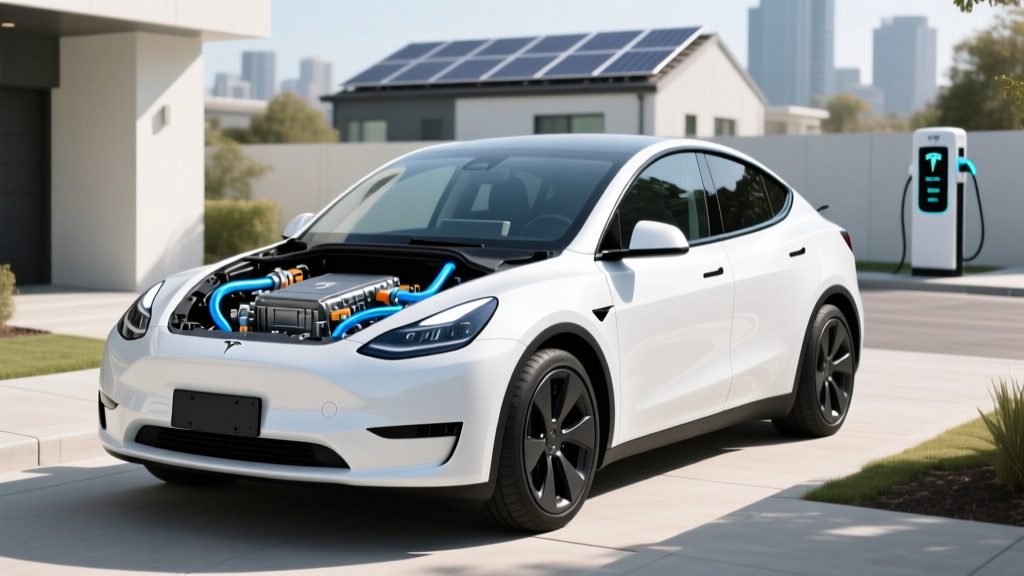
Tesla Model Y Drivetrain Diagram: How the Powertrain Is Laid Out
Understanding the Tesla Model Y's drivetrain starts with its skateboard-style architecture. Unlike a front-engine vehicle, the Model Y places its battery pack flat along the floor between the axles, lowering the center of gravity and maximizing cabin space. Here's a breakdown of the layout for both the RWD and Long Range AWD configurations:
RWD (Rear-Wheel Drive) Layout
- Single permanent-magnet synchronous reluctance motor mounted on the rear axle
- LFP (lithium iron phosphate) battery pack — approximately 60 kWh usable capacity
- Single-speed reduction gearbox with no traditional multi-gear transmission
- Inverter positioned directly above the motor, converting DC battery power to AC for the motor
- Thermal management loop using Tesla's octovalve system to distribute heat between the battery, motor, and cabin
Long Range AWD (Dual Motor) Layout
- Rear motor: Permanent-magnet synchronous reluctance motor (~287 hp)
- Front motor: Induction motor (~215 hp) — can be decoupled to reduce drag during cruising
- NMC (nickel manganese cobalt) battery pack — approximately 78.1 kWh usable capacity
- Dual inverters managing front and rear motors independently
- Heat pump standard, improving cold-weather efficiency by up to 30% compared to resistive heating
The front induction motor's ability to freewheel when not needed is a key efficiency trick — it eliminates cogging losses that permanent-magnet motors suffer when unpowered. This is why the dual-motor Model Y achieves range figures that rival some single-motor competitors.
| Spec | RWD | Long Range AWD | Performance AWD |
|---|---|---|---|
| EPA Range | 303 mi | 320 mi | 298 mi |
| Battery (usable) | ~60 kWh (LFP) | ~78.1 kWh (NMC) | ~78.1 kWh (NMC) |
| Drivetrain | RWD, single motor | AWD, dual motor | AWD, dual motor |
| Horsepower | 295 hp | 502 hp combined | 502 hp combined |
| 0–60 mph | 6.5 sec | 4.8 sec | 3.5 sec |
| Top Speed | 135 mph | 135 mph | 155 mph |
| Peak DC Charge Rate | 175 kW | 250 kW | 250 kW |
| 10–80% DC Time | ~25 min | ~21 min | ~21 min |
| Level 2 Rate | 11.5 kW (~44 mi/hr) | 11.5 kW (~44 mi/hr) | 11.5 kW (~44 mi/hr) |
| Efficiency | 133 MPGe / 25 kWh/100mi | 122 MPGe / 28 kWh/100mi | 111 MPGe / 30 kWh/100mi |
| Base MSRP | $44,990 | $48,990 | $53,990 |
Source: fueleconomy.gov and Tesla's official order page. Specs reflect the 2025 refresh (Juniper) carried into the 2026 model year.
Charging: DC Fast-Charge Speed and Home Level 2 Setup
The Model Y Long Range and Performance variants accept a peak DC fast-charge rate of 250 kW on V3 and V4 Superchargers. However, peak rate is not sustained rate. Here's what the charging curve actually looks like:
- 10–30% SoC: Sustains near 250 kW, adding roughly 150 miles in 10 minutes
- 30–60% SoC: Tapers to ~180–200 kW
- 60–80% SoC: Drops further to ~120–150 kW
- Above 80%: Slows sharply to protect battery health — plan your stops around 80%
The RWD trim, with its smaller LFP pack, peaks at 175 kW. LFP chemistry does offer one advantage: Tesla recommends charging to 100% regularly, which means you can use the full 303 EPA miles daily without degradation concerns. NMC owners should set daily limits to 80% for longevity.
| Charging Level | Power (kW) | Speed (miles of range per hour) | Best For |
|---|---|---|---|
| Level 1 (120V household) | ~1.4 kW | ~4–5 mi/hr | Emergency top-ups |
| Level 2 (240V, 32A) | 7.7 kW | ~30 mi/hr | Budget home install |
| Level 2 (240V, 48A) | 11.5 kW | ~44 mi/hr | Standard home charging |
| DC Fast (V3 Supercharger) | Up to 250 kW | ~1,000+ mi/hr (peak) | Road trips |
Pricing, Trims, and Federal Tax Credit Eligibility
The 2026 Model Y lineup starts at $44,990 for the RWD and climbs to $53,990 for the Performance. All trims fall under the IRS §30D MSRP cap of $80,000 for SUVs, making them potentially eligible for the full $7,500 federal tax credit — but eligibility is not automatic. Here's what you need to verify:
- Income caps: Modified AGI must not exceed $150,000 (single), $225,000 (head of household), or $300,000 (joint filers)
- MSRP cap: Vehicle base price must be ≤$80,000 for SUVs — all Model Y trims qualify
- Battery sourcing: Critical minerals and battery components must meet phased-in percentages set by the IRS. Tesla's shift to LFP cells (often CATL-sourced) in the RWD model has periodically affected eligibility for that specific trim
- Point-of-sale transfer: As of 2024, buyers can transfer the credit to the dealer for an immediate price reduction at purchase — this is the fastest way to realize the savings
- Assembly: Must be assembled in North America — the Fremont, CA and Austin, TX Model Y plants qualify
Always verify current eligibility on IRS.gov's qualified vehicle list before purchasing, as battery-sourcing compliance can change mid-year.
| Trim | Base MSRP | Est. After $7,500 Credit | Destination Fee |
|---|---|---|---|
| RWD | $44,990 | $37,490* | $1,390 |
| Long Range AWD | $48,990 | $41,490* | $1,390 |
| Performance AWD | $53,990 | $46,490* | $1,390 |
*Assumes full §30D eligibility. Add options (paint, wheels, FSD) on top. State incentives may stack — check your local DMV or energy office.
Interior, Cargo, and Technology
The Juniper refresh brought meaningful interior upgrades: ventilated front seats, ambient lighting, a rear-seat touchscreen for climate and media, and improved sound insulation. The 15.4-inch center touchscreen handles nearly all vehicle controls — there are no physical buttons for climate, mirrors, or glovebox.
Dimensions and Space
- Cargo (rear seats up): 30.2 cu ft
- Cargo (rear seats folded): 72.0 cu ft
- Front trunk (frunk): 4.1 cu ft
- Front legroom: 41.8 inches
- Rear legroom: 41.6 inches
- Seating: 5-passenger standard; 7-seat option available on Long Range (reduces cargo space significantly)
Standout Tech
- Tesla Autopilot (standard): Adaptive cruise, lane centering, auto emergency braking — SAE Level 2, requires hands-on-wheel supervision at all times
- Full Self-Driving (Supervised) ($8,000 option or $99/mo): Adds automated lane changes, traffic light/stop sign recognition, and Navigate on Autopilot. Still Level 2 — not autonomous
- Sentry Mode: 360° camera recording when parked, with app-based live view
- Over-the-air updates: Regular software improvements to performance, UI, and features
- Tesla app: Remote preconditioning, location tracking, service scheduling, and keyless entry via phone
Pros, Cons, and Who Should Buy the Model Y
Pros
- Access to 20,000+ Superchargers — still the most reliable public network
- Class-leading DC fast-charge speed at 250 kW
- Spacious cabin with generous rear legroom (41.6 in)
- Strong performance even on base RWD (6.5s 0–60)
- Over-the-air updates add features post-purchase
- LFP battery (RWD) allows worry-free 100% daily charging
Cons
- No physical turn-signal stalk — buttons on the steering wheel take adaptation
- Firm ride quality, especially with 20-inch wheels
- Everything routed through the touchscreen — no redundancy if it glitches
- FSD costs $8,000 extra and remains Level 2
- RWD LFP battery may have reduced cold-weather range vs NMC
- Rear visibility limited by sloping roofline
Who This EV Suits Best
- Commuters: Excellent — home Level 2 charging covers daily needs with range to spare
- Families: Strong choice — roomy rear seats, good safety ratings (NHTSA 5-star), optional 7-seat config
- Road-trippers: Best-in-class thanks to the Supercharger network and 21-minute 10–80% charge times
- Towing: Rated for 3,500 lbs (AWD) — adequate for small trailers, not heavy haulers
- Budget-conscious buyers: RWD at ~$37,500 after the tax credit is competitive with gas SUVs on TCO
How the Model Y Stacks Up Against Competitors
The compact electric SUV segment has matured. Here's how the Model Y Long Range compares to its three closest rivals on the metrics that matter most:
| Spec | Tesla Model Y LR AWD | Hyundai Ioniq 5 Limited AWD | Ford Mustang Mach-E Ext. Range AWD | Kia EV6 GT-Line AWD |
|---|---|---|---|---|
| EPA Range | 320 mi | 290 mi | 312 mi | 282 mi |
| Battery (kWh) | 78.1 (NMC) | 77.4 (NMC) | 91 (NMC) | 77.4 (NMC) |
| Peak DC Charge | 250 kW | 240 kW | 150 kW | 240 kW |
| 10–80% Time | ~21 min | ~18 min | ~38 min | ~18 min |
| 0–60 mph | 4.8 sec | 5.1 sec | 5.1 sec | 4.5 sec |
| Base MSRP (AWD) | $48,990 | $53,500 | $51,875 | $52,900 |
| NACS Native? | Yes | No (CCS→NACS adapter) | No (CCS→NACS adapter) | No (CCS→NACS adapter) |
Note: Hyundai, Ford, and Kia now include or offer NACS adapters for Supercharger access, but native NACS ports won't appear on most non-Tesla vehicles until 2026–2027 model years.
Frequently Asked Questions
What is the real-world range of the Tesla Model Y?
The EPA rates the Long Range AWD at 320 miles. In real-world highway driving at 70 mph, expect 270–290 miles. In freezing temperatures without preconditioning, that can fall to 220–240 miles. The RWD's 303-mile EPA rating benefits from 100% charge capability on its LFP battery.
How fast does the Model Y charge at home and on the road?
On a 48-amp Level 2 home charger (11.5 kW), the Long Range gains about 44 miles of range per hour — a full charge takes roughly 8–9 hours overnight. On a V3 Supercharger, the 10–80% charge takes approximately 21 minutes, with the curve tapering significantly above 80%.
How much does the Model Y cost after the federal tax credit?
The RWD starts at $44,990 and drops to approximately $37,490 if you qualify for the full $7,500 §30D credit. The Long Range AWD falls from $48,990 to ~$41,490. Eligibility depends on income caps, battery-sourcing compliance, and North American assembly. Use the IRS qualified vehicle list to confirm before purchasing.
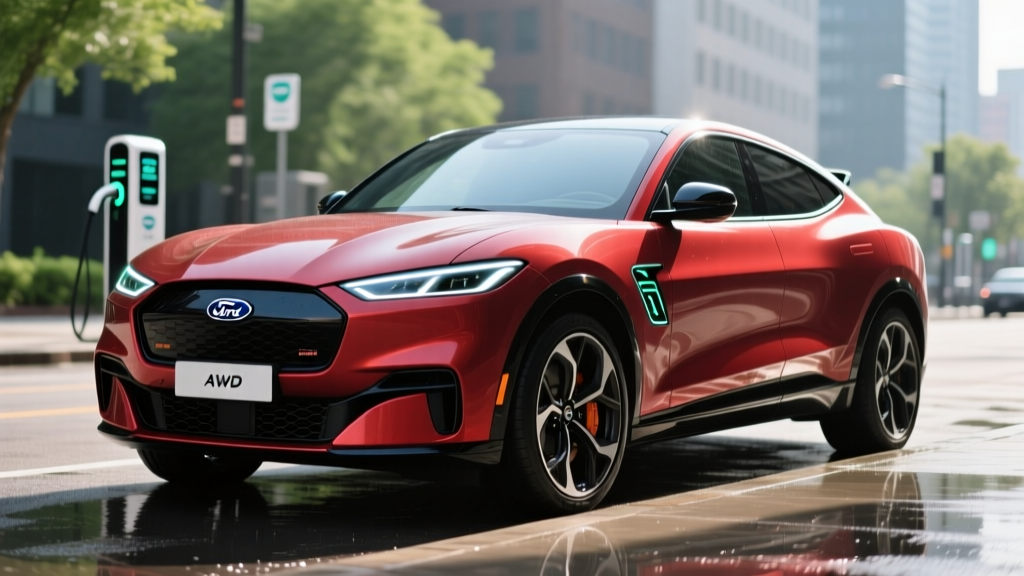
Is the Model Y worth buying vs. the Hyundai Ioniq 5 or Ford Mach-E?
If Supercharger access and the lowest price in the segment matter most, the Model Y wins. The Ioniq 5 charges slightly faster (18 vs 21 minutes 10–80%) and has a more conventional interior with physical controls. The Mach-E offers a larger battery but charges considerably slower. For road-trip convenience and total cost, the Model Y still leads.
What are the biggest pros and cons?
Top pros: Supercharger network, fast charging, spacious cabin, strong value after tax credits, OTA updates. Top cons: No turn-signal stalk, firm ride, touchscreen-only controls, FSD costs extra and remains Level 2, rear visibility is limited.
Does the 2026 Model Y qualify for the $7,500 federal EV tax credit?
All trims meet the MSRP cap ($80,000 for SUVs) and are assembled in the US. However, eligibility depends on your income (≤$150K single / ≤$300K joint), the specific battery-sourcing compliance at time of purchase, and whether you've already claimed the credit on another vehicle. The RWD trim's LFP battery sourcing has been subject to periodic changes — always check the IRS qualified vehicles list for the exact trim and delivery date.
What is the Model Y's battery warranty?
Tesla covers the battery and drive unit for 8 years or 100,000 miles (RWD) and 8 years or 120,000 miles (Long Range/Performance), whichever comes first. The warranty guarantees at least 70% capacity retention over that period. Real-world degradation data from fleet operators suggests most Model Y packs retain 90%+ capacity at 100,000 miles.
For the latest EPA efficiency data, see fueleconomy.gov. For safety ratings, check NHTSA and IIHS.