The Tesla Model Y's Door Design: Form Over Function?
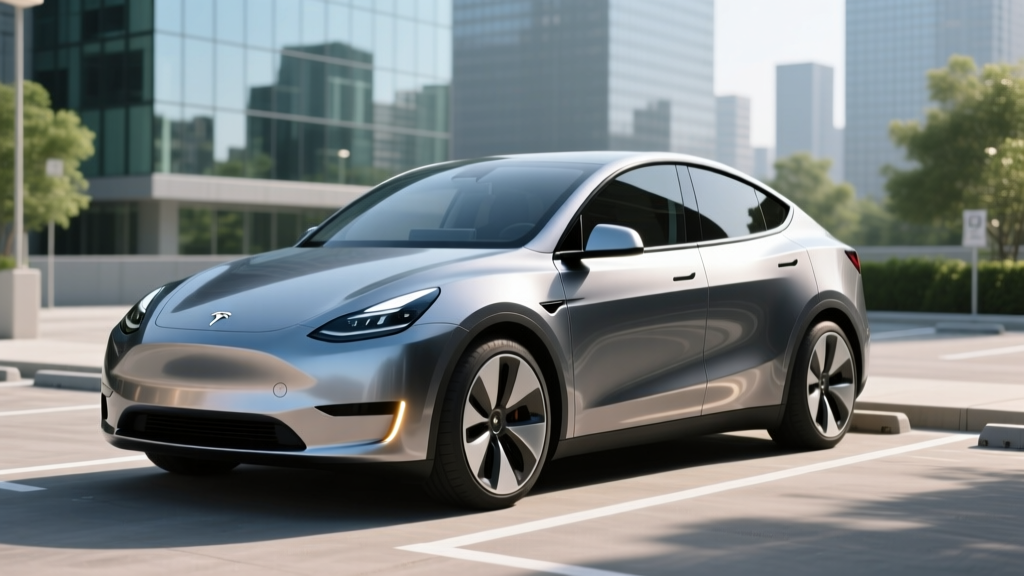
If you've watched a Tesla Model Y owner fumble with a door handle in a grocery store parking lot, you've witnessed one of the most polarizing design choices in modern EVs. The 2026 Tesla Model Y retains the flush, electronic push-button door handles that have defined the platform since its 2020 debut — and the 2025 "Juniper" refresh did little to soften the learning curve for new passengers. For a vehicle that sells in the hundreds of thousands annually, the Tesla Model Y doors remain a genuine ownership talking point, blending minimalist aesthetics with real-world usability trade-offs that every prospective buyer should understand before signing a delivery agreement.
This review covers the full 2026 Tesla Model Y lineup — from door mechanics and entry quirks to range, charging, pricing, and tax credit eligibility — with the exact numbers you need to make an informed purchase decision.
Door Mechanics, Entry System & Everyday Usability
The 2026 Model Y uses electronic push-button door handles that sit flush with the body panel. To open from the outside, you press the wide end of the handle with your thumb, and the door unlatches electronically. There is no mechanical pull lever as you'd find on a Hyundai Ioniq 5 or Ford Mustang Mach-E.
From the inside, the 2025 Juniper refresh replaced the original Model Y's touchscreen-based door release with a physical button on the door panel above the armrest — a meaningful improvement that addresses one of the loudest complaints from first-generation owners. However, rear passengers still rely on a small electronic button rather than a traditional pull handle, which can confuse children and ride-share passengers.
Keyless Entry & Phone-as-Key
The Model Y supports three entry methods:
- Phone-as-key (Bluetooth): Your smartphone unlocks the car as you approach. This is the default for most owners and works reliably within ~6 feet.
- RFID key card: Tap the B-pillar to unlock — useful as a backup or for valet situations.
- Key fob (optional, ~$175): A traditional fob with proximity unlock and trunk release.
Real-World Door Drawbacks
- Electronic handles can be unintuitive for first-time passengers, especially in rain or with gloves.
- Ice buildup around flush handles in freezing climates can prevent actuation — a heated garage or handle de-icer helps.
- The 12V auxiliary battery powers the electronic latches. If the 12V dies (rare but possible), manual release cables exist inside the cabin but are not obvious to find.
- Frameless window design looks sleek but can produce more wind noise at highway speeds vs. framed competitors.
2026 Tesla Model Y Full Spec Sheet
| Specification | Long Range RWD | Long Range AWD | Performance |
|---|---|---|---|
| EPA Range | 320 miles | 308 miles | 277 miles |
| Battery (usable) | ~75 kWh (NMC) | ~75 kWh (NMC) | ~75 kWh (NMC) |
| Drivetrain | Rear-Wheel Drive | Dual Motor AWD | Dual Motor AWD |
| Horsepower | 346 hp | 384 hp | 456 hp |
| 0-60 mph | 5.8 sec | 4.8 sec | 3.5 sec |
| Peak DC Fast Charge | 250 kW | 250 kW | 250 kW |
| 10-80% DC Charge | ~25 min | ~25 min | ~25 min |
| Level 2 Home Charge (kW) | 11.5 kW (48A) | 11.5 kW (48A) | 11.5 kW (48A) |
| MPGe (combined) | 119 MPGe | 111 MPGe | 104 MPGe |
| kWh/100 mi | 28 | 30 | 32 |
| Base MSRP | $44,990 | $47,990 | $52,490 |
Source: fueleconomy.gov and Tesla.com, 2026 model year.
Range, Efficiency & Real-World Expectations
The Long Range RWD carries an EPA estimate of 320 miles. In real-world mixed driving at 70 mph highway speeds, expect approximately 265-285 miles. In cold weather (below 32°F), range can drop to 220-250 miles due to cabin heating demand and battery resistance. City driving with frequent regenerative braking can approach or slightly exceed the EPA figure.
The Model Y's efficiency remains a benchmark in its class. At 28 kWh per 100 miles (Long Range RWD), it converts electricity into motion more effectively than most competing electric crossovers. The heat pump, standard since the 2021 refresh, reduces cold-weather range loss compared to resistive heating — but physics still apply, and sub-freezing temperatures meaningfully compress your usable range.
Tesla's navigation system includes battery preconditioning: when you route to a Supercharger, the car warms the battery en route to optimize the charge curve on arrival. This is a tangible advantage for road-trip charging speed that not all competitors match.
Charging Speed: DC Fast, Level 2 & Home Setup
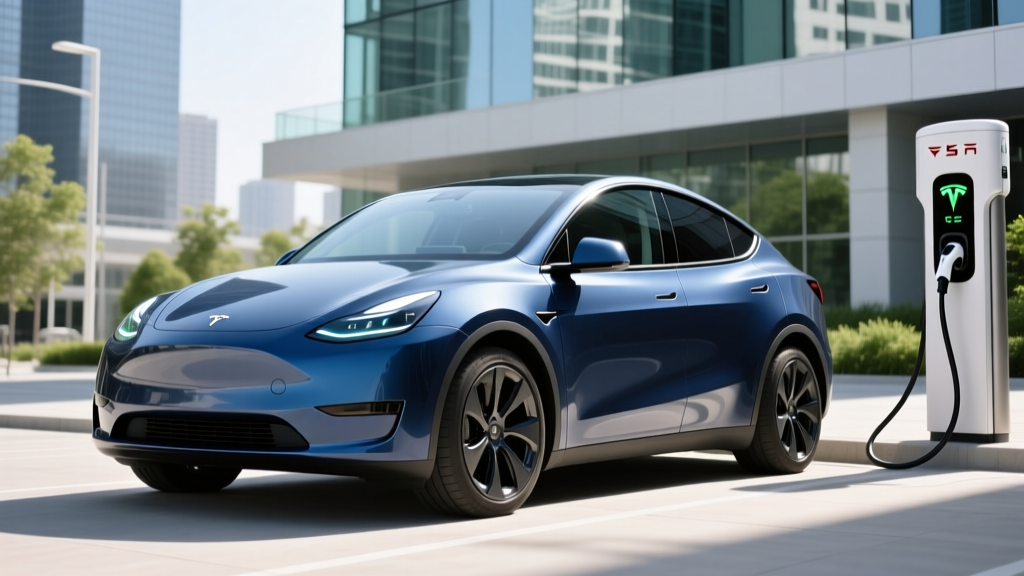
The 2026 Model Y supports a peak DC fast-charge rate of 250 kW on Tesla Superchargers (V3 and V4 stalls). This translates to a 10-80% charge in approximately 25 minutes under ideal conditions. Note that charge speed is not sustained — the curve tapers significantly above 60% state of charge, so the final 20% takes disproportionately longer.
| Charging Method | Power (kW) | Miles Added per Hour | Notes |
|---|---|---|---|
| Level 1 (120V outlet) | ~1.4 kW | ~4-5 mi/hr | Emergency/trickle only |
| Level 2 (240V, 48A Wall Connector) | 11.5 kW | ~38-44 mi/hr | Full overnight charge in ~8 hrs |
| Level 2 (240V, 32A Mobile Connector) | 7.7 kW | ~25-30 mi/hr | Slower but adequate for most commutes |
| DC Fast (Tesla Supercharger V3) | Up to 250 kW | ~180 mi in 15 min | Peak rate; tapers above 60% |
| DC Fast (CCS adapter at non-Tesla) | Up to 150-200 kW | Varies by station | Adapter sold separately (~$175) |
Home charging with Tesla's Wall Connector on a 60A circuit delivers 11.5 kW, adding roughly 40 miles of range per hour — enough to fully replenish the battery overnight. Installation costs typically range from $500 to $2,000 depending on panel proximity and local permit requirements. If your home has a 200A electrical panel with spare capacity, a straightforward install is likely. Older homes with 100A service may require a panel upgrade ($1,500-$3,000+).
Tesla's NACS (North American Charging Standard) connector is now the industry standard adopted by Ford, GM, Rivian, and others for Supercharger access. Model Y owners benefit from native compatibility — no adapter needed at any of the 6,000+ Supercharger stalls in North America.
Pricing, Trims & Federal Tax Credit Eligibility
| Trim | Base MSRP | Est. Federal Credit | Effective Price |
|---|---|---|---|
| Long Range RWD | $44,990 | Up to $7,500* | ~$37,490 |
| Long Range AWD | $47,990 | Up to $7,500* | ~$40,490 |
| Performance | $52,490 | Up to $7,500* | ~$44,990 |
*Federal tax credit eligibility depends on multiple factors. See details below.
IRS §30D Tax Credit Requirements (2026)
The federal EV tax credit under IRS §30D offers up to $7,500 for qualifying new EVs, but eligibility is not automatic. Key rules:
- MSRP cap: SUVs/crossovers must have an MSRP at or below $80,000 — all Model Y trims qualify.
- Buyer income cap: Modified AGI must not exceed $150,000 (single), $225,000 (head of household), or $300,000 (joint).
- Battery sourcing: Critical minerals and battery components must meet phased-in domestic/free-trade sourcing thresholds. Tesla's US-built batteries generally satisfy these requirements, but always verify with your dealer and tax professional for the specific VIN.
- Point-of-sale transfer: As of 2024, you can transfer the credit to the dealer at purchase, reducing your out-of-pocket cost immediately rather than waiting for a tax refund.
Tesla has historically qualified for the full $7,500 credit on the Model Y, but battery sourcing rules tighten annually. Confirm current eligibility on fueleconomy.gov before purchasing.
Cargo, Passenger Space & Interior Practicality
The Model Y is classified as a compact SUV, and its cargo capacity is one reason it dominates family-EV sales:
- Cargo volume (rear seats up): 30.2 cu ft
- Cargo volume (rear seats folded): 72.1 cu ft
- Front trunk (frunk): 4.1 cu ft — enough for a charging cable bag and small groceries
- Rear legroom: 38.4 inches
- Front headroom: 41.0 inches
- Seating: 5 standard; optional 7-seat layout (third row is child-only, ~27" legroom)
The interior is spartan by design — a single 15.4-inch center touchscreen controls nearly everything, including climate vents, mirror adjustment, and glovebox release. The 2025 Juniper refresh added ventilated front seats, ambient lighting, a rear-seat touchscreen, and improved sound insulation. Build quality from the Fremont and Austin factories has improved markedly since the 2020-2022 era, though panel gap consistency still trails Korean and German competitors.
Technology, Driver Assistance & Safety
Every 2026 Model Y includes Tesla Autopilot as standard — a Level 2 driver-assistance system providing adaptive cruise control and lane-centering on highways. Tesla's optional Full Self-Driving (Supervised) package ($8,000 or $99/month) adds automated lane changes, traffic-light recognition, and city-street navigation, but remains a Level 2 system requiring full driver engagement at all times.
Tesla Autopilot and FSD (Supervised) are SAE Level 2 systems. The driver must remain attentive, hands on or near the wheel, and ready to intervene instantly. These are not self-driving systems. Only Level 4 services like Waymo operate without a human driver, and those are limited to specific geofenced areas.
The infotainment system runs on Tesla's proprietary OS with a responsive interface, built-in navigation, streaming apps (Netflix, YouTube while parked), and a phone app that enables remote climate control, charging monitoring, and vehicle location. There is no Apple CarPlay or Android Auto — a deliberate omission that frustrates some buyers but keeps the Tesla ecosystem self-contained.
Safety ratings are strong: the Model Y earned a 5-star overall rating from NHTSA and was named an IIHS Top Safety Pick+ in prior model years. Standard features include automatic emergency braking, blind-spot monitoring, and 360-degree cameras.
Warranty & Long-Term Ownership
- Basic vehicle warranty: 4 years / 50,000 miles
- Battery & drive unit: 8 years / 120,000 miles (Long Range), 8 years / 100,000 miles (Performance), with a guaranteed minimum 70% capacity retention
- Roadside assistance: 4 years / 50,000 miles
Tesla's battery warranty is competitive, though the 70% retention threshold is lower than Hyundai's 70% at 10 years/100,000 miles. Real-world degradation data from Tesla's fleet suggests most Model Y batteries retain 88-92% capacity after 100,000 miles. The NMC chemistry used in Long Range and Performance trims offers higher energy density than LFP (lithium iron phosphate), but Tesla recommends daily charging to 80% rather than 100% for optimal longevity — unlike LFP packs that tolerate regular full charges.
Pros and Cons: The Honest Verdict
- Class-leading efficiency (119 MPGe combined, LR RWD)
- Supercharger network access — most reliable DC charging in North America
- Excellent cargo space (72 cu ft seats-folded)
- Strong acceleration across all trims
- Over-the-air updates continuously add features
- Competitive pricing after $7,500 federal credit
- Door handles unintuitive for guests, problematic in ice
- No Apple CarPlay or Android Auto
- Minimalist interior lacks physical climate/audio controls
- FSD ($8,000) remains Level 2, not autonomous
- Ride quality firm on 20"/21" wheels
- Build quality improving but still inconsistent vs. legacy automakers
Who Should Buy the 2026 Tesla Model Y?
- Choose the Model Y if: You want maximum Supercharger network access, top-tier efficiency, strong cargo capacity, and you're comfortable with a touchscreen-centric interface. The Long Range AWD at ~$40,490 (after credit) is the value sweet spot for families and commuters alike.
- Look elsewhere if: You prioritize physical controls, want CarPlay/Android Auto, need a smoother ride on rough roads, or live in an extreme cold climate where flush door handles and range loss compound. The Hyundai Ioniq 5 or Kia EV6 offer more conventional ergonomics with 800V charging architecture.
Frequently Asked Questions
What is the real-world range of the 2026 Tesla Model Y?
The Long Range RWD is EPA-rated at 320 miles, but expect 265-285 miles in real-world highway driving and as low as 220-250 miles in sub-freezing temperatures. The AWD and Performance trims rate at 308 and 277 miles EPA, respectively.
How fast does the Model Y charge at home and on the road?
At home on a 240V/48A Wall Connector, the Model Y charges at 11.5 kW, adding ~40 miles of range per hour (full charge in ~8 hours). On a Tesla Supercharger, it peaks at 250 kW and charges from 10-80% in approximately 25 minutes.
Does the 2026 Tesla Model Y qualify for the federal EV tax credit?
The Model Y qualifies for up to $7,500 under IRS §30D, provided the buyer meets income caps ($150K single / $300K joint) and the vehicle's battery sourcing meets current-year requirements. The MSRP cap for SUVs is $80,000 — all Model Y trims fall well below. Verify eligibility on fueleconomy.gov and with a tax professional before purchase.
Are the Tesla Model Y doors a problem in winter?
The flush electronic handles can freeze in icy conditions, making them difficult to actuate. Owners in cold climates recommend parking in a garage when possible or carrying a small de-icer spray. The frameless windows can also experience slight ice adhesion to the door seal.
Is the Tesla Model Y worth buying over the Hyundai Ioniq 5 or Ford Mustang Mach-E?
The Model Y wins on Supercharger access, efficiency, and software. The Ioniq 5 offers faster 800V charging (10-80% in ~18 min on compatible chargers), CarPlay, and more physical controls. The Mach-E provides a more traditional driving feel. If Supercharger reliability is your priority, the Model Y is the strongest choice; if you prefer conventional ergonomics, test-drive all three.
What is the battery warranty on the 2026 Model Y?
Tesla covers the battery and drive unit for 8 years / 120,000 miles (Long Range) or 8 years / 100,000 miles (Performance), guaranteeing a minimum 70% capacity retention over the warranty period.