Quick Verdict: The Tesla Model Y in 2026
The Tesla Model Y remains the benchmark compact electric SUV in 2026, balancing efficiency, Supercharger access, and software refinement in a segment now crowded with rivals. For shoppers researching everything from cargo space to the now-iconic Tesla door handle design, the Model Y delivers a compelling package — but not without trade-offs in ride comfort and interior material quality that competitors like the Hyundai Ioniq 5 and Ford Mustang Mach-E have closed in on.
This review covers the 2026 Model Y Long Range AWD and Performance trims with exact EPA figures, real-world range data, charging speeds, and federal tax credit eligibility under current IRS §30D rules.
| Spec | Long Range AWD | Performance |
|---|---|---|
| EPA Range | 320 miles | 293 miles |
| Battery (usable) | ~75 kWh, NMC | ~75 kWh, NMC |
| MPGe (combined) | 122 MPGe | 111 MPGe |
| kWh/100 mi | 28 kWh | 30 kWh |
| 0–60 mph | 4.8 sec | 3.5 sec |
| Horsepower | 384 hp | 456 hp |
| Drivetrain | Dual-Motor AWD | Dual-Motor AWD |
| Max DC Charge | 250 kW | 250 kW |
| 10–80% DC Time | ~25 min | ~25 min |
| Level 2 Rate | 11.5 kW (~44 mi/hr) | 11.5 kW (~44 mi/hr) |
| Cargo (rear up/down) | 30.2 / 72.1 cu ft | 30.2 / 72.1 cu ft |
| Rear Legroom | 41.6 in | 41.6 in |
| Base MSRP | $44,990 | $48,990 |
| Battery Warranty | 8 yr / 120,000 mi | 8 yr / 120,000 mi |
Range & Efficiency: EPA vs. the Real World
EPA Estimated: 320 miles (Long Range AWD)
Real-World Expectation: 270–295 miles on mixed highway driving at 70 mph; 230–260 miles in sustained cold weather (below 32°F) without preconditioning.
The Model Y Long Range AWD carries an EPA-estimated 320 miles of range on its roughly 75 kWh usable NMC battery pack. That efficiency — 28 kWh per 100 miles — is among the best in the compact EV SUV class, a result of Tesla's heat pump thermal management system and low drag coefficient (0.23 Cd).
On a 250-mile highway loop at 70–75 mph in 55°F weather, expect to use roughly 85–90% of the battery, landing you in the 270–295 mile real-world window. Cold weather is the Model Y's efficiency kryptonite: below freezing, range can drop 15–25% without preconditioning. Tesla's battery preconditioning feature (activated when navigating to a Supercharger) mitigates this on DC fast-charge runs, but daily cold commutes without preconditioning will noticeably reduce your usable range.
The Performance trim sacrifices 27 miles of EPA range (293 miles) for its stickier tires, lower suspension, and more aggressive power delivery — a trade-off worth understanding if you prioritize acceleration over maximum distance.
Charging: Supercharger Network and Home Setup
| Level | Power | Miles Added per Hour | Notes |
|---|---|---|---|
| Level 1 (120V) | ~1.4 kW | ~4–5 mi/hr | Emergency/trickle only |
| Level 2 (240V, 48A) | 11.5 kW | ~44 mi/hr | Full charge in ~7 hours |
| DC Fast (V3 Supercharger) | 250 kW peak | ~1,000 mi/hr (peak) | 10–80% in ~25 min |
| DC Fast (V4 Supercharger) | 250 kW peak | ~1,000 mi/hr (peak) | Newer stalls, CCS adapter compatible |
The Model Y peaks at 250 kW on V3 and V4 Superchargers, adding up to 200 miles in roughly 15 minutes under ideal conditions. The full 10–80% session takes about 25 minutes. However, like all EVs, the Model Y's charge curve tapers significantly above 80% — going from 80% to 100% at DC fast speeds can add another 20+ minutes. For road trips, plan your stops around the 10–80% window for the best time efficiency.
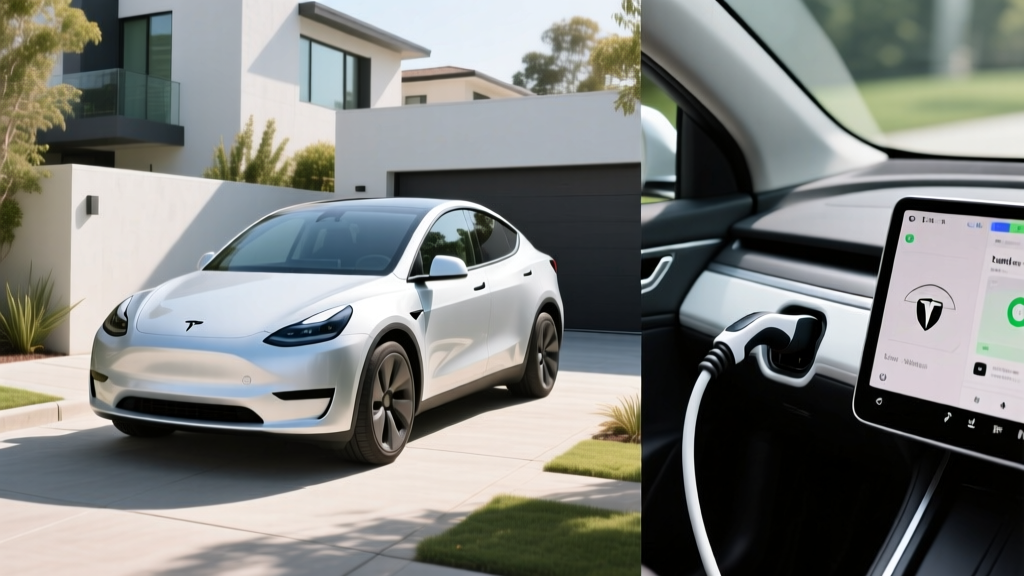
At home, the onboard charger accepts up to 11.5 kW on a 240V/48A circuit (Tesla Wall Connector or equivalent NACS-equipped Level 2 unit). That translates to roughly 44 miles of range per hour of charging, meaning a depleted battery fully replenishes overnight in about 7 hours. A Tesla Wall Connector costs around $475, plus $500–$2,000 for professional installation depending on your panel capacity and conduit run length.
Tesla's NACS connector is now the industry standard, with Ford, GM, Rivian, and others adopting it. Model Y owners benefit from native Supercharger access without adapters — a meaningful convenience advantage over CCS-equipped rivals still reliant on third-party networks like Electrify America.
Performance and the Tesla Door Experience
The Model Y Long Range AWD hits 0–60 mph in 4.8 seconds with 384 horsepower from its dual-motor setup. The Performance trim drops that to 3.5 seconds and 456 hp — sports-car territory in a family crossover. Instant torque delivery and a low center of gravity (battery pack mounted under the floor) give the Model Y confident handling, though the ride quality remains firm, especially on 21-inch Performance wheels.
The Tesla Door Handle: Design and Practicality
One of the first things new owners notice is the Tesla door handle design. Unlike traditional pull handles, the Model Y uses flush-mounted electronic handles: press the wide end, and the handle pivots out for you to pull. This contributes to the vehicle's aerodynamic profile but has a learning curve — passengers unfamiliar with the mechanism often fumble on first use.
Inside, the Model Y uses electronic push-button door releases located on the door panel. In the event of a 12V power failure, manual mechanical releases exist (located in the front door pockets and behind the rear door panels), but their placement is not intuitive. Every Model Y owner should locate these emergency releases before they're needed — NHTSA has flagged electronic door release awareness as a safety consideration across the EV industry.
For families with young children, the electronic interior releases can be a concern. Tesla's child-lock setting disables the rear electronic buttons, requiring the manual override — something to practice before loading kids into car seats.
Pricing, Tax Credits, and Ownership Cost
| Trim | Base MSRP | Est. After §30D Credit | Destination |
|---|---|---|---|
| Long Range AWD | $44,990 | ~$37,490* | $1,390 |
| Performance | $48,990 | ~$41,490* | $1,390 |
*Assumes full $7,500 federal tax credit eligibility. Your actual credit depends on current-year IRS §30D requirements.
The Model Y Long Range AWD starts at $44,990 before destination, and the Performance trim at $48,990. Both trims fall under the IRS §30D SUV MSRP cap of $80,000, making them potentially eligible for the full $7,500 federal tax credit — provided you meet the following requirements:
- Income caps: Modified AGI ≤ $150,000 (single), $225,000 (head of household), $300,000 (married filing jointly)
- MSRP cap: Vehicle MSRP must not exceed $80,000 for SUVs (Model Y qualifies)
- Battery sourcing: Critical minerals and battery components must meet phased-in domestic/free-trade sourcing percentages — Tesla's US-built packs have generally complied, but verify at point of sale
- Point-of-sale transfer: As of 2024+, you can transfer the credit to the dealer for an immediate price reduction rather than waiting for tax filing
- One credit per VIN, one vehicle per taxpayer per year
Always confirm eligibility with your tax professional and the dealer at purchase. Sourcing requirements tighten annually, and a vehicle that qualifies in January may have different compliance status later in the year.
On a 5-year total cost of ownership basis, the Model Y benefits from low fuel costs (~$0.04–$0.06/mile on home charging vs. $0.12–$0.15/mile for a comparable gas SUV), minimal maintenance (no oil changes, reduced brake wear from regen), and strong resale value. Insurance premiums, however, tend to run 15–25% higher than comparable ICE vehicles — get quotes before committing.
Interior, Tech, and Driver Assistance
The Model Y interior is minimalist by design: a single 15.4-inch touchscreen handles navigation, media, climate, and vehicle settings. There is no instrument cluster — speed and range display on the left edge of the main screen. Build quality on the 2026 refresh has improved with ventilated front seats, ambient lighting, and a rear-seat entertainment screen, but material quality still trails the Hyundai Ioniq 5's soft-touch surfaces.
Autopilot comes standard and includes adaptive cruise control, lane centering, and automatic emergency braking. The optional Full Self-Driving (Supervised) package ($8,000 or $99/month) adds automated lane changes, traffic light/stop sign recognition, and Navigate on Autopilot.
SAE Level 2 — Not Self-Driving: Both Autopilot and FSD (Supervised) are Level 2 driver-assistance systems. You must keep your hands on the wheel and eyes on the road at all times. Tesla's cabin camera monitors attentiveness and will issue escalating warnings if you look away. Full self-driving capability (Level 4/5) is not available in any consumer Tesla as of 2026.
Cargo space is generous: 30.2 cubic feet behind the rear seats and 72.1 cubic feet with them folded — enough for a week of camping gear or a Costco haul. The front trunk (frunk) adds 4.1 cubic feet for charging cables or a small bag.
Pros, Cons, and Who Should Buy
Pros
- Best-in-class Supercharger network access (native NACS)
- Top-tier efficiency at 28 kWh/100 mi
- Strong 0–60 performance even on base Long Range trim
- Over-the-air updates continuously add features
- Spacious cargo area (72.1 cu ft max)
- Federal tax credit eligible (verify sourcing compliance)
Cons
- Firm ride quality, especially on 21" wheels
- Interior materials lag behind Hyundai/Kia competitors
- Flush Tesla door handles confuse first-time passengers
- Electronic interior door releases require emergency-override familiarity
- FSD (Supervised) costs $8,000 and remains Level 2
- No Apple CarPlay or Android Auto
Who the Model Y Suits Best
Choose the Model Y if: You prioritize Supercharger convenience, want strong real-world range with excellent efficiency, need family cargo space, and value software-driven features and OTA updates.
Look elsewhere if: You want a plush ride (Ioniq 5), physical buttons and Apple CarPlay (Mach-E), or the longest possible EPA range in this segment (Ioniq 5 Long Range at 318 mi is close, but the Model Y's Supercharger advantage often outweighs a 2-mile difference).
Frequently Asked Questions
What is the real-world range of the 2026 Tesla Model Y?
The EPA rates the Long Range AWD at 320 miles. In real-world highway driving at 70 mph, expect 270–295 miles. In cold weather below freezing without preconditioning, plan for 230–260 miles.
How fast does the Model Y charge at home and on the road?
On a 240V Level 2 home charger, the Model Y adds about 44 miles of range per hour (11.5 kW), fully charging overnight in ~7 hours. On a V3/V4 Supercharger, it peaks at 250 kW and charges from 10–80% in approximately 25 minutes.
Does the Tesla Model Y qualify for the $7,500 federal tax credit?
Both trims are under the $80,000 SUV MSRP cap and have historically qualified. However, eligibility depends on your income (AGI caps apply), battery critical-mineral sourcing compliance for the current year, and purchasing new. Verify with your tax professional and at the point of sale per IRS §30D guidelines.
Is the Tesla door handle a problem?
The flush-mounted exterior handles have a learning curve for passengers but work reliably once understood. The interior electronic push-button releases are less intuitive in emergencies — locate the manual override pulls in each door before you need them.
Is the Model Y worth buying over the Ioniq 5 or Mach-E?
If native Supercharger access and software features are priorities, the Model Y remains the default choice. If ride comfort, interior quality, or Apple CarPlay matter more, test-drive the Ioniq 5 and Mach-E. The gap between these three has narrowed significantly in 2026.
What is the battery warranty on the Model Y?
Tesla covers the battery and drive unit for 8 years or 120,000 miles (whichever comes first), with a minimum 70% capacity retention guarantee over that period.