Why Dog Mode Put the Tesla Model Y on Every Pet Owner's Shortlist
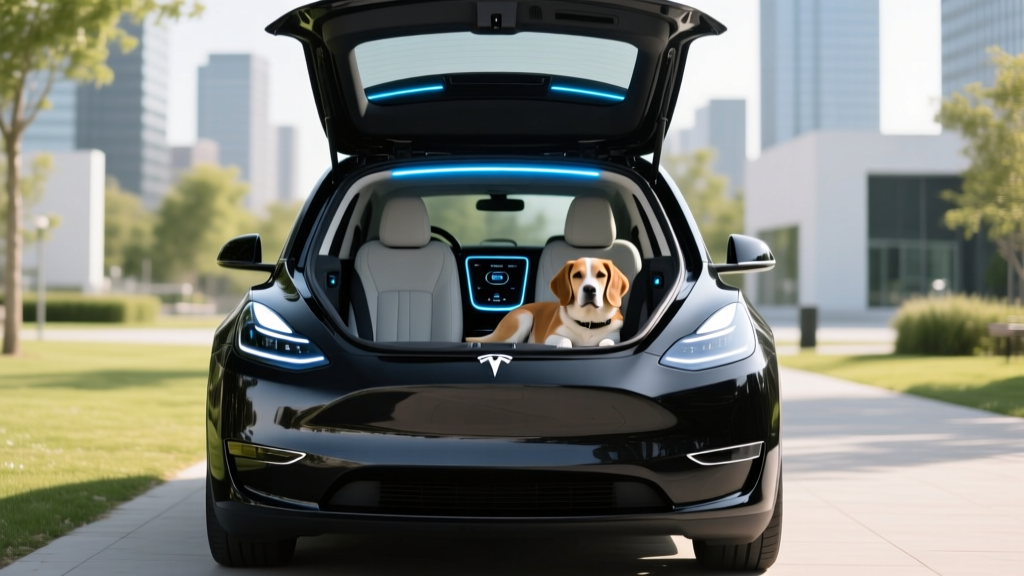
Search "dog mode tesla y" and you'll find a feature that has quietly become one of the strongest lifestyle differentiators in the EV market. Dog Mode keeps your Tesla Model Y's cabin climate running while you step away, displays your set temperature on the exterior touchscreen message so passersby know your pet is safe, and disables interior motion-sensor alarms that would otherwise trigger from a moving animal. It's a software feature wrapped around serious HVAC hardware — a heat pump that draws from the Model Y's high-voltage traction battery to maintain cabin temperature for hours without a running engine.
But Dog Mode only works because the Model Y's underlying platform delivers the range, efficiency, and thermal management to support it. This review covers the full 2026 Tesla Model Y — the refreshed "Juniper" generation — with exact EPA range figures, charging speeds, pricing, federal tax credit eligibility, and real-world ownership data you need before buying.
2026 Tesla Model Y Core Specifications
| Spec | Long Range RWD | Long Range AWD | Performance AWD |
|---|---|---|---|
| EPA Range | 320 mi | 294 mi | 277 mi |
| Battery (usable) | ~75 kWh, LFP | ~75 kWh, NMC | ~75 kWh, NMC |
| Max DC Fast Charge | 250 kW | 250 kW | 250 kW |
| 10–80% DC Time | ~25 min | ~25 min | ~25 min |
| Level 2 Home Charge | 11.5 kW (~44 mi/hr) | 11.5 kW (~44 mi/hr) | 11.5 kW (~44 mi/hr) |
| 0–60 mph | 5.8 sec | 4.8 sec | 3.5 sec |
| Horsepower | 346 hp | 384 hp | 456 hp |
| Drivetrain | RWD (single motor) | AWD (dual motor) | AWD (dual motor) |
| Efficiency (MPGe) | 123 MPGe combined | 115 MPGe combined | 111 MPGe combined |
| kWh/100 mi | 27 kWh | 29 kWh | 30 kWh |
| Base MSRP | $44,990 | $47,990 | $52,490 |
All trims seat five, offer an optional third-row for seven-passenger capacity (reducing cargo significantly), and ship with Tesla's 15.4-inch center touchscreen running the latest software stack including Dog Mode, Sentry Mode, and Camp Mode.
Real-World Range vs. EPA Estimates
The Juniper refresh improved aerodynamic efficiency with a smoother front fascia, updated underbody panels, and revised wheel designs. Tesla's heat pump — standard across all trims — reduces winter range loss compared to resistive heating systems found in older EVs, but cold weather still cuts range by 20–30% depending on cabin temperature settings and whether you precondition.
Dog Mode energy draw: In 75°F ambient conditions, Dog Mode holding a 72°F cabin draws roughly 0.5–1.0 kW. Over two hours, that's 1–2 kWh — approximately 4–8 miles of range consumed. In extreme heat (100°F+) or cold (below freezing), the draw increases to 2–4 kW, meaning you could use 4–8 kWh (16–32 miles of range) over two hours. Always leave a minimum 20% state-of-charge buffer when activating Dog Mode.
Charging Speed: DC Fast and Home Level 2
| Charging Level | Power (kW) | Miles Added per Hour | Notes |
|---|---|---|---|
| Level 1 (120V standard outlet) | ~1.4 kW | ~4–5 mi/hr | Emergency/trickle only |
| Level 2 (240V home Wall Connector) | 11.5 kW | ~44 mi/hr | Full charge in ~7–8 hours |
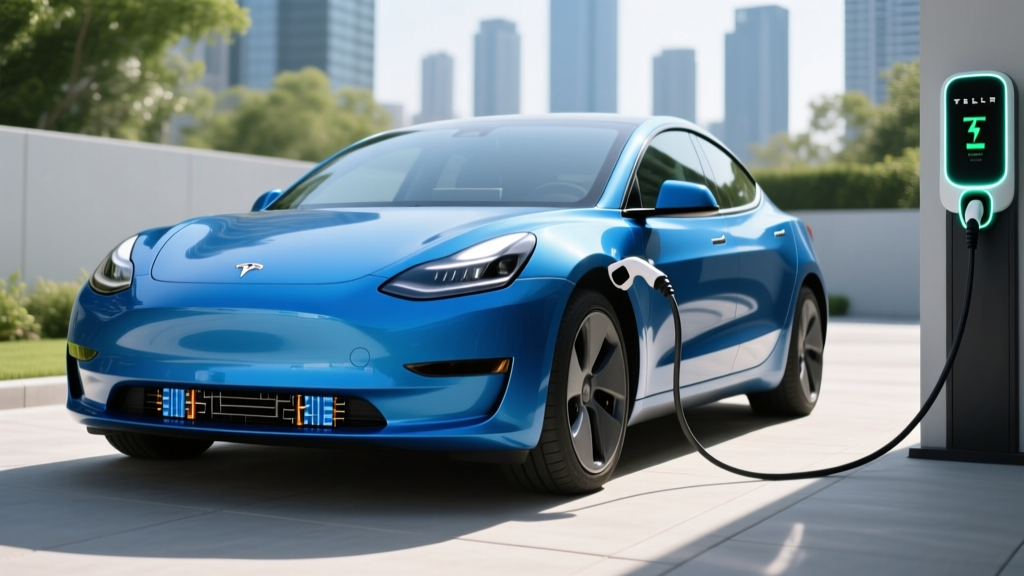
| DC Fast (Tesla Supercharger V3/V4) | Up to 250 kW peak | ~180 mi in 15 min | 10–80% in ~25 min; tapers above 80% |
| DC Fast (CCS adapter at non-Tesla stations) | Up to 175–250 kW | Varies by station | Requires Tesla CCS adapter (included) |
The Model Y's charging curve peaks near 250 kW between 10–30% state of charge, then progressively tapers. From 50–80%, expect roughly 100–120 kW sustained. This is why the 10–80% metric matters more than peak kW — the ~25-minute time reflects real-world charging behavior. Above 80%, the charge rate drops sharply to protect battery health, so plan to unplug at 80% on road trips unless you need the final miles.
For home charging, Tesla's Gen 2 Wall Connector at $425 delivers the full 11.5 kW on a 60-amp circuit (48-amp continuous draw). Most owners need a panel evaluation; a 200-amp service panel typically accommodates the install without an upgrade, but older homes with 100-amp service will likely need a panel upgrade adding $1,500–$3,000 to the installation cost.
Dog Mode, Camp Mode, and Standout Technology
Dog Mode is activated through the climate controls menu or the Tesla app. Once enabled, it locks the cabin temperature, displays a message on the exterior screen ("My owner will be back soon. Don't worry, the A/C is on and the cabin is [XX]°F"), disables interior motion sensors for Sentry Mode, and sends a notification to your phone if the battery drops below 20%. If the battery reaches a critical threshold, the car will roll down windows slightly and alert you.
Key technology features:
- 15.4-inch center touchscreen with Netflix, YouTube, and gaming while parked
- Autopilot (SAE Level 2) — adaptive cruise and lane-keeping included standard; driver must keep hands on wheel
- Full Self-Driving (Supervised) — $8,000 upgrade, still SAE Level 2, requires active supervision
- Sentry Mode — 360-degree camera recording when parked (adds ~1 mile of range drain per hour)
- Camp Mode — maintains climate and USB power overnight for car camping
- HEPA air filtration with bioweapon defense mode (pressurizes cabin, filters outside air)
- Ventilated front seats and acoustic glass (Juniper refresh additions)
Pricing, Trim Levels, and Federal Tax Credit Eligibility
| Trim | Base MSRP | As-Tested (common config) | Est. Price After §30D Credit |
|---|---|---|---|
| Long Range RWD | $44,990 | $46,490 (w/ paint + wheels) | ~$37,490–$44,990* |
| Long Range AWD | $47,990 | $49,990 (w/ paint + tow) | ~$40,490–$47,990* |
| Performance AWD | $52,490 | $55,490 (w/ FSD + paint) | ~$44,990–$52,490* |
*Tax credit eligibility depends on multiple factors. See checklist below.
IRS §30D Federal Tax Credit Requirements (current-year rules per irs.gov):
- MSRP cap: SUVs must be at or below $80,000 — all Model Y trims qualify
- Buyer income cap: AGI must not exceed $150,000 (single), $225,000 (head of household), or $300,000 (joint)
- Battery sourcing: Up to $3,750 for critical minerals + up to $3,750 for battery component assembly — sourcing requirements tighten annually; verify current-year battery compliance on Tesla's website or IRS guidance
- Point-of-sale transfer: You can apply the credit as an instant rebate at purchase rather than waiting for tax filing
- Tax liability: The credit is non-refundable — you must owe at least the credit amount in federal taxes (or transfer at point of sale)
The Long Range RWD with LFP battery may face different critical-mineral sourcing outcomes than NMC trims depending on supply-chain shifts. Always confirm your specific vehicle's credit eligibility with Tesla at delivery and consult a tax professional for your personal situation.
Cargo Space, Interior Dimensions, and Practicality
The Juniper Model Y retains its class-leading cargo versatility:
- Cargo behind second row: 30.2 cu ft
- Cargo with second row folded: 72.1 cu ft
- Front trunk (frunk): 4.1 cu ft — enough for a charging cable bag and groceries
- Rear legroom: 41.6 inches
- Front headroom: 41.0 inches
- Towing capacity: 3,500 lbs (AWD trims, with tow hitch package)
For pet owners using Dog Mode regularly, the flat-load cargo floor and low liftover height make it easy for dogs to enter and exit. The optional all-weather cargo liner ($175) protects against claws and accidents. The HEPA filtration system is a genuine advantage for pets with respiratory sensitivities.
Battery Warranty, Degradation, and Longevity
Tesla covers the Model Y battery and drive unit with an 8-year / 120,000-mile warranty (whichever comes first) with a minimum 70% capacity retention guarantee. If your battery degrades below 70% state of health within the warranty period, Tesla will repair or replace it at no cost.
LFP vs. NMC chemistry differences:
- LFP (Long Range RWD): Can be charged to 100% daily without accelerated degradation; slightly heavier, lower energy density, better cycle life (2,000+ cycles), more resistant to thermal runaway
- NMC (Long Range AWD, Performance): Tesla recommends daily charge to 80%, 100% only for trips; higher energy density, better cold-weather performance, approximately 1,000–1,500 cycles to 80% SoH
Real-world degradation data from Tesla fleet reports shows most Model Y batteries retain 88–92% capacity at 100,000 miles. Replacement cost out of warranty: $12,000–$16,000 depending on pack size and labor, though this figure has been declining as battery costs fall.
Pros, Cons, and Who Should Buy the Model Y
- Class-leading Supercharger network access (20,000+ V3/V4 stalls)
- Dog Mode, Camp Mode, and Sentry Mode are genuinely useful daily features
- 320-mile EPA range (RWD) covers most commutes for a full week without charging
- 250 kW DC fast charging for ~180 miles in 15 minutes
- OTA software updates add features over time
- 72.1 cu ft cargo volume rivals midsize SUVs
- HEPA air filtration standard
- No physical buttons — all controls via touchscreen (turn signals on stalk removed in Juniper)
- Ride quality still firm on rough pavement despite Juniper suspension tuning
- Insurance premiums 20–35% higher than comparable gas SUVs
- FSD ($8,000) remains Level 2 despite the "Full Self-Driving" name
- Third-row option is cramped — suitable only for small children
- Service center wait times can exceed 2 weeks in some markets
- Build quality inconsistency (panel gaps, paint) still reported by some owners
- Pet owners who regularly make quick stops (grocery runs, vet visits) and need Dog Mode climate assurance
- Two-adult households with one or two children who value cargo space over third-row seating
- Home-charging owners with Level 2 access who can wake up to a full battery daily
- Road trippers who want Supercharger network reliability across all 50 states
- Commuters driving 30–80 miles daily who want minimal fuel cost ($0.04–$0.06/mi on home electricity vs. $0.12–$0.18/mi gas equivalent)
Tesla Model Y vs. Key Competitors
The Model Y competes directly with the Hyundai Ioniq 5 (311 mi EPA, $42,900), Ford Mustang Mach-E (320 mi extended-range, $43,995), and Chevrolet Equinox EV (319 mi, $33,000). The Model Y's advantages are the Supercharger network (now partially open to competitors via NACS adapters but still most reliable for Tesla owners), Dog Mode and integrated software ecosystem, and higher resale value. The Equinox EV undercuts on price significantly; the Ioniq 5 offers 800V architecture for faster peak charging (350 kW capable). The Mach-E provides more traditional SUV styling and a physical instrument cluster some buyers prefer.
If Dog Mode is a priority, the Model Y remains the most mature implementation. Hyundai's "pet mode" equivalent is less widely publicized, and Ford/Mach-E climate-keeping features lack the external screen message that reassures strangers your pet is safe.
Frequently Asked Questions
What is the real-world range of the Tesla Model Y?
The 2026 Long Range RWD carries a 320-mile EPA estimate. Real-world highway driving at 70–75 mph yields 270–290 miles. In winter conditions below 32°F, expect 220–250 miles. City driving with regenerative braking can match or slightly exceed the EPA number.
How fast does the Model Y charge at home and on the road?
At home on a Level 2 Wall Connector (11.5 kW), the Model Y gains approximately 44 miles of range per hour — a full charge takes 7–8 hours. On a Tesla Supercharger (250 kW peak DC), it adds roughly 180 miles in 15 minutes, with a 10–80% session taking about 25 minutes before the charge curve tapers above 80%.
How much does the Model Y cost after federal tax credits?
The Long Range RWD starts at $44,990 MSRP. If you qualify for the full $7,500 §30D credit (meeting income, MSRP, and battery-sourcing requirements), your effective price drops to approximately $37,490. Eligibility depends on AGI limits ($150K single / $300K joint), the $80K SUV MSRP cap, and current-year battery component and critical-mineral sourcing rules per the IRS. Always verify with Tesla and a tax professional before purchase.
Does the Tesla Model Y qualify for the $7,500 federal EV tax credit?
All Model Y trims fall under the $80,000 SUV MSRP cap. However, the full credit depends on your income, the battery's critical-mineral and component sourcing (which can change model year to model year), and your federal tax liability. The credit can be transferred at point of sale as an instant rebate. Check IRS §30D guidance for current sourcing requirements.
Is the Tesla Model Y worth buying over competitors?
If you prioritize Supercharger network reliability, Dog Mode functionality, OTA software updates, and strong resale value, the Model Y is difficult to beat. If you want a lower entry price, consider the Chevy Equinox EV. If you prefer 800V faster-charging architecture, the Hyundai Ioniq 5 is compelling. The Model Y wins on ecosystem integration and daily-use features like Dog Mode, Sentry Mode, and Camp Mode that competitors haven't fully matched.
How long can Dog Mode run on the Model Y battery?
In moderate weather (70–80°F), Dog Mode draws roughly 0.5–1.0 kW, meaning a Model Y with 60% charge (~45 kWh available) could theoretically maintain climate for 45+ hours. In extreme heat or cold, draw increases to 2–4 kW, reducing that to 11–22 hours. Tesla's software sends a phone alert if the battery drops below 20%, and will take protective action (window venting) if it reaches critically low levels.