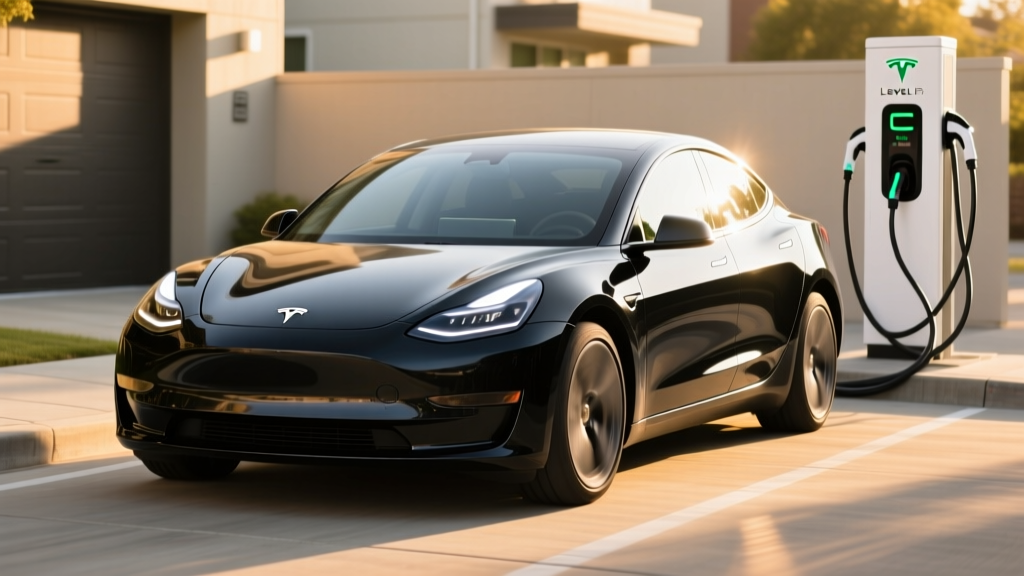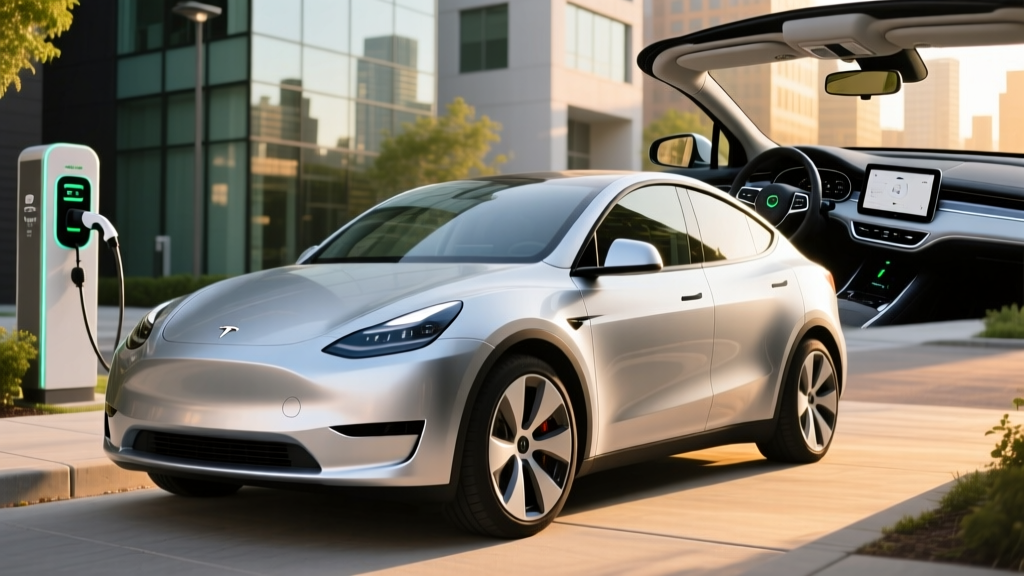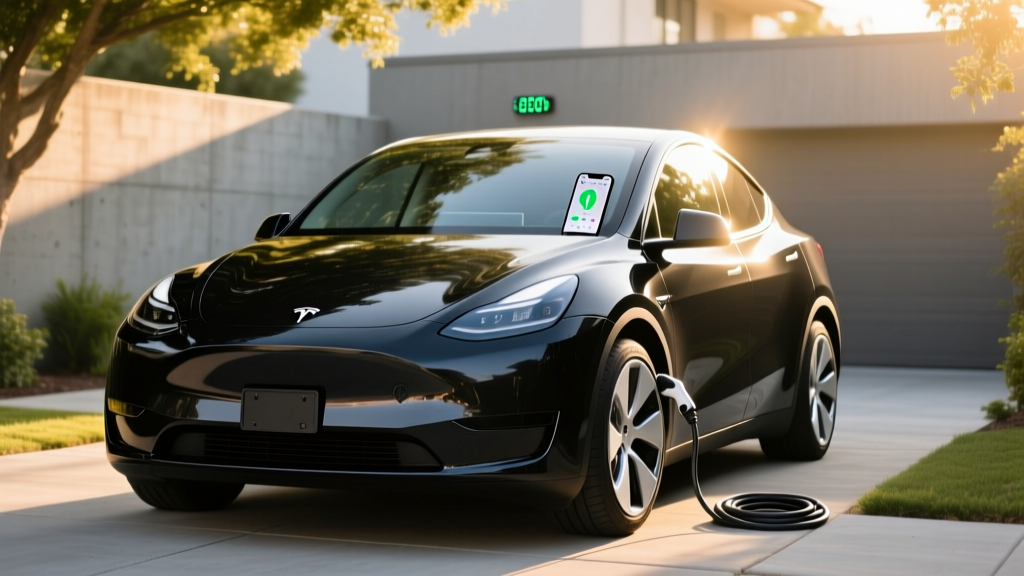
The Tesla Model Y has been the world's best-selling EV for consecutive years, but volume production, aggressive price cuts, and intensifying competition have reshaped its resale trajectory. If you're researching the Tesla Model Y depreciation rate before signing a lease or committing to a purchase, you need more than a sticker price — you need the full picture of range retention, battery longevity, tax-credit impact, and how this crossover stacks up against the Hyundai Ioniq 5, Ford Mustang Mach-E, and Kia EV6 at trade-in time.
This 2026 profile breaks down every number that matters — EPA range, real-world highway expectations, DC fast-charge curves, §30D credit eligibility, and the depreciation math that determines what this SUV is actually worth after three and five years of ownership.
2026 Tesla Model Y: Core Specifications at a Glance
| Specification | Value |
|---|---|
| EPA Range | 310 miles (Long Range AWD) |
| Battery (usable) | ~75 kWh, NMC (2170 cells) |
| Peak DC Fast Charge | 250 kW (V3 Supercharger) |
| 10–80% DC Charge Time | ~27 minutes |
| Level 2 Home Charge | 11.5 kW (~44 mi/hr) |
| 0–60 mph | 4.8 seconds (Long Range AWD) |
| Horsepower | 384 hp (dual-motor) |
| Drivetrain | Dual-motor AWD |
| EPA Efficiency | 117 MPGe combined / 29 kWh/100mi |
| Cargo (rear seats up) | 30.2 cu ft |
| Cargo (rear seats folded) | 72.0 cu ft |
| Rear Legroom | 40.5 inches |
| Battery Warranty | 8 years / 120,000 miles (70% retention) |
| Base MSRP (Long Range AWD) | $44,990 |
| Performance AWD MSRP | $48,990 |
Real-World Range: Beyond the EPA Sticker
EPA Estimate: 310 miles (Long Range AWD)
Real-World Expectation: 260–285 miles at highway speeds (70–80 mph); 220–250 miles in sub-freezing winter conditions with cabin heating.
Tesla's thermal management system — including a standard heat pump across all trims — helps mitigate cold-weather range loss compared to earlier EV generations. However, the NMC chemistry in the Long Range pack still sheds roughly 15–20% of capacity in sustained 25°F driving, based on owner-reported data aggregated by fueleconomy.gov and real-world tracking communities.
City driving with regenerative braking engaged routinely matches or slightly exceeds the 310-mile EPA figure. Highway efficiency drops to roughly 3.4–3.6 miles per kWh at 75 mph, which is where the gap between sticker and reality widens. For road-trip planning, budgeting 250 miles of usable range before needing a Supercharger stop is a conservative, stress-free approach.
Charging Speed: Supercharger Network Advantage
| Charging Level | Power / Rate | Time / Miles Added |
|---|---|---|
| Level 1 (120V household) | ~1.4 kW | ~4 miles per hour |
| Level 2 (240V home Wall Connector) | 11.5 kW | ~44 miles per hour; full charge in ~8 hrs |
| DC Fast Charge (V3 Supercharger) | Peak 250 kW | 10–80% in ~27 min; ~175 miles in 15 min |
| DC Fast Charge (V4 Supercharger) | Peak 250+ kW | Similar curve; newer stations offer cable management improvements |
The Model Y's charge curve peaks at 250 kW up to approximately 50–55% state of charge, then tapers progressively. Sustained average power from 10–80% sits around 130–140 kW — a critical distinction from the headline peak number. This is why a 10–80% session takes roughly 27 minutes rather than the ~18 minutes that pure peak-rate math would suggest.
One ownership advantage: the Tesla Supercharger network remains the most reliable DC fast-charging ecosystem in the U.S., with uptime consistently above 95% at corridor stations. With the Model Y now equipped with the NACS connector natively (no adapter required), access to the full Supercharger network is seamless. Competitors relying on CCS-to-NACS adapters add a friction layer that can affect real-world charging convenience on road trips.
For home charging, the Tesla Wall Connector at 48 amps (11.5 kW) adds roughly 44 miles per hour of charging. A full overnight session from 20% to 100% takes about 8 hours — easily covering daily replenishment for even high-mileage commuters. Installation typically requires a 60-amp dedicated circuit; budget $800–$2,000 for a licensed electrician depending on panel proximity and local permitting.
Depreciation Rate: What the Model Y Is Actually Worth Over Time
The Tesla Model Y depreciation rate has been the subject of significant market turbulence since 2023. Aggressive new-vehicle price cuts by Tesla, increased competition from Hyundai, Kia, and Ford, and softening used-EV demand all compressed resale values more than early owners anticipated.
Based on aggregated resale data and industry depreciation models, here is the projected trajectory for a 2024–2025 Model Y Long Range AWD:
- Year 1: 15–20% depreciation (steeper if new-vehicle prices continue to drop)
- Year 3: 40–50% depreciation from original transaction price
- Year 5: 55–65% depreciation from original transaction price
For context, the average mainstream compact SUV retains roughly 45–55% of its value at year five, according to Kelley Blue Book and Edmunds data. The Model Y currently depreciates faster than segment stalwarts like the Toyota RAV4 Hybrid but similarly to other premium EVs like the Ford Mustang Mach-E and Volkswagen ID.4.
Key depreciation drivers specific to the Model Y:
- New-price volatility: Tesla's direct-to-consumer model means MSRP changes flow directly into used-market expectations. A $5,000 price cut on new inventory immediately compresses used values.
- Battery degradation perception: While Tesla's NMC packs show strong longevity (typically 5–8% degradation over 100,000 miles based on fleet data), buyer anxiety about replacement cost suppresses resale.
- Tax-credit pass-through: When buyers receive a $7,500 point-of-sale credit, the effective transaction price is lower — and used-market comps adjust downward accordingly.
- Competition density: The mid-size electric crossover segment now has a dozen credible alternatives, reducing the Model Y's scarcity premium.
Offsetting factors: The Supercharger network moat, over-the-air update longevity, and Tesla's brand recognition among EV-curious buyers provide a floor that lesser-known EVs lack. A well-maintained Model Y with documented Supercharger usage and battery health data commands a premium over comparable private-sale listings.
Pricing, Tax Credits, and Effective Cost of Ownership
| Trim | Base MSRP | §30D Credit Eligibility | Effective Price (if eligible) |
|---|---|---|---|
| Long Range AWD | $44,990 | Eligible (below $80,000 SUV cap) | ~$37,490* |
| Performance AWD | $48,990 | Eligible (below $80,000 SUV cap) | ~$41,490* |
*Effective price assumes full $7,500 §30D federal tax credit applied at point of sale. Eligibility is NOT automatic.
Federal tax credit eligibility under IRS §30D depends on several moving targets:
- Buyer income caps: Modified AGI must not exceed $150,000 (single), $225,000 (head of household), or $300,000 (joint).
- MSRP cap: SUVs/vans must be under $80,000 — both Model Y trims clear this comfortably.
- Battery sourcing requirements: Critical mineral and battery component sourcing thresholds tighten annually. Tesla's U.S.-assembled packs with diversified supply chains have generally met the thresholds, but this is subject to change. Always verify current eligibility on the IRS qualified vehicles list before purchase.
- Point-of-sale transfer: Since 2024, the credit can be transferred to the dealer at purchase, reducing your out-of-pocket cost directly rather than waiting for a tax refund.
For the 5-year total cost of ownership, the Model Y benefits from zero oil changes, minimal brake wear (thanks to regenerative braking), and electricity costs averaging $0.14–$0.18/kWh nationally. A driver covering 15,000 miles annually at 3.5 mi/kWh spends roughly $600–$770 per year on home charging — versus $1,800–$2,200 for a comparable gas crossover at 25 MPG and $3.25/gallon fuel.
Technology, Safety, and Driver Assistance
The Model Y's 15.4-inch center touchscreen runs Tesla's proprietary infotainment stack — no Apple CarPlay or Android Auto, but native navigation, Spotify, Netflix (while parked), and a built-in trip planner with real-time Supercharger routing. The UI is responsive, though the lack of physical climate controls remains a polarizing design choice.
SAE Automation Level: Tesla Autopilot and Full Self-Driving (Supervised) are Level 2 driver-assistance systems. The driver must remain fully engaged, hands on the wheel, and eyes on the road at all times. This is NOT autonomous or self-driving capability. Only Level 4 services like Waymo operate without a human driver in geofenced areas.
Standard Autopilot includes Traffic-Aware Cruise Control and Autosteer. The optional FSD (Supervised) package ($8,000 one-time or $99/month as of early 2026) adds Navigate on Autopilot, Auto Lane Change, Autopark, and Smart Summon. Real-world FSD performance varies significantly by geography and road complexity — it excels on well-marked highways but requires frequent intervention on construction zones, unmapped roads, and adverse weather.
Safety ratings remain strong: the Model Y earned a 5-Star Overall rating from NHTSA and a Top Safety Pick+ designation from IIHS (when equipped with acceptable headlights). The structural battery pack contributes to a low center of gravity and strong rollover resistance.
Pros, Cons, and Who the Model Y Suits Best
Pros
- Supercharger network access — still the gold standard for road-trip charging reliability
- Class-leading efficiency at 117 MPGe combined
- Spacious cargo area (72 cu ft) with practical hatchback form factor
- Strong over-the-air update cadence extending feature life
- Heat pump standard for improved cold-weather range retention
- Eligible for full $7,500 §30D credit (verify sourcing at purchase)
Cons
- Depreciation rate steeper than mainstream gas and hybrid crossovers
- No Apple CarPlay / Android Auto — proprietary infotainment only
- Minimalist interior lacks physical controls; polarizing for some buyers
- FSD (Supervised) costs $8,000 and remains Level 2 — not autonomous
- Ride quality on 20-inch wheels can be firm over rough pavement
- Insurance premiums run 15–25% higher than segment average
Best suited for: Tech-forward commuters with home Level 2 charging access, small families needing cargo versatility, and road-trippers who value the Supercharger network. The Model Y is less ideal for buyers prioritizing resale-value retention, traditional infotainment integration, or those in areas with limited Tesla service center coverage.
How the Model Y Compares to Key Competitors
Against the Hyundai Ioniq 5 (EPA 305 mi, 800V architecture, 10–80% in ~18 min), the Model Y offers more cargo space and a more mature charging network, but the Ioniq 5 charges faster at compatible 350 kW stations and offers CarPlay. Depreciation on both is comparable.
The Ford Mustang Mach-E (EPA 305 mi Extended Range) matches the Model Y on performance and range but trails on charging speed and network access. Ford's dealer service network is more geographically dense, which matters for warranty work in rural areas.
The Kia EV6 shares the Ioniq 5's 800V platform and offers a sportier driving position, but cargo space (24.4 cu ft rear up) falls short of the Model Y's 30.2 cu ft. For family buyers, the Model Y's hatchback practicality is a decisive advantage.
Frequently Asked Questions
What is the Tesla Model Y depreciation rate after 3 years?
Current market data projects 40–50% depreciation from the original transaction price at the 3-year mark. This is steeper than gas-powered compact SUVs but comparable to other premium electric crossovers. New-vehicle price volatility and tax-credit pass-through are the primary accelerants.
Does the Model Y qualify for the $7,500 federal EV tax credit?
Yes, both trims fall under the $80,000 SUV MSRP cap. However, buyer income limits ($150K single / $300K joint) and battery critical-mineral sourcing requirements must be met. Always verify current eligibility on the IRS qualified vehicles list before purchasing, as sourcing rules tighten annually.
How much does it cost to charge a Model Y at home per month?
At 15,000 miles/year and the national average of $0.15/kWh, expect roughly $50–$65/month for home charging. Supercharger costs run $0.25–$0.35/kWh depending on location and time of day, adding $20–$40/month for drivers who rely on public charging for road trips.
What is the real-world highway range of the Model Y Long Range?
Expect 260–285 miles at 70–80 mph in moderate temperatures. In sub-freezing conditions with cabin heating, plan for 220–250 miles. The EPA's 310-mile estimate reflects a combined city/highway cycle that most highway-dominant commuters won't match.
Is the Tesla Model Y worth buying over the Hyundai Ioniq 5?
Choose the Model Y if Supercharger network access, cargo space (72 cu ft), and over-the-air updates are priorities. Choose the Ioniq 5 if faster 800V DC charging (18-min 10–80%), Apple CarPlay, and a more conventional interior layout matter more. Both depreciate similarly; the decision hinges on charging ecosystem preference and daily usability.