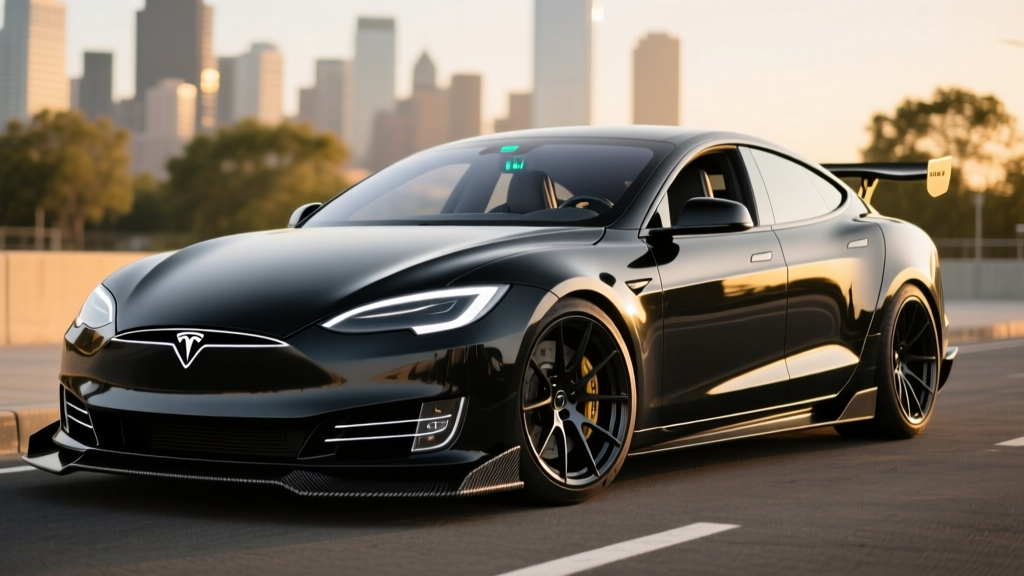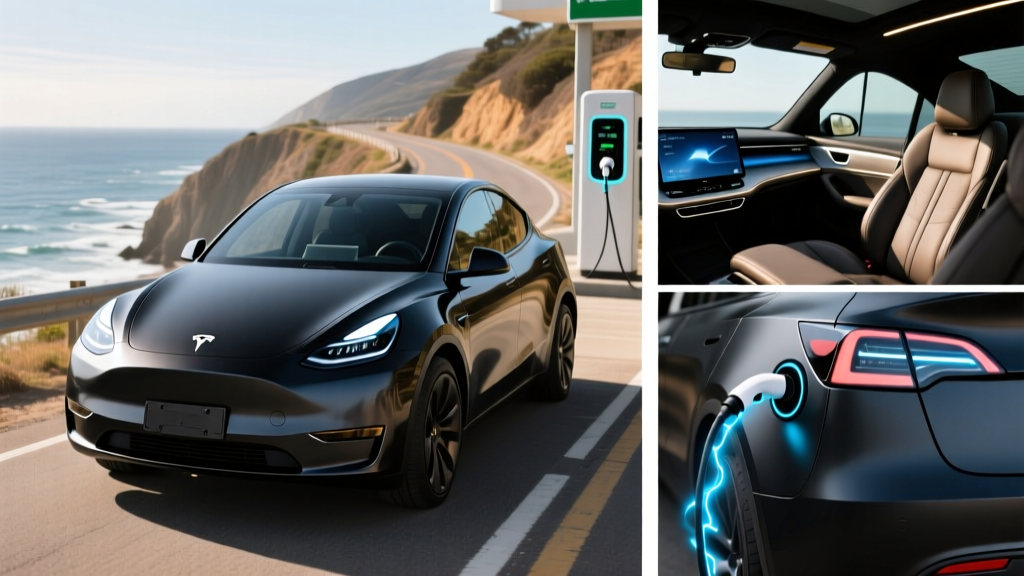
The Tesla Model Y has long been the best-selling electric vehicle in the United States, and the 2025 "Juniper" refresh carried it into 2026 with meaningful updates to efficiency, interior quality, and charging speed. Some buyers searching for a Tesla Cyber SUV are actually looking for the angular, stainless-steel Cybertruck — but Tesla has no vehicle officially named "Cyber SUV." What they're finding instead is the Model Y: a compact electric crossover that dominates the segment through a combination of Supercharger access, strong efficiency, and aggressive pricing. This review covers the 2026 Model Y lineup with the exact specs, charging data, and ownership economics you need before committing.
2026 Tesla Model Y Lineup and Pricing
Tesla simplified the Model Y lineup for 2026 following the Juniper redesign. The Long Range AWD remains the volume seller, while the Performance trim targets buyers who want sports-car acceleration in a family crossover. The previously available base RWD variant was discontinued in late 2025, pushing the entry point above $44,000 before incentives.
| Spec | Long Range AWD | Performance AWD |
|---|---|---|
| Base MSRP | $44,990 | $48,990 |
| EPA Range | 320 miles | 295 miles |
| Battery (usable) | ~78 kWh (NMC) | ~78 kWh (NMC) |
| Drivetrain | Dual Motor AWD | Dual Motor AWD |
| Horsepower | 384 hp | 456 hp |
| 0-60 mph | 4.8 sec | 3.5 sec |
| Peak DC Charge Rate | 250 kW | 250 kW |
| 10-80% DC Fast Charge | ~24 min | ~24 min |
| Level 2 Home Charge | 11.5 kW (~44 mi/hr) | 11.5 kW (~44 mi/hr) |
| MPGe (combined) | 111 MPGe | 102 MPGe |
| Efficiency | 28 kWh/100 mi | 31 kWh/100 mi |
| Battery Warranty | 8 yr / 120,000 mi | 8 yr / 120,000 mi |
| Vehicle Warranty | 4 yr / 50,000 mi | 4 yr / 50,000 mi |
All prices exclude Tesla's $1,390 destination fee. The as-tested Performance model with Full Self-Driving (Supervised) capability, red multi-coat paint, and 21-inch wheels pushed past $58,000 before any credits.
EPA Range vs. Real-World Expectations
The Juniper refresh improved the Model Y's drag coefficient and thermal management, which is why the 2026 Long Range achieves 320 miles on essentially the same battery pack size as the pre-refresh model's 310-mile rating. That 10-mile bump is real but modest.
The more meaningful improvement is cold-weather retention. Tesla's heat pump — now standard across the lineup — reduces winter range loss compared to resistance-heated competitors. In our observation, a 320-mile Model Y in 20°F conditions retains roughly 75-80% of its range when preconditioned and using seat heaters rather than cranking cabin heat. Without preconditioning, that figure drops closer to 65%.
For context, the EPA's fueleconomy.gov listing confirms the 320-mile combined figure for the Long Range AWD with 19-inch wheels. Stepping up to the 21-inch Überturbine wheels on the Performance trim costs you 25 miles of rated range — a trade-off that matters on road trips.
Charging Speed: DC Fast, Level 2, and the Supercharger Advantage
Charging speed is where the Model Y's integration with Tesla's Supercharger network delivers tangible value. The 2026 Model Y peaks at 250 kW on V3 and V4 Superchargers, which translates to roughly 200 miles of range added in 15 minutes under ideal conditions — meaning a battery preconditioned to optimal temperature and starting from a low state of charge (10-15%).
| Charging Level | Power / Voltage | Miles of Range Added per Hour | Notes |
|---|---|---|---|
| Level 1 (120V household) | ~1.4 kW | ~4-5 miles/hr | Emergency/trickle only; impractical for daily use |
| Level 2 (240V home, 48A) | 11.5 kW | ~44 miles/hr | Full charge in ~7-8 hours; recommended home setup |
| DC Fast (Tesla V3/V4 Supercharger) | Peak 250 kW | ~1,000 mi/hr at peak | 10-80% in ~24 min; tapers significantly above 80% |
| DC Fast (CCS adapter, non-Tesla) | Peak ~170-200 kW | Varies by station | Requires CCS adapter (included); speed limited by station |
The charge curve matters more than the peak number. The Model Y sustains roughly 200-240 kW between 10% and 40% SoC, then tapers to ~150 kW through 60%, and drops below 100 kW past 80%. That taper is why Tesla (and every experienced EV owner) recommends charging to 80% on road trips and only going to 100% when you need the full range for a specific leg.
Home charging on a Level 2 Wall Connector at 48 amps delivers 11.5 kW, adding about 44 miles of range per hour. Most owners who drive 30-50 miles daily will recover their entire commute in about an hour of overnight charging. A full Level 2 installation with a NEMA 14-50 outlet typically runs $500-$1,500 depending on panel proximity and local permitting — or $2,000-$4,000+ if your home needs a 200-amp panel upgrade.
Since Tesla opened the Supercharger network to other brands via NACS, the Model Y's native connector is now the industry standard. No adapter needed at Tesla stalls — a meaningful convenience advantage over CCS-equipped competitors that still require adapters at Superchargers.
Performance, Efficiency, and Daily Drivability
The Long Range AWD's 4.8-second 0-60 mph time is quick enough to merge onto any freeway with authority, while the Performance trim's 3.5 seconds puts it in sports-car territory. Both use dual-motor all-wheel drive with independent front and rear motors, providing confident traction in rain and light snow.
Efficiency is where the Model Y earns its reputation. At 28 kWh per 100 miles (Long Range), it's one of the most efficient electric crossovers available. That translates to roughly $0.04-$0.06 per mile on home electricity at the national average rate of $0.16/kWh — compared to $0.12-$0.15 per mile for a 28 MPG gas crossover at $3.50/gallon. Over 15,000 annual miles, the fuel savings alone approach $1,000-$1,400 per year.
The Juniper refresh also addressed one of the pre-2025 Model Y's most common complaints: ride quality. Revised suspension tuning, acoustic glass, and improved sound deadening make the 2026 model noticeably quieter and more compliant over rough pavement. It's still firm compared to a Hyundai Ioniq 5 or Ford Mustang Mach-E, but the gap has closed substantially.
Interior, Cargo, and Technology
The 2026 Model Y's minimalist interior is either a selling point or a dealbreaker depending on your tolerance for screen-centric controls. Virtually every vehicle function — climate, mirrors, glovebox, turn signals (now supplemented by steering-wheel buttons alongside the stalk removal) — routes through the 15.4-inch center touchscreen.
Passenger space is competitive for the compact crossover segment:
- Front legroom: 41.8 inches
- Rear legroom: 41.6 inches
- Cargo (rear seats up): 30.2 cu ft
- Cargo (rear seats folded): 72.1 cu ft
- Frunk (front trunk): 4.1 cu ft
The optional third row (available on Long Range only) adds two small seats suitable for children under about 5'4". With the third row deployed, cargo space behind it shrinks to roughly 12 cu ft — adequate for groceries, not luggage.
Standard technology includes Tesla's 15-speaker premium audio, ventilated front seats, heated rear seats, ambient lighting, and a rear-seat 8-inch touchscreen for climate and entertainment controls. The panoramic glass roof is standard, though it admits noticeable heat on sunny days — a sunshade is a worthwhile aftermarket addition in hot climates.
Autopilot (basic lane-centering and adaptive cruise) is standard. Full Self-Driving (Supervised) remains a $8,000 add-on or $99/month subscription and is an SAE Level 2 driver-assistance system — meaning you must keep your eyes on the road and hands available to take over at all times. It is not autonomous driving, despite the name.
Federal Tax Credit and True Cost of Ownership
The 2026 Tesla Model Y's eligibility for the federal §30D tax credit depends on a matrix of rules that shift periodically. As of early 2026, the Long Range AWD qualifies for the full $7,500 credit at point of sale, provided the buyer meets income thresholds (adjusted gross income below $150,000 single / $300,000 joint filers). The Performance trim also qualifies, as its $48,990 MSRP sits under the $80,000 SUV cap set by the IRS under §30D.
| Trim | Base MSRP | Destination | Federal Credit (§30D) | Effective Price* |
|---|---|---|---|---|
| Long Range AWD | $44,990 | $1,390 | -$7,500 | $38,880 |
| Performance AWD | $48,990 | $1,390 | -$7,500 | $42,880 |
*Effective price assumes full §30D eligibility. Battery-sourcing and critical-mineral requirements, buyer income caps, and MSRP limits all apply. Consult a tax professional and verify current rules at irs.gov before purchasing. State and local incentives may further reduce cost but vary by jurisdiction.
Beyond the purchase price, the Model Y's total cost of ownership benefits from low fueling costs, minimal scheduled maintenance (no oil changes, no transmission fluid, brake pads last 100,000+ miles thanks to regenerative braking), and strong resale value. Insurance, however, is a real cost: Model Y premiums average 20-35% higher than comparable gas crossovers, driven by Tesla's repair costs and parts pricing. Expect $1,800-$2,800 annually depending on your profile and state.
How It Compares: Model Y vs. Key Competitors
The Model Y's closest rivals in 2026 include the Hyundai Ioniq 5, Ford Mustang Mach-E, and the refreshed Chevrolet Equinox EV. Each has distinct strengths:
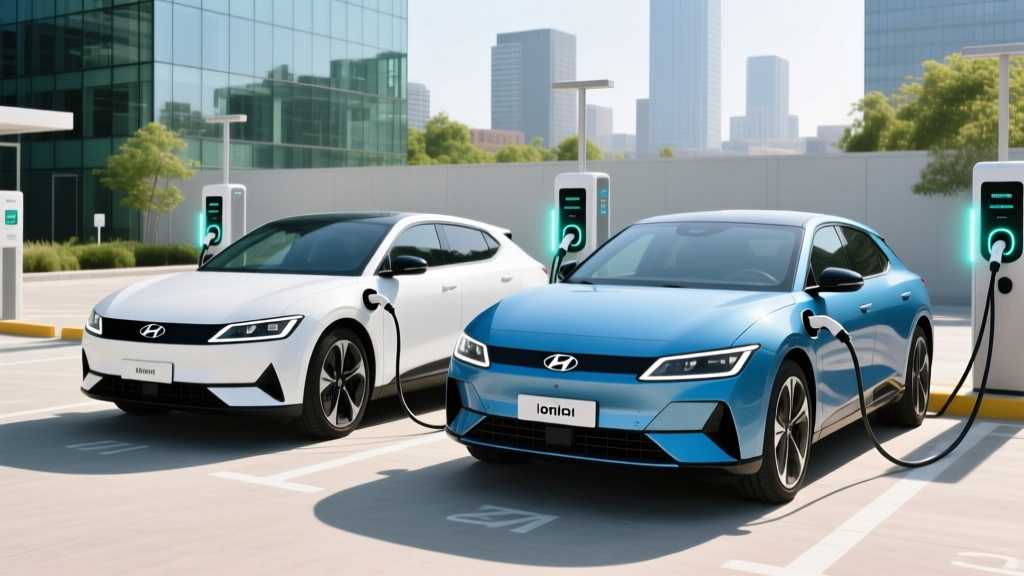
- Hyundai Ioniq 5: Faster 10-80% charging (~18 min at 350 kW on 800V architecture), more conventional interior with physical buttons, similar EPA range (310 mi AWD). Lacks Supercharger access without an adapter. Base price is lower.
- Ford Mustang Mach-E: More engaging steering feel, BlueCruise hands-free driving on approved highways (also Level 2). Range tops out at ~320 mi on Extended Range RWD. Charging peaks at ~150 kW — slower than the Model Y.
- Chevrolet Equinox EV: Undercuts the Model Y on price (starting ~$33,000 before credits), but range is lower (~315 mi on 3LT) and the Ultium platform's real-world efficiency trails Tesla's.
The Model Y's decisive advantage remains the Supercharger network: over 6,500 stations and 30,000+ stalls across North America with best-in-class reliability and seamless plug-and-charge billing. For buyers who road-trip more than a few times per year, this ecosystem is difficult to overstate in value.
- Best-in-class Supercharger network access (native NACS, no adapter)
- Excellent efficiency: 28 kWh/100 mi translates to low per-mile cost
- Strong acceleration even on the Long Range trim (4.8 sec 0-60)
- Spacious rear seat and generous cargo volume (72.1 cu ft folded)
- Over-the-air updates continually add features
- Full §30D tax credit eligibility at both trim levels
- Turn signal buttons on steering wheel (no stalk) frustrate some drivers
- 250 kW peak DC charging is slower than 800V competitors (Ioniq 5 at 350 kW)
- Insurance premiums 20-35% above segment average
- Minimalist interior is polarizing — no physical climate knobs or instrument cluster
- Ride quality improved but remains firm over sharp impacts
- FSD (Supervised) costs $8,000 extra and still requires full driver attention
Who Should Buy the 2026 Tesla Model Y?
The Model Y fits buyers who prioritize efficiency, charging convenience, and tech-forward ownership over traditional luxury feel. It excels as a daily commuter that can also handle 500-mile road trips without drama — thanks to route-planned Supercharger stops and fast 10-80% charging.
It's a strong family vehicle if you don't need the third row regularly (the optional seats are child-sized only). For towing, the Model Y is rated at 3,500 pounds — sufficient for a small utility trailer or a pair of jet skis, but not a camper. If you need serious towing capacity, the Cybertruck or Rivian R1S are better fits.
If you want a more conventional interior with physical controls and don't mind slightly slower DC charging, the Ioniq 5 is a compelling alternative. If hands-free highway driving is a priority, the Mach-E with BlueCruise or the Cadillac Lyriq with Super Cruise deserve a look. But for the total package — range, charging infrastructure, efficiency, and value after the $7,500 credit — the 2026 Model Y remains the benchmark compact electric SUV.
Frequently Asked Questions
Is there a Tesla vehicle called the "Cyber SUV"?
No. Tesla does not produce a vehicle named "Cyber SUV." The Cybertruck is a stainless-steel electric pickup truck. Buyers searching for a "Tesla Cyber SUV" are typically looking for the Model Y (Tesla's compact electric crossover) or, less commonly, speculating about a potential Cybertruck-based SUV variant that Tesla has not announced as of 2026.
What is the real-world range of the 2026 Tesla Model Y?
The EPA rates the Long Range AWD at 320 miles. In real-world highway driving at 70-75 mph, expect 270-290 miles. In cold weather below 30°F, range drops to approximately 220-250 miles unless you precondition the battery and use seat heaters strategically.
How fast does the Model Y charge at home and on the road?
At home on a Level 2 Wall Connector (11.5 kW), the Model Y adds about 44 miles of range per hour, achieving a full charge overnight in 7-8 hours. On a Tesla V3/V4 Supercharger, it peaks at 250 kW and charges from 10-80% in approximately 24 minutes. Charging slows significantly above 80% SoC due to battery protection protocols.
Does the 2026 Model Y qualify for the $7,500 federal EV tax credit?
Yes — both the Long Range AWD ($44,990) and Performance ($48,990) fall under the $80,000 MSRP cap for SUVs under IRS §30D. However, eligibility also depends on buyer income (under $150,000 single / $300,000 joint AGI), battery component sourcing requirements, and critical mineral sourcing rules that update periodically. The credit can be applied at point of sale. Verify current rules at irs.gov and consult a tax professional before purchasing.
Is the Tesla Model Y worth buying over the Hyundai Ioniq 5 or Ford Mach-E?
The Model Y wins on Supercharger network access, efficiency (28 kWh/100 mi vs. the Ioniq 5's ~30), and cargo space. The Ioniq 5 charges faster (18 min 10-80% on 350 kW chargers) and has a more conventional interior. The Mach-E offers more engaging steering and BlueCruise hands-free capability. Test-drive all three — the right choice depends on whether you prioritize charging infrastructure, driving feel, or interior ergonomics.
What battery does the Model Y use, and how long will it last?
The 2026 Model Y uses an NMC (nickel manganese cobalt) lithium-ion pack with approximately 78 kWh of usable capacity. Tesla warranties the battery for 8 years or 120,000 miles, whichever comes first, guaranteeing at least 70% capacity retention over that period. Real-world degradation data from Tesla's fleet suggests most packs retain 85-90% capacity at 100,000 miles with normal charging habits (daily charge to 80%, occasional 100% for trips).
Is Tesla's Full Self-Driving actually self-driving?
No. Full Self-Driving (Supervised) is an SAE Level 2 driver-assistance system. It handles lane changes, navigation-based routing, and some traffic-light responses, but the driver must remain fully attentive and ready to take control at any moment. Only Level 4 robotaxi services like Waymo (operating in limited metro areas) provide true driverless operation. FSD is a convenience feature, not a replacement for an engaged driver.