Quick Verdict: Is the 2026 Tesla Model Y Still the Safe, Practical EV Benchmark?
The 2026 Tesla Model Y Long Range AWD remains the best-selling electric vehicle in the United States for good reason: top-tier crash test results, a 320-mile EPA range, access to the largest fast-charging network, and a starting price that — after the federal tax credit — undercuts most midsize electric SUVs. The Juniper-refreshed Model Y (introduced for the 2025 model year and carried into 2026) brings a quieter cabin, ventilated front seats, a rear touchscreen, and a mildly updated battery pack. But it isn't perfect. Panel gaps still trail Korean rivals, the ride on 20-inch wheels is firm, and Tesla's FSD (Supervised) remains a Level 2 driver-assist system that demands your full attention.
If safety data is your primary filter, the Model Y's NHTSA 5-Star Overall rating and IIHS Top Safety Pick+ status make it one of the safest vehicles in any class, electric or otherwise. Below we break down every crash test score, then cover range, charging, pricing, and whether it's still the EV to beat in 2026.
2026 Tesla Model Y Crash Test & Safety Ratings
When shoppers search for "Tesla crash test" data, they're usually looking for two authoritative sources: the National Highway Traffic Safety Administration (NHTSA) and the Insurance Institute for Highway Safety (IIHS). The 2026 Model Y Long Range AWD excels at both.
NHTSA Star Ratings (2026 Model Y AWD)
| Test Category | Rating |
|---|---|
| Overall | ★★★★★ (5/5) |
| Frontal Crash (Driver) | ★★★★★ (5/5) |
| Frontal Crash (Passenger) | ★★★★★ (5/5) |
| Side Crash | ★★★★★ (5/5) |
| Side Pole (Driver) | ★★★★★ (5/5) |
| Rollover Risk | ★★★★★ (5/5) — 7.9% risk |
The low 7.9% rollover risk reflects the Model Y's skateboard architecture: the heavy battery pack sits beneath the floor, giving it one of the lowest centers of gravity in the midsize SUV segment. Source: NHTSA.gov.
IIHS Ratings (2026 Model Y)
| IIHS Test | Result |
|---|---|
| Driver-Side Small Overlap | Good |
| Passenger-Side Small Overlap | Good |
| Moderate Overlap Front (Updated) | Good |
| Side Impact (Updated) | Good |
| Roof Strength | Good |
| Head Restraints & Seats | Good |
| Headlights | Acceptable (LED reflector) |
| Front Crash Prevention (Vehicle-to-Vehicle) | Superior |
| Front Crash Prevention (Vehicle-to-Pedestrian, Day) | Superior |
| LATCH Ease of Use | Good |
The Model Y earned the IIHS Top Safety Pick+ award. The only non-Good mark is an "Acceptable" headlight rating on lower trims — a recurring complaint that Tesla has not fully addressed even with the Juniper update. Source: IIHS.org.
Range, Battery & Efficiency: Real-World Numbers
Real-World Expectation: ~270–290 mi on mixed highway driving at 70 mph; ~220–240 mi in sub-30°F winter conditions with cabin heat. City/regen-heavy driving can exceed 300 mi.
The 2026 Model Y Long Range AWD uses a ~78 kWh usable NMC (nickel-manganese-cobalt) lithium-ion battery pack. The base RWD variant uses a ~60 kWh LFP (lithium iron phosphate) pack supplied by CATL. The chemistry difference matters:
| Attribute | NMC (Long Range AWD) | LFP (Base RWD) |
|---|---|---|
| Usable Capacity | ~78 kWh | ~60 kWh |
| Energy Density | Higher (more range per kg) | Lower |
| Cycle Life | ~1,500–2,000 cycles | ~3,000+ cycles |
| Recommended Daily SoC | 80% (for longevity) | 100% (LFP tolerates full charge) |
| Cold-Weather Performance | Better low-temp output | More range loss in freezing temps |
| Cost to Replace (est.) | $12,000–$16,000 | $9,000–$12,000 |
Efficiency on the Long Range AWD is rated at 122 MPGe combined (28 kWh/100 mi), per fueleconomy.gov. That's among the best in the midsize electric SUV class and translates to roughly $0.045–$0.06 per mile on residential electricity at $0.16/kWh.
Charging Speed: DC Fast, Level 2 & Home Setup
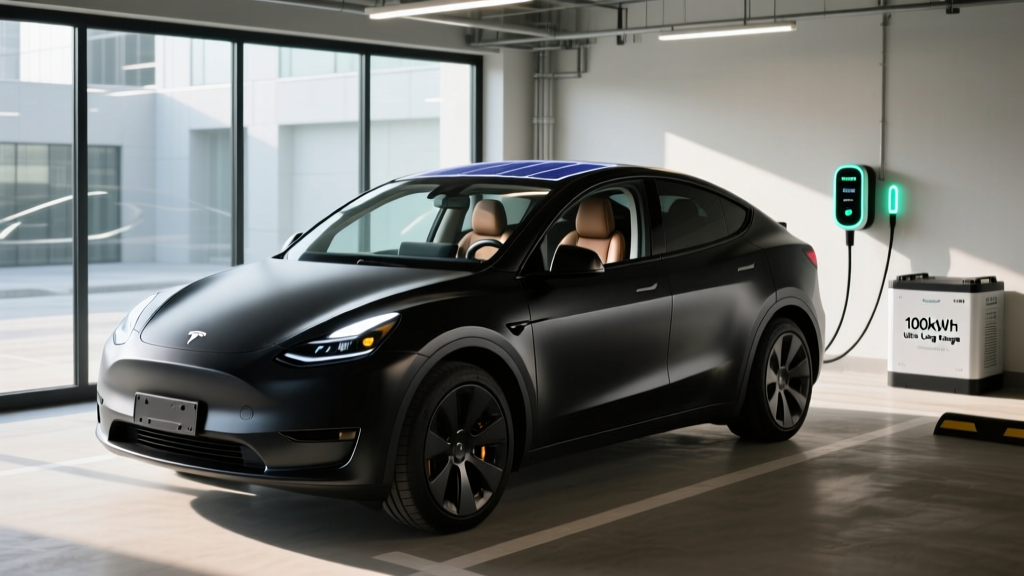
Charging speed is where the Juniper Model Y made a meaningful generational leap. The 2026 Long Range AWD supports up to 250 kW peak DC fast charging on V3 Superchargers, with a 10–80% session taking approximately 22 minutes under ideal thermal conditions.
| Charging Level | Power / Rate | Speed (Approx.) | Use Case |
|---|---|---|---|
| Level 1 (120V household) | 1.4 kW | ~4–5 mi/hr | Emergency / overnight trickle |
| Level 2 (240V, 48A Wall Connector) | 11.5 kW | ~44 mi/hr | Daily home charging (~7 hr 10–80%) |
| Level 2 (240V, 32A mobile) | 7.7 kW | ~30 mi/hr | Portable / rental use |
| DC Fast (V3 Supercharger) | 250 kW peak | ~162 mi in 15 min | Road trips, 10–80% in ~22 min |
| DC Fast (CCS adapter, EA/others) | Up to 150 kW | ~100 mi in 15 min | Non-Tesla networks (slower taper) |
Charging-curve reality: The 250 kW peak only holds between roughly 10–30% SoC. From 30–60%, the rate tapers to ~150 kW, and from 60–80% it drops further to ~75 kW. That's why the 10–80% time is 22 minutes, not the 15 minutes marketing sometimes implies. Above 80%, expect a steep taper — plan road-trip stops at 80% unless you need the final miles.
Home charging setup: A Tesla Wall Connector ($420) on a 60A/48A continuous circuit adds ~44 miles of range per hour of charging. Most owners with a 200-amp electrical panel can accommodate this with a $500–$1,500 electrician install. Older homes with 100-amp panels may need a $1,500–$3,000 panel upgrade.
Performance, Drivetrain & Handling
| Spec | RWD (Base) | Long Range AWD | Performance (if avail.) |
|---|---|---|---|
| 0–60 mph | 6.6 sec | 4.8 sec | 3.5 sec |
| Horsepower | 346 hp | 384 hp | ~480 hp |
| Drivetrain | Rear-Wheel Drive | Dual-Motor AWD | Dual-Motor AWD |
| Top Speed | 135 mph | 135 mph | 155 mph |
| EPA Range | 277 mi | 320 mi | ~285 mi |
The dual-motor AWD system uses a permanent-magnet rear motor and an induction front motor that can decouple for efficiency under light load. The Juniper chassis tuning is noticeably more compliant than the pre-2025 Model Y — body noise is reduced, and the ride over broken pavement is less punishing, especially on the standard 19-inch wheels. Opt for the 20-inch wheels and you sacrifice roughly 10–15 miles of EPA range and some ride comfort.
Pricing, Tax Credits & Ownership Cost
| Trim | Base MSRP | Federal Credit (§30D) | Effective Price (est.) |
|---|---|---|---|
| Model Y RWD | $44,990 | Up to $7,500 | ~$37,490 |
| Model Y Long Range AWD | $48,990 | Up to $7,500 | ~$41,490 |
| Model Y Performance | $52,490 | Up to $7,500 | ~$44,990 |
IRS §30D Tax Credit Eligibility — Key Rules for 2026:
- MSRP Cap: SUVs/vans/pickups must have an MSRP ≤ $80,000. All Model Y trims qualify.
- Buyer Income Cap: Modified AGI ≤ $150,000 (single), $225,000 (head of household), $300,000 (joint). Exceed these and you lose the credit.
- Battery Sourcing: The $7,500 credit splits into $3,750 for critical-mineral sourcing and $3,750 for battery-component sourcing. Tesla's US-built batteries and supply-chain agreements currently satisfy both halves for most Model Y configurations — but Tesla's own website notes that eligibility can shift based on battery lot and build date.
- Point-of-Sale Transfer: Since 2024, you can transfer the credit to the dealer at purchase, reducing your out-of-pocket cost immediately rather than waiting for a tax refund.
- Verify before you buy: Always confirm the specific VIN's eligibility on the IRS's official credit lookup tool and consult a tax professional. Rules change, and your personal tax situation matters.
5-Year Total Cost of Ownership Estimate (Long Range AWD, 15,000 mi/yr):
| Category | Model Y LR AWD | Gas SUV Baseline (Toyota RAV4) |
|---|---|---|
| Purchase (after credit) | $41,490 | $34,500 |
| Fuel/Energy (5 yr) | $4,200 | $9,800 |
| Maintenance (5 yr) | $1,800 | $4,500 |
| Insurance (5 yr avg) | $11,500 | $8,200 |
| Depreciation (est.) | $18,000 | $14,000 |
| 5-Year Total | ~$77,000 | ~$71,000 |
The Model Y costs more upfront but saves significantly on fuel and maintenance. Insurance is the main ownership penalty — Tesla premiums run 20–40% higher than comparable gas SUVs due to repair-cost data. If you charge at home on cheap electricity, the break-even point versus a RAV4 typically arrives around year 4–5.
Interior, Cargo, Tech & Drawbacks
Cargo & Passenger Space:
- Rear cargo (behind 2nd row): 30.2 cu ft
- Cargo (2nd row folded): 72.1 cu ft
- Front trunk (frunk): 4.1 cu ft
- Rear legroom: 41.6 inches
- Front legroom: 41.8 inches
- Seating: 5 standard (optional 7-seat with small 3rd row, best for children)
Standout Tech:
- 15.4-inch center touchscreen with fast processor (AMD Ryzen)
- 8-inch rear passenger touchscreen (new with Juniper)
- Ambient lighting strip across the dash
- Ventilated front seats (new for Juniper)
- HEPA cabin air filtration with Bioweapon Defense Mode
- Over-the-air updates that add features post-purchase
- Sentry Mode dashcam recording with USB export
- Tesla Supercharger network: 6,500+ V3/V4 stalls in the US (now open to other brands via NACS, which can increase wait times)
Notable Drawbacks:
- No Apple CarPlay or Android Auto — Tesla's OS only
- Turn-signal stalks removed (buttons on steering wheel) — polarizing for new owners
- Gear selector moved to touchscreen swipe — steep learning curve
- Panel gaps still inconsistent vs. Hyundai/Kia build quality
- Firm ride on 20-inch wheels; road noise audible on coarse surfaces
- Headlight rating only "Acceptable" per IIHS
- Service center wait times remain long in many metro areas
- Top crash test scores (NHTSA 5★, IIHS TSP+)
- 320-mi EPA range; 250 kW DC charging
- Largest, most reliable US fast-charge network
- Low cost per mile on home electricity
- Strong OTA update track record
- Qualifies for full $7,500 federal credit
- No CarPlay/Android Auto
- Steering-wheel turn signals take adjustment
- Insurance costs 20–40% above segment average
- Build quality not at German/Korean level
- FSD costs $8,000 extra and is still Level 2
- Service access varies widely by region
Warranty Coverage
| Coverage | Terms |
|---|---|
| Basic Vehicle | 4 years / 50,000 miles |
| Battery & Drive Unit (Long Range/Perf) | 8 years / 120,000 miles (70% capacity retention) |
| Battery & Drive Unit (RWD/LFP) | 8 years / 100,000 miles (70% capacity retention) |
| Roadside Assistance | 4 years / 50,000 miles |
The 70% capacity retention threshold is standard for the industry. If your battery degrades below 70% of original capacity within the warranty window, Tesla will replace or refurbish it at no charge. Real-world data from high-mileage Tesla owners suggests typical degradation of 8–12% after 100,000 miles on NMC packs, meaning most owners will never trigger a warranty claim.
Who Should Buy the 2026 Model Y?
- You want the safest crash test ratings in an electric SUV
- You road-trip regularly and need reliable DC fast charging
- You have home Level 2 charging access
- You value OTA updates and a minimal-control interior
- Your household income qualifies for the §30D credit
- You insist on Apple CarPlay/Android Auto
- You want a plush, quiet ride above all else (consider the Genesis GV70 Electrified or Hyundai Ioniq 5)
- You need 3-row seating for adults (the optional 3rd row is children-only)
- You don't have reliable home charging access
Frequently Asked Questions
What is the real-world range of the 2026 Tesla Model Y?
The EPA rates the Long Range AWD at 320 miles. In real-world mixed highway driving at 70 mph, expect 270–290 miles. In freezing temperatures (below 30°F) with cabin heating, plan for 220–240 miles. City driving with heavy regenerative braking can push past 300 miles. The base RWD with LFP battery is EPA-rated at 277 miles; expect roughly 230–250 real-world highway miles.
How fast does the Model Y charge at home and on the road?
On a Tesla Wall Connector (240V, 48A), the Model Y charges at 11.5 kW, adding ~44 miles of range per hour — enough for a full overnight charge. On a V3 Supercharger, it peaks at 250 kW and charges from 10–80% in approximately 22 minutes, though the rate tapers significantly above 60% SoC.
How much does the 2026 Model Y cost after the federal tax credit?
The Long Range AWD starts at $48,990 MSRP. If you meet all IRS §30D requirements — income caps ($300K joint / $150K single), the vehicle's MSRP is under the $80K SUV cap, and your specific VIN's battery meets critical-mineral and component sourcing rules — you can apply up to $7,500 at point of sale, bringing the effective price to ~$41,490 before destination and state fees.
Is the Tesla Model Y worth buying over the Hyundai Ioniq 5 or Ford Mustang Mach-E?
It depends on your priorities. The Model Y wins on charging-network access (Superchargers remain the most reliable US network), cargo space (72 cu ft vs. ~56–60 for rivals), and software integration. The Ioniq 5 charges faster on CCS (10–80% in ~18 min on 350 kW chargers) and offers CarPlay. The Mach-E provides a more traditional driving feel and better dealership service access. If Supercharger reliability matters most, the Model Y is still the answer.
Does the 2026 Model Y qualify for the full $7,500 federal EV tax credit?
As of early 2026, the Model Y qualifies for the full $7,500 under §30D for buyers meeting income requirements, because Tesla manufactures the vehicle in Fremont, CA and Austin, TX, and its battery sourcing currently meets both critical-mineral and component thresholds. However, eligibility can vary by specific build date and battery lot. Always verify your VIN on the IRS/FuelEconomy.gov credit lookup tool before finalizing your purchase.
What are the biggest pros and cons of the 2026 Model Y?
Top pros: best-in-class crash test ratings, 320-mile range, Supercharger network access, low running costs, strong OTA updates, and full tax credit eligibility. Top cons: no CarPlay/Android Auto, controversial stalkless steering wheel, higher insurance premiums, inconsistent panel gaps, and FSD's $8,000 price for a system that still requires full driver supervision.