Quick Verdict: The Benchmark EV Under Renewed Pressure
The 2026 Tesla Model Y remains the best-selling electric vehicle in the United States, and for good reason: a compelling blend of range, charging infrastructure access, cargo versatility, and over-the-air updates that keep it current. But the competitive landscape has shifted dramatically. The Hyundai Ioniq 5, Ford Mustang Mach-E, and Chevrolet Equinox EV all close the gap in key areas. Recent Tesla Motors Consumer Reports evaluations highlight both the Model Y's enduring strengths — efficiency, Supercharger network access, and tech integration — and persistent weaknesses in ride comfort, build consistency, and phantom braking incidents that continue to surface in owner surveys.
This review covers the 2026 Model Y lineup with exact specs, real-world range expectations, charging data, tax-credit eligibility under current IRS §30D rules, and a clear-eyed look at where it wins and where it falls short.
Range, Efficiency, and Real-World Expectations
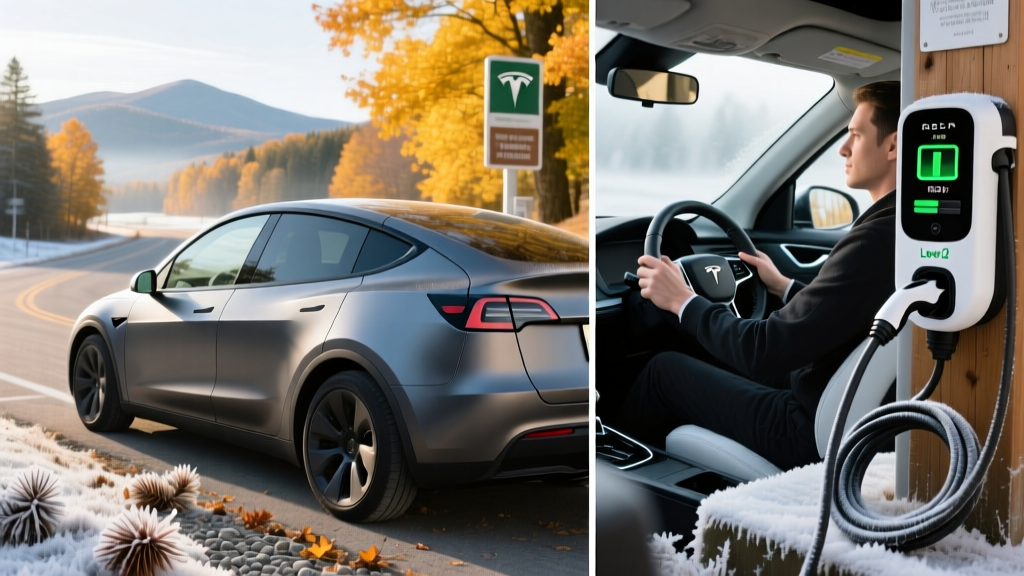
The 2026 Model Y Long Range AWD carries an EPA-estimated 320 miles of range. In real-world highway driving at 70 mph with mild temperatures, expect roughly 275–290 miles. In freezing conditions (below 30°F), plan for 230–260 miles due to battery heating demands and cabin climate load. The RWD base model with its LFP battery rates at 280 miles EPA, with real-world highway figures closer to 245–260 miles.
Efficiency remains a Tesla hallmark. The Long Range AWD achieves approximately 122 MPGe combined (roughly 28 kWh/100 mi) per EPA data on fueleconomy.gov. That efficiency edge translates directly into lower charging costs and more miles per stop on road trips.
The base Model Y RWD uses a 60 kWh usable lithium iron phosphate (LFP) battery pack. LFP chemistry sacrifices some energy density for longer cycle life, better thermal stability, and the ability to charge routinely to 100% without accelerating degradation — a practical advantage for daily commuters. The Long Range and Performance trims use ~75 kWh usable NMC (nickel manganese cobalt) packs, which deliver higher energy density and better cold-weather performance but should be kept between 20–80% for daily use to maximize longevity.
| Spec | RWD (Base) | Long Range AWD | Performance AWD |
|---|---|---|---|
| EPA Range | 280 mi | 320 mi | 295 mi |
| Battery (usable) | 60 kWh, LFP | ~75 kWh, NMC | ~75 kWh, NMC |
| Drivetrain | Rear-Wheel Drive | Dual-Motor AWD | Dual-Motor AWD |
| Horsepower | 295 hp | 384 hp | 456 hp |
| 0–60 mph | 6.6 sec | 4.8 sec | 3.5 sec |
| Max DC Charge Rate | 170 kW | 250 kW | 250 kW |
| 10–80% DC Time | ~28 min | ~22 min | ~22 min |
| Level 2 Home Rate | 11.5 kW (~44 mi/hr) | 11.5 kW (~44 mi/hr) | 11.5 kW (~44 mi/hr) |
| MPGe (combined) | 127 MPGe | 122 MPGe | 111 MPGe |
| Cargo (rear seats up) | 30.2 cu ft | 30.2 cu ft | 30.2 cu ft |
| Cargo (rear seats folded) | 72.1 cu ft | 72.1 cu ft | 72.1 cu ft |
| Rear Legroom | 38.7 in | 38.7 in | 38.7 in |
| Base MSRP | $44,990 | $48,990 | $53,990 |
Charging Speed and Infrastructure Access
Charging remains the Model Y's strongest competitive moat. Tesla's Supercharger network — now exceeding 6,000 stations and 60,000 stalls in North America — offers unmatched reliability and coverage. While other automakers have gained NACS access to Superchargers, native Tesla vehicles still enjoy the most seamless plug-and-charge experience with no adapter required.
| Charging Level | Power | Miles Added per Hour | Notes |
|---|---|---|---|
| Level 1 (120V) | ~1.4 kW | ~5 mi/hr | Emergency/trickle only |
| Level 2 (240V, 48A) | 11.5 kW | ~44 mi/hr | Full overnight charge in 7–8 hrs |
| DC Fast Charge (RWD) | Peak 170 kW | ~650 mi/hr (peak) | 10–80% in ~28 min; tapers above 60% |
| DC Fast Charge (LR/Perf) | Peak 250 kW | ~950 mi/hr (peak) | 10–80% in ~22 min; tapers sharply above 80% |
The charge curve matters more than peak kW. The Long Range sustains above 200 kW from roughly 10–35% State of Charge, then gradually tapers. Above 80%, charging slows dramatically to protect the battery — expect 80–100% to take nearly as long as 10–80%. For road trips, plan stops around the 10–80% window for maximum efficiency.
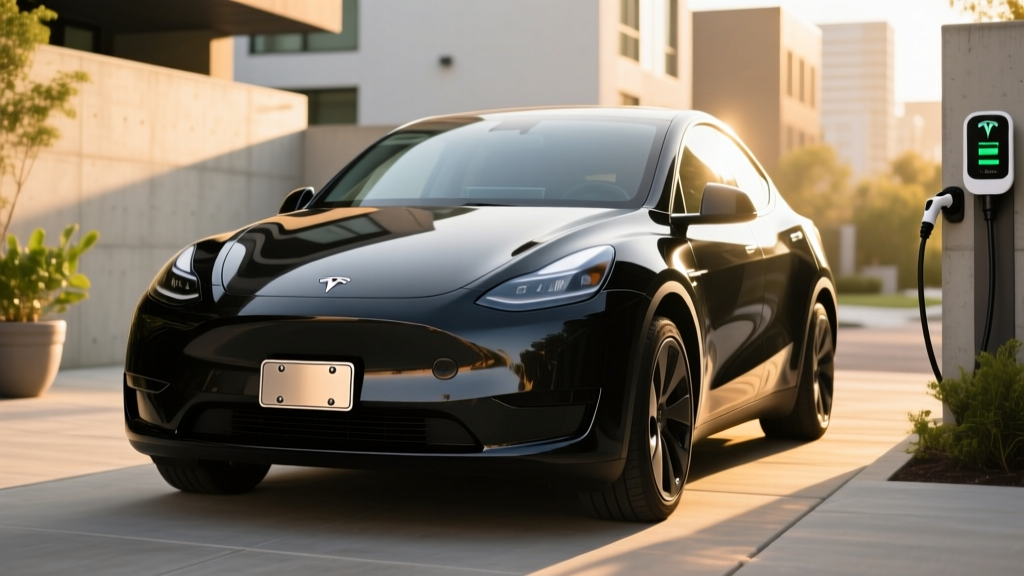
At home, a Level 2 Wall Connector on a 60-amp circuit delivers 11.5 kW, replenishing roughly 44 miles of range per hour. A full charge from 10% takes about 7 hours for the Long Range. Installation costs for a 240V/60A circuit typically run $800–$2,000 depending on panel proximity and local permitting, though a panel upgrade can push costs above $3,000.
Pricing, Trim Levels, and Federal Tax Credit Eligibility
The 2026 Model Y lineup spans three trims. Tesla periodically adjusts pricing, so verify current figures on the manufacturer's configurator before ordering.
| Trim | Base MSRP | As-Tested (w/ common options) | Est. §30D Credit | Effective Price (est.) |
|---|---|---|---|---|
| RWD | $44,990 | $46,490 (w/ paint + wheels) | Up to $7,500* | ~$37,490 – $38,990* |
| Long Range AWD | $48,990 | $50,990 (w/ paint + FSD transfer) | Up to $7,500* | ~$41,490 – $43,490* |
| Performance AWD | $53,990 | $56,490 (w/ paint + wheels) | Up to $7,500* | ~$46,490 – $48,990* |
*Federal tax credit eligibility under IRS §30D depends on multiple factors that change periodically:
- MSRP cap: SUVs must be priced at or below $80,000 — all Model Y trims qualify.
- Buyer income cap: Modified AGI must not exceed $150,000 (single), $225,000 (head of household), or $300,000 (joint).
- Battery sourcing: Critical minerals and battery components must meet phased-in domestic/free-trade-agreement thresholds that tighten each year. Verify current-year compliance on the IRS clean vehicle credit page before purchase.
- Point-of-sale transfer: Eligible buyers can transfer the credit to the dealer at purchase, reducing the upfront cost rather than waiting for a tax return.
- Consult a tax professional — eligibility is taxpayer-specific and subject to change.
Performance, Ride, and Daily Usability
Even the base RWD Model Y delivers 295 hp and a 6.6-second 0–60 time — brisk by any compact SUV standard. The Long Range AWD drops that to 4.8 seconds with 384 hp, while the Performance variant hits 3.5 seconds with 456 hp. Dual-motor AWD trims provide confident traction in rain and light snow, with torque vectoring that feels natural rather than intrusive.
Ride quality remains the Model Y's most common criticism in Tesla Motors Consumer Reports assessments and owner feedback. The suspension tuning is firm, transmitting more road imperfections than competitors like the Ioniq 5 or Mach-E. Tesla has made incremental improvements with updated bushings and damper tuning, but the gap persists on rough pavement.
Interior space is generous for the class. With 30.2 cubic feet behind the second row and 72.1 cubic feet with seats folded, the Model Y out-cargoes most compact electric SUVs. The rear seats offer 38.7 inches of legroom — adequate for adults on longer trips, though the seat cushion is lower than some competitors, which can cause a knees-up posture for taller passengers.
The minimalist interior centers on a 15.4-inch touchscreen handling nearly all vehicle functions. There is no instrument cluster — speed and navigation info appear in the upper-left corner of the main display. This design polarizes: some owners love the clean aesthetic, while others find the lack of physical controls distracting while driving.
Driver Assistance, Tech, and Autopilot Reality
Tesla's Autopilot and available FSD (Supervised) are SAE Level 2 driver-assistance systems. The driver must remain fully engaged, hands on or near the wheel, and eyes on the road at all times. These systems do not make the vehicle self-driving. Only Level 4 services like Waymo operate without a human driver in defined areas.
Standard Autopilot includes adaptive cruise control and lane-centering assist. The optional FSD (Supervised) package adds automated lane changes, traffic light recognition, and city-street navigation assistance. In practice, FSD handles many scenarios competently but still requires frequent driver intervention for construction zones, unusual lane markings, and complex intersections. Phantom braking — where the car unexpectedly decelerates on open highway — remains a documented issue in NHTSA investigations and owner reports.
- It does not drive autonomously — you are the responsible operator at all times.
- It does not reliably handle construction zones, unmapped roads, or severe weather.
- It does not eliminate the need for active attention and steering input.
- It does not guarantee collision avoidance — treat it as an assist, not a replacement.
Tesla's infotainment system is among the fastest and most responsive in the industry, with native navigation, Spotify/Apple Music integration, and a robust app ecosystem. Over-the-air updates regularly add features — a genuine differentiator over competitors that require dealer visits for software updates.
Warranty and Long-Term Battery Outlook
Tesla provides the following warranty coverage for the 2026 Model Y:
- Basic vehicle: 4 years / 50,000 miles
- Battery and drive unit (RWD): 8 years / 100,000 miles
- Battery and drive unit (Long Range/Performance AWD): 8 years / 120,000 miles
- Capacity retention threshold: Warranty covers degradation below 70% of original capacity during the warranty period.
Real-world battery degradation data from high-mileage Tesla owners suggests most Model Y packs retain approximately 88–92% capacity after 100,000 miles. LFP packs in the RWD model tend to show slightly less measurable degradation due to the chemistry's inherent cycle-life advantage, though they start with lower total range. Battery replacement outside warranty currently ranges from $12,000–$16,000 depending on pack size and labor — a cost worth factoring into long-term ownership plans beyond the 8-year window.
Pros and Cons: The Honest Scorecard
- Class-leading Supercharger network access with native plug-and-charge
- Top-tier efficiency (122+ MPGe) reduces charging cost per mile
- Strong cargo capacity (72.1 cu ft) for the compact SUV segment
- Over-the-air updates continuously add features and refinements
- Competitive real-world range (275–290 mi highway for Long Range)
- LFP option allows routine 100% charging without degradation concern
- Firm ride quality transmits road harshness more than rivals
- No physical controls — all functions routed through touchscreen
- Phantom braking incidents remain a documented concern
- FSD (Supervised) requires constant vigilance; not autonomous
- Build consistency has improved but still lags some competitors
- Rear seat comfort limited for taller passengers on long trips
Is the 2026 Model Y Worth Buying vs. Key Competitors?
The decision framework depends on your priorities:
- You road-trip frequently and want the most reliable DC fast-charging network.
- Efficiency and cost-per-mile matter — Tesla's MPGe leads the segment.
- You value OTA updates and a maturing software ecosystem.
- You can charge at home and want a practical daily commuter with strong cargo space.
- Hyundai Ioniq 5: You prioritize ride comfort, 800V ultra-fast charging (10–80% in ~18 min), and physical controls.
- Ford Mustang Mach-E: You want a more engaging driving feel and a traditional instrument cluster.
- Chevrolet Equinox EV: Budget is paramount — the Equinox EV starts significantly lower, though with less range and slower charging.
Frequently Asked Questions
What is the real-world range of the 2026 Tesla Model Y?
The EPA rates the Long Range AWD at 320 miles. In real-world highway driving at 70 mph, expect 275–290 miles in mild weather and 230–260 miles in freezing temperatures. The RWD model rates at 280 miles EPA with real-world highway range around 245–260 miles.
How fast does the Model Y charge at home and on the road?
On a Level 2 home charger (11.5 kW), the Model Y adds roughly 44 miles per hour, with a full charge taking about 7 hours. On DC fast chargers, the Long Range and Performance peak at 250 kW with a 10–80% time of approximately 22 minutes. The RWD peaks at 170 kW with a 10–80% time around 28 minutes.
Does the 2026 Model Y qualify for the $7,500 federal EV tax credit?
It may. All trims fall under the $80,000 SUV MSRP cap. However, eligibility also depends on buyer income (AGI limits of $150K/$225K/$300K by filing status) and battery component/critical-mineral sourcing requirements that tighten annually. Verify current eligibility on the IRS §30D page and consult a tax professional before purchasing.
Is the Model Y better than the Hyundai Ioniq 5 or Ford Mach-E?
It depends on your use case. The Model Y leads in efficiency, Supercharger network access, and cargo space. The Ioniq 5 wins on ride comfort, 800V charging speed, and interior design. The Mach-E offers a sportier driving feel and more conventional controls. None is universally "better" — prioritize what matters most for your driving patterns.
What are the biggest drawbacks of the Tesla Model Y?
The most consistent complaints involve firm ride quality over rough pavement, the touchscreen-only control scheme, phantom braking events with Autopilot, and rear seat comfort for taller passengers. Build quality has improved but still draws occasional panel-gap and trim-fitment criticism.
How long will the Model Y battery last?
Tesla warranties the battery for 8 years/100,000 miles (RWD) or 8 years/120,000 miles (AWD) with a 70% capacity retention threshold. Real-world data from high-mileage owners suggests most packs retain 88–92% capacity at 100,000 miles. Out-of-warranty replacement currently costs $12,000–$16,000.