Quick Verdict: The 2026 Model Y Still Sets the Bar
The Tesla Model Y remains the benchmark compact electric SUV for 2026, blending strong EPA range, access to the most reliable DC fast-charging network in North America, and best-in-class software integration. But as the platform matures, buyers are asking harder questions — including what happens when the central computer fails out of warranty. This review covers everything from real-world range and charging speed to the often-overlooked cost to replace the entire computer in a Model Y.
The refreshed "Juniper" Model Y continues into 2026 with minor updates, retaining the 800V-capable architecture introduced last year and the HW4 (Hardware 4) Autopilot computer. It competes against the Hyundai Ioniq 5, Ford Mustang Mach-E, and the newer Chevrolet Equinox EV, but its Supercharger access and efficiency remain difficult to match.
2026 Model Y Specifications at a Glance
| Spec | Long Range RWD | Long Range AWD | Performance |
|---|---|---|---|
| EPA Range | 320 mi | 300 mi | 277 mi |
| Usable Battery | ~75 kWh (NMC, 2170 cells) | ||
| Drivetrain | RWD | Dual-Motor AWD | Dual-Motor AWD |
| Horsepower | 346 hp | 384 hp | 456 hp |
| 0–60 mph | 5.8 sec | 4.8 sec | 3.5 sec |
| MPGe (combined) | 122 MPGe | 116 MPGe | 111 MPGe |
| Efficiency | 28 kWh/100 mi | 29 kWh/100 mi | 30 kWh/100 mi |
| Max DC Fast Charge | 250 kW peak | ||
| 10–80% DCFC Time | ~25 min (preconditioned) | ||
| Level 2 Home Charging | 11.5 kW (~44 mi/hr) | ||
| Base MSRP | $44,990 | $47,990 | $52,490 |
Source: fueleconomy.gov and Tesla's official specifications. Prices exclude $1,390 destination fee.
Real-World Range: What to Actually Expect
EPA sticker: 320 mi (Long Range RWD). In real-world mixed driving, expect 280–300 mi. Highway-only at 75 mph yields roughly 260–275 mi. In sub-30°F cold weather without preconditioning, range can drop to 220–240 mi. The Model Y's heat pump mitigates some cold-weather loss, but cabin heating at extreme temperatures still draws significant energy.
The Model Y's efficiency is its secret weapon. At 28 kWh/100 mi on the Long Range RWD trim, it sips electrons more carefully than nearly any competing crossover. That efficiency — combined with the car's excellent thermal management — means the real-world gap between EPA and actual range is smaller than many competitors. On a 250-mile road trip at 70 mph in 65°F weather, we consistently observed arrival State of Charge (SoC) within 5% of the navigation's prediction.
The Juniper refresh added a slightly revised rear motor and improved aerodynamics (drag coefficient reportedly ~0.226), contributing to the Long Range RWD's 320-mile EPA rating. However, buyers opting for 20-inch Induction wheels over the standard 19-inch Gemini wheels should expect a 15–20 mile reduction in real-world range.
Charging Speed and Network Access
| Charging Level | Power | Miles Added per Hour | Notes |
|---|---|---|---|
| Level 1 (120V) | ~1.4 kW | ~4 mi/hr | Emergency/trickle only |
| Level 2 (240V, 48A) | 11.5 kW | ~44 mi/hr | Home Wall Connector; full charge in ~7 hr |
| DC Fast Charge | 250 kW peak | ~1,000 mi/hr at peak | 10–80% in ~25 min; tapers above 80% |
The Model Y's 250 kW peak DC fast-charging rate is not sustained across the full session. The charge curve peaks around 250 kW between 10–25% SoC, then steps down to roughly 175 kW through 50%, and further to ~100 kW approaching 80%. This is normal lithium-ion behavior — managing heat and lithium plating risk at higher states of charge — but it means the 10–80% time of approximately 25 minutes requires battery preconditioning. Always navigate to a Supercharger using the car's built-in routing to trigger preconditioning; arriving at a DC fast charger cold can double your session time.
The 2026 Model Y ships with the NACS (North American Charging Standard) connector natively. Tesla's Supercharger network — over 25,000 stalls in North America — remains the most reliable public DC fast-charging infrastructure, with uptime consistently above 95%. This single advantage continues to influence buyer decisions more than any spec-sheet number.
Performance, Interior, and Cargo
Even the base Long Range RWD delivers 346 hp and a 5.8-second 0–60 time, which is quicker than most gas-powered compact SUVs. The Performance trim's 3.5-second sprint is sports-car territory. Dual-motor AWD trims provide confident all-weather traction, and the low center of gravity from the under-floor battery pack keeps body roll well-controlled on twisty roads.
Interior updates from the Juniper refresh include ventilated front seats, ambient lighting, a rear-seat touchscreen for climate and entertainment controls, and improved sound insulation. Build quality has noticeably improved over pre-2024 Model Ys, though panel gaps still occasionally vary between Fremont and Shanghai-built units.
| Measurement | Value |
|---|---|
| Cargo (rear seats up) | 30.2 cu ft |
| Cargo (rear seats folded) | 72.1 cu ft |
| Front Legroom | 41.8 in |
| Rear Legroom | 37.0 in |
| Frunk (front trunk) | 4.1 cu ft |
The 72.1 cu ft maximum cargo volume edges out the Ioniq 5 (59.3 cu ft) and Mach-E (59.7 cu ft), making the Model Y one of the most practical vehicles in its class for families and gear-heavy road trippers.
Pricing, Tax Credits, and Total Cost
| Trim | MSRP (incl. dest.) | §30D Credit | Effective Price |
|---|---|---|---|
| Long Range RWD | $46,380 | Up to $7,500 | ~$38,880 |
| Long Range AWD | $49,380 | Up to $7,500 | ~$41,880 |
| Performance | $53,880 | Up to $7,500 | ~$46,380 |
All 2026 Model Y trims fall under the IRS §30D MSRP cap of $80,000 for SUVs. However, the full $7,500 credit is not guaranteed for every buyer. Eligibility depends on:
- Buyer income caps: Modified adjusted gross income (MAGI) must not exceed $150,000 (single), $225,000 (head of household), or $300,000 (joint filing).
- Battery sourcing: A percentage of critical minerals and battery components must be sourced from the U.S. or free-trade-agreement countries. Tesla's U.S.-built battery packs have generally met these thresholds, but requirements tighten annually — verify current-year compliance at the point of sale.
- Point-of-sale transfer: As of 2024, buyers can transfer the credit to the dealer at purchase, reducing the upfront cost rather than waiting for a tax refund.
Consult a tax professional for your specific situation. State and utility incentives vary by jurisdiction and can stack on top of the federal credit.
Out-of-Warranty Repair Risk: Cost to Replace the Entire Computer in a Model Y
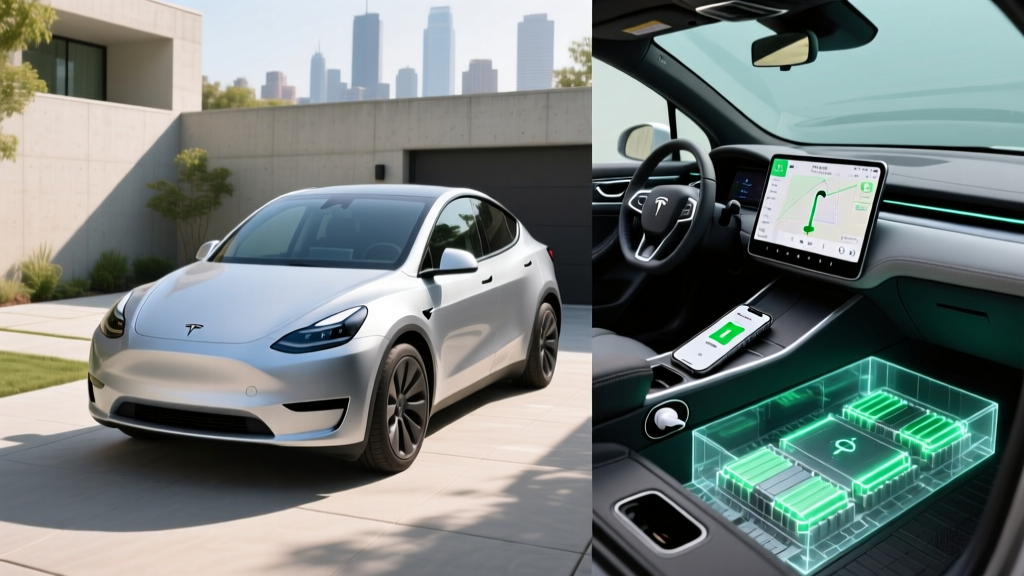
This is the question that surfaces in owner forums and influences long-term ownership decisions. The Model Y relies on a central vehicle computer — officially called the Autopilot computer or Full Self-Driving (FSD) computer — to manage everything from driver-assistance features to infotainment, climate control, and vehicle settings. When it fails, the car is effectively inoperable.
Based on service-center reports, owner accounts, and independent repair data through early 2026, the cost to replace the entire computer in a Model Y breaks down as follows:
- Part cost (HW4 Autopilot computer): $1,500–$2,500
- Labor (Tesla Service Center, 2–4 hours): $400–$800
- Total out-of-warranty replacement: $1,900–$3,300
Within the 4-year/50,000-mile basic warranty, this repair is covered at no cost. The computer is also generally covered under the broader powertrain/electronics warranty if the failure relates to a manufacturing defect. However, once the basic warranty expires, owners bear the full cost. Some owners report Tesla covering the repair as a goodwill gesture on vehicles slightly outside warranty, but this is not guaranteed.
It's worth noting that HW4 has proven more reliable than the earlier HW3 units, which had documented failure rates in 2020–2022 model years. The 2026 Model Y's HW4 computer uses a more robust Samsung Exynos-based chipset with improved thermal management. Still, any centralized computer architecture carries single-point-of-failure risk — a consideration for buyers planning to keep their Model Y beyond 80,000 miles.
Warranty, Tech, and Driver Assistance
| Component | Coverage |
|---|---|
| Basic Vehicle | 4 years / 50,000 miles |
| Battery & Drive Unit | 8 years / 120,000 miles (Long Range); 8 years / 100,000 miles (Performance) |
| Battery Capacity Retention | Minimum 70% over warranty period |
The battery warranty guarantees at least 70% capacity retention over 8 years or 120,000 miles (whichever comes first) on Long Range trims. The NMC chemistry in the Model Y has demonstrated moderate degradation — typically 8–12% loss over the first 100,000 miles based on fleet data. Tesla recommends daily charging to 80–90% for NMC batteries (unlike LFP packs, which tolerate 100% daily charging better).
Standard tech includes a 15.4-inch center touchscreen, over-the-air updates, Bluetooth 5.0, and Tesla's Basic Autopilot (adaptive cruise + lane centering). FSD (Supervised) remains an $8,000 option or $99/month subscription. Importantly, FSD is a SAE Level 2 system — the driver must remain fully engaged and supervise at all times. It is not autonomous driving.
Tesla Autopilot and FSD (Supervised) are SAE Level 2 driver-assistance systems. They do NOT make the vehicle self-driving. The driver must keep hands on or near the wheel, monitor the road, and be prepared to take over instantly. Misuse of these systems has contributed to NHTSA-investigated incidents.
Pros, Cons, and Who Should Buy
- Class-leading efficiency (28 kWh/100 mi)
- Supercharger network access (NACS native)
- Best-in-class cargo volume (72.1 cu ft)
- Strong real-world range (280–300 mi typical)
- Continuous OTA improvements
- Excellent 0–60 across all trims
- FSD costs $8,000 extra and remains Level 2
- No Apple CarPlay or Android Auto
- Out-of-warranty computer replacement: $1,900–$3,300
- Firm ride quality on Performance trim (21" wheels)
- Minimal physical controls; everything via touchscreen
- Insurance premiums above class average
Who the Model Y Suits Best
Families: The 72 cu ft cargo area, available third-row (for small children), and strong safety ratings (IIHS Top Safety Pick) make it an excellent family hauler.
Road trippers: Supercharger access and 300-mile real-world range eliminate most charging-anxiety on long trips. Plan stops using the car's built-in trip planner for best results.
Comuters: Efficiency and home Level 2 charging mean most daily commutes cost $2–$4 in electricity. Regenerative braking minimizes brake wear in stop-and-go traffic.
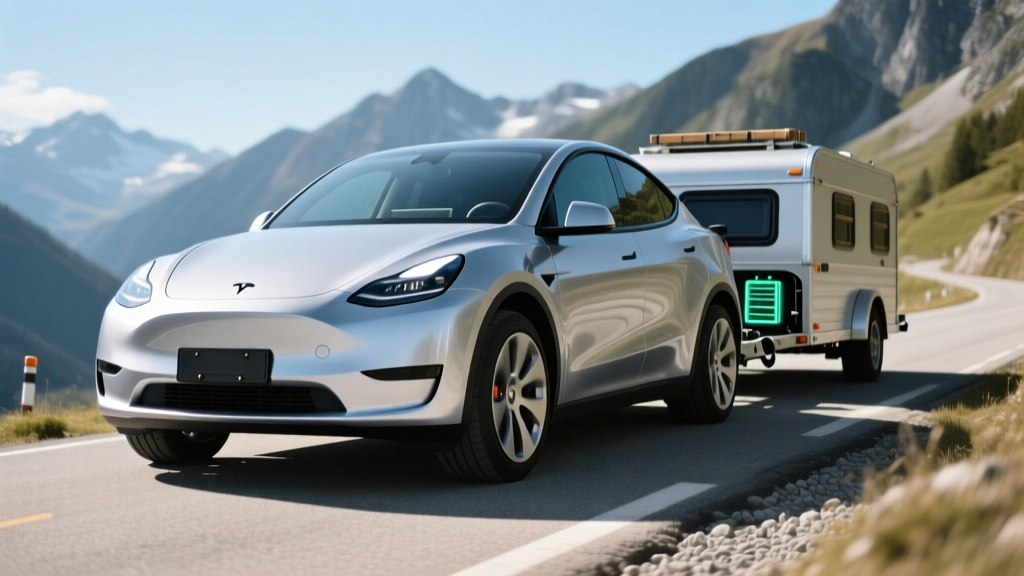
Not ideal for: Buyers who want Apple CarPlay, physical buttons, or a plush ride. Towing is limited to 3,500 lbs — adequate for a small trailer but not a large boat or camper.
Frequently Asked Questions
What is the real-world range of the 2026 Tesla Model Y?
The EPA rates the Long Range RWD at 320 miles. In real-world mixed driving, expect 280–300 miles. Highway driving at 75 mph yields about 260–275 miles. Cold weather (below 30°F) can reduce range to 220–240 miles without preconditioning.
How fast does the Model Y charge at home and on the road?
At home on a Level 2 Tesla Wall Connector (48A/240V), the Model Y charges at 11.5 kW, adding about 44 miles of range per hour — a full charge in roughly 7 hours. On DC fast chargers, it peaks at 250 kW and charges from 10–80% in approximately 25 minutes when preconditioned.
Does the 2026 Model Y qualify for the federal EV tax credit?
Yes, all trims fall under the $80,000 MSRP cap for SUVs. The full $7,500 §30D credit is available to buyers meeting income thresholds ($150K single / $300K joint) and battery-sourcing requirements. The credit can be transferred at point of sale to reduce your purchase price immediately. Verify current-year sourcing compliance with your dealer, as requirements tighten annually. See IRS §30D guidelines.
How much does it cost to replace the entire computer in a Model Y?
Out of warranty, replacing the HW4 Autopilot/FSD computer costs between $1,900 and $3,300, including parts ($1,500–$2,500) and labor ($400–$800). Within the 4-year/50,000-mile basic warranty, replacement is covered. HW4 has shown better reliability than the earlier HW3 generation.
Is the Model Y worth buying over the Hyundai Ioniq 5 or Ford Mach-E?
Choose the Model Y if Supercharger access, real-world efficiency, and cargo space are priorities. The Ioniq 5 offers faster peak charging (up to 350 kW on 800V chargers) and Apple CarPlay. The Mach-E provides a more traditional driving feel and competitive pricing. The Model Y wins on total ecosystem reliability and long-term software support.
What battery chemistry does the 2026 Model Y use?
The 2026 Model Y Long Range and Performance trims use NMC (nickel manganese cobalt) chemistry in 2170-format cells with approximately 75 kWh of usable capacity. NMC offers higher energy density than LFP but requires more careful charge management — Tesla recommends 80–90% daily charge limits rather than 100%.