The Tesla Model Y Compact Prototype Explained: Juniper Reality Check
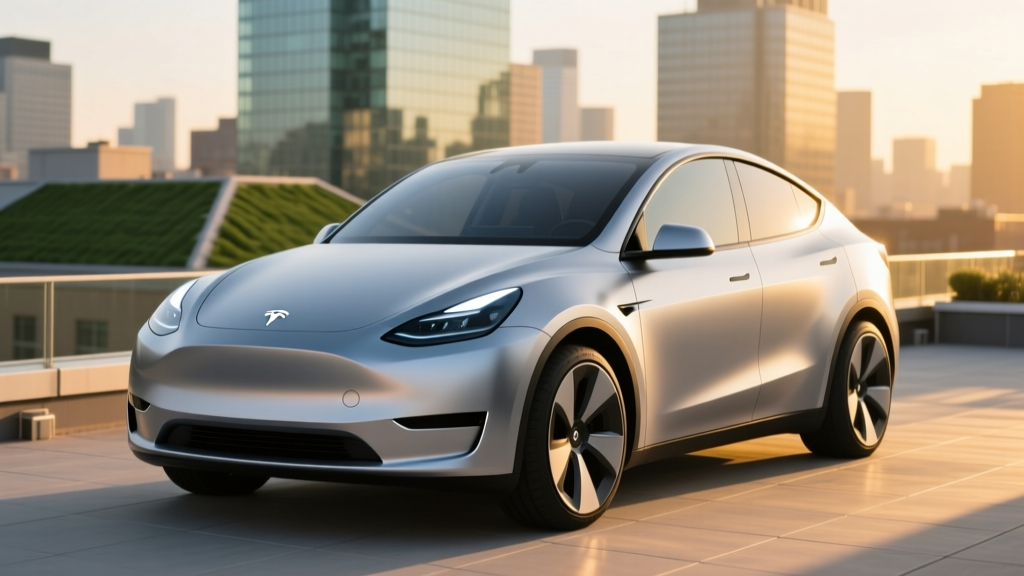
Search interest in the Tesla Model Y compact prototype surged after spy shots and supply-chain leaks suggested a heavily revised platform. What Tesla actually delivered is the Juniper-generation Model Y — not a shrunken hatchback, not a budget EV, but a comprehensive overhaul of the best-selling electric crossover in the United States. The "compact prototype" label stuck in forums and SEO queries, but the production reality is a mid-size SUV that competes directly with the Hyundai Ioniq 5, Ford Mustang Mach-E, and Chevrolet Equinox EV on efficiency, tech, and charging speed.
This review covers the 2026 Tesla Model Y Long Range AWD and the base Rear-Wheel Drive variant with verified specs, real-world range reconciliation, and tax-credit math that actually matters at the dealership.
Spec Table: 2026 Tesla Model Y at a Glance
| Specification | Long Range AWD | Rear-Wheel Drive (Base) |
|---|---|---|
| EPA Range | 320 miles | 279 miles |
| Battery (usable) | ~78 kWh (NMC) | ~60 kWh (LFP) |
| Peak DC Fast Charge | 250 kW | 170 kW |
| 10–80% DC Charge Time | ~24 minutes | ~25 minutes |
| Level 2 Home Charge | 11.5 kW (~44 mi/hr) | 7.7 kW (~30 mi/hr) |
| 0–60 mph | 4.8 seconds | 6.9 seconds |
| Horsepower | 384 hp (dual motor) | 295 hp (single motor) |
| Drivetrain | Dual-motor AWD | Rear-wheel drive |
| MPGe (combined) | 122 MPGe | 129 MPGe |
| Efficiency | 27 kWh/100 mi | 26 kWh/100 mi |
| Cargo (rear seats up) | 30.2 cu ft | 30.2 cu ft |
| Cargo (seats folded) | 72.1 cu ft | 72.1 cu ft |
| Base MSRP | $48,990 | $44,990 |
| As-Tested (w/ FSD) | $56,990 | $52,990 |
| Battery/Powertrain Warranty | 8 yr / 120,000 mi | 8 yr / 100,000 mi |
Range: EPA Stickers vs. Real-World Driving
EPA 320 mi (Long Range AWD). Expect ~270–290 mi on sustained highway driving at 70+ mph. In winter conditions (below 32°F), plan for 220–260 mi depending on cabin heating use and battery preconditioning. The base RWD at 279 mi EPA typically delivers 230–250 mi highway and as low as 180 mi in deep cold.
Tesla's Juniper thermal management system — now standard with a heat pump across all trims — narrows the gap between EPA estimates and reality compared to the pre-2025 Model Y. In EPA testing, the Long Range AWD achieves 122 MPGe combined, which translates to roughly 3.6 miles per kWh. That efficiency figure is among the best in the mid-size electric crossover segment, rivaling Hyundai's E-GMP platform.
The critical variable buyers overlook: the LFP battery in the base RWD model has a lower energy density and slightly less usable capacity (~60 kWh vs. ~78 kWh NMC in the Long Range). The trade-off is longevity — LFP chemistry degrades more slowly over thousands of charge cycles and tolerates daily 100% charging without accelerated wear. If your commute is under 40 miles round-trip and you charge at home nightly, the base RWD's real-world range is more than adequate and may outlast the NMC pack over a decade.
Charging: DC Fast, Level 2, and the Curve Reality
| Charging Level | Power / Rate | Miles Added Per Hour | Best For |
|---|---|---|---|
| Level 1 (120V household) | 1.4 kW | ~3–5 mi/hr | Emergency / overnight trickle |
| Level 2 (240V home) | 7.7–11.5 kW | 30–44 mi/hr | Daily home charging |
| DC Fast (Supercharger V3) | Up to 250 kW | ~1,000+ mi/hr (peak) | Road trips, rapid top-ups |
| DC Fast (Supercharger V4) | Up to 250 kW* | ~1,000+ mi/hr (peak) | Future-proofed infrastructure |
*Tesla's V4 Supercharger cabinets are rated for higher output, but the Model Y's onboard architecture caps intake at 250 kW.
The charging curve matters more than the peak number. The Long Range AWD hits 250 kW only between roughly 10–30% state of charge, then tapers progressively — dropping to ~100 kW around 60% and below 50 kW past 80%. This is why Tesla quotes 10–80% in ~24 minutes rather than a misleading 0–100% figure. Charging from 80–100% at a DC fast charger can take as long as the 10–80% session. For road-trip planning, plan stops at 10–15% remaining and charge to 70–80% to minimize total trip time.
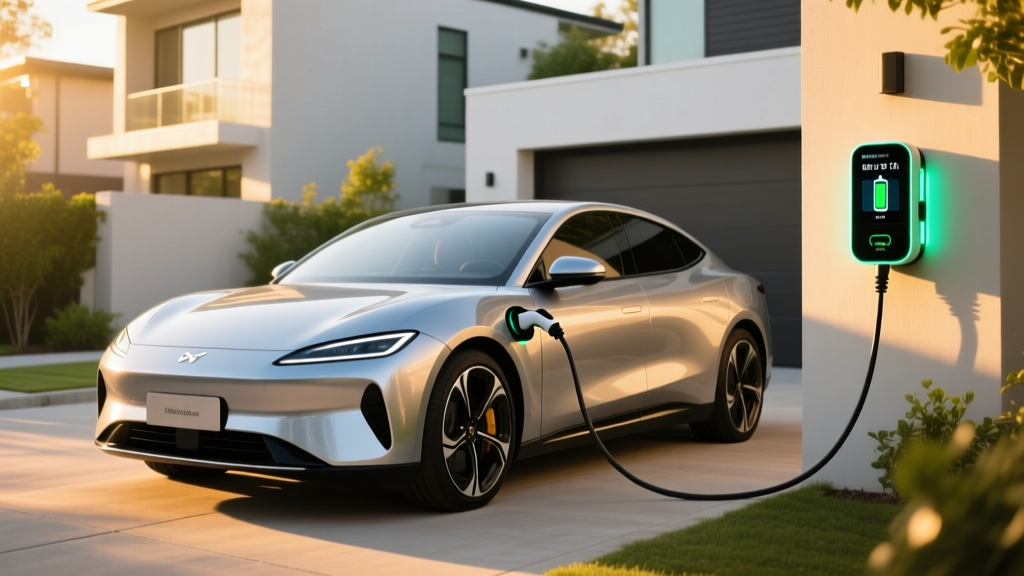
For home Level 2 charging, the Long Range AWD's 11.5 kW onboard charger fills the ~78 kWh battery in roughly 8 hours — ideal for overnight charging on a Tesla Wall Connector or any J1772/NACS-compatible Level 2 unit. The base RWD's 7.7 kW charger takes about 8 hours for its smaller 60 kWh pack. Either way, you wake up to a full battery every morning, which eliminates most range anxiety for daily driving.
Tesla's NACS connector is now the de facto North American standard, with Ford, GM, Rivian, Hyundai, and others adopting it. This means the Model Y has the broadest public fast-charging access of any EV on the market — over 25,000 Supercharger stalls in the U.S. alone, plus growing third-party NACS infrastructure.
Performance and Drivetrain
The Long Range AWD uses a dual-motor setup producing 384 combined horsepower with permanent-magnet synchronous motors on both axles. The 4.8-second 0–60 mph time places it ahead of the Ford Mustang Mach-E Premium AWD (5.1 sec) and on par with the Hyundai Ioniq 5 AWD (5.0 sec). Torque vectoring between front and rear motors provides confident all-weather traction without the efficiency penalty of a mechanical AWD system.
The base RWD's 295 hp and 6.9-second sprint are perfectly adequate for commuting and highway merging. Single-motor EVs have an inherent simplicity advantage — fewer moving parts, less weight, and marginally better efficiency. If you live in a mild climate and don't need mountain-pass grip, the RWD is the pragmatic choice.
Regenerative braking in the Model Y remains one-pedal-capable, though Tesla removed the user-adjustable regen setting in recent software updates. The default strong-regen mode recovers significant energy in stop-and-go traffic and reduces brake-pad wear to near-zero over typical ownership periods.
Pricing, Trims, and the §30D Tax Credit Math
| Trim | Base MSRP | Destination | Est. Federal Credit | Effective Price |
|---|---|---|---|---|
| Model Y RWD | $44,990 | $1,390 | Up to $7,500* | ~$38,880 |
| Model Y LR AWD | $48,990 | $1,390 | Up to $7,500* | ~$42,880 |
| Model Y LR AWD + FSD | $56,990 | $1,390 | Up to $7,500* | ~$50,880 |
*Federal §30D credit eligibility depends on buyer income, battery-sourcing requirements, and MSRP caps. Not all buyers qualify for the full amount. See IRS guidelines for current rules.
- MSRP Cap: SUVs/vans/pickups must be under $80,000 — all Model Y trims qualify.
- Income Cap: AGI ≤ $150,000 (single), $225,000 (head of household), $300,000 (joint).
- Battery Sourcing: Critical minerals and battery components must meet escalating domestic-content thresholds. Tesla's U.S.-built packs with sourced materials have generally qualified, but verify at point of sale.
- Point-of-Sale Transfer: You can transfer the credit to the dealer at purchase for an immediate price reduction — no need to wait for tax filing.
- Assembly: Vehicle must undergo final assembly in North America. All U.S.-sold Model Ys are built in Fremont, CA or Austin, TX.
The point-of-sale transfer provision is the most impactful change for buyers. Instead of waiting until April to claim the credit on your tax return, the $7,500 comes directly off your purchase price at the dealership (or Tesla's checkout). This effectively makes the base Model Y RWD a ~$39,000 vehicle for qualifying buyers — competitive with the Chevrolet Equinox EV 3LT and undercutting most AWD crossovers in the segment after fuel savings.
Interior, Cargo, and Daily Practicality
The Juniper redesign brought a quieter cabin (acoustic glass on all four doors), ventilated front seats, ambient lighting, and a rear-seat touchscreen for climate and entertainment control. The minimalist dashboard remains polarizing — no physical stalks (turn signals are steering-wheel-mounted buttons), no instrument cluster, and all driving information funnels through the 15.4-inch center display.
Cargo volume holds at 30.2 cubic feet behind the second row and 72.1 cubic feet with seats folded — competitive with the Ioniq 5 (27.2/59.3 cu ft) and slightly less than the Mach-E (29.7/59.7 cu ft, though Tesla's measurements include the front trunk). The Model Y's 4.1 cu ft frunk adds genuine utility for charging cables, groceries, or a small carry-on.
Legroom measurements (41.8 in front / 38.4 in rear) accommodate adults comfortably in both rows, though the rear seat cushion sits lower than some competitors, creating a knees-up posture on longer trips. The panoramic glass roof floods the cabin with light but contributes to summer heat soak — Tesla's tint helps, but a shade is worth the accessory cost in southern climates.
Driver Assistance, Tech, and What Autopilot Actually Does
Tesla Autopilot and Full Self-Driving (Supervised) are Level 2 driver-assistance systems, not autonomous driving. The driver must remain attentive, hands on or near the wheel, and ready to take over at any moment. Only Level 4 services like Waymo operate without a human driver — and those are limited to geofenced urban areas. Do not treat FSD as "self-driving."
Tesla's Autopilot (standard) includes adaptive cruise control, lane-keeping assist, and automatic emergency braking. Full Self-Driving (Supervised) — a $8,000 add-on or $99/month subscription — layers on traffic-light and stop-sign recognition, autosteer on city streets, and automatic lane changes. The system is impressively capable in many scenarios but still requires active supervision, particularly in construction zones, unmapped areas, and adverse weather.
The Juniper hardware suite includes Tesla's latest AI processor (Hardware 4.0/AI5) with improved camera resolution and processing throughput. Whether FSD justifies its premium depends entirely on your commute complexity and tolerance for beta-level software. For highway commuters, standard Autopilot handles 90% of the workload. For urban drivers navigating complex intersections, FSD is a compelling but imperfect co-pilot.
Pros and Cons
- Best-in-class Supercharger network access (25,000+ U.S. stalls)
- Top-tier efficiency (26–27 kWh/100 mi)
- Strong real-world range (270–290 mi highway, LR AWD)
- Point-of-sale tax credit reduces effective price to ~$39K–$43K
- Over-the-air updates continuously add features
- LFP battery option for daily-charge longevity
- No turn-signal stalks — steering-wheel buttons are a learning curve
- FSD at $8,000 is expensive for a Level 2 system
- Rear-seat cushion height compromises long-trip comfort
- Panel gaps and paint quality still inconsistent vs. legacy OEMs
- No Apple CarPlay / Android Auto — Tesla-only ecosystem
- Insurance premiums run 15–30% higher than segment average
Who the 2026 Model Y Suits Best
Daily commuters: The base RWD at ~$39K after credits, with 230+ real-world miles and home charging, is one of the most cost-effective electric commutes available. LFP chemistry rewards daily 100% charging without degradation guilt.
Family road-trippers: The Long Range AWD's 270–290 mile highway range, 72 cu ft cargo capacity, and Supercharger access make it the default choice for families who drive beyond metro areas. Plan 20-minute charging stops every 2.5–3 hours.
Tech-forward buyers: If you want OTA updates, a robust app ecosystem, and the most advanced (if imperfect) driver-assist suite in the segment, Tesla's software moat remains unmatched.
Consider alternatives if: You need Apple CarPlay, prefer physical buttons and stalks, want a more plush interior (Genesis Electrified GV70, BMW iX), or need maximum towing capacity (Rivian R1S, Ford F-150 Lightning).
Frequently Asked Questions
What is the real-world range of the Tesla Model Y?
The Long Range AWD delivers 270–290 miles on highway trips and up to 310+ miles in mixed city driving with regenerative braking. In winter (below freezing), expect 220–260 miles. The base RWD achieves 230–250 miles highway and roughly 180 miles in deep cold. These figures assume moderate speeds (65–75 mph) and standard climate control use.
How fast does the Model Y charge at home and on the road?
At home on Level 2 (240V), the Long Range adds ~44 miles per hour and fully charges in about 8 hours. On a Tesla V3 Supercharger, it peaks at 250 kW and charges 10–80% in approximately 24 minutes. The base RWD charges at 170 kW peak DC and 7.7 kW Level 2, with a similar 10–80% time of ~25 minutes due to its smaller battery.
How much does the Model Y cost after tax credits?
For buyers meeting all §30D requirements (income caps, battery sourcing, North American assembly), the effective price drops to approximately $38,880 for the RWD and $42,880 for the Long Range AWD after the $7,500 point-of-sale credit. Verify eligibility with your tax professional and confirm credit applicability at the time of purchase, as sourcing rules evolve annually.
Is the Model Y worth buying vs. the Ioniq 5 or Mach-E?
The Model Y wins on charging infrastructure (Supercharger network), efficiency, and software. The Ioniq 5 offers faster 800V charging architecture (10–80% in ~18 min on 350 kW chargers), a more spacious rear seat, and standard CarPlay. The Mach-E provides a more traditional driving feel and competitive pricing. If public charging access matters most, Tesla's network advantage is decisive. If interior comfort and CarPlay are priorities, test-drive the Ioniq 5.
Does the Model Y qualify for the full $7,500 federal tax credit?
As of 2026, the Model Y generally qualifies for the full §30D credit for eligible buyers, given its U.S. assembly and Tesla's battery-sourcing compliance. However, critical-mineral and battery-component thresholds tighten each year. Always verify current eligibility on IRS.gov and confirm with your dealer before finalizing your purchase.
Is the "Tesla Model Y compact prototype" a different vehicle?
No. The "compact prototype" search term originated from early spy photos and speculation about a smaller, cheaper Tesla crossover. What Tesla actually produced is the Juniper-generation Model Y — the same mid-size crossover, comprehensively updated. There is no separate compact variant in Tesla's current or announced lineup. If Tesla introduces a sub-$30,000 compact EV (sometimes referred to as the "Model 2" or "Redwood" project), it would be a distinct vehicle, not a Model Y variant.