Verdict: Honda's First EV Is a Strong Deal When 0% APR Meets Tax Credits
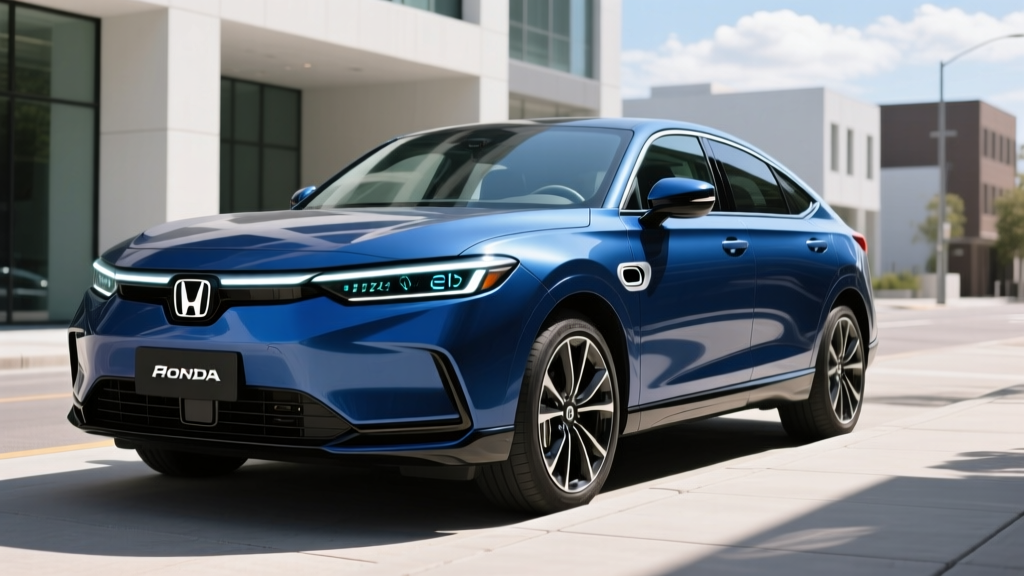
If you've been watching Honda's EV strategy from the sidelines, the 2024 Prologue is the automaker's long-awaited entry into the battery-electric market — and promotional financing like 0% APR for qualified buyers makes it one of the most compelling midsize electric SUV deals on the market. Built on General Motors' Ultium platform and sharing its bones with the Chevrolet Blazer EV, the Prologue delivers up to 296 miles of EPA-estimated range, spacious seating for five, and Honda's reputation for reliability. But before you sign, you need to understand the real-world range, charging realities, and exactly how the federal tax credit stacks with that 0% APR offer.
| Spec | EX (FWD) | Touring (AWD) |
|---|---|---|
| EPA Range | 296 miles | 273 miles |
| Battery (usable) | 85 kWh NMC (Ultium) | |
| Motor Output | 212 hp / 236 lb-ft | 288 hp / 325 lb-ft |
| 0-60 mph | ~7.5 sec | ~6.2 sec |
| Max DC Fast Charge | 150 kW peak | |
| 10-80% DC Charge | ~35 minutes | |
| Level 2 Home Charge | 11.5 kW (~26 mi/hr) | |
| Efficiency | 99 MPGe (combined) | 95 MPGe (combined) |
| Base MSRP | $47,400 | $57,900 |
| Destination Charge | $1,350 | |
Real-World Range: What 296 Miles Actually Looks Like
The front-wheel-drive Prologue EX and Touring trims earn an EPA-estimated 296 miles of range, while the dual-motor AWD Touring drops to 273 miles. These are competitive numbers for the midsize electric SUV segment, but EPA estimates assume a specific mix of city and highway driving under controlled conditions.
- City/commute driving (mild weather): 280-300+ miles — EVs excel in stop-and-go thanks to regenerative braking
- Highway cruising at 70-75 mph: Expect 230-260 miles (FWD) or 210-240 miles (AWD) — aerodynamic drag is the efficiency killer
- Cold weather (below 32°F): Plan for 20-30% range reduction, bringing the FWD down to ~210-235 miles and AWD to ~190-215 miles
- Worst-case (highway + cold + hills): Budget for ~180-200 miles on the AWD Touring
The Prologue uses GM's Ultium battery platform with an 85 kWh usable capacity in nickel-manganese-cobalt (NMC) chemistry. NMC offers higher energy density than LFP (lithium iron phosphate), which is why Honda can package this much range into a relatively compact battery. However, NMC batteries benefit from staying between 20-80% state of charge for daily use — avoid habitual 100% charges unless you're heading out on a road trip.
According to fueleconomy.gov, the FWD Prologue achieves 99 MPGe combined (105 city / 93 highway), while the AWD Touring nets 95 MPGe (99 city / 90 highway). For context, that translates to roughly 34-36 kWh per 100 miles of driving.
Charging Speed: DC Fast and Home Level 2 Breakdown
Charging infrastructure is the make-or-break factor for EV ownership, and the Prologue offers competent but not class-leading charge speeds. Here's what you're working with across all charging levels:
| Level | Power / Voltage | Rate | Time |
|---|---|---|---|
| Level 1 (120V household) | ~1.4 kW | ~3-4 mi/hr | ~30+ hours (0-100%) |
| Level 2 (240V home) | 11.5 kW | ~26 mi/hr | ~8-9 hours (0-100%) |
| DC Fast Charge | 150 kW peak (CCS) | Up to ~150 mi in 15 min | ~35 min (10-80%) |
The 150 kW peak DC fast-charge rate is the Prologue's most notable limitation versus competitors. The Hyundai Ioniq 5 peaks at roughly 240 kW on an 800V architecture, and the Tesla Model Y can accept around 250 kW at V3 Superchargers. In practice, the Prologue's charge curve tapers significantly above 80% state of charge — a common characteristic of NMC batteries — so plan your road trips around 10-80% sessions rather than topping off to full.
For home charging, the 11.5 kW onboard charger is a strong point. A properly installed 48-amp Level 2 home station on a 60-amp circuit will replenish the Prologue's battery from near-empty to full overnight. Honda includes a dual-level charging cord with every Prologue that handles both 120V and 240V outlets, though dedicated wall-mount stations from ChargePoint or Emporia deliver faster, more reliable daily charging.
The Prologue uses the CCS (Combined Charging System) connector. Honda has announced future models will adopt Tesla's NACS connector, and adapters are expected for access to Tesla Supercharger stations — but for now, you'll rely on Electrify America, EVgo, and ChargePoint networks for public DC charging.
Performance, Ride, and Daily Drivability
The single-motor FWD Prologue produces 212 horsepower and 236 lb-ft of torque, delivering a relaxed 0-60 mph time of approximately 7.5 seconds. It's adequate for commuting and highway merging but won't win any stoplight drag races. The dual-motor AWD Touring bumps output to 288 horsepower and 325 lb-ft, cutting the 0-60 sprint to roughly 6.2 seconds — noticeably more responsive and confidence-inspiring in wet or snowy conditions.
Ride quality is where the Prologue genuinely shines. The Ultium platform's low center of gravity and Honda's suspension tuning produce a composed, quiet ride that absorbs road imperfections well. Steering is light and predictable, making it easy to maneuver in parking lots despite the SUV's size. One-pedal driving mode is available and provides moderate regenerative braking, though it doesn't quite bring the vehicle to a complete stop like some competitors — you'll still need the brake pedal for final halts.
Interior Space, Cargo, and Technology
The Prologue is a midsize two-row SUV, and Honda maximized the Ultium platform's packaging advantages. Passenger space is generous:
- Front legroom: 41.4 inches
- Rear legroom: 38.6 inches
- Cargo behind rear seats: 25.2 cubic feet
- Cargo with rear seats folded: 57.7 cubic feet
There is no front trunk (frunk) — the space under the hood houses the HVAC system and electronics. That's a missed opportunity versus the Tesla Model Y and Hyundai Ioniq 5, both of which offer front storage.
The infotainment system runs on Google Built-in (on Touring trims), giving you native Google Maps navigation, Google Assistant, and Play Store apps directly on the 11.3-inch touchscreen. Wireless Apple CarPlay and Android Auto are standard across all trims. The Honda Sensing suite of driver-assistance features includes adaptive cruise control, lane-keeping assist, and collision mitigation — all standard.
Pricing, 0% APR Offers, and Federal Tax Credit Eligibility
The 2024 Honda Prologue starts at $47,400 (including destination) for the EX FWD trim. The mid-level Touring FWD is $52,900, and the range-topping Touring AWD is $57,900. Honda has been aggressive with promotional financing, including 0% APR for up to 60 months for well-qualified buyers — a significant value when the Federal Reserve's rate environment pushes standard auto loan APRs into the 6-8% range.
| Trim | MSRP (incl. dest.) | Federal Credit (max) | Effective Price* |
|---|---|---|---|
| EX FWD | $47,400 | $7,500 | ~$39,900 |
| Touring FWD | $52,900 | $7,500 | ~$45,400 |
| Touring AWD | $57,900 | $7,500 | ~$50,400 |
*Effective price assumes full §30D credit eligibility. Actual credit varies by buyer.
- MSRP cap: SUVs/vans/pickups must be under $80,000 — all Prologue trims qualify ✓
- Buyer income cap: Modified AGI ≤ $150,000 (single), ≤ $300,000 (married filing jointly), ≤ $225,000 (head of household)
- Battery sourcing: Critical minerals and battery components must meet phased percentage thresholds from US/FTA countries — the Prologue's GM-sourced Ultium battery has met these requirements for the full $7,500 credit as of 2024
- Point-of-sale transfer: You can apply the credit as an immediate dealer discount rather than waiting for tax-time refund, reducing your financed amount
- Tax liability: Credit is non-refundable — you must owe at least $7,500 in federal income tax to claim the full amount (unless transferred at point of sale, which removes this requirement)
When you combine the 0% APR financing with the point-of-sale tax credit transfer, the math becomes very attractive: an EX FWD Prologue effectively costs ~$39,900 financed at 0% over 60 months — that's roughly $665/month with zero interest. Compare that to a similarly equipped gas SUV at 7% APR, and the total cost of ownership advantage is substantial.
Warranty Coverage and Long-Term Battery Outlook
Honda backs the Prologue with a competitive warranty package:
- Limited vehicle warranty: 3 years / 36,000 miles
- Powertrain warranty: 5 years / 60,000 miles
- Battery warranty: 8 years / 100,000 miles (retains ≥70% capacity)
The 8-year/100,000-mile battery warranty is federally mandated for EVs sold in the US and matches the industry standard. The 70% capacity retention threshold means Honda will repair or replace the battery if it degrades below that level within the warranty period. Based on data from GM's Ultium platform in other applications, NMC batteries in liquid-cooled packs typically retain 85-90% capacity after 100,000 miles under normal use.
Pros and Cons: The Honest Take
- Up to 296 miles EPA range (FWD) — strong for the class
- Spacious interior with excellent rear legroom
- Quiet, comfortable ride quality
- 0% APR promotional financing dramatically lowers total cost
- Full $7,500 federal tax credit eligibility
- Google Built-in infotainment on Touring
- Honda Sensing safety suite standard on all trims
- 150 kW peak DC charging is slower than Hyundai/Kia and Tesla rivals
- No front trunk (frunk) for additional cargo
- AWD range drops to 273 miles
- Regen braking doesn't bring vehicle to full stop
- Higher base price than some competitors before incentives
- CCS connector (NACS adapter needed for Supercharger access)
How It Compares: Prologue vs. Key Competitors
The Prologue competes in the crowded midsize electric SUV segment. Here's how it stacks up against three key rivals:
| Spec | Honda Prologue EX | Hyundai Ioniq 5 SEL | Tesla Model Y LR | Ford Mustang Mach-E Select |
|---|---|---|---|---|
| EPA Range | 296 mi | 303 mi | 330 mi | 250 mi |
| Battery | 85 kWh NMC | 77.4 kWh NMC | ~75 kWh NMC | 70 kWh NMC |
| Peak DC Charge | 150 kW | ~240 kW | ~250 kW | ~150 kW |
| 0-60 mph | ~7.5 sec | ~7.4 sec | ~4.8 sec | ~6.1 sec |
| Base MSRP | $47,400 | $47,500 | $44,990 | $42,995 |
| Cargo (rear seats up) | 25.2 cu ft | 27.2 cu ft | 30.2 cu ft | 29.7 cu ft |
The Prologue trades peak charging speed and cargo volume for ride comfort, interior refinement, and strong promotional incentives. If road-trip charging speed is your top priority, the Ioniq 5's 800V architecture is the better pick. If you need maximum range and Supercharger access, the Model Y wins. But if you value a smooth, quiet daily driver with aggressive financing and tax credit savings, the Prologue holds its own.
Who Should Buy the 2024 Honda Prologue?
- You're a commuter who drives under 200 miles round-trip and can charge at home overnight
- You want a comfortable, quiet family SUV with Honda's dealer network and brand trust
- You qualify for the full $7,500 federal tax credit and can pair it with 0% APR financing
- Ride comfort and interior quality matter more to you than peak performance or fastest charging
- You frequently take 400+ mile road trips and need the fastest possible DC charging
- You need maximum cargo space or a frunk for gear
- You want Tesla Supercharger network access without adapters
- You prioritize 0-60 performance — the Model Y Long Range AWD is significantly quicker
Frequently Asked Questions
What is the real-world range of the 2024 Honda Prologue?
The EPA rates the FWD Prologue at 296 miles and the AWD at 273 miles. In real-world highway driving at 70-75 mph, expect 230-260 miles from the FWD and 210-240 from the AWD. Cold weather (below freezing) can reduce range by 20-30%, so plan for roughly 190-235 miles in winter conditions.
How fast does the Prologue charge at home and on the road?
At home on a 240V Level 2 charger, the Prologue accepts 11.5 kW, adding about 26 miles of range per hour and fully charging overnight in 8-9 hours. On DC fast chargers, it peaks at 150 kW, reaching 10-80% in approximately 35 minutes. That's adequate but noticeably slower than the Hyundai Ioniq 5 (~18 min) or Tesla Model Y (~20 min).
Does the 2024 Honda Prologue qualify for the $7,500 federal EV tax credit?
Yes — as of 2024, all Prologue trims qualify for the full $7,500 federal tax credit under IRS §30D, provided the buyer meets income limits (≤$150K single, ≤$300K married filing jointly). The credit can be transferred at the point of sale as an immediate dealer discount. Verify current eligibility on IRS.gov before purchasing.
Is the 0% APR financing available to everyone?
No. Honda's 0% APR promotional financing is typically available for 36-60 month terms to buyers with excellent credit (generally Tier 1 / FICO 720+). Availability varies by region and dealership, and promotional terms change monthly. Contact your local Honda dealer for current offers and qualification requirements.
How does the Prologue compare to the Chevrolet Blazer EV?
The Prologue and Blazer EV share GM's Ultium platform and battery, but Honda tuned the suspension for a softer, more refined ride. The Prologue offers slightly different styling, Honda's infotainment interface, and typically stronger incentive stacking. The Blazer EV may offer more trim flexibility and SS performance variants. Range and charging specs are very similar between the two.
Is the Honda Prologue good for cold-weather driving?
The Prologue includes a battery preconditioning system and available heated seats and steering wheel on Touring trims. However, like all EVs, expect 20-30% range loss in sustained sub-freezing temperatures. The AWD Touring provides confident traction in snow and ice. If you live in a cold climate and can't charge at home, the reduced winter range is a factor worth planning for.