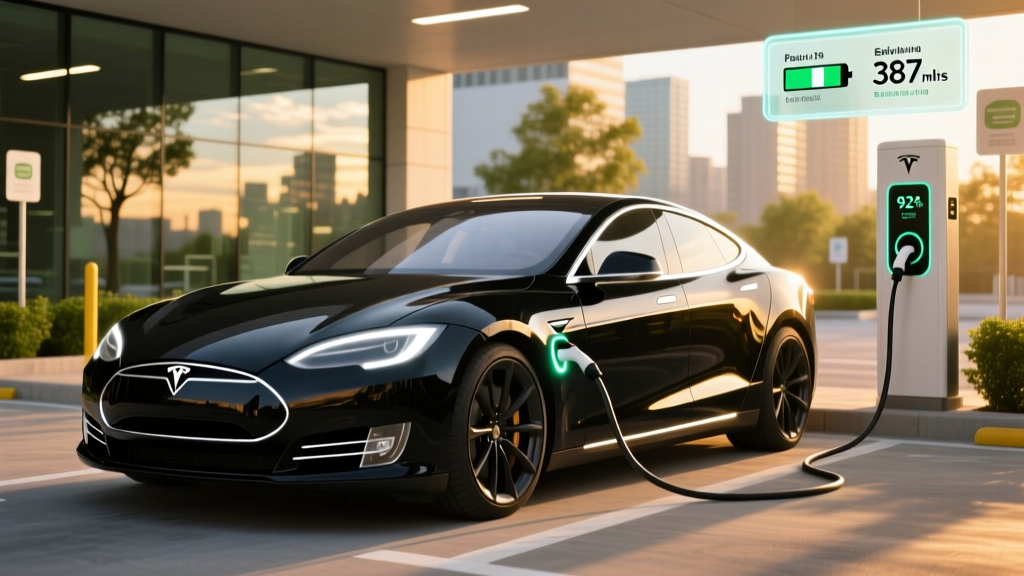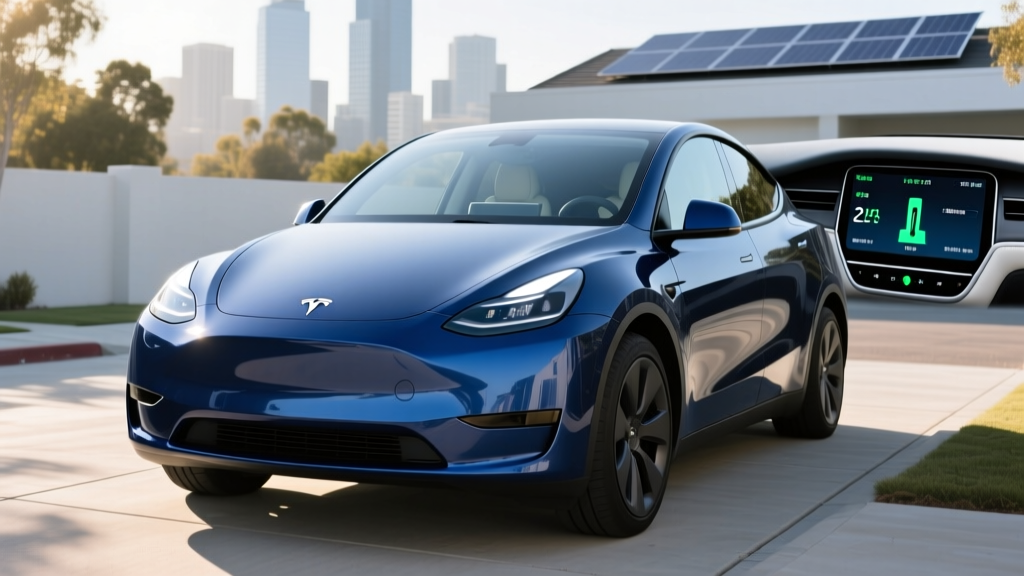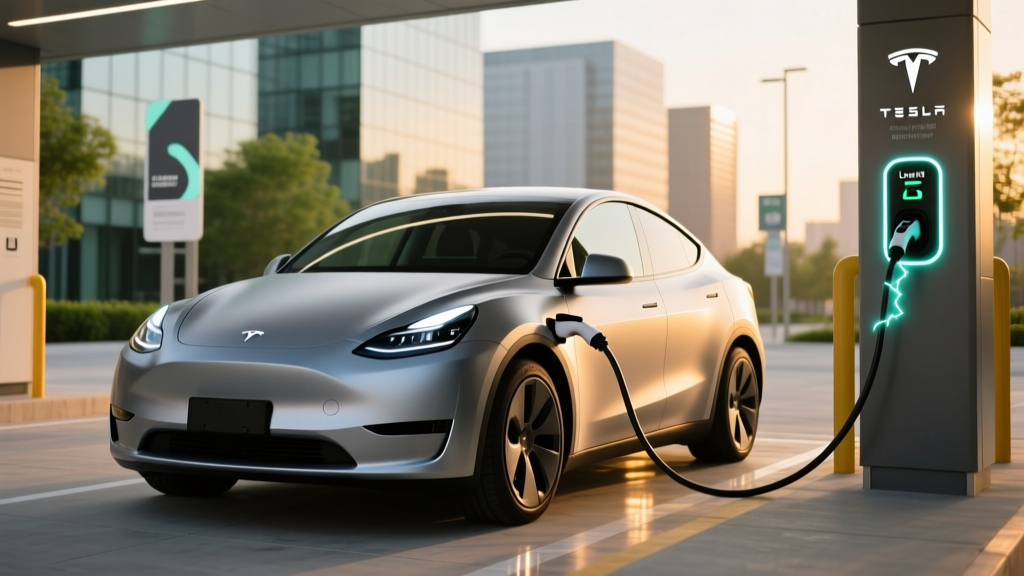
The Tesla Model Y remains one of the most popular electric vehicles on the road, and for good reason: strong range, access to the Supercharger network, and competitive pricing. But for buyers researching the Tesla Model Y charge cost and real-world ownership economics, the details matter far more than the marketing. This review covers the 2026 Model Y lineup with exact numbers on range, charging speed, efficiency, and what you will actually pay per mile.
2026 Tesla Model Y at a Glance
The current Model Y is offered in three primary configurations for the US market: Long Range RWD, Long Range AWD, and Performance AWD. All use the refreshed "Juniper" body style introduced in early 2025, with updated aero, a ventilated-seat interior, ambient lighting, and a rear touchscreen for passengers.
| Spec | Long Range RWD | Long Range AWD | Performance AWD |
|---|---|---|---|
| EPA Range | 320 mi | 300 mi | 277 mi |
| Battery (usable) | ~75 kWh (LFP) | ~75 kWh (NMC) | ~75 kWh (NMC) |
| MPGe (combined) | 122 MPGe | 115 MPGe | 110 MPGe |
| kWh / 100 mi | 28 | 30 | 31 |
| 0-60 mph | 5.8 sec | 4.8 sec | 3.5 sec |
| Horsepower | 295 hp | 384 hp | 456 hp |
| Drivetrain | Rear-Wheel Drive | Dual-Motor AWD | Dual-Motor AWD |
| Peak DC Charge | 170 kW | 250 kW | 250 kW |
| 10-80% DC Time | ~30 min | ~22 min | ~22 min |
| Base MSRP | $44,990 | $47,990 | $52,490 |
Sources: fueleconomy.gov, Tesla Model Y Design Studio. Specs reflect 2026 model year; confirm at time of purchase.
Real-World Range: Beyond the EPA Sticker
Tesla's efficiency is among the best in the midsize electric SUV segment. The Long Range RWD achieves 28 kWh per 100 miles, which translates directly to lower charging costs. However, EPA testing includes generous city-regen credits that inflate the sticker number. Highway-only trips at 75 mph with climate control running will consistently deliver 10-15% less than the EPA figure.
Cold-weather impact is significant but manageable. The Model Y uses a heat pump (standard on all trims), which mitigates some winter range loss compared to resistive heating systems. Preconditioning the battery while plugged in — a feature accessible through the Tesla app — warms the pack before departure, improving both range and charging speed at your first DC stop.
Charging Speed and the Model Y Charge Cost
Understanding what it costs to charge a Tesla Model Y requires separating kW (power, or how fast energy flows) from kWh (energy, or how much the battery holds). The Model Y Long Range holds roughly 75 kWh of usable energy. Here is how each charging level breaks down:
| Level | Power / Rate | Miles Added per Hour | Typical Cost per kWh | Cost for Full Charge (0-100%) |
|---|---|---|---|---|
| Level 1 (120V) | ~1.4 kW | ~3-4 mi/hr | $0.14 (home avg) | ~$10.50 |
| Level 2 (240V home) | 7.7-11.5 kW | ~30-44 mi/hr | $0.14 (home avg) | ~$10.50 |
| DC Fast (Supercharger V3) | Up to 250 kW | ~200 mi in 15 min | $0.30-$0.45 | ~$22-$34 |
| DC Fast (Supercharger V4) | Up to 350 kW* | ~250 mi in 15 min | $0.30-$0.45 | ~$22-$34 |
*V4 peak rates depend on vehicle acceptance rate; the Model Y currently peaks at 250 kW. Cost figures are national averages; your local utility or Supercharger station may differ.
The Charge Curve Reality
Tesla advertises "up to 250 kW" for the Long Range AWD and Performance, but that peak is only sustained between roughly 10-30% state of charge. Above 50%, the rate tapers to approximately 120 kW, and above 80% it drops further to protect battery health. This is why the 10-80% time (~22 minutes) is the most useful metric — charging from 80-100% can take an additional 25-30 minutes on DC fast charging.
For daily driving, home Level 2 charging is the most economical approach. At the US average residential electricity rate of ~$0.14/kWh, a full 75 kWh charge costs about $10.50, yielding a per-mile cost of roughly $0.035. Compare that to a 25 MPG gas SUV at $3.40/gallon: $0.136 per mile. Over 15,000 annual miles, the Model Y home-charging savings total approximately $1,500 per year before any solar or time-of-use optimization.
Level 2 Home Charging Setup
The Tesla Wall Connector delivers up to 11.5 kW (48 amps) on a 60-amp circuit, adding approximately 44 miles of range per hour. A full overnight charge takes 7-8 hours. Installation costs typically range from $500 to $2,000 depending on panel proximity and whether your electrical panel needs an upgrade to 200 amps. The Tesla Mobile Connector (included) provides a slower Level 2 option via a NEMA 14-50 outlet at up to 7.7 kW.
Battery Chemistry: LFP vs NMC in the Model Y
The 2026 Model Long Range RWD uses a lithium iron phosphate (LFP) battery, while the Long Range AWD and Performance use nickel manganese cobalt (NMC) chemistry. This distinction has real ownership implications:
| Factor | LFP (RWD) | NMC (AWD / Performance) |
|---|---|---|
| Recommended daily charge | 100% OK | 80% for daily; 100% for trips |
| Cold-weather performance | Moderately reduced | Better low-temp output |
| Energy density | Lower (heavier pack) | Higher (lighter, more range) |
| Cycle life | Longer (3,000+ cycles) | Shorter (~1,500-2,000) |
| DC charge speed | Lower peak (170 kW) | Higher peak (250 kW) |
If you charge primarily at home and want the simplicity of charging to 100% daily without degradation concerns, the LFP-equipped RWD is the pragmatic pick. If you need AWD traction, faster DC charging for road trips, or better cold-climate range, the NMC trims justify their premium.
Pricing, Tax Credits, and True Cost
| Trim | Base MSRP | Est. §30D Credit | Effective Price |
|---|---|---|---|
| Long Range RWD | $44,990 | Up to $7,500* | ~$37,490 |
| Long Range AWD | $47,990 | Up to $7,500* | ~$40,490 |
| Performance AWD | $52,490 | Up to $7,500* | ~$44,990 |
*Federal §30D tax credit eligibility depends on multiple factors. As of 2026, the IRS requirements include:
- MSRP cap: SUVs/vans must be under $80,000 — all Model Y trims qualify.
- Buyer income cap: Modified AGI must not exceed $150,000 (single), $225,000 (head of household), or $300,000 (joint).
- Battery sourcing: Critical minerals and battery components must meet escalating domestic-content thresholds. Tesla's US-built cells (via Panasonic in Nevada and 4680 cells in Texas) generally meet current thresholds, but verify your specific VIN's eligibility at the point of sale.
- Point-of-sale transfer: You can apply the credit as an immediate price reduction at the dealership rather than waiting for a tax refund.
Always confirm credit eligibility with your tax professional and the dealer before purchase. Rules can change, and individual tax situations vary.
Interior, Cargo, and Technology
The Juniper-refreshed Model Y interior is a substantial improvement over the pre-2025 cabin. Notable updates include ventilated front seats, ambient lighting, acoustic glass (quieter highway cruising), and an 8-inch rear touchscreen for passengers.
Cargo volume: 30.2 cubic feet behind the second row, expanding to 72.1 cubic feet with seats folded. The front trunk (frunk) adds 4.1 cubic feet. Rear legroom measures 41.6 inches — competitive with the Hyundai Ioniq 5 and Ford Mustang Mach-E.
Infotainment: Tesla's 15.4-inch center touchscreen runs the proprietary Tesla OS with native navigation, streaming apps, and over-the-air updates. There is no Apple CarPlay or Android Auto — a dealbreaker for some buyers accustomed to phone projection.
Driver assistance: Basic Autopilot (adaptive cruise + lane centering) is standard. Full Self-Driving (Supervised) is an $8,000 option or $99/month subscription. It is critical to understand that FSD is an SAE Level 2 system — the driver must remain fully engaged, hands on or near the wheel, and eyes on the road at all times. It is not autonomous driving.
Pros, Cons, and Who Should Buy
- Class-leading Supercharger network access (17,000+ US stations)
- Low per-mile charging cost (~$0.035 at home)
- Strong efficiency (28-31 kWh/100 mi)
- Spacious cargo area (72.1 cu ft max)
- Over-the-air updates continuously add features
- Point-of-sale tax credit reduces upfront cost
- No Apple CarPlay or Android Auto
- LFP RWD has slower DC charging (170 kW peak)
- FSD is expensive and still requires full driver supervision
- Minimal physical controls — everything via touchscreen
- Insurance premiums run 15-30% higher than comparable gas SUVs
- Ride quality is firm on broken pavement
Who the Model Y Suits Best
- Daily commuters with home charging access who want minimal fuel cost and low maintenance.
- Families needing 5-seat space, strong cargo capacity, and AWD for inclement weather (Long Range AWD).
- Road trippers who value the reliability and density of the Supercharger network over rival CCS-dependent vehicles.
- Tech-forward buyers comfortable with touchscreen-centric controls and OTA-driven feature evolution.
The Model Y is less ideal for buyers who want Apple CarPlay, prefer physical buttons, need a third row (consider the Kia EV9), or frequently tow heavy loads (3,500-lb max towing capacity is modest for the class).
How the Model Y Compares to Key Rivals
| Spec | Tesla Model Y LR AWD | Hyundai Ioniq 5 Limited AWD | Ford Mustang Mach-E Premium AWD |
|---|---|---|---|
| EPA Range | 300 mi | 290 mi | 290 mi |
| kWh/100 mi | 30 | 31 | 32 |
| Peak DC Charge | 250 kW | 238 kW | 150 kW |
| 10-80% DC Time | ~22 min | ~18 min (800V) | ~35 min |
| 0-60 mph | 4.8 sec | 5.1 sec | 5.1 sec |
| Cargo (max) | 72.1 cu ft | 59.3 cu ft | 59.7 cu ft |
| Base MSRP | $47,990 | $52,600 | $48,995 |
| Charging Network | Supercharger (native) | NACS adapter / Ionna | NACS adapter / public |
The Ioniq 5's 800V architecture delivers a slightly faster 10-80% charge, but the Model Y wins on cargo space, efficiency, and direct Supercharger access without adapters. The Mach-E trails on DC charge speed but offers a more traditional interior layout with physical controls.
Warranty Coverage
- Basic vehicle: 4 years / 50,000 miles
- Battery and drive unit: 8 years / 120,000 miles (Long Range AWD/Performance) or 8 years / 100,000 miles (RWD)
- Battery retention threshold: Tesla warrants at least 70% capacity retention during the warranty period
Out-of-warranty battery replacement costs remain high — typically $12,000-$16,000 for the pack alone. However, real-world degradation data from the Tesla fleet shows most Model Y packs retain 85-90% capacity at 100,000 miles, making full replacement uncommon within the first decade of ownership.
Frequently Asked Questions
What is the real-world range of the Tesla Model Y?
The EPA rates the Long Range AWD at 300 miles. Expect 255-275 miles in real-world highway driving and 200-230 miles in sustained cold weather (below 30°F). The RWD variant delivers slightly more at 320 EPA / ~280 real-world highway.
How much does it cost to charge a Tesla Model Y at home?
At the US average electricity rate of $0.14/kWh, a full 75 kWh charge costs approximately $10.50, or about $0.035 per mile. Over 15,000 miles per year, that is roughly $525 in home electricity — compared to approximately $2,040 in gasoline for a 25 MPG SUV.
Does the Tesla Model Y qualify for the federal EV tax credit?
All 2026 Model Y trims fall under the $80,000 SUV MSRP cap. Buyer income must not exceed $150K single / $300K joint. Battery sourcing requirements must also be met — Tesla's US-manufactured cells generally qualify, but confirm with the dealer and your tax professional before purchase. The credit can be applied at the point of sale.
How fast does the Model Y charge on a road trip?
The Long Range AWD and Performance peak at 250 kW on a V3 Supercharger, adding up to 200 miles in approximately 15 minutes and reaching 10-80% in about 22 minutes. The LFP-equipped RWD peaks at 170 kW, adding roughly 150 miles in 15 minutes.
Is the Tesla Model Y worth buying over the Ioniq 5 or Mach-E?
Choose the Model Y if you prioritize Supercharger network reliability, maximum cargo space, and the lowest per-mile charging cost. Choose the Ioniq 5 if faster DC charging (18-minute 10-80%) and a more conventional interior matter. Choose the Mach-E if you prefer physical controls and a Ford dealer experience. All three are strong; the right pick depends on your charging access and interface preferences.