The Tesla Model Y remains one of the best-selling electric vehicles in the United States for good reason: it pairs crossover practicality with class-leading efficiency and access to the most reliable DC fast-charging network in the country. But for buyers cross-shopping the EV SUV segment, the details matter — especially when it comes to usable cargo volume, real-world range, and what you'll actually pay after incentives. This profile breaks down every number you need to make an informed decision on the current-generation Model Y.
Tesla Model Y Cargo Space Dimensions and Interior Volume
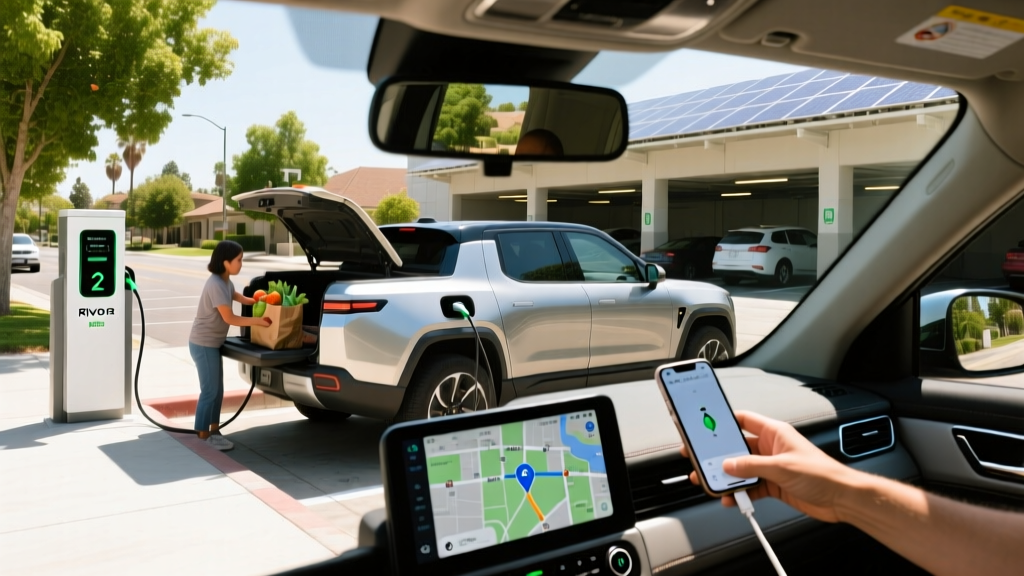
Cargo versatility is the primary reason buyers choose the Model Y over the Model 3 sedan. Tesla lists the Model Y's maximum cargo volume at 74 cubic feet with the second row folded flat, and approximately 30 cubic feet behind the second row in the five-seat configuration. The rear cargo floor is relatively flat, and the liftgate opening is wide enough to accommodate bulky items like a full-size bicycle or multiple large suitcases without angling them through.
Beneath the cargo floor, a deep under-floor storage compartment adds roughly 4 additional cubic feet of hidden space — ideal for charging cables, emergency kits, or groceries you want to keep out of sight. The front trunk (frunk) provides about 4.1 cubic feet of additional sealed storage, enough for a backpack or small soft-sided cooler.
| Measurement | Specification |
|---|---|
| Cargo volume (behind 2nd row) | 30 cu ft |
| Cargo volume (2nd row folded) | 74 cu ft |
| Frunk volume | 4.1 cu ft |
| Front headroom | 41.0 in |
| Rear headroom | 37.7 in |
| Front legroom | 41.8 in |
| Rear legroom | 37.9 in |
| Seating capacity | 5 (optional 7-seat available on select trims) |
For context, the Hyundai Ioniq 5 offers 56.2 cu ft max cargo, and the Ford Mustang Mach-E provides 59.7 cu ft. The Model Y's 74 cu ft figure places it near the top of the electric compact-SUV class, closer to midsize gas crossovers like the Honda CR-V. The optional third-row seat (available on Long Range AWD) reduces cargo capacity significantly when deployed and is best suited for small children only.
EPA Range and Real-World Efficiency
The 2026 Model Y lineup uses a lithium iron phosphate (LFP) battery in the Rear-Wheel Drive trim and a nickel-manganese-cobalt (NMC) pack in the Long Range and Performance variants. LFP chemistry offers superior cycle life and can be charged to 100% daily without degradation concerns, though it is heavier and less energy-dense than NMC.
Long Range AWD: EPA-estimated 320 miles. Expect 280–300 miles in mixed highway driving at 70–75 mph, and approximately 240–260 miles in sustained sub-freezing winter conditions (20°F or below) due to cabin heating demand and increased battery resistance. City and suburban driving with regenerative braking can approach or slightly exceed the EPA figure.
Rear-Wheel Drive: EPA-estimated 280 miles. Expect 245–265 miles highway, 210–230 miles in cold weather.
Performance: EPA-estimated 293 miles. Expect 255–275 miles highway.
Efficiency ratings from fueleconomy.gov place the Long Range AWD at approximately 118 MPGe combined (29 kWh/100 mi), one of the highest efficiency figures in the EV SUV segment. The RWD model achieves roughly 123 MPGe combined. These figures translate to low per-mile energy costs — at the U.S. average electricity rate of $0.16/kWh, the Long Range costs approximately $4.64 to travel 100 miles.
| Trim | Drivetrain | Battery (kWh usable) | Chemistry | EPA Range | MPGe (combined) | kWh/100 mi |
|---|---|---|---|---|---|---|
| Rear-Wheel Drive | RWD | ~60 kWh | LFP | 280 mi | 123 | 27 |
| Long Range AWD | Dual Motor AWD | ~75 kWh | NMC | 320 mi | 118 | 29 |
| Performance | Dual Motor AWD | ~75 kWh | NMC | 293 mi | 111 | 30 |
Charging Speed: DC Fast Charge and Home Level 2
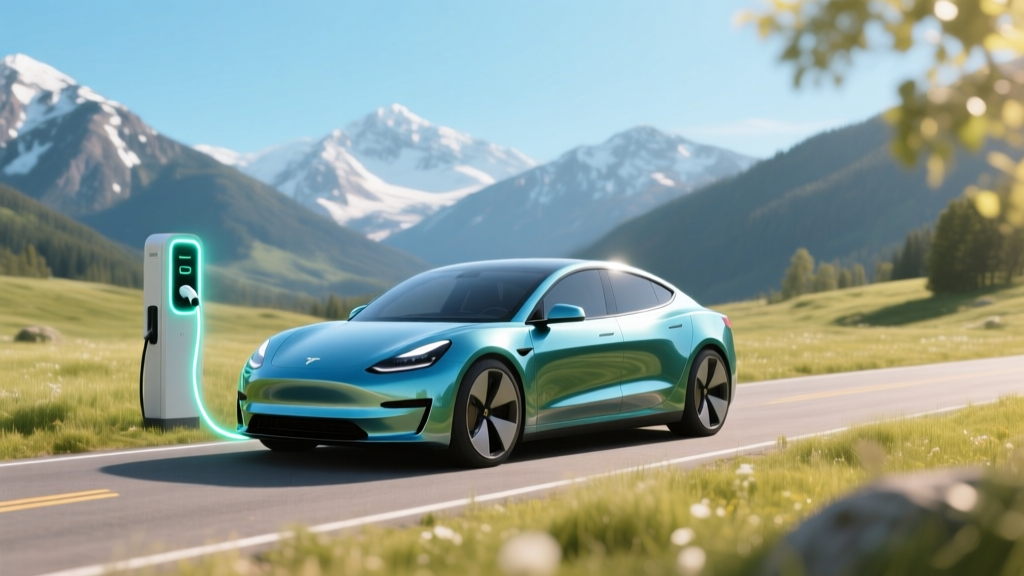
Charging speed remains one of the Model Y's strongest attributes, particularly given Tesla's Supercharger network — now the most extensive and reliable DC fast-charging infrastructure in North America with over 6,000 stations and 30,000+ connectors in the U.S. alone.
| Charging Level | Max Rate | Speed / Time | Connector |
|---|---|---|---|
| DC Fast Charge (Supercharger V3/V4) | 250 kW peak | 10–80% in ~22 min; adds ~200 mi in 15 min | NACS (native Tesla) |
| DC Fast Charge (3rd-party CCS via adapter) | ~150–175 kW typical | 10–80% in ~30 min | NACS (with CCS adapter) |
| Level 2 Home/Public (240V) | 11.5 kW (48A) | ~37 miles of range per hour | NACS (J1772 adapter included) |
| Level 1 (120V household) | ~1.4 kW | ~3–4 miles per hour | NACS (mobile connector) |
The 250 kW peak rate on V3 Superchargers is sustained roughly between 10–30% state of charge (SoC), after which the charge curve tapers progressively. From 50–80%, expect rates closer to 100–130 kW. This is normal lithium-ion behavior — no EV sustains peak rate across the entire curve. Battery preconditioning activates automatically when you navigate to a Supercharger, warming the pack to optimize charge acceptance. Skipping preconditioning (e.g., arriving at a charger without navigation routing) can add 5–10 minutes to your session in cold weather.
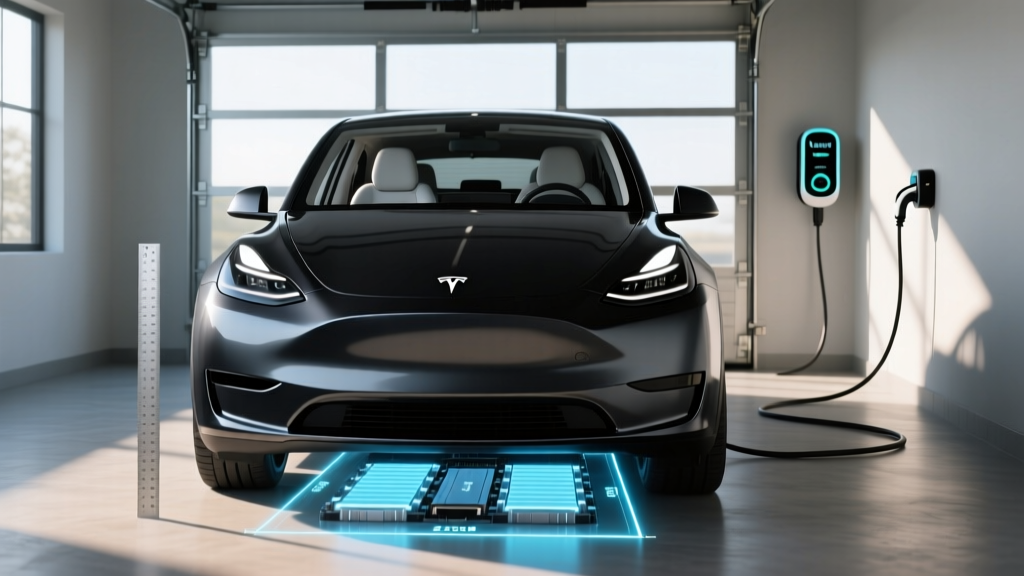
For home charging, a Wall Connector on a 60-amp circuit delivers the full 11.5 kW / 48 amps, recovering roughly 37 miles of range per hour of charging. Most owners who drive 30–50 miles daily recover their commute in under two hours overnight. A licensed electrician will typically charge $800–$2,000 for a 240V/60A circuit installation depending on panel proximity and local permit requirements.
Performance and Drivetrain Specifications
The Model Y's performance varies substantially by trim. The Long Range AWD pairs dual permanent-magnet motors for confident all-weather traction, while the Performance trim unlocks track-capable acceleration that belies its crossover body style.
| Trim | 0–60 mph | Horsepower | Top Speed | Drivetrain |
|---|---|---|---|---|
| Rear-Wheel Drive | 6.6 sec | ~295 hp | 135 mph | Single motor RWD |
| Long Range AWD | 4.8 sec | ~384 hp | 135 mph | Dual motor AWD |
| Performance | 3.5 sec | ~456 hp | 155 mph | Dual motor AWD |
All trims feature regenerative braking with one-pedal driving capability. The dual-motor AWD system provides torque vectoring between front and rear axles, improving traction in rain and snow without the mechanical complexity of a traditional AWD system. Towing capacity is rated at 3,500 lbs across all trims when equipped with the optional tow hitch — sufficient for a small utility trailer or pair of jet skis, but not for larger boat or camper trailers.
Pricing, Trims, and Federal Tax Credit Eligibility
Tesla adjusts pricing frequently, often multiple times per quarter. The figures below reflect the most recent MSRP listings. The federal EV tax credit under IRS §30D has specific eligibility requirements that not every buyer will meet.
| Trim | Base MSRP | §30D Credit Eligibility | Effective Price (with credit) |
|---|---|---|---|
| Rear-Wheel Drive | ~$44,990 | Eligible (under $80K MSRP cap) | ~$37,490* |
| Long Range AWD | ~$48,990 | Eligible (under $80K MSRP cap) | ~$41,490* |
| Performance | ~$52,490 | Eligible (under $80K MSRP cap) | ~$44,990* |
*Effective price assumes full $7,500 §30D credit qualification. Eligibility depends on:
- Buyer income caps: Modified AGI ≤ $150,000 (single), $225,000 (head of household), $300,000 (joint filers)
- MSRP cap: SUVs/vans must be ≤ $80,000 — all Model Y trims qualify
- Battery sourcing: Critical minerals and battery components must meet escalating domestic-content thresholds. Tesla's U.S. battery manufacturing and supply chain currently satisfy these requirements for most Model Y configurations, but component sourcing rules tighten annually. Confirm current-year eligibility on the IRS qualified vehicle list before purchase.
- Point-of-sale transfer: The credit can be applied as a direct price reduction at delivery rather than claimed on your tax return, reducing out-of-pocket cost immediately.
Consult a tax professional to confirm your personal eligibility. State and utility incentives vary by jurisdiction and may stack with the federal credit — check AFDC's state incentive database for local programs.
Technology, Safety, and Driver Assistance
The Model Y's interior centers on a 15.4-inch touchscreen that controls virtually all vehicle functions — climate, navigation, media, vehicle settings, and even the glovebox release. There is no traditional instrument cluster; speed and navigation info display on the main screen. A rear-seat 8-inch touchscreen was added for second-row passengers in recent model years.
Autopilot comes standard on every Model Y and includes Traffic-Aware Cruise Control and Autosteer (lane centering) on highways. This is an SAE Level 2 driver-assistance system — the driver must remain attentive, keep hands on the steering wheel, and be prepared to take over at any moment. It is not self-driving.
Tesla Autopilot and the optional Full Self-Driving (Supervised) package are SAE Level 2 systems. They provide combined steering and speed assistance but require continuous driver supervision. The vehicle does not handle all driving scenarios autonomously. You are legally and practically the driver at all times.
The optional Full Self-Driving (Supervised) package ($8,000 or $99/month subscription) adds automatic lane changes, Navigate on Autopilot (highway on/off-ramp navigation), Autopark, and Smart Summon (low-speed parking lot vehicle retrieval). Despite the name, FSD (Supervised) remains a Level 2 system requiring full driver engagement.
Safety ratings are strong: the Model Y earned a 5-star overall rating from NHTSA and the IIHS Top Safety Pick+ designation. Standard active safety features include automatic emergency braking, blind-spot monitoring, lane departure warning, and rear cross-traffic alert.
Warranty Coverage and Battery Longevity
| Coverage Area | Term |
|---|---|
| Basic Vehicle Limited Warranty | 4 years / 50,000 miles |
| Battery & Drive Unit (Long Range/Performance) | 8 years / 120,000 miles |
| Battery & Drive Unit (RWD, LFP) | 8 years / 100,000 miles |
| Battery Capacity Retention Guarantee | ≥70% of original capacity during warranty period |
Tesla's battery warranty guarantees that the pack will retain at least 70% of its original capacity over the warranty term. Real-world data from high-mileage Tesla owners suggests typical degradation of 8–12% over the first 100,000 miles for NMC packs, with the degradation curve flattening significantly after the initial 20,000–30,000 miles. LFP packs in the RWD model tend to degrade even more slowly, though they start with slightly less total capacity.
Out-of-warranty battery replacement remains expensive — expect $12,000–$16,000 for a full pack replacement at a Tesla Service Center. However, individual module repairs may be available at lower cost, and catastrophic battery failure within the first decade is statistically uncommon based on fleet data.
Who the Model Y Suits Best — and Who Should Look Elsewhere
- You need maximum cargo volume in an electric compact SUV (74 cu ft leads the class)
- You road-trip frequently and want reliable, widespread DC fast charging via the Supercharger network
- You want strong efficiency (118+ MPGe) to minimize per-mile energy cost
- You value over-the-air software updates that add features post-purchase
- You live in a region with cold winters and want standard battery preconditioning and a heat pump
- You prefer physical buttons and a traditional instrument cluster (see Hyundai Ioniq 5, Kia EV6)
- You need 800V ultra-fast charging for 10–80% in under 18 minutes (Ioniq 5, EV6, Porsche Macan Electric)
- You want a more compliant, luxury-tuned ride (BMW iX, Genesis GV70 Electrified)
- You need more than 3,500 lbs of towing capacity (Rivian R1S, Ford F-150 Lightning)
- You want a quieter cabin at highway speeds — the Model Y's road noise is noticeable on coarse pavement
Frequently Asked Questions
What is the real-world range of the Tesla Model Y?
The EPA rates the Long Range AWD at 320 miles, the RWD at 280 miles, and the Performance at 293 miles. In real-world highway driving at 70–75 mph, expect roughly 10–15% below EPA figures (280–300 mi for Long Range). In sub-freezing winter conditions, range can drop 20–30% to approximately 220–260 miles depending on temperature and cabin heating use. The Model Y's standard heat pump significantly reduces cold-weather HVAC energy draw compared to resistive heaters in older EVs.
How fast does the Model Y charge at home and on the road?
On a Tesla V3 Supercharger, the Model Y peaks at 250 kW and charges from 10–80% in approximately 22 minutes. At home on a 240V Wall Connector (48A/11.5 kW), it recovers about 37 miles of range per hour, fully replenishing a daily commute in 1–2 hours. A standard 120V outlet adds only 3–4 miles per hour and is suitable only for emergency or very low-mileage use.
Does the Tesla Model Y qualify for the $7,500 federal EV tax credit?
All current Model Y trims fall under the $80,000 MSRP cap for SUVs under §30D. However, buyer eligibility also requires meeting income caps ($150K single / $300K joint) and the vehicle must meet battery-sourcing requirements, which Tesla's current supply chain largely satisfies. The credit can be transferred at point of sale for an immediate price reduction. Always verify current eligibility on the IRS qualified vehicles list, as sourcing rules tighten annually.
How does Model Y cargo space compare to the Hyundai Ioniq 5 and Ford Mustang Mach-E?
The Model Y offers 74 cu ft max cargo volume (seats folded), substantially more than the Ioniq 5 (56.2 cu ft) and the Mach-E (59.7 cu ft). Behind the second row, the Model Y provides 30 cu ft vs. the Ioniq 5's 27.2 cu ft and the Mach-E's 29.7 cu ft. If cargo capacity is your top priority in an electric SUV under $55,000, the Model Y leads the segment.
Is the Tesla Model Y worth buying over key competitors in 2026?
The Model Y's combination of cargo space, efficiency, Supercharger access, and software ecosystem remains difficult to match. Its main trade-offs are a minimalist interior that won't appeal to everyone, noticeable road noise, and a firm ride compared to luxury alternatives. If you prioritize practicality, range, and charging infrastructure, it's the default choice. If you value interior refinement, ride comfort, or 800V ultra-fast charging, the Hyundai Ioniq 5, Kia EV6, or BMW iX deserve serious consideration.
What are the biggest pros and cons of owning a Model Y?
- Class-leading 74 cu ft cargo volume
- Best-in-class efficiency (118+ MPGe)
- Supercharger network reliability
- Strong OTA software updates
- Heat pump standard for cold climates
- 5-star NHTSA safety rating
- No physical buttons — all controls on touchscreen
- Noticeable road noise on coarse pavement
- Firm ride quality vs. competitors
- FSD package expensive, still Level 2
- Service center wait times can be lengthy
- Rear visibility limited by sloping roofline