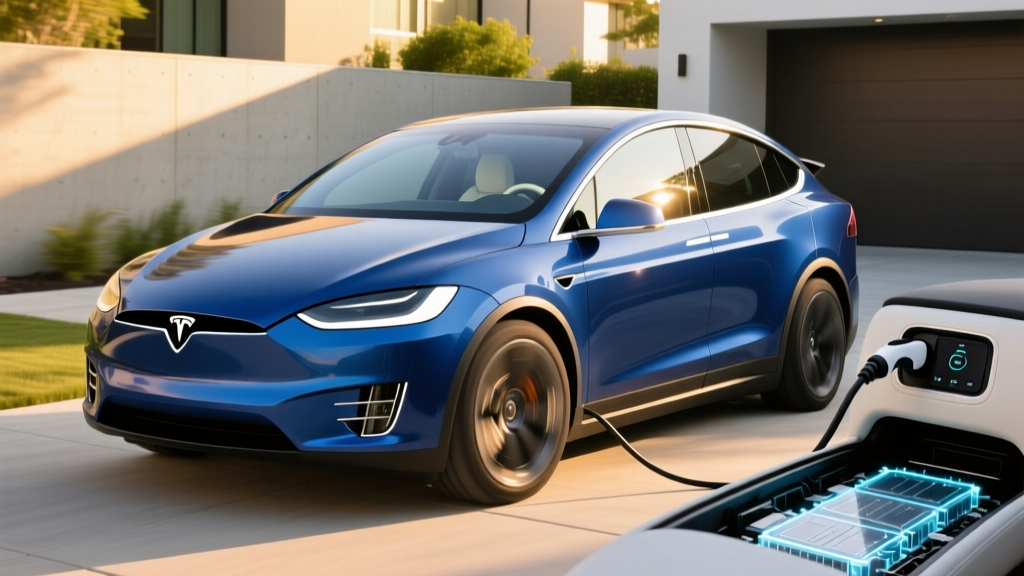
Why Colorado EV Buyers Need to Do the Full Math
Colorado has emerged as one of the most incentive-rich states for electric vehicle buyers, stacking a state-level tax credit on top of federal incentives and utility rebates. But stacking credits doesn't automatically mean an EV is the cheaper choice. Insurance premiums, upfront pricing, and depreciation patterns all shift the equation. This guide breaks down what a Colorado buyer can actually expect to pay — and save — over five years of EV ownership, using concrete numbers rather than marketing promises.
Regional note: This article focuses on Colorado-specific incentives layered on top of federal rules. State and local credits vary widely by jurisdiction. Always confirm current incentive amounts with the Colorado Department of Revenue and your tax professional before purchasing.
Colorado's EV Tax Credit: What You Actually Get
Colorado offers a state income tax credit for the purchase or lease of new electric vehicles. As of the 2025–2026 tax years, the credit is structured as follows:
- $5,000 for new light-duty EVs with an MSRP up to $80,000
- $2,500 for new EVs with an MSRP between $80,000 and $100,000 (phased availability)
- An additional $1,000 for Colorado taxpayers with adjusted gross income under certain thresholds (income-based adder, subject to annual legislative renewal)
- The credit is refundable in some cases, meaning you can receive the benefit even if your state tax liability is lower than the credit amount — but verify current-year rules
This state credit is separate from and in addition to the federal §30D Clean Vehicle Credit. The two can be combined, but each has its own eligibility rules, and neither is automatic.
Federal §30D Tax Credit: The $7,500 That Isn't Guaranteed
The federal Clean Vehicle Credit under IRS §30D offers up to $7,500 for qualifying new EVs. But "up to" is doing heavy lifting here. The credit is split into two $3,750 halves, each with distinct requirements:
§30D Federal Tax Credit Eligibility Checklist (2025–2026 rules):
- Battery component sourcing: At least a specified percentage of battery components must be manufactured or assembled in North America (percentage increases annually)
- Critical minerals: A specified percentage of critical minerals must be sourced from the U.S. or a free-trade-agreement partner
- MSRP caps: Vans, SUVs, and pickup trucks ≤ $80,000 MSRP; sedans and other body styles ≤ $55,000 MSRP
- Buyer income caps: AGI ≤ $150,000 (single), $225,000 (head of household), $300,000 (married filing jointly)
- Final assembly: Vehicle must undergo final assembly in North America
- FEOC restriction: Vehicles containing battery components from a "foreign entity of concern" (primarily targeting Chinese supply chains) are disqualified — this rule tightened significantly for 2025 and beyond
- Point-of-sale transfer: Buyers can elect to transfer the credit to the dealer at purchase, reducing the sale price directly rather than waiting for a tax refund
The practical result: Many popular EVs qualify for the full $7,500, but some lose one half ($3,750) due to battery-sourcing failures, and others are disqualified entirely. Always check the fueleconomy.gov tax credit lookup for your specific model and trim before committing.
5-Year Total Cost of Ownership: A Colorado EV Example
Let's model a realistic 5-year ownership scenario using a 2026 Tesla Model Y Long Range AWD — one of the best-selling EVs in Colorado — compared against a comparably priced gas SUV (2026 Toyota RAV4 AWD, ~$38,000 MSRP). Assumptions: 15,000 miles/year, 75,000 miles total, Colorado electricity rates, and Colorado gasoline averages.
| Cost Category | 2026 Tesla Model Y LR AWD | 2026 Toyota RAV4 AWD |
|---|---|---|
| Base MSRP | $46,630 | $38,000 |
| Federal §30D credit | −$7,500 (if eligible) | $0 |
| Colorado state credit | −$5,000 | $0 |
| Net purchase price (est.) | ~$34,130 | $38,000 |
| Fuel / electricity (75k mi) | $2,250 (home charging) | $8,100 (gas @ $3.60/gal, 28 MPG) |
| Maintenance (5 years) | $1,200 | $3,800 |
| Insurance (5 years) | $11,500 | $8,750 |
| Estimated depreciation | $15,200 | $13,500 |
| Total 5-year cost | ~$64,280 | ~$72,150 |
| Cost per mile | ~$0.86/mi | ~$0.96/mi |
Key takeaway: The Model Y comes out roughly $7,870 cheaper over five years in this scenario, primarily driven by fuel savings, maintenance savings, and the stacked federal + Colorado credits. However, insurance costs ~$2,750 more over the period, and depreciation remains slightly steeper. Your mileage — and your insurance quote — will vary.
Charging vs. Gas: The Per-Mile Math
This is where EVs consistently win, and the math is straightforward if you use real numbers.
| Scenario | Cost/kWh or Cost/Gallon | Efficiency | Cost Per Mile |
|---|---|---|---|
| Model Y — home Level 2 (Xcel Energy, ~$0.14/kWh) | $0.14/kWh | 3.5 mi/kWh (284 Wh/mi) | $0.04/mi |
| Model Y — DC fast charging (avg $0.40/kWh) | $0.40/kWh | 3.5 mi/kWh | $0.11/mi |
| RAV4 AWD — gas ($3.60/gal, 28 MPG combined) | $3.60/gal | 28 MPG | $0.13/mi |
Home charging is the key variable. At $0.04/mile, the EV costs roughly 70% less per mile than the gas SUV. If you rely entirely on DC fast charging at public stations, the advantage narrows to about 15%. Colorado EV owners who install a Level 2 home charger (typically $800–$2,000 installed) and charge overnight capture the maximum savings. Xcel Energy and other Colorado utilities also offer time-of-use (TOU) rates that can push off-peak electricity below $0.10/kWh.
Maintenance: Where the EV Advantage Compounds
Electric vehicles have far fewer moving parts than internal combustion engines. No oil changes, no spark plugs, no timing belts, no exhaust systems, and no multi-speed transmissions. Regenerative braking significantly extends brake pad and rotor life — many EV owners report original brake pads lasting 80,000+ miles.
| Service Item | EV (Model Y example) | Gas SUV (RAV4 example) |
|---|---|---|
| Oil changes | $0 (none required) | $600–$900 (5–7 changes) |
| Brake pads/rotors | $0–$200 (regen extends life) | $600–$1,200 |
| Transmission fluid | $0 (single-speed, sealed) | $150–$300 |
| Cabin air filter | $80–$120 | $80–$120 |
| Tire rotation/replacement | $800–$1,200 (heavier vehicle, faster wear) | $600–$900 |
| Coolant/other fluids | $100–$200 | $200–$400 |
| Total (est. 5 yr) | ~$1,200 | ~$3,800 |
The EV saves roughly $2,600 over five years on maintenance. The one area where EVs can cost more is tires — the additional vehicle weight and instant torque tend to wear tires faster. Budget for tire replacement on a slightly shorter interval than you would with a gas vehicle.
Insurance Reality: Expect to Pay More
This is the category where EVs consistently cost more, and it's one that pro-EV guides often gloss over. EV insurance premiums are typically 15–30% higher than comparable gas vehicles. The reasons are structural:
- Higher repair costs: EV battery packs are expensive to diagnose and replace after collision damage. Even minor rear-end impacts can trigger battery safety write-offs
- Specialized labor: High-voltage system repairs require certified technicians, and fewer shops have them
- Higher replacement values: Even after incentives, the actual insured value of the vehicle is based on pre-credit MSRP in many cases
- Parts availability: EV-specific body panels and structural components can have longer lead times, extending rental car costs for insurers
In Colorado, expect to pay $2,100–$2,500/year to insure a Model Y (varies by driver profile, zip code, and coverage level) versus $1,600–$1,900/year for a RAV4. That's roughly $2,500–$3,000 more over five years. Always get a personalized insurance quote before purchasing — the gap varies significantly by insurer and driver history.
Depreciation and Resale Value
EV depreciation has been volatile. In 2022–2023, aggressive Tesla price cuts on new vehicles cratered used EV values across the board. By 2025–2026, the market has partially stabilized, but EVs still tend to depreciate slightly faster than equivalent gas vehicles in the first 3–4 years. Contributing factors:
- Rapid tech advancement: Newer EVs offer more range and faster charging at similar prices, making older models feel dated quickly
- Battery degradation concerns: Used buyers discount for unknown battery health, even though most modern packs retain 85–90%+ capacity at 100,000 miles
- Federal credit compression: New EV buyers benefit from $7,500 in federal credits, which effectively lowers the "real" new price and compresses used values
In our 5-year model, the Model Y loses roughly $15,200 in value (about 33% of net purchase price), while the RAV4 loses $13,500 (about 36% of purchase price — though on a lower starting number). The gap is narrowing as the EV market matures, and models with strong brand loyalty (Porsche Taycan, Ford F-150 Lightning) have held value better than average.
Colorado-Specific Incentives Beyond the State Credit
The Colorado state tax credit is just the starting point. Colorado EV buyers should also investigate:
- Utility rebates: Xcel Energy offers rebates for Level 2 home charger installation (up to $500–$1,500 depending on program year and income tier). Holy Cross Energy, Colorado Springs Utilities, and others run similar programs
- HOV lane access: Colorado allows qualifying EVs to use express/HOV lanes with a single occupant — a significant commute-time benefit in the I-25 and I-70 corridors
- Vehicle emissions testing exemption: EVs are exempt from Colorado's emissions testing requirements, saving $25–$50 every two years plus time
- Local city/county incentives: Some municipalities (Boulder, Denver, Fort Collins) offer additional rebates or reduced registration fees for EVs
- Solar + EV charging: Colorado's strong solar resources and net metering policies can effectively reduce home charging costs to near-zero for solar-equipped homeowners
Verify before you buy: Utility rebate programs have annual funding caps and can change between model years. Check with your specific utility provider and the Colorado Energy Office for current availability.
Frequently Asked Questions
How much does it really cost to own an EV over 5 years in Colorado?
In our Model Y vs. RAV4 comparison, the EV came out roughly $7,870 cheaper over five years (~$64,280 vs. ~$72,150), driven by stacked federal and state tax credits ($12,500 combined), fuel savings (~$5,850), and maintenance savings (~$2,600). These savings were partially offset by ~$2,750 in additional insurance costs and slightly higher depreciation. Your results depend on your specific model, driving habits, electricity rate, and insurance profile.
Do I qualify for the federal §30D tax credit?
Eligibility depends on five factors: your AGI (≤$150K single / $300K married filing jointly), the vehicle's MSRP (≤$80K for SUVs/trucks, ≤$55K for sedans), North American final assembly, battery component sourcing, and critical mineral sourcing. The FEOC (foreign entity of concern) restrictions tightened in 2025, disqualifying some previously eligible models. Check the fueleconomy.gov credit lookup tool for your specific vehicle and confirm with a tax professional.
How much do I save on fuel and maintenance?
For 75,000 miles of driving in Colorado, our Model Y example saves approximately $5,850 on fuel (home charging at $0.14/kWh vs. gas at $3.60/gallon) and $2,600 on maintenance over five years. Combined savings of ~$8,450. If you rely heavily on DC fast charging instead of home charging, fuel savings shrink to roughly $3,000–$4,000.
Are EVs more expensive to insure in Colorado?
Yes, typically 15–30% more than comparable gas vehicles. For a Model Y in Colorado, expect annual premiums of $2,100–$2,500 vs. $1,600–$1,900 for a RAV4. Higher repair costs, specialized high-voltage labor, and elevated replacement values drive the gap. Get a personalized quote before purchasing — the difference varies significantly by insurer.
How well do EVs hold their value compared to gas vehicles?
EVs have historically depreciated slightly faster than gas vehicles in the first 3–5 years, due to rapid technology advancement, battery health uncertainty for used buyers, and the downward price pressure from federal tax credits on new vehicles. However, the gap has narrowed since 2024 as the market has matured. Expect 5-year depreciation of roughly 30–40% of net purchase price for mainstream EVs, compared to 25–35% for popular gas vehicles.
Can I stack the Colorado state credit with the federal credit?
Yes. The Colorado state EV tax credit and the federal §30D credit are separate programs with separate eligibility rules. A qualifying buyer purchasing a qualifying vehicle can claim both — potentially $12,500 in combined tax credits ($7,500 federal + $5,000 Colorado). Consult a tax professional to confirm your eligibility for both and to understand point-of-sale transfer options for the federal credit.