Quick Verdict: The Best-Selling EV Faces a Reputation Reckoning
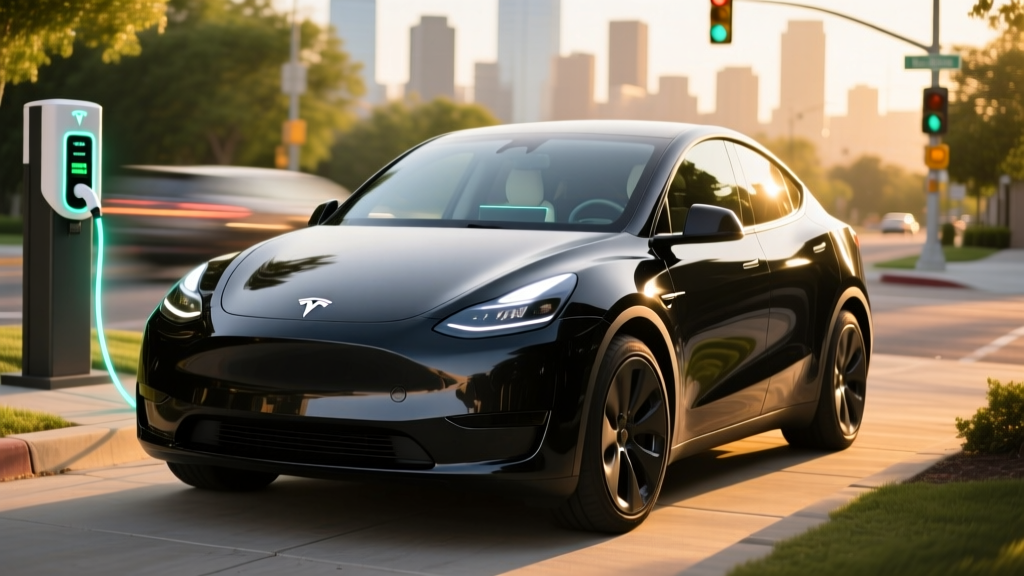
The Tesla Model Y remains the world's best-selling electric vehicle for good reason: class-leading efficiency, a robust Supercharger network, and a starting price that undercuts most rivals. But in 2026, buyers are increasingly weighing a new variable — Tesla's brand value, which multiple consumer surveys have flagged as trending negative among key demographics. Does brand sentiment actually matter when the spec sheet is this strong? This review breaks down every number that counts, from real-world range to total cost of ownership, so you can decide whether the Model Y's engineering merits outweigh its reputational headwinds.
| Spec | 2026 Model Y Long Range AWD | 2026 Model Y Performance |
|---|---|---|
| EPA Range | 320 miles | 295 miles |
| Battery (usable) | ~75 kWh (NMC) | ~75 kWh (NMC) |
| Peak DC Fast Charge | 250 kW | 250 kW |
| 10–80% DC Time | ~27 min | ~27 min |
| Level 2 Home Charge | 11.5 kW (~44 mi/hr) | 11.5 kW (~44 mi/hr) |
| 0–60 mph | 4.8 sec | 3.5 sec |
| Horsepower | 384 hp | 456 hp |
| Drivetrain | Dual-Motor AWD | Dual-Motor AWD |
| MPGe (combined) | 122 MPGe | 111 MPGe |
| Efficiency | 28 kWh/100 mi | 30 kWh/100 mi |
| Base MSRP | $44,990 | $51,490 |
| Battery Warranty | 8 yr / 120,000 mi | 8 yr / 120,000 mi |
Range & Efficiency: EPA Numbers vs. the Real World
The 2026 Model Y Long Range AWD carries an EPA-estimated 320 miles of range, while the Performance trim drops to 295 miles. These figures come from Tesla's latest Juniper-refresh powertrain, which pairs a ~75 kWh usable NMC (nickel-manganese-cobalt) battery pack with highly efficient silicon-carbide inverters and a standard heat pump.
EPA Sticker: 320 mi (Long Range) / 295 mi (Performance)
Highway (70–75 mph, moderate temps): ~265–285 mi
City / Suburban Mixed: ~295–315 mi (regen-heavy driving recovers energy)
Cold Weather (below 32°F, highway): ~210–245 mi — a 25–30% reduction is typical for NMC packs without aggressive preconditioning
Cold Weather + City: ~240–270 mi (heat pump helps, but cabin heating still draws 2–4 kW)
The Model Y's efficiency is genuinely outstanding. At 28 kWh per 100 miles (Long Range), it converts electrons into miles better than nearly any crossover on the market. For context, the Ford Mustang Mach-E Extended Range AWD consumes roughly 34 kWh/100 mi, and the Hyundai Ioniq 5 AWD sits around 32 kWh/100 mi. That efficiency advantage means you're charging less often and spending less per mile — a tangible ownership benefit that brand sentiment can't erase.
Per fueleconomy.gov, the Long Range Model Y achieves 122 MPGe combined. If your commute is mostly stop-and-go city driving with ample regenerative braking, you'll trend closer to the EPA number. Sustained highway travel and cold climates are where the gap widens.
Charging Speed: Supercharger Strength and the NACS Advantage
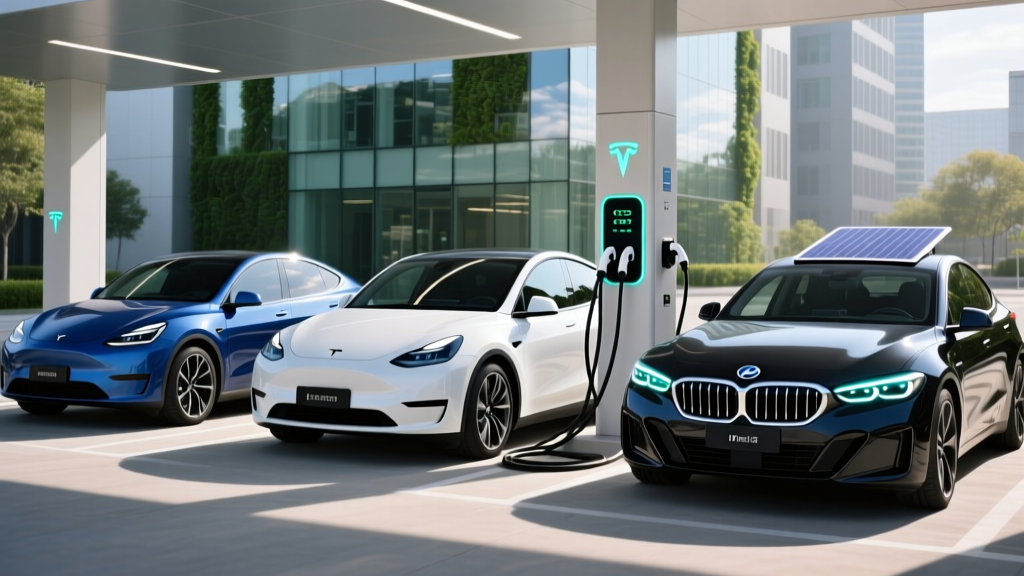
Tesla's charging story remains one of its strongest selling points. The Model Y peaks at 250 kW on DC fast charging via V3 Superchargers, and the proprietary NACS (North American Charging Standard) port is now the industry standard that competitors are adopting. Here's what charging actually looks like:
| Charging Level | Power | Speed (approx.) | Use Case |
|---|---|---|---|
| Level 1 (120V household) | ~1.4 kW | ~5 mi/hr | Emergency / trickle top-up |
| Level 2 (240V, 48A Wall Connector) | 11.5 kW | ~44 mi/hr | Daily home charging — full charge in ~7 hr |
| DC Fast (V3 Supercharger) | Peak 250 kW | 10–80% in ~27 min | Road trips; tapers significantly above 80% |
| DC Fast (V4 Supercharger) | Peak 250 kW (cab-side) | 10–80% in ~25 min | Newer stations; cable is lighter, no magic dock needed |
Charging curve reality check: The 250 kW peak only holds roughly between 10–30% State of Charge (SoC). From 30–60%, expect ~170–200 kW, and from 60–80%, the rate tapers to ~80–120 kW. Above 80%, charging slows dramatically to protect the NMC cells — a 10–80% session takes about 27 minutes, but 80–100% can add another 25–30 minutes. Plan your road-trip stops around the 10–80% window for the fastest experience.
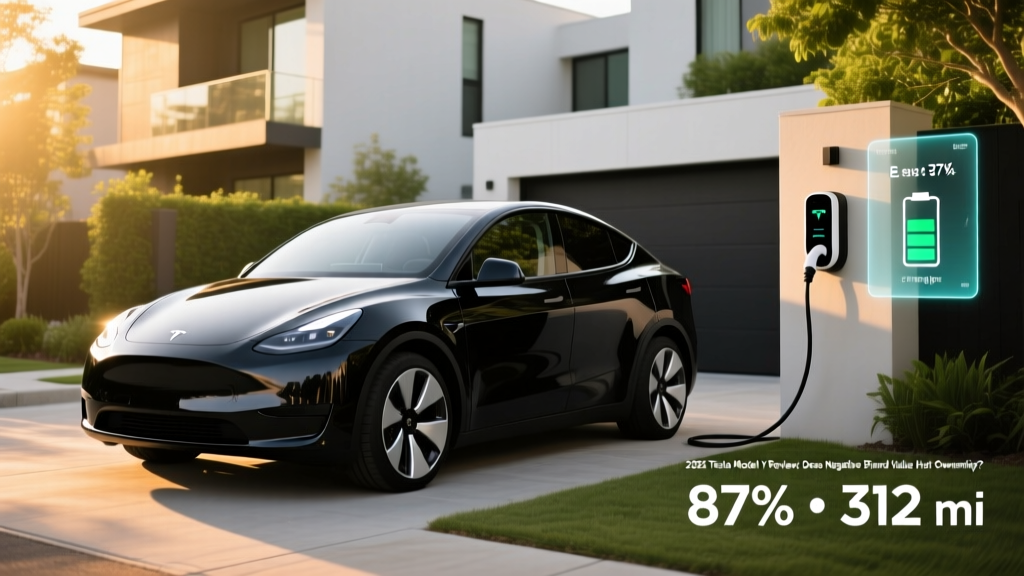
At home, Tesla's Wall Connector on a 60-amp circuit delivers 48 amps (11.5 kW), adding roughly 44 miles of range per hour of charging. A full overnight session easily replenishes a day's driving. Installation typically runs $800–$2,000 depending on your electrical panel's proximity to the garage — budget for a possible panel upgrade if you're running a legacy 100-amp service.
The Supercharger network now exceeds 6,500 stations and 60,000+ connectors in North America, and with NACS adoption by Ford, GM, Rivian, and others, Tesla has opened access to non-Tesla EVs on select stalls. For Model Y owners, this means the network remains the most reliable and densely distributed DC fast-charging option in the U.S.
Performance, Ride, and Daily Drivability
The Long Range AWD Model Y delivers 384 horsepower and a 4.8-second 0–60 mph time — quick enough to merge confidently and pass without drama. The Performance trim bumps output to 456 hp with a 3.5-second sprint, putting it in sports-sedan territory. Both trims use a dual-motor all-wheel-drive layout with independent front and rear motors.
Ride quality on the Juniper-refresh Model Y has improved meaningfully over earlier builds. Tesla added frequency-selective dampers, additional acoustic insulation, and revised bushings. It's still firmer than a Toyota RAV4 or Hyundai Ioniq 5, but highway harshness is noticeably reduced. The steering remains quick and direct, though some drivers find it overly assisted at low speeds.
One-pedal driving via regenerative braking is well-calibrated, and the heat pump ensures efficient cabin heating without the severe range penalties that older resistance-heater EVs suffered. Towing capacity stands at 3,500 pounds — adequate for a small camper or utility trailer but below the Ford F-150 Lightning or Rivian R1S.
Interior, Cargo, and Technology
The Juniper interior is a study in minimalism. A single 15.4-inch touchscreen handles all infotainment, climate, and vehicle controls. A rear 8-inch screen serves second-row passengers. There are no physical stalks — turn signals and gear selection live on the steering wheel and touchscreen, respectively. This remains polarizing: some owners adapt quickly, while others find it distracting.
Cargo volume: 30.2 cubic feet behind the second row, expanding to 72.1 cubic feet with the rear seats folded. The front trunk (frunk) adds 4.1 cubic feet — useful for charging cables or a small bag. Rear legroom measures 41.6 inches, competitive with midsize crossovers.
Tech highlights:
- Tesla's infotainment is fast, responsive, and receives regular OTA (over-the-air) updates
- Native navigation with real-time Supercharger routing and battery preconditioning
- Sentry Mode dashcam recording, Dog Mode climate, and Camp Mode for overnighting
- Phone-as-key with Bluetooth LE — no fob needed
- Standard Autopilot (lane centering + adaptive cruise); FSD (Supervised) available as a $8,000 option or $99/mo subscription
Tesla's Autopilot and Full Self-Driving (Supervised) are SAE Level 2 driver-assistance systems. They do not make the Model Y self-driving. You must keep your hands on the wheel, eyes on the road, and remain prepared to take over at any moment. FSD (Supervised) handles more scenarios (city streets, stop signs, some highway interchanges), but it is not a Level 4 autonomous system and requires constant supervision. Misuse has contributed to NHTSA-investigated crashes.
Notable drawbacks: The lack of Apple CarPlay and Android Auto is a dealbreaker for some buyers. Panel gaps and paint quality, while improved, still lag behind legacy luxury automakers. The all-touchscreen interface for wipers, glovebox, and mirrors adds friction to simple tasks.
Pricing, Tax Credits, and the Brand-Value Question
The 2026 Model Y Long Range AWD starts at $44,990 (including destination), while the Performance trim begins at $51,490. An as-tested Long Range with FSD, red paint, and 20-inch wheels can climb past $56,000.
| Trim | Base MSRP | Est. Federal Credit (§30D) | Effective Price |
|---|---|---|---|
| Long Range AWD | $44,990 | Up to $7,500* | ~$37,490* |
| Performance AWD | $51,490 | Up to $7,500* | ~$43,990* |
*Federal §30D credit eligibility depends on buyer income caps ($150K single / $300K joint AGI), vehicle MSRP caps ($80K for SUVs), battery critical-mineral and component sourcing requirements, and point-of-sale transfer election. Confirm current eligibility at irs.gov before purchasing.
- ✅ Buyer AGI under $150K (single), $225K (head of household), or $300K (joint)
- ✅ Vehicle MSRP under $80,000 (SUV/truck classification)
- ✅ Battery meets critical-mineral sourcing thresholds (percentage increases annually)
- ✅ Battery components not sourced from a "foreign entity of concern" (FEOC rules tighten yearly)
- ✅ Credit can be transferred to the dealer at point of sale for an instant price reduction
- ⚠️ Rules change frequently — verify with a tax professional before committing
Now, the elephant in the showroom: Tesla's brand value trending negative. Consumer sentiment surveys from sources like the American Customer Satisfaction Index and various automotive research firms have shown Tesla's brand perception declining in certain demographics since 2024, driven largely by CEO Elon Musk's public political statements and controversies. What does this mean for buyers in practical terms?
Depreciation risk: Brand sentiment can influence resale values. The Model Y has historically held value well, but increased competition from the Hyundai Ioniq 5, Kia EV6, Ford Mustang Mach-E, and upcoming models from Toyota and Honda means the Model Y no longer enjoys a monopoly on desirable EVs. If brand perception continues to erode among mainstream buyers, depreciation could accelerate compared to the 2021–2023 era when used Model Y prices were bulletproof.
Social cost: Some owners report feeling self-conscious about driving a Tesla-branded vehicle in certain communities. This is subjective and varies by region, but it's a real factor that test-drive data doesn't capture.
The counter-argument: Tesla's Supercharger network, OTA update cadence, and service infrastructure remain best-in-class. The vehicle's engineering merits — efficiency, charging speed, software — exist independently of brand perception. Many buyers find that the product speaks for itself once they're behind the wheel.
Ownership Costs, Warranty, and Longevity
Tesla covers the Model Y's battery and drive unit for 8 years or 120,000 miles (whichever comes first), with a minimum 70% capacity retention guarantee. The basic vehicle limited warranty is 4 years / 50,000 miles — competitive with the industry but shorter than Hyundai/Kia's 5-year/60,000-mile basic and 10-year/100,000-mile powertrain coverage.
Estimated 5-year cost of ownership (Long Range AWD, 15K mi/yr, national avg. electricity):
- Purchase (after credit): ~$37,490
- Charging (home + public mix): ~$3,200/year × 5 = $16,000
- Insurance (national EV avg.): ~$2,400/year × 5 = $12,000
- Maintenance (tires, cabin filter, wiper fluid): ~$600/year × 5 = $3,000
- Estimated depreciation (5 yr): ~$14,000–$18,000
- Total ~$68,500–$72,500 over 5 years
Insurance costs for the Model Y tend to run higher than non-EV crossovers due to repair costs and claims data. Get a personalized quote before purchasing — premiums vary dramatically by zip code and driving history.
Battery degradation on Tesla's NMC packs typically follows a curve of ~5–8% loss in the first 30,000 miles, then a slower linear decline. Most Model Y packs are projected to retain 85–90% capacity at 100,000 miles based on fleet data. The 70% retention warranty threshold is conservative; very few owners report hitting it.
How the Model Y Stacks Up Against Key Rivals
| Spec | 2026 Tesla Model Y LR AWD | 2026 Hyundai Ioniq 5 AWD | 2026 Ford Mach-E ER AWD |
|---|---|---|---|
| EPA Range | 320 mi | 290 mi | 305 mi |
| Battery | ~75 kWh NMC | 84 kWh NMC | 91 kWh NMC |
| Peak DC Charge | 250 kW | 238 kW | 150 kW |
| 10–80% DC Time | ~27 min | ~18 min (800V) | ~38 min |
| 0–60 mph | 4.8 sec | 5.1 sec | 5.5 sec |
| Efficiency | 28 kWh/100mi | 32 kWh/100mi | 34 kWh/100mi |
| Base MSRP | $44,990 | $49,500 | $48,995 |
| Apple CarPlay | No | Yes | Yes |
| Charging Network | Supercharger (native) | NACS adapter / EA | NACS adapter / EA |
The Ioniq 5's 800-volt architecture gives it a faster 10–80% time despite a lower peak kW, but it uses a larger, heavier battery to achieve less range — the Model Y's efficiency advantage is clear. The Mach-E charges noticeably slower on DC but offers Apple CarPlay and a more traditional interior layout.
Pros, Cons, and Who Should Buy the Model Y
- Best-in-class efficiency (28 kWh/100mi)
- Native Supercharger network — most reliable DC charging in the U.S.
- Strong real-world range with excellent highway regenerative braking
- Regular OTA updates add features post-purchase
- Competitive starting price; eligible for up to $7,500 federal credit
- Class-leading cargo space for an EV crossover
- Juniper refresh improved ride comfort and cabin quietness
- No Apple CarPlay / Android Auto
- All-touchscreen controls (no stalks, no physical buttons) are polarizing
- Brand perception trending negative in some demographics — potential resale risk
- FSD (Supervised) is expensive and still requires full driver attention
- Panel gap and paint quality inconsistent vs. legacy luxury brands
- Insurance premiums tend to be above segment average
- Basic warranty shorter than Hyundai/Kia coverage
Choose the Model Y if: You prioritize efficiency and real-world range, rely on DC fast charging for road trips, want native Supercharger access without adapters, and can adapt to a minimalist, touchscreen-first interior.
Look elsewhere if: You need Apple CarPlay, prefer physical buttons and stalks, are sensitive to brand perception in your community, or want the longest basic warranty coverage available. The Ioniq 5 and Mach-E are strong alternatives that address these points.
Frequently Asked Questions
What is the real-world range of the 2026 Tesla Model Y?
The EPA rates the Long Range AWD at 320 miles. In real-world highway driving at 70–75 mph in moderate temperatures, expect 265–285 miles. In cold weather (below freezing), plan for 210–245 miles on the highway. City driving with regenerative braking gets you closer to the EPA sticker — around 295–315 miles.
How fast does the Model Y charge at home and on the road?
On a Level 2 home charger (Tesla Wall Connector, 48A/11.5 kW), the Model Y adds about 44 miles of range per hour — a full charge takes roughly 7 hours overnight. On a V3 Supercharger at peak 250 kW, a 10–80% session takes about 27 minutes. Charging slows significantly above 80% SoC to protect battery health.
How much does the Model Y cost after federal tax credits?
The Long Range AWD starts at $44,990. If you qualify for the full §30D federal credit of $7,500 (income caps, battery sourcing rules, and MSRP limits apply), the effective price drops to approximately $37,490. The Performance trim starts at $51,490, or roughly $43,990 after the credit. Verify eligibility at irs.gov and with a tax professional — sourcing rules tighten annually.
Does the 2026 Tesla Model Y qualify for the federal EV tax credit?
As of early 2026, the Model Y qualifies for up to $7,500 under IRS §30D, provided the buyer meets income limits ($150K single / $300K joint AGI) and the vehicle meets battery critical-mineral and FEOC-component sourcing thresholds. The credit can be transferred to the dealer at point of sale for an instant price reduction. Rules change frequently, so confirm current status before purchasing.
Is the Model Y worth buying despite Tesla's negative brand trends?
This depends on your priorities. The Model Y's engineering — efficiency, Supercharger access, range, software — is objectively strong and exists independently of brand sentiment. However, brand perception can affect resale values and the social experience of ownership. If the product merits matter most to you, the Model Y remains a top pick. If brand association is a concern, the Hyundai Ioniq 5 and Ford Mustang Mach-E offer compelling alternatives with less reputational baggage.
What are the biggest pros and cons of the 2026 Model Y?
Top pros: best-in-class efficiency, native Supercharger network, competitive pricing, strong cargo capacity, regular OTA updates. Top cons: no Apple CarPlay, polarizing all-touchscreen interface, negative brand sentiment in some markets, higher-than-average insurance costs, and FSD remains a Level 2 system despite its price.
How does the Model Y's warranty compare to competitors?
Tesla provides an 8-year/120,000-mile battery and drive unit warranty with a 70% minimum capacity retention guarantee. The basic vehicle warranty is 4 years/50,000 miles. Hyundai/Kia offer a longer 5-year/60,000-mile basic and 10-year/100,000-mile powertrain warranty, though their EV battery coverage is similar at 8 years/100,000 miles.
Sources: EPA / fueleconomy.gov, IRS §30D Clean Vehicle Credits, Tesla Model Y Owner's Manual, NHTSA.