Quick Verdict: The Value Sweet Spot in Tesla's Lineup
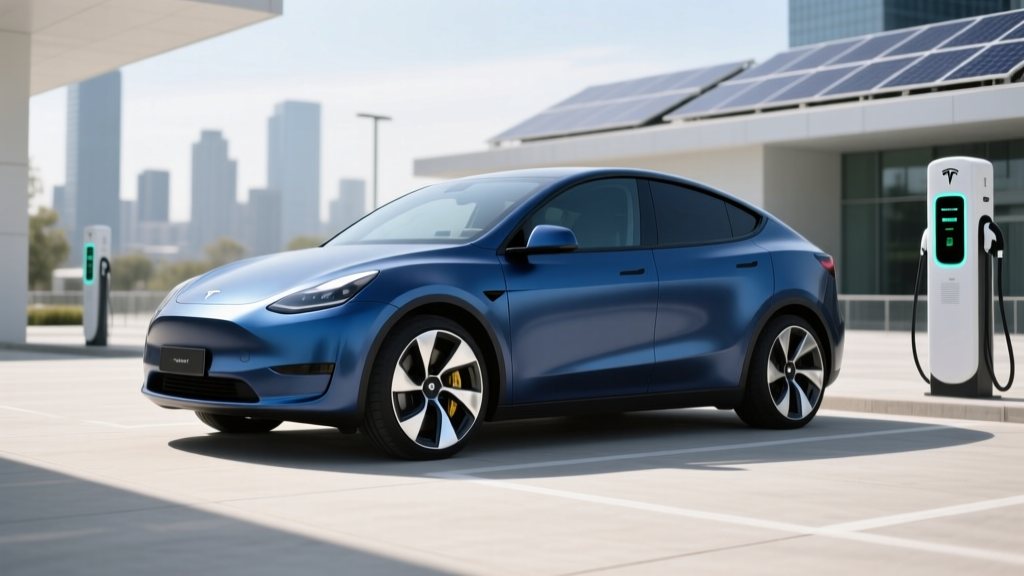
When Tesla introduced a cheaper new Model Y AWD variant in early 2026, it immediately became the most compelling trim in the crossover's lineup. Priced at $44,990 before incentives, this dual-motor all-wheel-drive configuration undercuts the Long Range AWD by several thousand dollars while retaining the practicality, Supercharger access, and software ecosystem that define Tesla ownership. The trade-offs are real but calculated: slightly less range, a modestly smaller battery, and the absence of a few premium features. For the majority of EV buyers who need all-weather traction without stretching their budget, this is the Model Y to get.
| Spec | 2026 Model Y AWD (Base) | 2026 Model Y Long Range AWD |
|---|---|---|
| Base MSRP | $44,990 | $48,990 |
| EPA Range | 295 miles | 330 miles |
| Battery (usable) | ~62 kWh (LFP) | ~78 kWh (NMC) |
| Drivetrain | Dual Motor AWD | Dual Motor AWD |
| 0–60 mph | 5.0 seconds | 4.8 seconds |
| Horsepower | 384 hp | 384 hp |
| Peak DC Charge Rate | 250 kW | 250 kW |
| 10–80% DC Charge Time | ~25 min | ~27 min |
| Level 2 Rate | 11.5 kW (44 mi/hr) | 11.5 kW (44 mi/hr) |
| MPGe (combined) | 117 MPGe | 122 MPGe |
| Efficiency | 29 kWh/100 mi | 27 kWh/100 mi |
| Cargo (rear seats up) | 30.2 cu ft | 30.2 cu ft |
| Cargo (seats folded) | 72.0 cu ft | 72.0 cu ft |
| Battery Warranty | 8 yr / 120,000 mi | 8 yr / 120,000 mi |
Range and Efficiency: What the EPA Number Doesn't Tell You
Real-World Expectation: Plan for 250–270 miles on highway-heavy trips at 70–80 mph. In cold weather (below 32°F), expect 20–30% range loss, dropping effective range to roughly 200–230 miles without preconditioning. City driving with regenerative braking can push closer to or slightly above the EPA figure.
The 295-mile EPA rating on this AWD variant reflects its LFP (lithium iron phosphate) battery chemistry. LFP cells offer lower energy density than the NMC (nickel manganese cobalt) packs in the Long Range, which is why Tesla fits a smaller ~62 kWh usable pack here versus ~78 kWh in the pricier trim. The trade-off is deliberate: LFP chemistry tolerates daily charging to 100% without the degradation concerns that plague NMC packs held at high state of charge. Tesla's software actually recommends charging LFP vehicles to 100% at least weekly to maintain battery calibration.
Efficiency comes in at 29 kWh per 100 miles (117 MPGe combined), per EPA data on fueleconomy.gov. That's marginally less efficient than the Long Range, likely due to a combination of slightly different gear ratios and the energy-density trade-off. In our experience, Tesla's thermal management and heat pump keep cold-weather efficiency penalties manageable, but the smaller battery means those penalties bite harder on total range. If your winters are severe and your commute is long, the Long Range's buffer matters.
Charging Speed: DC Fast, Level 2, and the LFP Advantage
| Charging Level | Power / Rate | Speed (Miles Added) | Notes |
|---|---|---|---|
| Level 1 (120V) | ~1.2 kW | ~4–5 mi/hr | Emergency/trickle only |
| Level 2 (240V, 48A) | 11.5 kW | ~44 mi/hr | Full overnight charge in ~6 hours |
| DC Fast (V3 Supercharger) | 250 kW peak | ~162 mi in 15 min | 10–80% in ~25 min; tapers above 80% |
| DC Fast (V4 Supercharger) | 250 kW peak | ~162 mi in 15 min | Newer stalls; cable-cooled connector |
The 250 kW peak DC fast-charge rate is identical to the Long Range, but the smaller battery changes the charging-curve story. Because the pack is ~62 kWh, the vehicle can sustain peak charge rates across a wider state-of-charge window relative to its total capacity. You'll see 10–80% in roughly 25 minutes at a V3 or V4 Supercharger — a couple minutes faster than the Long Range, which takes about 27 minutes due to its larger pack absorbing energy over a longer curve.
Above 80% state of charge, the charge rate tapers sharply — this is normal for all lithium-ion chemistries. The LFP chemistry here has one practical advantage: because Tesla recommends regular 100% charges for LFP, you can top off at a Supercharger before a road trip without the battery-health guilt associated with NMC packs. On a road trip, preconditioning the battery by navigating to a Supercharger in the Tesla nav system warms the pack for optimal charge speed, cutting several minutes off your stop.
At home on a 48-amp Level 2 circuit (NACS connector, native — no adapter needed), you'll add about 44 miles of range per hour, filling the pack from near-empty to 100% in roughly six hours. Installation of a Tesla Wall Connector on a 60-amp circuit typically runs $500–$1,500 depending on panel proximity and local electrical code requirements. Always consult a licensed electrician for final specs.
Performance and Drivetrain: Dual-Motor Traction Without the Premium
This AWD variant uses Tesla's familiar dual-motor setup — an induction motor up front and a permanent-magnet synchronous motor in the rear. Combined output is 384 horsepower, and the 0–60 mph sprint takes 5.0 seconds. That's two-tenths behind the Long Range, a difference you'll notice only in back-to-back testing. For merging onto highways, climbing grades, and passing, the AWD delivers confident, immediate torque.
The dual-motor system provides genuine all-wheel drive with independent front and rear torque management. In rain, snow, and loose surfaces, the traction advantage over the RWD Model Y is substantial. Tesla's stability control and traction management operate seamlessly, and the low center of gravity from the floor-mounted battery keeps body roll controlled through corners. Ride quality on the 19-inch wheels is firm but compliant — the 20-inch optional wheels look better but transmit more road imperfections.
Regenerative braking is strong and predictable. Tesla removed the user-adjustable regen setting several model years ago, defaulting to a firm one-pedal-driving experience. Most owners adapt within a week and appreciate the reduced brake wear, but if you prefer a coasting feel, this isn't adjustable.
Interior, Tech, and Cargo: What You Get (and What You Don't)
The cabin is the same minimalist, screen-centric environment found across the Model Y lineup. A 15.4-inch center touchscreen handles virtually all vehicle controls, infotainment, navigation, and climate functions. There is no instrument cluster — speed and drive status appear in the upper-left corner of the main screen. A rear 8-inch screen provides climate and media controls for second-row passengers.
Standout tech features include:
- Tesla Autopilot (SAE Level 2 driver-assist): adaptive cruise control, lane centering, automatic emergency braking, blind-spot monitoring
- Over-the-air software updates adding features incrementally
- Sentry Mode (dashcam-based parking surveillance)
- Dog Mode and Camp Mode for climate management when parked
- Native NACS charging port — full Supercharger network access without adapters
- HEPA air filtration with bioweapon defense mode
Tesla Autopilot and the optional FSD (Supervised) system are SAE Level 2 driver-assistance features. The driver must remain fully attentive, keep hands on the wheel, and be prepared to take over at any moment. These are not self-driving systems. Only Level 4 services like Waymo operate without a human driver in defined geographic areas.
Notable drawbacks relative to the Long Range: The cheaper AWD variant omits the premium audio system upgrade (the standard audio is good but not the 14-speaker immersive setup), and ventilated front seats are reserved for higher trims. The LFP battery also adds roughly 50–70 pounds versus the NMC pack, slightly affecting efficiency. Build quality has improved markedly since Tesla's Fremont-era inconsistencies, but panel gaps and interior material quality still trail competitors like the Hyundai Ioniq 5 and BMW iX at similar price points.
Cargo capacity remains a Model Y strength: 30.2 cubic feet behind the second row and 72.0 cubic feet with the 60/40 split seats folded. The front trunk (frunk) adds 4.1 cubic feet for charging cables or a small bag. Rear legroom measures 40.5 inches, sufficient for adults on longer trips, though the sloping roofline cuts into headroom for passengers over six feet tall.
Pricing, Tax Credits, and Total Cost
| Cost Factor | Amount |
|---|---|
| Base MSRP (AWD) | $44,990 |
| Destination Fee | $1,390 |
| Federal §30D Tax Credit (if eligible) | Up to $7,500 |
| Effective Price After Max Credit | ~$38,880 |
| As-Tested (with FSD Supervised) | ~$53,990 before credit |
The $44,990 base MSRP places this Model Y AWD variant under the IRS §30D MSRP cap of $80,000 for SUVs and trucks, making it potentially eligible for the full $7,500 federal tax credit. However, eligibility depends on several factors that change frequently:
- Buyer income caps (2026): Modified AGI must not exceed $150,000 (single), $225,000 (head of household), or $300,000 (married filing jointly)
- MSRP cap: Vehicle must be under $80,000 for SUV classification — this Model Y qualifies
- Battery sourcing: Critical minerals and battery components must meet escalating domestic-content thresholds per IRS §30D rules. Tesla's LFP cells have faced scrutiny on sourcing — verify current eligibility at purchase time
- Point-of-sale transfer: As of 2024+, you can transfer the credit to the dealer at purchase, reducing your out-of-pocket cost immediately rather than waiting for tax filing
- Tax liability: The credit is non-refundable; it cannot exceed your federal tax liability for the year (unless transferred at point of sale)
On a five-year total-cost basis, the Model Y AWD benefits from low fuel costs (roughly $0.04–$0.06 per mile on residential electricity vs. $0.12–$0.16 per mile for a comparable gas crossover), minimal maintenance (no oil changes, reduced brake wear from regen), and strong resale value. Insurance premiums, however, tend to run 15–25% higher than comparable gas vehicles — get a quote before committing. According to IIHS, the Model Y carries strong crash-test ratings that may help moderate premiums with some carriers.
Pros, Cons, and Who Should Buy This EV
Pros
- Lowest-priced AWD Model Y in the lineup — genuine dual-motor traction at $44,990
- LFP battery allows routine 100% charging without degradation concerns
- 295-mile EPA range covers most daily driving and moderate road trips comfortably
- Full Supercharger network access with native NACS — the most reliable public charging ecosystem
- Strong cargo capacity (72 cu ft max) and practical hatchback form factor
- Over-the-air updates continuously add features and refinements
- Competitive 0–60 performance (5.0 sec) for the price point
Cons
- 295-mile EPA range is tight for long road trips in cold weather — expect 200–230 real miles
- Minimalist interior lacks physical controls; everything routes through the touchscreen
- No adjustable regenerative braking — one-pedal driving is mandatory
- Build quality and material finish trail Hyundai, Kia, and BMW competitors
- FSD (Supervised) adds $8,000 and remains a Level 2 system requiring full driver attention
- Insurance costs typically higher than gas crossovers in the same price range
- Rear headroom limited by coupe-like roofline for tall passengers
Who this EV suits best: Daily commuters in moderate-to-cold climates who need AWD traction, families who want hatchback cargo versatility without stepping up to a three-row SUV, and Tesla-curious buyers who want Supercharger access at the lowest AWD price point. If you regularly drive more than 250 highway miles between charging stops or live in a region with harsh winters and sparse charging infrastructure, the Long Range's 330-mile buffer is worth the $4,000 premium. For apartment dwellers without home charging, the Supercharger network's reliability makes Tesla ownership viable where other EVs are impractical.
How It Compares to Key Competitors
At ~$38,880 after the federal credit, the Model Y AWD competes against the Hyundai Ioniq 5 ($42,500 base, 310-mile range), Kia EV6 ($43,200 base, 310-mile range), and Ford Mustang Mach-E Select AWD ($44,995, 250-mile range). The Tesla's advantages are clear: Supercharger access remains the gold standard for public charging reliability, the software ecosystem is unmatched, and the cargo capacity leads the segment. The Hyundai and Kia counter with faster 10–80% charging on 350 kW-capable architectures (~18 minutes), more physical controls, ventilated seats at lower trims, and arguably more polished interiors.
The Mach-E trails on range and charging speed but offers a more traditional crossover driving feel with a driver-focused cockpit. None of these competitors match Tesla's over-the-air update cadence or Supercharger seamlessness, but all three offer Android Auto and Apple CarPlay — which Tesla still does not support.
Choose a competitor if: You want faster peak DC charging (Ioniq 5/EV6 at 350 kW), physical buttons and knobs, Apple CarPlay/Android Auto, or a more premium interior at a similar price.
Battery Warranty and Long-Term Ownership
Tesla covers the Model Y's battery and drive unit for 8 years or 120,000 miles, whichever comes first, with a minimum 70% capacity retention threshold. This is competitive with the industry standard (Hyundai and Kia offer 10 years/100,000 miles on the battery, which is slightly longer in years but fewer miles).
LFP chemistry has demonstrated strong cycle life in real-world data — many Tesla Model 3 Standard Range vehicles (which share LFP packs) have shown less than 5% degradation after 100,000 miles. The chemistry's tolerance for high state-of-charge storage means this Model Y AWD variant may actually age better than its NMC siblings when charged to 100% daily. Replacement cost for the battery pack, should it fall outside warranty, is estimated at $8,000–$12,000 based on current Tesla service pricing, though costs are expected to decline as the LFP supply chain matures.
The vehicle's basic limited warranty covers 4 years or 50,000 miles. Tesla does not offer a separate corrosion warranty, which is worth noting if you live in a road-salt-heavy region.
Frequently Asked Questions
What is the real-world range of the 2026 Model Y AWD?
The EPA rates it at 295 miles. In real-world highway driving at 70–80 mph, expect 250–270 miles. In cold weather below freezing, range can drop to 200–230 miles without preconditioning. City driving with regenerative braking may match or slightly exceed the EPA number.
How fast does it charge at home and on the road?
On a 240V Level 2 home charger at 48 amps, it charges at 11.5 kW, adding about 44 miles of range per hour — a full charge takes roughly 6 hours. On a 250 kW DC fast charger (Tesla V3/V4 Supercharger), it reaches 10–80% in about 25 minutes, adding up to 162 miles in 15 minutes.
Does the 2026 Model Y AWD qualify for the $7,500 federal EV tax credit?
It is potentially eligible. The MSRP is under the $80,000 SUV cap. Your personal eligibility depends on income limits ($150K single / $300K joint), the vehicle's battery-sourcing compliance at time of purchase, and your federal tax liability. Check current IRS §30D guidance and confirm with the dealer and a tax professional before purchase.
Is it worth buying over the Model Y Long Range or competitors?
If you need AWD and your typical drives stay under 250 miles, the $4,000 savings over the Long Range is significant and the LFP battery's daily-charging tolerance is a long-term advantage. If you road-trip frequently or face extreme cold, the Long Range's 330-mile buffer is worth the premium. Against competitors like the Ioniq 5 or EV6, the Tesla wins on Supercharger access and cargo space but loses on charging speed and interior refinement.
What are the biggest drawbacks of this variant?
The 295-mile range is the shortest in the Model Y lineup, making cold-weather road trips tighter. The interior is entirely screen-dependent with no physical buttons. Regenerative braking is not adjustable. And the LFP battery, while durable, adds weight and reduces energy density versus NMC.
Is Autopilot or FSD actually self-driving?
No. Both Tesla Autopilot and FSD (Supervised) are SAE Level 2 driver-assistance systems. You must remain fully attentive, keep your hands on the wheel, and be ready to take over instantly. Tesla's naming conventions are aspirational — the technology assists but does not replace the driver.