The Short Answer on the All-Electric Acura
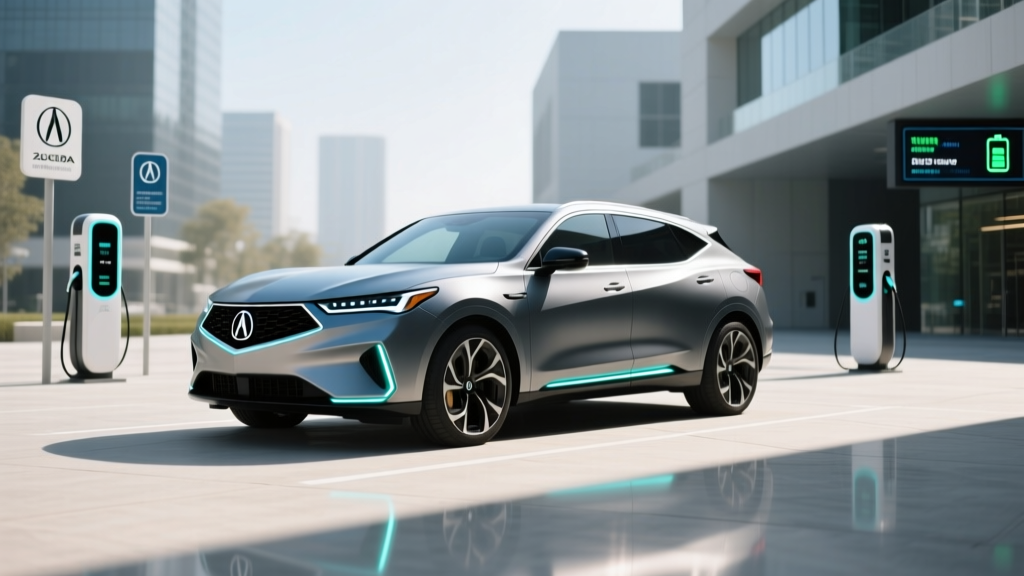
If you're researching the all-electric Acura lineup, the model you can actually buy right now is the Acura ZDX, a midsize luxury crossover built on GM's Ultium platform. The 2026 ZDX offers up to 313 miles of EPA range (RWD), starts around $60,000, and supports DC fast charging at up to 190 kW. The high-performance ZDX Type S drops range to 278 miles but delivers 500 horsepower. Federal tax credit eligibility (§30D) depends on your income, the vehicle's MSRP cap compliance, and battery-sourcing rules that shift annually — always verify on IRS.gov before purchasing. This guide breaks down real-world range, charging speeds, total ownership costs versus the gas Acura MDX, and the decision framework for whether the ZDX fits your driving life.
ZDX Trim Lineup, Range, and Battery Specs
The ZDX comes in three core configurations for 2026. All use GM's Ultium battery architecture with NMC (nickel-manganese-cobalt) chemistry, which offers higher energy density than LFP but requires more careful long-term state-of-charge management to minimize degradation.
| Spec | ZDX A-Spec (RWD) | ZDX A-Spec (AWD) | ZDX Type S (AWD) |
|---|---|---|---|
| Base MSRP | ~$60,000 | ~$64,000 | ~$70,000 |
| Battery (usable) | 102 kWh (NMC) | 102 kWh (NMC) | 102 kWh (NMC) |
| EPA Range | 313 mi | 304 mi | 278 mi |
| Horsepower | 358 hp | 490 hp | 500 hp |
| 0–60 mph | ~6.0 sec | ~4.7 sec | ~4.2 sec |
| Max DC Charge Rate | 190 kW | 190 kW | 190 kW |
| 10–80% DC Charge | ~37 min | ~37 min | ~37 min |
| Level 2 (240V) Rate | 11.5 kW | 11.5 kW | 11.5 kW |
| MPGe (combined) | ~85 MPGe | ~82 MPGe | ~77 MPGe |
| Battery Warranty | 8 yr / 100,000 mi | 8 yr / 100,000 mi | 8 yr / 100,000 mi |
Real-World Range vs. EPA Sticker
EPA 313 miles (RWD) — but plan your road trips around 250–275 miles of real-world highway range. At sustained 75 mph speeds, EVs consume 15–20% more energy than the mixed-cycle EPA test assumes. In freezing temperatures (below 32°F), expect an additional 20–30% reduction due to cabin heating and battery chemistry limitations, dropping effective range to roughly 200–220 miles on the RWD model. The Type S, with its stickier tires and performance tuning, will see even steeper highway losses — budget for 220–240 miles in temperate conditions.
Charging the ZDX: Home, Public, and What It Costs
The ZDX uses the NACS (North American Charging Standard) connector natively on 2025+ models, giving it seamless access to Tesla Supercharger stations — the most reliable DC fast-charging network in the U.S. This is a significant advantage over CCS-only vehicles, which still face patchy Electrify America and third-party reliability.
| Level | Power | Miles Added per Hour | Use Case |
|---|---|---|---|
| Level 1 (120V) | ~1.4 kW | ~3–4 mi/hr | Emergency/overnight trickle only |
| Level 2 (240V, 48A) | 11.5 kW | ~30–33 mi/hr | Daily home charging — full overnight refill |
| DC Fast Charge | Peak 190 kW | ~200+ mi in 20 min | Road trips; tapers sharply above 80% SoC |
Charging curve reality: The ZDX hits its 190 kW peak only between roughly 10–40% state of charge. By 60%, the rate drops to approximately 120–130 kW, and above 80% it falls below 50 kW. This is normal lithium-ion behavior to protect cell longevity, but it means that 10–80% charge takes about 37 minutes while 10–95% can take 55+ minutes. On road trips, plan stops around the 10–80% window and skip topping off unless you'll be parked overnight.
Cost to charge: At the U.S. average residential electricity rate of ~$0.16/kWh, fully replenishing the 102 kWh battery at home costs roughly $16.30 — translating to about $0.052 per mile. Public DC fast charging averages $0.35–$0.48/kWh, or roughly $0.12–$0.16 per mile. Compare that to the gas Acura MDX AWD at 21 MPG combined on $3.40/gallon fuel: $0.162 per mile. Home-charging the ZDX saves approximately $1,100–$1,300 per year at 12,000 miles driven.
ZDX vs. Gas Acura MDX: Real Cost of Ownership
The most common cross-shop for ZDX buyers is the three-row Acura MDX. Here's how five-year costs stack up, assuming 12,000 miles/year and home charging for the ZDX:
| Cost Category | ZDX A-Spec AWD (EV) | MDX A-Spec AWD (Gas) |
|---|---|---|
| Base MSRP | $64,000 | $57,000 |
| Est. Federal Tax Credit (§30D) | $0–$7,500* | $0 |
| Fuel / Electricity (5 yr) | $3,200 (home avg) | $9,700 |
| Maintenance (5 yr) | $1,200 | $3,500 |
| Insurance (5 yr est.) | $11,500 | $9,800 |
| Est. Depreciation (5 yr) | $28,000 | $24,000 |
| 5-Year Total (approx.) | $39,900–$47,400 | $56,000 |
*§30D credit eligibility depends on MSRP cap (SUVs: $80,000), buyer AGI limits ($150K single / $300K joint), and battery component/critical mineral sourcing requirements that tighten annually. The ZDX, built on a GM platform with U.S. assembly, has qualified in prior model years, but verify current-year status at IRS.gov or via the point-of-sale transfer tool at the dealer. Consult a tax professional for your specific situation.
Key takeaways: The ZDX costs more upfront, but fuel and maintenance savings recover $8,000–$9,000 over five years. Insurance runs 15–20% higher on EVs due to repair-cost data and battery-replacement exposure. Depreciation remains the wildcard — luxury EVs have seen steeper resale drops than their gas counterparts, though the Ultium platform and Acura brand may stabilize this. If you qualify for the full $7,500 credit, the ZDX actually beats the MDX on five-year cost.
What First-Time EV Buyers Must Know Before Ordering
If the ZDX is your first EV, these ownership realities don't appear on the showroom brochure:
Home charging is nearly essential. Without Level 2 access at home, EV ownership shifts from convenient to burdensome. A 240V/48A home charger installation typically costs $1,200–$2,800 (charger unit + licensed electrician + permit), but can climb to $4,000+ if your electrical panel needs a 200-amp upgrade. Public-only charging is viable in dense urban areas with robust infrastructure, but it adds 2–4 hours per week and costs 2–3× more per mile.
Preconditioning matters for fast charging. The ZDX's battery thermal management system works best when you navigate to a DC fast charger using the built-in nav — this triggers battery preconditioning, warming the cells to the optimal temperature for peak charge acceptance. Arriving at a Supercharger without preconditioning (especially in cold weather) can cut your peak charge rate by 30–50%.
One-pedal driving changes your brake maintenance. Aggressive regenerative braking means you'll use the friction brakes far less. Expect brake pads to last 100,000+ miles. However, you should still periodically apply the friction brakes to prevent rotor rust — the ZDX has a maintenance mode for this.
NMC battery care for longevity. Unlike LFP chemistry, NMC cells degrade faster when held at 100% or 0% for extended periods. Set your daily charge limit to 80% and only charge to 100% when you need the full range for a trip. This habit alone can add years of usable capacity. The 8-year/100,000-mile battery warranty covers capacity falling below 60% of original — per fueleconomy.gov, most Ultium packs retain 90%+ capacity at 100,000 miles under normal use.
Common Misconceptions About the All-Electric Acura
| Myth | Fact |
|---|---|
| "313 miles means I can drive 313 miles before stopping." | Highway driving at 75 mph yields ~250–275 miles. Cold weather drops it further. Plan conservatively. |
| "DC fast charging always takes 37 minutes." | That's 10–80%. The charge curve tapers sharply above 80% — a 10–95% session can take 55+ minutes. |
| "The $7,500 tax credit applies automatically." | §30D has MSRP caps, buyer income limits, and battery-sourcing rules that change yearly. Verify annually. |
| "EVs need no maintenance." | No oil changes, but tires wear 20–30% faster due to torque and weight. Cabin air filters, brake fluid, coolant, and wiper fluid still need service. |
| "The ZDX is self-driving with AcuraWatch." | AcuraWatch is a Level 2 driver-assist system per SAE classification. You must remain fully engaged — hands on wheel, eyes on road. It is not autonomous. |
Decision Framework: Is the All-Electric Acura ZDX Right for You?
Choose the ZDX if:
- You have Level 2 home charging (or can install it for under $3,000)
- Your daily commute is under 80 miles round-trip, making overnight charging sufficient
- You take road trips 3–5 times per year and can plan around Supercharger/DC fast-charger stops
- You want luxury-crossover refinement with instant torque and near-silent highway cruising
- You're eligible for the §30D credit, bringing the effective price within $2,000–$3,000 of the gas MDX
- You live in a moderate climate, or you accept 20–30% winter range loss as a tradeoff
Look elsewhere (MDX, RDX, or a PHEV) if:
- You live in an apartment or condo with no charging access and no realistic path to installing it
- You regularly drive 300+ miles in a single day through charging-desert regions
- You frequently tow — the ZDX is rated for 1,500 lbs max, versus the MDX's 5,000 lbs
- You need a true three-row family hauler — the ZDX has two rows; the MDX seats seven
- Your budget is strictly under $50,000 before incentives
Acura's Electric Future: What's Next Beyond the ZDX
Acura has signaled additional all-electric models built on Honda's own EV architecture (distinct from the GM-sourced Ultium platform under the ZDX). A smaller electric SUV, expected to slot below the ZDX, has been announced for the 2026–2027 timeframe but final specs, pricing, and availability remain preliminary. Honda/Acura's in-house EV platform promises a thinner battery pack and potentially LFP chemistry options for lower trims, which would mean 100% daily charging without degradation concerns. Until official EPA data and pricing are published, treat any range or cost figures for upcoming models as estimates.
Frequently Asked Questions
Is the Acura ZDX eligible for the $7,500 federal tax credit in 2026?
The ZDX has qualified in prior years due to its U.S. assembly and GM battery sourcing, but §30D critical-mineral and battery-component requirements tighten each year. Check the current qualified-vehicles list at IRS.gov and confirm with your dealer's point-of-sale transfer system before signing paperwork. Income caps ($150K single / $300K joint) and the $80,000 SUV MSRP cap also apply.
How does ZDX range compare to the Tesla Model X or BMW iX?
The ZDX A-Spec RWD at 313 miles EPA sits between the BMW iX xDrive50 (~324 miles) and the Tesla Model X Long Range (~335 miles). However, the ZDX's 190 kW peak charge rate trails the iX's ~200 kW and significantly trails Tesla's ~250 kW capability. On road trips, the Model X charges faster; in daily driving, all three are comparable.
Can I charge the ZDX at Tesla Superchargers?
Yes. The 2025+ ZDX uses the NACS connector natively, meaning direct plug-in access to the Tesla Supercharger network — no adapter required. This is one of the strongest practical advantages of the ZDX over CCS-equipped competitors.
What happens if the ZDX battery needs replacement out of warranty?
Full Ultium battery pack replacement currently costs $15,000–$22,000 at a dealer, though individual module replacement may be possible for isolated cell failures at lower cost. Industry data suggests fewer than 2% of modern EV battery packs require full replacement within the first 150,000 miles. The 8-year/100,000-mile warranty (covering drops below 60% capacity) provides substantial protection.
Is the ZDX a good EV for cold climates?
It's adequate but not class-leading. The Ultium platform includes a heat pump for cabin heating, which reduces winter range loss compared to resistive-heater EVs. Expect 20–25% range reduction in sustained sub-freezing temperatures — meaning ~240 miles from the 313-mile RWD model. Preconditioning while plugged in (using grid power instead of battery) is essential to preserve range and enable fast charging in winter. If you live in Minnesota or Maine, a garage is nearly mandatory.
How does AcuraWatch compare to Tesla Autopilot or GM Super Cruise?
AcuraWatch provides adaptive cruise, lane-centering, and traffic-jam assist — all classified as SAE Level 2. It's competent for highway commuting but requires constant driver engagement. It does not offer hands-free driving on mapped highways the way GM's Super Cruise does (available on other GM Ultium vehicles). If hands-free highway driving is a priority, the Cadillac Lyriq or Chevrolet Blazer EV offer Super Cruise on the same platform.