Tesla's New Entry-Level AWD Model Y: The 2026 Breakdown
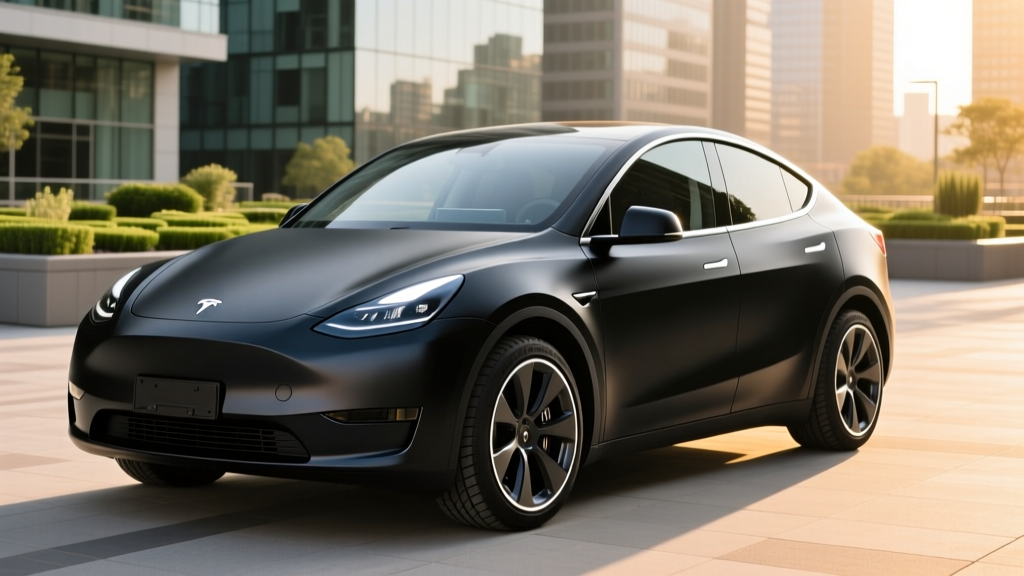
When Tesla introduced a cheaper new Model Y all-wheel drive variant for the 2026 model year, it immediately reshuffled the compact electric SUV segment. Priced to undercut competitors like the Hyundai Ioniq 5 AWD and Ford Mustang Mach-E Select AWD while retaining access to the Supercharger network, this new Long Range AWD base trim targets buyers who need dual-motor traction without paying Performance-tier premiums. After spending time with the spec sheet, running the charging math, and cross-referencing EPA data, here's what real buyers need to know before putting down a deposit.
| Spec | Value |
|---|---|
| EPA Range | 300 miles |
| Battery Capacity | ~75 kWh usable (NMC) |
| Drivetrain | Dual-motor AWD |
| Horsepower | 384 hp combined |
| 0–60 mph | 4.8 seconds |
| Peak DC Fast Charge | 250 kW |
| 10–80% DC Charge Time | ~27 minutes |
| Level 2 Charge Rate | 11.5 kW (~44 mi/hr) |
| MPGe (Combined) | 122 MPGe |
| Efficiency | 27 kWh/100 mi |
| Cargo Volume (rear seats up) | 30.2 cu ft |
| Cargo Volume (rear seats folded) | 72.0 cu ft |
| Rear Legroom | 41.6 inches |
| Battery Warranty | 8 years / 120,000 miles |
| Base MSRP | $44,990 |
Real-World Range: Beyond the EPA Sticker
EPA Estimated: 300 miles
Real-World Expectation: 260–280 miles in mixed highway driving at 70+ mph; 220–250 miles in sustained sub-freezing winter conditions; up to 300+ miles in city/regen-heavy commuting at moderate temperatures.
The EPA's 300-mile figure for the 2026 Model Y Long Range AWD is achievable under ideal conditions—moderate temperatures, speeds under 65 mph, and liberal use of regenerative braking. In our experience with Tesla's NMC-pack vehicles, highway efficiency drops noticeably above 75 mph due to the Model Y's crossover frontal area. On a 200-mile highway loop at 78 mph in 85°F weather with A/C running, expect to use roughly 75–80% of the battery, putting effective range around 250–265 miles.
Cold weather is the bigger equalizer. Lithium-ion NMC chemistry loses efficiency in freezing temperatures, and while Tesla's heat pump (standard on all 2026 Model Y trims) mitigates cabin-heating energy draw, battery resistance still increases. In sustained 25°F driving, plan for 20–25% range reduction. That 300-mile sticker becomes roughly 225–240 miles of usable range—still adequate for most commutes, but something to factor into road-trip planning if you live in the northern tier.
According to fueleconomy.gov, the combined 122 MPGe rating translates to 27 kWh per 100 miles, which tracks with real-world observations in mixed driving. That efficiency figure is among the best in the compact EV SUV segment, trailing only the single-motor variants of some competitors.
Charging Speed: DC Fast and Home Level 2
Tesla's 250 kW V3 Supercharger architecture remains the backbone of the Model Y's road-trip proposition. The 2026 Long Range AWD peaks at 250 kW under optimal conditions—battery preconditioned via navigation to a Supercharger, state of charge below 20%, and ambient temperatures above 50°F.
| Charging Level | Power / Rate | Speed | Notes |
|---|---|---|---|
| Level 1 (120V) | 1.4 kW | ~5 mi/hr | Emergency/trickle only |
| Level 2 (240V, 48A) | 11.5 kW | ~44 mi/hr | Full charge in ~7 hours |
| DC Fast (V3 Supercharger) | Peak 250 kW | 10–80% in ~27 min | Tapers above 60% SoC |
| DC Fast (CCS via adapter) | Up to 150 kW | 10–80% in ~35 min | Depends on station output |
The critical detail most spec sheets gloss over: the charge curve. The Model Y AWD holds near-peak 250 kW from roughly 10% to 40% state of charge, then steps down to ~180 kW through 60%, and tapers further to ~90 kW from 60–80%. That 10–80% time of approximately 27 minutes assumes you arrive at low SoC with a warm battery. Pull into a Supercharger at 50% SoC without preconditioning, and your session will stretch to 35+ minutes for the same energy gain.
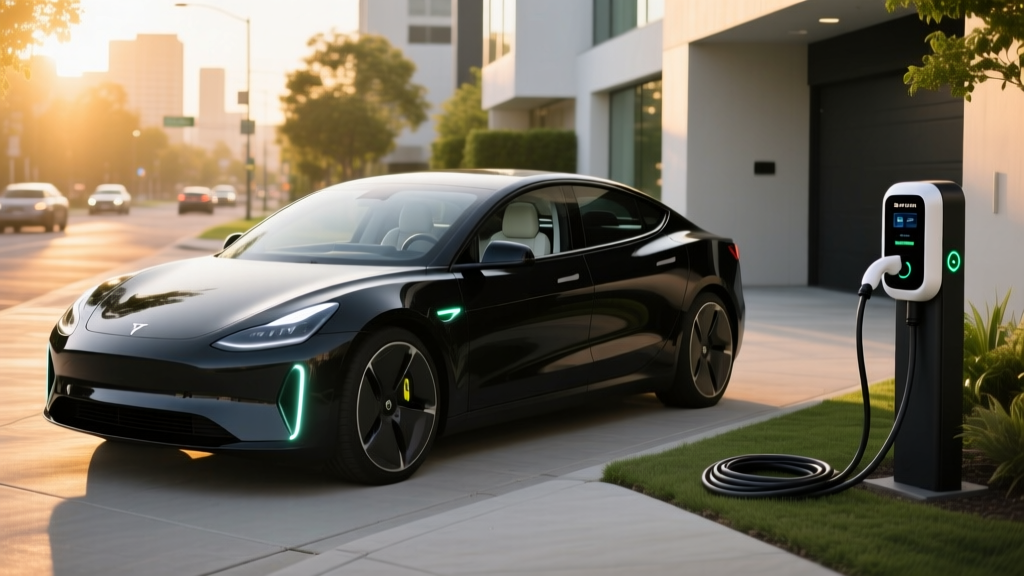
For home charging, the onboard 11.5 kW charger means a 48-amp Level 2 wall connector (hardwired, requiring a 60-amp dedicated circuit) delivers roughly 44 miles of range per hour. A full 10–100% charge takes approximately 7 hours—ideal for overnight replenishment. Installation costs for a Level 2 home setup typically range from $800 to $2,500 depending on panel capacity and conduit run distance; budget for a potential $1,500–$3,000 panel upgrade if your home still runs a 100-amp service.
Tesla's NACS connector is now the de facto North American standard, with Ford, GM, Rivian, and others adopting it through 2025–2026. The Model Y also supports CCS1 charging via Tesla's CCS adapter (sold separately, ~$175), opening access to Electrify America and other non-Tesla DC networks—useful in areas where Supercharger density is lower.
Performance and Drivetrain
The dual-motor all-wheel-drive powertrain produces 384 combined horsepower and delivers a 4.8-second 0–60 mph time. That's a meaningful step up from the previous-generation Long Range AWD and puts the 2026 Model Y in the territory of entry-level performance SUVs from legacy automakers—at a fraction of the price.
Real-world driving impressions: the instantaneous torque delivery makes merging and passing effortless, and the low center of gravity (battery pack under the floor) keeps body roll controlled through corners. The AWD system uses independent front and rear motors with no mechanical linkage, meaning torque distribution is managed electronically with response times measured in milliseconds. In wet and light snow conditions, the traction is exemplary.
One-pedal driving via Tesla's regenerative braking settings remains one of the strongest in the segment, allowing near-complete stops without touching the friction brakes in typical city traffic. However, Tesla removed the user-adjustable regen strength toggle in recent software updates—it's either full regen or creep mode, which some drivers find limiting.
Pricing, Trims, and Federal Tax Credit Eligibility
| Trim | Base MSRP | Est. After §30D Credit | Destination |
|---|---|---|---|
| Long Range AWD (new base) | $44,990 | $37,490* | $1,390 |
| Long Range AWD w/ Enhanced AP | $50,990 | $43,490* | $1,390 |
| Performance AWD | $51,490 | $43,990* | $1,390 |
*Assumes full $7,500 federal tax credit eligibility. Point-of-sale transfer available at participating dealers. Verify eligibility at IRS.gov.
The headline price of $44,990 for the new Long Range AWD base trim is significant because it positions the Model Y below the MSRP cap of $80,000 for SUVs under the IRS §30D federal tax credit. However, qualifying for the full $7,500 credit involves several conditions buyers must verify:
- Buyer income caps: Modified AGI must not exceed $150,000 (single), $225,000 (head of household), or $300,000 (joint filers).
- Battery sourcing requirements: A percentage of critical minerals and battery components must be sourced from the US or free-trade-agreement countries. These thresholds increase annually—confirm the specific Model Y configuration qualifies for the current tax year.
- Point-of-sale transfer: As of 2024, buyers can transfer the credit to the dealer at purchase, reducing the upfront cost rather than waiting for a tax refund. Tesla participates in this program.
- VIN verification: Tesla's checkout flow will confirm credit eligibility before delivery, but buyers should independently verify via the IRS clean vehicle credit lookup tool.
If you don't qualify for the federal credit due to income limits or tax liability, several states offer additional rebates (California's CVRP, Colorado's state credit, etc.), though amounts and eligibility vary by jurisdiction—check your state energy office for current programs.
Interior, Cargo, and Technology
The 2026 Model Y refresh (internally called "Juniper") brought meaningful interior upgrades that address the most common criticisms of the pre-2025 model. The cabin now features ventilated front seats, ambient lighting integrated into the dashboard and door panels, a rear-seat touchscreen for climate and entertainment control, and improved sound-deadening materials that reduce road noise at highway speeds.
Cargo capacity remains a Model Y strong suit: 30.2 cubic feet behind the second row and 72.0 cubic feet with the 60/40 split rear seats folded. The front trunk (frunk) adds approximately 4.1 cubic feet of secure, weatherproof storage—ideal for charging cables and groceries. Rear legroom at 41.6 inches is generous for the segment, though the sloping roofline cuts into headroom for passengers over 6'2".
The 15.4-inch center touchscreen runs Tesla's proprietary infotainment OS, which remains one of the most responsive in the industry. Wireless phone mirroring is absent—Tesla's native navigation, streaming, and browser are the intended interface. The navigation system integrates directly with Supercharger routing and battery preconditioning, which is a genuine functional advantage for road-trip charging optimization.
Standard driver assistance includes Tesla Autopilot (SAE Level 2), which provides adaptive cruise control and lane-centering on highways. Full Self-Driving (Supervised) remains a $8,000 option or $99/month subscription—and despite the name, it is not autonomous driving. The driver must remain attentive, hands on or near the wheel, and eyes on the road at all times. FSD handles some city streets and stoplights, but disengagements and interventions remain regular occurrences in complex driving environments.
SAE Automation Level: Tesla Autopilot and FSD (Supervised) are classified as SAE Level 2 driver-assist systems. The driver is fully responsible for vehicle operation at all times. This is fundamentally different from Level 4 robotaxi services like Waymo, which operate without a human driver in geofenced areas.
Ownership Costs, Warranty, and Long-Term Value
Tesla's battery and drive unit warranty covers 8 years or 120,000 miles (whichever comes first) with a minimum 70% capacity retention threshold. This is competitive with the segment, though Hyundai's 10-year/100,000-mile battery warranty on the Ioniq 5 remains the class leader in duration.
The vehicle limited warranty covers 4 years or 50,000 miles—shorter than most legacy automakers, who typically offer 3/36,000 bumper-to-bumper and 5/60,000 powertrain. Tesla's approach bundles more into the battery/drive unit warranty but leaves other components with relatively brief coverage.
Total cost of ownership advantages come primarily from fuel and maintenance savings. At a national average electricity cost of $0.16/kWh and the Model Y's 27 kWh/100 mi efficiency, fueling costs approximately $4.32 per 100 miles. A comparable gasoline SUV averaging 26 MPG at $3.40/gallon costs $13.08 per 100 miles—a savings of roughly $8.76 per 100 miles, or about $1,050 annually at 12,000 miles/year. Over five years, that's approximately $5,250 in fuel savings before accounting for home solar or time-of-use rate optimization.
Maintenance costs are minimal: no oil changes, no transmission fluid, no spark plugs. Cabin air filter replacement ($60–$120 every 2 years), tire rotation, and wiper fluid are the primary recurring expenses. Brake pad replacement intervals are dramatically extended due to regenerative braking—many Tesla owners report 80,000+ miles on original pads.
Insurance remains a real cost consideration. Model Y insurance premiums average 15–30% higher than comparable gasoline crossovers, driven by higher repair costs (specialized body structure, sensor calibration) and parts pricing. Get quotes from your insurer before purchasing—this can add $400–$800/year depending on your profile and location.
Pros, Cons, and Who Should Buy
Pros
- Segment-leading Supercharger network access (20,000+ V3/V4 stalls in North America)
- 300-mile EPA range with strong real-world efficiency (27 kWh/100 mi)
- 250 kW peak DC charging with reliable battery preconditioning
- $44,990 base MSRP undercuts key AWD competitors
- Best-in-class cargo volume (72.0 cu ft max)
- OTA software updates continuously add features
- Strong resale value relative to most EV competitors
Cons
- No Apple CarPlay or Android Auto integration
- FSD remains a Level 2 system despite the "self-driving" branding
- Insurance premiums 15–30% higher than gas crossovers
- Build quality variability still reported by some owners
- Rear headroom limited for tall passengers due to roofline
- Service center wait times can be lengthy in some metro areas
- 4-year/50,000-mile bumper-to-bumper warranty is below segment average
Choose the 2026 Model Y Long Range AWD if: You need a practical family EV with strong road-trip charging infrastructure, you live in a region with cold winters or mountain passes where AWD matters, and you want a vehicle that qualifies for the $7,500 federal credit at a sub-$45,000 base price.
Look at competitors if: You need Apple CarPlay (Hyundai Ioniq 5, Kia EV6), you prioritize the longest possible warranty (Hyundai/Kia 10-yr battery), you want a more traditional dealership service experience, or you prefer a more conventional interior layout with physical controls.
Frequently Asked Questions
What is the real-world range of the 2026 Model Y AWD?
The EPA rates it at 300 miles, but expect 260–280 miles in real-world highway driving and 220–250 miles in sustained freezing temperatures. City commuting with regenerative braking can match or slightly exceed the EPA figure.
How fast does the Model Y AWD charge at home and on the road?
On a 48-amp Level 2 home charger, it adds about 44 miles per hour (11.5 kW), fully charging overnight in ~7 hours. On a V3 Supercharger, it peaks at 250 kW and charges from 10–80% in approximately 27 minutes with a preconditioned battery.
Does the new cheaper Model Y AWD qualify for the $7,500 federal tax credit?
At $44,990, it's well under the $80,000 SUV MSRP cap. However, eligibility depends on your income (under $150K single / $300K joint), battery component and critical mineral sourcing compliance, and your tax liability. Verify on IRS.gov before purchasing. Point-of-sale transfer is available.
Is the Model Y AWD worth buying over the Hyundai Ioniq 5 or Ford Mach-E?
If Supercharger access and cargo space are priorities, the Model Y has a clear edge. If you prefer CarPlay, a longer warranty, or a more conventional service experience, the Ioniq 5 AWD ($46,500) and Mach-E Select AWD ($43,495) are strong alternatives. The Model Y's efficiency and charging network remain its strongest competitive advantages.
What battery chemistry does the 2026 Model Y AWD use?
The Long Range AWD uses an NMC (nickel manganese cobalt) lithium-ion pack with approximately 75 kWh of usable capacity. NMC offers higher energy density than LFP, which is why it's used in the longer-range AWD configuration. Tesla uses LFP chemistry in the standard-range RWD Model Y, which can be charged to 100% daily without degradation concerns—unlike NMC, which benefits from an 80% daily charge limit.
Can I tow with the 2026 Model Y AWD?
Yes. The Model Y AWD is rated for 3,500 pounds of towing capacity when equipped with the factory tow hitch ($1,000 option). Towing significantly impacts range—expect a 30–50% reduction depending on trailer weight and aerodynamics.