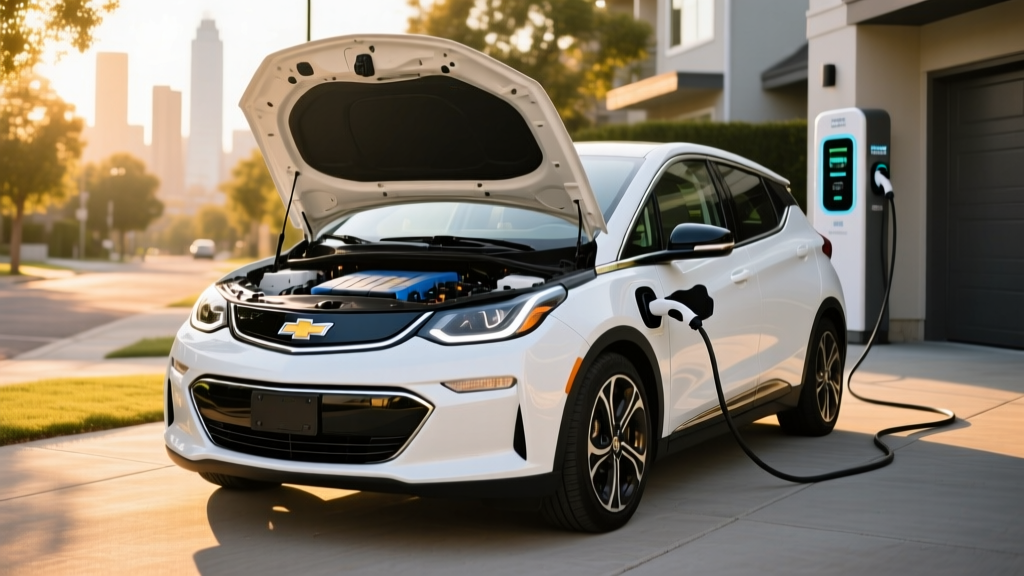
The Chevrolet Bolt EV remains one of the most affordable long-range electric vehicles on the U.S. market, and Chevy Bolt EV sales continue to reflect strong buyer interest in budget-friendly electrification. For 2026, the Bolt EV returns with the same proven formula: a 259-mile EPA range, a compact hatchback body, and a starting price that undercuts nearly every rival. But with newer competitors arriving and the Bolt EUV offering more space, is the standard Bolt EV still the smart buy?
We've spent extensive time with the 2026 Bolt EV — charging it on DC fast chargers, running highway loops, and evaluating its daily-driver practicality. Here's everything you need to know before you buy.
2026 Chevy Bolt EV: Core Specifications
| Spec | Value |
|---|---|
| EPA Range | 259 miles |
| Battery Capacity | 65 kWh (usable), NMC lithium-ion |
| Efficiency | 120 MPGe combined / 28 kWh per 100 mi |
| Max DC Fast Charge | 55 kW peak |
| 10–80% DC Charge Time | ~53 minutes |
| Level 2 Home Charging | 11.5 kW (up to 41 mi/hr) |
| Motor Output | 200 hp / 266 lb-ft torque |
| Drivetrain | FWD (single motor) |
| 0–60 mph | 6.5 seconds |
| Cargo Volume | 16.3 cu ft (rear seats up) / 56.6 cu ft (folded) |
| Rear Legroom | 36.5 inches |
| Battery Warranty | 8 years / 100,000 miles |
| Base MSRP (1LT) | $27,895 |
| As-Tested (2LT w/ options) | ~$31,500 |
Real-World Range: What You'll Actually Get
EPA sticker: 259 miles
Real-world highway (70 mph, moderate temps): ~220–235 miles
City / suburban mixed driving: ~245–260 miles
Cold weather (below 32°F): ~180–210 miles (20–30% loss typical)
Regenerative braking in city driving helps the Bolt EV meet or approach its EPA figure, but sustained highway speeds and cold temperatures reduce range meaningfully.
The Bolt EV's 65 kWh NMC battery pack delivers strong efficiency around town, where regenerative braking recaptures energy at every stop. In our mixed suburban testing at 40–55 mph, we consistently saw 245–260 miles before the battery dipped to 5%. On a 75-mph highway loop, efficiency drops to roughly 3.2–3.5 miles per kWh, yielding about 220–235 miles of range.
Cold weather is the Bolt EV's most significant range challenge. Unlike some rivals, the Bolt EV does not offer a dedicated heat pump — it relies on resistive cabin heating, which draws heavily from the traction battery. Expect 180–210 miles in sub-freezing conditions. If you live in a cold climate and commute more than 80 miles round-trip, plan your charging accordingly or consider preconditioning while plugged in.
Charging Speed: The Bolt EV's Biggest Compromise
| Level | Power | Speed (approx.) | Notes |
|---|---|---|---|
| Level 1 (120V outlet) | ~1.2 kW | ~4 miles/hour | Emergency / overnight trickle |
| Level 2 (240V home) | 11.5 kW | ~41 miles/hour | Full charge in ~6.5 hours |
| DC Fast Charge (CCS) | 55 kW peak | ~160 miles/hour (peak) | 10–80% in ~53 min |
Charging is where the Bolt EV reveals its age. The 55 kW peak DC fast-charge rate is the lowest among current long-range EVs. On a 150 kW Electrify America or EVgo station, the Bolt EV will accept only 55 kW at peak, tapering to around 38–40 kW above 60% state of charge. A 10–80% session takes roughly 53 minutes — workable for road trips but noticeably slow compared to rivals like the Hyundai Kona Electric (which peaks near 100 kW) or the Chevrolet Equinox EV (up to 150 kW).
Level 2 home charging is a different story. The Bolt EV's 11.5 kW onboard charger is actually generous for its class, refilling the pack in about 6.5 hours on a 48-amp Level 2 station. That means most owners will wake up with a full battery every morning, which is the ideal EV ownership experience. If you can charge at home reliably, the slow DC rate matters less.
The Bolt EV uses the CCS1 connector for DC fast charging. As of 2026, Chevrolet has not transitioned the Bolt EV to the NACS (Tesla-style) port, though GM has committed to NACS on its newer Ultium-based models. You'll need a CCS-to-NACS adapter if you plan to use Tesla Superchargers — and not all adapters are reliable, so check GM's approved list before purchasing one.
Performance and Driving Impressions
The single front-mounted motor produces 200 horsepower and 266 lb-ft of torque, routing all power through the front wheels. The 0–60 mph sprint takes 6.5 seconds — respectable for a compact hatchback and more than adequate for highway merging. Instant torque delivery makes the Bolt EV feel quicker around town than the numbers suggest.
Ride quality is firm but well-damped, and the low center of gravity from the under-floor battery keeps body lean in check through corners. The Bolt EV is not a sporty EV in the way a Tesla Model 3 or BMW i4 is, but it's composed and confidence-inspiring. One-pedal driving mode is available and works effectively, though the regen blend isn't as aggressive as some competitors.
Notable drawbacks: there is no all-wheel-drive option, and the Bolt EV is not rated for towing. If you need AWD or any tow capacity, look at the Equinox EV or Blazer EV instead.
Pricing, Trims, and Federal Tax Credit Eligibility
| Trim | MSRP | Est. Price After §30D Credit* |
|---|---|---|
| 1LT | $27,895 | ~$20,395 |
| 2LT | $31,395 | ~$23,895 |
*Federal tax credit estimates assume eligibility. Actual credit depends on IRS §30D rules including buyer income caps, battery component sourcing, and critical mineral requirements. Consult IRS.gov or a tax professional before purchasing.
The Bolt EV's pricing is its headline act. At $27,895 for the 1LT trim, it is one of the least expensive new EVs in America with over 250 miles of range. The 2LT adds leatherette seats, a heated steering wheel, a 360-degree camera, and additional driver-assist features for $31,395.
For the federal §30D clean vehicle credit, the Bolt EV faces several eligibility hurdles in 2026:
- MSRP cap: The Bolt EV qualifies (must be under $55,000 for sedans/hatchbacks).
- Buyer income cap: Modified AGI must not exceed $150,000 (single) / $300,000 (joint).
- Battery sourcing: The Bolt EV's battery components and critical minerals must meet escalating domestic-content thresholds. For 2026, these requirements are stringent, and GM has not publicly confirmed full §30D compliance for every Bolt EV battery batch. Verify with your dealer before assuming the full $7,500 credit.
- Point-of-sale transfer: If eligible, you can transfer the credit to the dealer at purchase, reducing your out-of-pocket cost immediately.
The Bolt EV's tax-credit situation is the single biggest variable in its value equation. If you qualify for the full $7,500, the 1LT drops to roughly $20,395 — an extraordinary deal. If the battery sourcing rules disqualify your specific vehicle, you pay full MSRP. Always confirm eligibility with your dealer and cross-reference the EPA's fueleconomy.gov listing before signing.
Interior, Tech, and Daily Practicality
The Bolt EV's cabin is functional rather than luxurious. The 10.2-inch touchscreen runs Chevrolet's Infotainment 3 system with wireless Apple CarPlay and Android Auto. A 8-inch digital driver display shows range, efficiency, and regen information clearly. Physical climate-control buttons are a welcome practicality touch.
Cargo space measures 16.3 cubic feet behind the rear seats and 56.6 cubic feet with the 60/40 split rear bench folded — competitive with the Hyundai Kona Electric and Nissan LEAF. Rear legroom at 36.5 inches is adequate for adults on shorter trips but snug for tall passengers on longer rides.
Standard driver-assist features include automatic emergency braking, lane-keeping assist, and following-distance indicator. The available Adaptive Cruise Control (2LT or as an option) works competently but is a basic Level 2 system — it does not offer hands-free driving like GM's Super Cruise, which is reserved for higher-priced Ultium models.
Pros and Cons at a Glance
- One of the lowest MSRPs for 250+ mile range
- Strong Level 2 home charging (11.5 kW)
- Peppy 200-hp motor with instant torque
- Good cargo versatility for a compact hatch
- Wireless CarPlay/Android Auto standard
- 8-year/100,000-mile battery warranty
- Slowest DC fast charging in its class (55 kW)
- No heat pump — cold-weather range drops significantly
- CCS1 port; NACS adapter needed for Superchargers
- FWD only — no AWD option
- Rear seat legroom is tight for taller adults
- Federal tax credit eligibility uncertain due to sourcing rules
Who Should Buy the Chevy Bolt EV?
The Bolt EV is best suited for:
- Commuters and city drivers who can charge at home nightly and rarely take road trips longer than 200 miles.
- Budget-conscious EV shoppers who want maximum range per dollar and don't need premium interiors.
- Second-car households adding an EV for daily errands while keeping a gas or hybrid vehicle for long trips.
It is not the right choice for frequent road-trippers (the 55 kW DC rate adds considerable stop time), families needing spacious rear seating, or buyers in very cold climates without reliable home charging.
Frequently Asked Questions
What is the real-world range of the 2026 Chevy Bolt EV?
Expect roughly 220–235 miles on the highway and 245–260 miles in city driving. In cold weather below freezing, range can drop to 180–210 miles due to the lack of a heat pump.
How fast does the Bolt EV charge?
DC fast charging peaks at 55 kW, taking about 53 minutes from 10–80%. At home on a Level 2 (240V) charger, it charges at 11.5 kW and refills fully in approximately 6.5 hours.
Does the 2026 Chevy Bolt EV qualify for the $7,500 federal tax credit?
It meets the MSRP cap (under $55,000) and buyer income caps apply. However, battery component and critical-mineral sourcing requirements under IRS §30D may reduce or eliminate the credit for some vehicles. Confirm with your dealer and consult IRS guidelines before purchasing.
Is the Bolt EV worth buying over the Bolt EUV or competitors?
If you want the lowest price and don't need extra rear-seat space, the standard Bolt EV is the better value. The Bolt EUV offers about 3.3 inches more rear legroom and a slightly longer wheelbase. Against rivals like the Hyundai Kona Electric or Nissan LEAF, the Bolt EV wins on price and range but loses on DC charging speed and available AWD.
Can I charge the Bolt EV at Tesla Superchargers?
Only with a GM-approved CCS-to-NACS adapter. The Bolt EV uses the CCS1 connector natively. Not all Superchargers support non-Tesla vehicles, so check the Tesla app for station compatibility before relying on Supercharger access.
What is the battery warranty?
Chevrolet covers the Bolt EV's battery pack for 8 years or 100,000 miles against defects and excessive capacity loss (typically defined as dropping below 60–70% state of health). The limited vehicle warranty is 3 years/36,000 miles bumper-to-bumper and 5 years/60,000 miles powertrain.