Tesla Model Y 7-Seat Configuration: Quick Verdict
The Tesla Model Y's optional third row transforms the best-selling electric SUV into a family hauler, but it's a specific-use solution rather than a true three-row competitor. With EPA-estimated 310 miles of range (Long Range AWD), access to Tesla's Supercharger network, and a starting price around $44,990 before the optional $2,000 third-row seat, the Model Y remains the default EV choice for many families. However, that third row is best reserved for children or occasional use — adults will find it cramped on anything longer than a school run.
For 2026, the Model Y continues with the refreshed "Juniper" styling introduced in 2025, featuring updated interior materials, ventilated front seats, ambient lighting, and a rear touchscreen for second-row passengers. The 7-seat configuration is only available on the Long Range AWD trim, which uses an NMC (nickel manganese cobalt) battery chemistry optimized for energy density and range.
Range, Efficiency & Real-World Expectations
With 7-Seat Option: ~300-305 miles (slight weight penalty)
Real-World Highway (70-75 mph): Expect 260-280 miles
Cold Weather (below 32°F): Expect 220-250 miles with heat pump active
Efficiency: 122 MPGe combined / 27 kWh per 100 miles
The Model Y Long Range AWD achieves its EPA rating through a combination of low drag coefficient (0.23 Cd), efficient dual-motor powertrain, and standard heat pump for climate control. In real-world testing, highway driving at sustained speeds above 70 mph typically yields 85-90% of the EPA sticker — consistent with most EVs but worth planning for on road trips.
Cold weather remains the great equalizer for all lithium-ion batteries. The Model Y's heat pump helps minimize cabin heating energy draw, but battery chemistry itself becomes less efficient in freezing temperatures. Owners in northern climates should budget for 20-30% range reduction during winter months, particularly on short trips where the battery doesn't reach optimal operating temperature.
With the 7-seat option adding roughly 100-150 pounds of structure and hardware, expect a modest range penalty of 5-10 miles compared to the 5-seat configuration. This is negligible for most buyers but worth noting if you're already range-anxious.
Battery, Charging Speed & Infrastructure
| Specification | Value |
|---|---|
| Battery Capacity (usable) | ~75 kWh |
| Battery Chemistry | NMC (Nickel Manganese Cobalt) |
| Max DC Fast Charge Rate | 250 kW peak |
| 10-80% DC Fast Charge Time | ~25-27 minutes |
| Sustained Charge Rate (10-50%) | ~180-220 kW average |
| Level 2 Home Charging (48A) | 11.5 kW / ~37 miles per hour |
| Level 2 Home Charging (32A) | 7.7 kW / ~25 miles per hour |
| Charging Port | NACS (native Tesla, no adapter needed) |
| Supercharger Network Access | Standard (17,000+ U.S. stalls) |
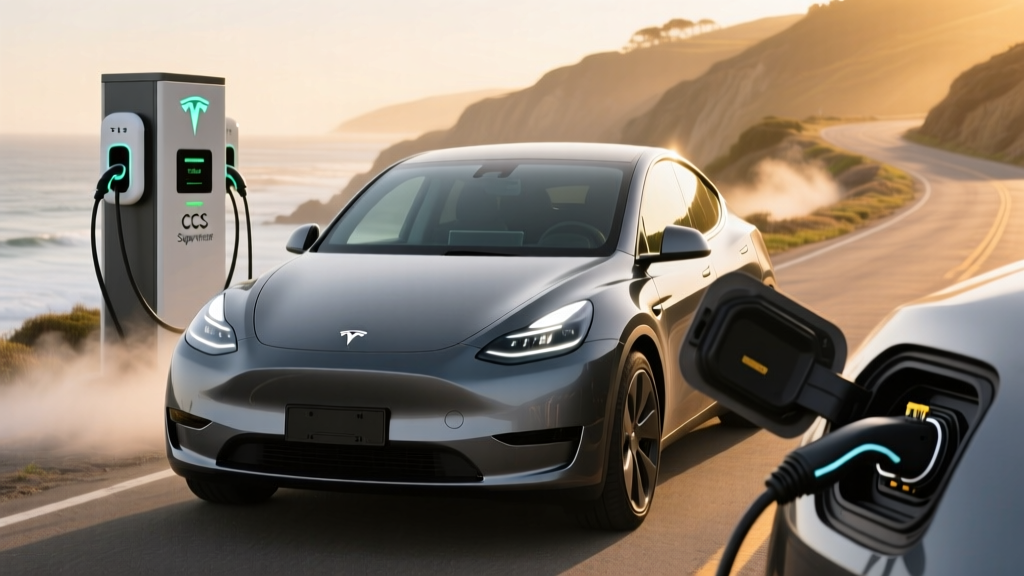
The Model Y's charging profile is one of its strongest selling points. At a V3 or V4 Supercharger, the battery can accept up to 250 kW peak, though this rate only sustains for a portion of the charge curve. Expect the charge rate to taper significantly above 60% state of charge — a physical limitation of lithium-ion chemistry, not a Tesla-specific flaw.
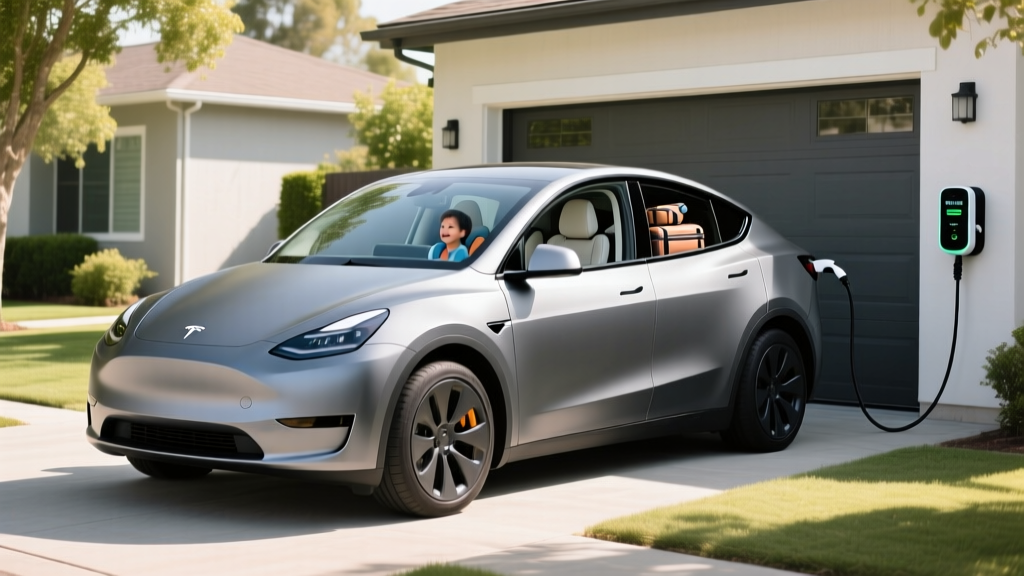
For home charging, Tesla's Wall Connector delivers up to 48 amps (11.5 kW) on a 60-amp circuit, adding roughly 37 miles of range per hour of charging. Most owners charging overnight from 20% to 80% will wake up to a full battery in 5-6 hours. If your electrical panel can't support a 60-amp circuit, a 40-amp circuit (32A charging) still provides ~25 miles per hour — adequate for daily driving under 75 miles.
The native NACS connector means no adapter is required at Tesla Superchargers, and Tesla has opened the network to other brands (Ford, Rivian, GM vehicles with adapters), which has increased stall utilization in some high-traffic corridors. Plan accordingly during peak travel times.
Performance & Drivetrain
| Metric | Value |
|---|---|
| 0-60 mph | 4.8 seconds |
| Horsepower | 384 hp (combined dual motor) |
| Torque | 375 lb-ft |
| Drivetrain | Dual-motor AWD |
| Top Speed | 135 mph |
| Towing Capacity | 3,500 lbs (with tow package) |
The Long Range AWD uses dual permanent-magnet motors — one on each axle — providing all-wheel drive traction and confident acceleration. The 4.8-second 0-60 time is quick for a family SUV and more than adequate for highway merging and passing. The instant torque delivery characteristic of electric motors makes the Model Y feel even quicker than the numbers suggest in real-world driving.
Regenerative braking is aggressive and customizable via the touchscreen. Most owners adapt to one-pedal driving within a week, reducing brake wear and recapturing energy during deceleration. The friction brakes are rarely used in normal driving, which contributes to lower long-term maintenance costs.
Interior Space: The 7-Seat Reality Check
The Model Y's third row is the elephant in the room for family buyers. Here are the hard numbers:
- Third-row legroom: ~26 inches (suitable for children under 5'4")
- Third-row headroom: ~34 inches (tight for adults)
- Cargo behind third row: ~12 cubic feet (groceries or two small suitcases)
- Cargo with third row folded: ~30 cubic feet
- Cargo with both rear rows folded: ~72 cubic feet
- Second-row legroom (5-seat config): ~40 inches
Let's be direct: the Model Y's third row is a child seat or occasional-use solution. Adults over 5'6" will find their knees pressed into the second-row seatbacks, and the low cushion height creates a knees-up seating position that's uncomfortable beyond 15-20 minutes. Compare this to the Kia EV9 (32 inches of third-row legroom) or Rivian R1S (35+ inches), and the Model Y's limitations become clear.
However, for families with two small children who need occasional third-row seating for carpool duty or visiting grandparents, the option provides flexibility without the size, weight, and cost penalty of a full three-row SUV. When folded flat, the third row is nearly invisible, preserving the Model Y's excellent cargo utility.
Pricing, Trims & Federal Tax Credit Eligibility
| Configuration | MSRP | After $7,500 Credit* |
|---|---|---|
| Long Range AWD (5-seat) | $44,990 | $37,490 |
| Long Range AWD (7-seat) | $46,990 | $39,490 |
| Performance AWD (5-seat only) | $48,990 | $41,490 |
*Federal tax credit eligibility under IRS §30D requires meeting multiple criteria:
- MSRP Cap: SUVs must be under $80,000 (Model Y qualifies)
- Buyer Income Cap: AGI ≤ $150,000 single / $225,000 head of household / $300,000 joint
- Battery Sourcing: Critical minerals and battery components must meet phased-in domestic/content requirements (verify current-year compliance at purchase)
- Point-of-Sale Transfer: Credit can be applied at purchase to reduce upfront cost (dealer must be registered with IRS)
- VIN Registration: Vehicle must be for personal use, primarily in the U.S.
The Model Y has historically qualified for the full $7,500 credit, but battery sourcing rules tighten annually. Always verify eligibility with your tax professional and confirm the specific vehicle's compliance at the time of purchase. Tesla's website typically indicates credit eligibility on the configurator, but the final determination rests with IRS rules in effect at delivery.
Technology, Driver Assistance & Safety
The Model Y's tech stack centers on a 15.4-inch center touchscreen running Tesla's proprietary infotainment OS. Features include:
- Navigation with real-time Supercharger routing and battery preconditioning
- Over-the-air updates adding features and improving performance
- Sentry Mode (360° security recording)
- Dashcam with front/rear/side cameras
- Dog Mode and Camp Mode for climate control when parked
- Rear-seat 8-inch touchscreen (added in 2025 refresh)
- Phone-as-key with Bluetooth proximity unlock
Tesla Autopilot (standard) and Full Self-Driving Supervised ($8,000 option or $99/month) are Level 2 driver-assist systems. The driver must remain engaged, hands on the wheel (or torque-sensing confirmation), and eyes on the road at all times. These systems do not make the vehicle self-driving. FSD Supervised can navigate highway interchanges, stop lights, and some city streets, but it requires constant supervision and can make errors requiring immediate driver intervention.
Safety ratings are strong: the Model Y earns a 5-star overall rating from NHTSA and has historically performed well in IIHS crash testing. Standard active safety features include automatic emergency braking, blind-spot monitoring, lane departure warning, and rear cross-traffic alert.
Warranty & Ownership Considerations
| Component | Coverage |
|---|---|
| Basic Vehicle | 4 years / 50,000 miles |
| Battery & Drive Unit | 8 years / 120,000 miles |
| Battery Capacity Retention | ≥70% of original capacity during warranty period |
The 8-year/120,000-mile battery warranty is competitive with most EV manufacturers (Hyundai/Kia offer 10 years/100,000 miles). Tesla's warranty guarantees the battery will retain at least 70% of its original capacity — meaning a 310-mile Model Y should still deliver ~217 miles of range at the warranty threshold.
Real-world degradation data from Tesla's fleet suggests most Model Y batteries retain 85-90% capacity after 100,000 miles, with the steepest degradation occurring in the first 20,000-30,000 miles before stabilizing. NMC chemistry is proven and well-understood, though it's slightly more prone to degradation than LFP (lithium iron phosphate) chemistry used in the RWD Model Y.
Insurance costs for the Model Y tend to run 15-25% higher than comparable gas-powered SUVs due to repair costs and parts pricing. Get quotes before purchasing — your mileage will vary by location, driving record, and coverage level.
Pros & Cons: Tesla Model Y 7-Seat
Pros
- Access to Tesla Supercharger network (17,000+ stalls, high reliability)
- Strong EPA range (310 miles) with real-world usability
- Fast DC charging (250 kW peak, 10-80% in ~25 min)
- Quick acceleration (4.8 sec 0-60) for a family SUV
- Over-the-air updates continuously add features
- Excellent cargo space with third row folded (72 cu ft)
- Competitive pricing after federal tax credit
- Strong safety ratings (5-star NHTSA)
Cons
- Third row is cramped — only suitable for children or short trips
- Minimal cargo space behind third row (12 cu ft)
- No Apple CarPlay or Android Auto
- FSD Supervised is expensive ($8,000) and still requires full driver attention
- Insurance costs higher than gas competitors
- Minimal physical controls — everything via touchscreen
- Service center availability varies by region
- 7-seat option only available on Long Range AWD (not base RWD or Performance)
Who Should Buy the Model Y 7-Seat?
Buy it if: You need occasional third-row seating for small children, prioritize Supercharger access for road trips, want strong range and fast charging, and can accept the third-row space limitations. Ideal for families of 4-5 who sometimes need to carpool an extra child or two.
Consider alternatives if: You regularly transport teenagers or adults in the third row, need substantial cargo space with all seats in use, or prefer physical controls and Apple CarPlay. In these cases, the Kia EV9 (320-mile range, usable third row, $54,900 starting) or Rivian R1S (350-mile range, true three-row space, $75,000+ starting) are worth cross-shopping despite higher prices.
Frequently Asked Questions
What is the real-world range of the Tesla Model Y 7-seat?
Expect 260-280 miles on highway road trips at 70-75 mph, and 220-250 miles in freezing weather. The EPA rates it at 310 miles (Long Range AWD), but real-world conditions — speed, temperature, terrain, and HVAC use — typically reduce that by 10-25%.
How fast does the Model Y charge at home and on the road?
At a Tesla Supercharger (250 kW peak), you'll add 10-80% in about 25-27 minutes. At home with a 48-amp Level 2 charger, expect ~37 miles of range per hour of charging, or a full overnight charge in 5-6 hours.
Does the Tesla Model Y qualify for the $7,500 federal tax credit?
The Model Y Long Range AWD has historically qualified for the full $7,500 credit under IRS §30D, but eligibility depends on your income (≤$300,000 joint AGI), the vehicle's MSRP (under $80,000 for SUVs), and battery sourcing requirements that tighten annually. Verify current-year eligibility with your tax professional and Tesla's configurator at purchase time.
Is the third row usable for adults?
Only for very short trips. With ~26 inches of legroom and a low cushion height, adults over 5'6" will be uncomfortable beyond 15-20 minutes. The third row is designed for children or occasional use. If you regularly carry adults in the third row, consider the Kia EV9 or Rivian R1S instead.
How does the Model Y 7-seat compare to the Kia EV9?
The EV9 offers a genuinely usable third row (32 inches legroom), more cargo space behind the third row, and competitive range (320 miles EPA). However, it costs ~$10,000 more, has slower DC charging (210 kW peak vs 250 kW), and lacks access to the Tesla Supercharger network (though it can use other networks). Choose the Model Y for value and charging infrastructure; choose the EV9 for third-row comfort.
What's the total cost of ownership over 5 years?
Assuming 15,000 miles/year, electricity at $0.15/kWh, and no major repairs: ~$5,000 in electricity costs vs ~$10,000 in gasoline for a comparable gas SUV. Factor in higher insurance (~$2,000-3,000 more over 5 years), no oil changes or transmission service, and the $7,500 tax credit. Most owners break even or save modestly over 5 years, with the real savings coming if you keep the vehicle 8-10 years.
For official EPA range and efficiency data, visit fueleconomy.gov. For current federal tax credit rules, consult the IRS clean vehicle credits page.