Quick Verdict: The 3rd Row Tesla Model Y at a Glance
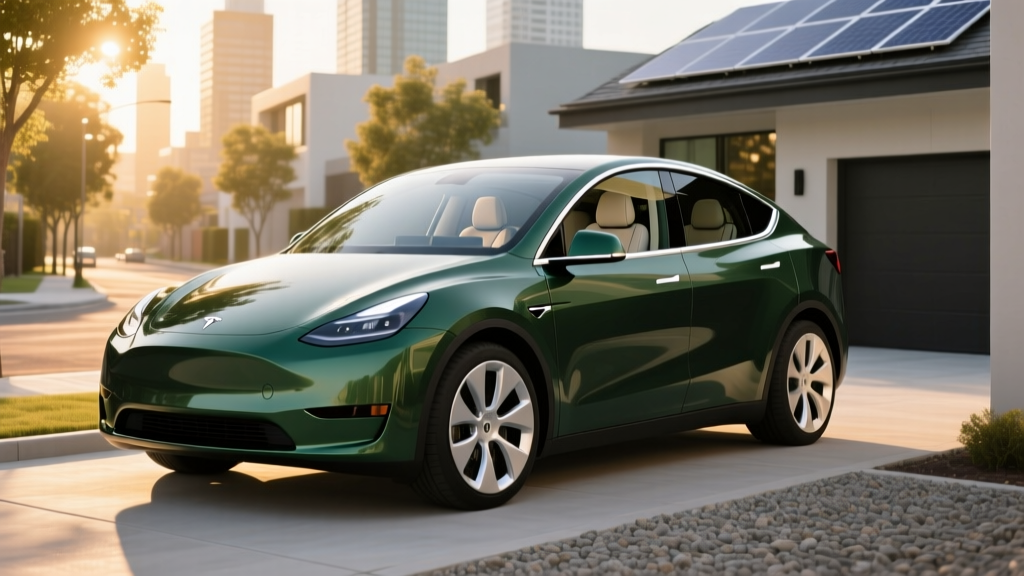
The Tesla Model Y remains one of the best-selling electric vehicles in the world, and for 2026, the optional third-row seat continues to offer families a compelling — if tightly packaged — way to carry up to seven passengers in a fully electric crossover. But not every 7-seater Tesla is created equal. The third-row option is only available on the Long Range AWD trim, and the space it provides is best suited for children or occasional use rather than full-size adults on long trips.
If you're searching for a 3rd row Tesla 7 seater, the Model Y Long Range AWD is the vehicle you're looking at. This review covers every spec that matters — real-world range, charging speeds, interior dimensions, tax-credit eligibility, and how it stacks up against three-row electric rivals like the Kia EV9 and Hyundai Ioniq 9.
| Spec | Value |
|---|---|
| EPA Estimated Range | 320 miles |
| Battery Capacity (usable) | ~78.1 kWh (NMC) |
| Drivetrain | Dual-Motor AWD |
| Horsepower | 384 hp |
| 0–60 mph | 4.8 seconds |
| Max DC Fast Charge | 250 kW (peak) |
| 10–80% DC Fast Charge | ~25 minutes |
| Level 2 Home Charging | 11.5 kW (~44 mi/hr) |
| EPA Efficiency | 111 MPGe combined (30 kWh/100 mi) |
| Cargo (behind 3rd row) | 12.4 cu ft |
| Cargo (3rd row folded) | 34.3 cu ft |
| Cargo (max, all rows folded) | 72.1 cu ft |
| Battery Warranty | 8 years / 120,000 miles |
| Base MSRP (7-seat) | $49,630 (incl. destination, before $2,000 3rd-row option) |
Range, Battery, and Real-World Efficiency
Real-World Expectation: ~270–290 miles on highway-heavy trips; ~240–260 miles in freezing weather with cabin heat. The 7-seat option adds approximately 60 lbs of hardware, which has a negligible effect on range compared to the standard 5-seat configuration.
The 2026 Model Y Long Range AWD carries a usable battery capacity of roughly 78.1 kWh using nickel-manganese-cobalt (NMC) chemistry. NMC cells offer higher energy density than lithium iron phosphate (LFP), which is why Tesla reserves them for Long Range and Performance trims. The trade-off: Tesla recommends daily charging to 80% for NMC batteries to preserve long-term health, whereas LFP packs can be routinely charged to 100%.
On the EPA combined cycle, the Model Y Long Range AWD achieves 111 MPGe, translating to about 30 kWh per 100 miles. In real-world highway driving at 70–75 mph, expect efficiency closer to 33–35 kWh/100 mi, which is why highway range typically falls 10–15% below the EPA sticker. In sub-30°F conditions, the heat pump helps but range loss of 20–30% is typical for any EV without preconditioning the battery.
Tesla's navigation system automatically preconditions the battery when you route to a Supercharger — a critical feature that brings the pack to optimal temperature for faster DC charging. Skipping preconditioning (for example, arriving at a non-Tesla charger without battery warm-up) can cut peak charge rates significantly.
Charging Speeds: Supercharger, Home, and Public DC Networks
| Charging Method | Power (kW) | Speed |
|---|---|---|
| Level 1 (120V household) | ~1.4 kW | ~4–5 miles per hour |
| Level 2 (240V, 48A Wall Connector) | 11.5 kW | ~44 miles per hour |
| DC Fast Charge (Tesla Supercharger V3) | 250 kW peak | 10–80% in ~25 min |
| DC Fast Charge (CCS adapter, non-Tesla) | ~150–250 kW (varies) | Depends on station output |
The Model Y peaks at 250 kW on Tesla's V3 Superchargers, but that peak rate is only sustained for a narrow portion of the charge curve — roughly between 10% and 30% State of Charge. Above 50%, the rate tapers progressively; above 80%, it slows dramatically to protect battery longevity. A typical 10–80% session takes about 25 minutes, but a 10–100% session can stretch past 45 minutes due to the taper.
For home charging, Tesla's Wall Connector at 48 amps on a 60-amp circuit delivers 11.5 kW, adding roughly 44 miles of range per hour. An overnight session (8 hours) replenishes approximately 350 miles — more than enough for daily use. Installation costs for a dedicated 240V/60A circuit typically range from $500 to $2,000 depending on panel proximity and local permitting, though a panel upgrade to 200A service can add $1,500–$4,000 if your home's electrical panel is older or already near capacity.
Tesla now includes a NACS (North American Charging Standard) port natively on all 2026 models. The Model Y can also access an expanding number of non-Tesla DC fast chargers via adapters, and many Electrify America and EVgo stations now feature NACS cables. For the latest connector compatibility, check Tesla's NACS support page.
Third-Row Space, Cargo, and Family Practicality
Let's address the central question directly: the Model Y's third row is small. Tesla officially recommends it for passengers up to approximately 5'4" tall, which effectively means children and smaller teenagers. Legroom in the third row measures around 26.5 inches — tight even by compact-crossover standards. Headroom is similarly constrained by the sloping roofline.
Access to the third row requires folding and sliding the second-row seat forward. It's a one-motion operation, but the opening is narrow, and adults will find ingress and egress awkward. Once seated, the third row has USB-C ports and a small cupholder area, but no dedicated climate vents — a notable omission for passenger comfort.
Cargo space behind the third row is 12.4 cubic feet — enough for a few grocery bags or a couple of small duffels, but not a full family road-trip load. Fold the third row flat and you get 34.3 cubic feet, which is generous for a two-row crossover. Fold everything and the Model Y offers 72.1 cubic feet, plus a small front trunk (frunk) for additional storage.
For context, the Kia EV9 offers significantly more third-row legroom (~32 inches) and cargo space behind the third row (~20 cu ft), making it a more practical choice if you regularly carry more than five passengers or need substantial cargo room with all seats in use.
Performance, Ride Quality, and Driver Assistance
The dual-motor AWD powertrain in the Model Y Long Range produces 384 horsepower and propels the crossover from 0 to 60 mph in 4.8 seconds — brisk for a family hauler. The instant torque delivery makes highway merging and passing effortless, even when fully loaded with passengers.
Ride quality in the refreshed Model Y (internally called the "Juniper" update that debuted for the 2025 model year) is noticeably improved over earlier builds. Tesla retuned the suspension for better compliance over rough pavement, and cabin noise levels dropped thanks to additional sound deadening and acoustic glass. It still isn't as plush as a Hyundai Ioniq 9 or a Volvo EX90 over sharp impacts, but the gap has narrowed considerably.
Tesla's FSD (Supervised) package, priced at $8,000 as a one-time purchase or $99/month in 2026, adds automatic city-street navigation, traffic-light recognition, and more assertive lane-change behavior. It is capable in many scenarios but still requires active supervision and occasional intervention. For highway commuting, the standard Autopilot (included with the vehicle) handles lane centering and adaptive cruise competently.
Pricing, Trims, and Federal Tax Credit Eligibility
| Configuration | MSRP | Est. After §30D Credit* |
|---|---|---|
| Long Range AWD (5-seat) | $47,630 | ~$39,880 (if eligible) |
| Long Range AWD (7-seat, 3rd row) | $49,630 | ~$41,880 (if eligible) |
| Performance AWD (5-seat only) | $52,130 | ~$44,380 (if eligible) |
*Federal tax credit estimates assume full eligibility under IRS §30D rules. Actual credit may be $0 to $7,500 depending on your income, the vehicle's battery sourcing compliance, and MSRP caps. Consult a tax professional.
The 7-seat Model Y Long Range AWD starts at approximately $49,630 including destination, reflecting the $2,000 third-row option. The Performance trim does not offer the third-row seat.
- MSRP Cap: SUVs/crossovers must be ≤ $80,000 — Model Y qualifies.
- Buyer Income Cap: Modified AGI ≤ $150,000 (single), ≤ $300,000 (joint filers).
- Battery Sourcing: Critical minerals and battery components must meet phased-in domestic/free-trade sourcing thresholds. Tesla has historically worked to comply, but eligibility can shift by model year and build date. Verify at IRS.gov clean vehicle credits.
- Point-of-Sale Transfer: Eligible buyers can transfer the credit to the dealer at purchase, reducing the out-of-pocket price immediately rather than waiting for a tax refund.
Because battery-sourcing compliance can change mid-year and depends on specific build dates, always verify the exact VIN's eligibility on the IRS clean vehicle portal before finalizing your purchase.
Tesla Model Y 7-Seater vs. the Competition
The 3rd row Tesla 7 seater competes in a growing segment of three-row electric SUVs. Here's how it measures up against key rivals:
| Spec | Tesla Model Y LR AWD | Kia EV9 GT-Line AWD | Hyundai Ioniq 9 AWD |
|---|---|---|---|
| EPA Range | 320 mi | ~280 mi | ~310 mi |
| Battery (usable) | ~78.1 kWh (NMC) | ~99.8 kWh (NMC) | ~110.3 kWh (NMC) |
| DC Fast Charge Peak | 250 kW | 236 kW | ~240 kW |
| 3rd-Row Legroom | ~26.5 in | ~32.0 in | ~31.5 in |
| Cargo behind 3rd row | 12.4 cu ft | ~20.2 cu ft | ~18.5 cu ft |
| 0–60 mph | 4.8 sec | 5.0 sec | ~5.2 sec |
| Base MSRP (AWD, 7-seat) | $49,630 | ~$63,600 | ~$56,500 |
The Model Y's clear advantage is price. It undercuts the EV9 by roughly $14,000 and the Ioniq 9 by around $7,000 while offering superior range and charging speed. The trade-off is third-row space and cargo volume — both the Kia and Hyundai are meaningfully larger in the third row and behind it.
If your third-row needs are occasional (school carpools, short trips with small kids), the Model Y's value proposition is hard to beat. If you regularly carry six or seven adults or need maximum cargo flexibility, the EV9 or Ioniq 9 are better suited despite the higher cost.
Pros and Cons of the Model Y 7-Seater
- Best-in-class range (320 mi EPA) among 7-seat EVs at this price
- Extensive Tesla Supercharger network access
- Strong performance (4.8 sec 0–60) even when loaded
- Lowest entry price for a 7-seat electric SUV
- Over-the-air updates continuously improve the vehicle
- Class-leading efficiency (111 MPGe combined)
- Third row is cramped — only suitable for children or short trips
- Minimal cargo space (12.4 cu ft) behind the third row
- No third-row climate vents
- NMC battery requires 80% daily charge limit for longevity
- FSD (Supervised) is expensive ($8,000) and still requires full driver attention
- Insurance costs tend to run higher than segment average
Who Should Buy the 3rd Row Tesla Model Y?
- You need a third row occasionally for small children or carpools, not daily for adults.
- Range and charging speed are top priorities for road trips.
- You want the most affordable entry point into a 7-seat electric vehicle.
- You already have access to home Level 2 charging or plan to install it.
- You regularly carry six or seven passengers, including adults in the third row.
- You need substantial cargo room with all three rows in use.
- You prefer a more traditional SUV interior layout with dedicated rear climate controls.
For daily commuters who occasionally need extra seats, the Model Y 7-seater is a pragmatic, efficient, and well-priced choice. For larger families with bigger passengers and more gear, spending more on a purpose-built three-row EV will pay dividends in daily comfort.
Frequently Asked Questions
What is the real-world range of the Tesla Model Y 7-seater?
The EPA rates the Model Y Long Range AWD at 320 miles. In real-world highway driving at 70+ mph, expect 270–290 miles. In freezing temperatures with cabin heating, range can drop to 240–260 miles. Preconditioning the battery via Tesla's navigation system helps mitigate cold-weather losses.
How fast does the Model Y charge at home and on the road?
On a Tesla Supercharger V3, the Model Y peaks at 250 kW and charges from 10–80% in approximately 25 minutes. At home on a 240V/48A Wall Connector, it charges at 11.5 kW, adding about 44 miles of range per hour. A full overnight charge easily covers daily driving needs.
Does the Tesla Model Y 7-seater qualify for the federal EV tax credit?
The Model Y Long Range AWD is under the $80,000 SUV MSRP cap and may qualify for up to $7,500 under IRS §30D, provided the buyer meets income limits (≤ $300,000 joint / ≤ $150,000 single) and the vehicle's battery meets critical-mineral and component sourcing requirements for the current year. Eligibility can change by build date — verify at fueleconomy.gov and the IRS clean vehicle credits page.
Is the Model Y 7-seater worth it vs. the Kia EV9 or Hyundai Ioniq 9?
It depends on your third-row needs. The Model Y is significantly cheaper ($10,000–$14,000 less), has longer range, and charges faster. But the EV9 and Ioniq 9 offer far more third-row legroom and cargo space. If your third-row use is occasional and involves small passengers, the Model Y is the better value. For frequent adult passengers, the larger SUVs are worth the premium.
Can adults fit in the Tesla Model Y third row?
Tesla recommends the third row for passengers up to about 5'4" tall. Adults of average height will find the legroom (~26.5 inches) and headroom very tight. It's usable for short trips but uncomfortable for longer drives.
What is the battery warranty on the Model Y?
Tesla covers the Model Y Long Range battery and drive unit for 8 years or 120,000 miles, whichever comes first, with a minimum 70% capacity retention threshold over the warranty period. This is competitive with the industry standard for EV battery warranties.
Is Tesla FSD self-driving?
No. Tesla's Full Self-Driving (Supervised) is an SAE Level 2 driver-assistance system. It can handle many highway and city driving tasks but requires the driver to remain fully attentive, keep hands on the wheel, and be ready to take over at any moment. It is not autonomous driving.