Quick Verdict: The Model Y 7-Seater at a Glance
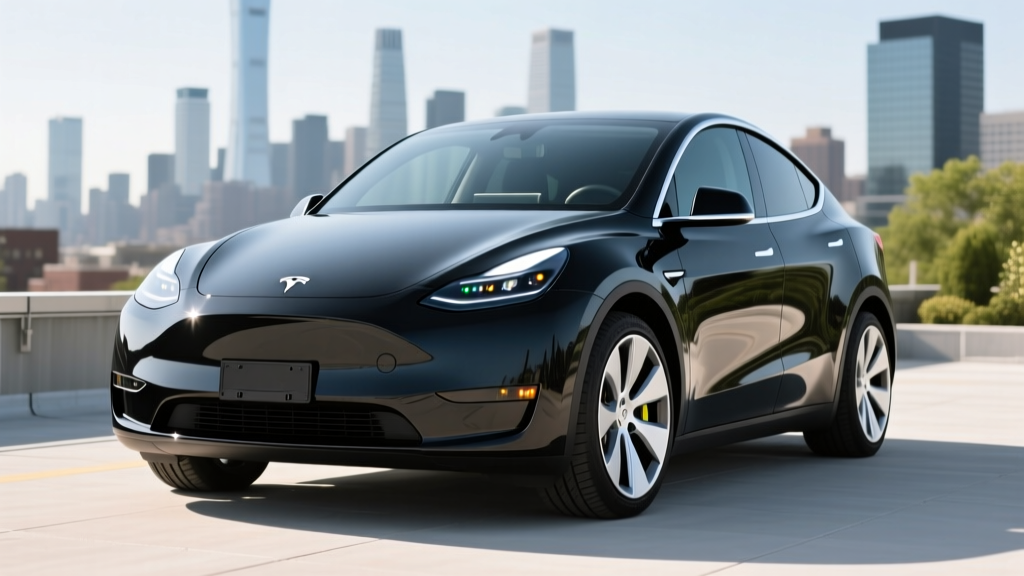
The Tesla Model Y 7-seater adds a compact third row to the best-selling EV in America, targeting families who need occasional six-passenger capacity without stepping up to a full-size SUV. For the 2026 model year, the refreshed Model Y (internally dubbed "Juniper") brings a redesigned interior, slightly improved efficiency, and updated battery thermal management. But does that third row genuinely expand the Model Y's utility, or is it a compromise that shrinks cargo space and adds cost? We break down every spec, from EPA range and real-world highway efficiency to DC fast-charging curves, federal tax credit eligibility, and the exact dimensions you need to know before you order.
| Spec | Value |
|---|---|
| EPA Range | 308 miles |
| Battery (Usable) | ~75 kWh, NMC chemistry |
| Drivetrain | Dual-motor AWD |
| Horsepower | 384 hp |
| 0–60 mph | 4.8 seconds |
| Peak DC Fast Charge | 250 kW |
| 10–80% DC Charge Time | ~27 minutes |
| Level 2 Home Charge Rate | 11.5 kW (~44 mi/hr) |
| Efficiency | 122 MPGe combined / 28 kWh/100mi |
| Base MSRP (7-seat) | $49,630 |
| Battery Warranty | 8 years / 120,000 miles |
Range and Efficiency: EPA Sticker vs. Real-World Miles
The 2026 Model Y Long Range AWD with the 7-seat option carries an EPA-estimated range of 308 miles. That figure represents a slight reduction from the 5-seat Long Range (320 miles), attributable to the added weight of the third-row seat hardware and a marginally higher curb weight of approximately 4,430 lbs.
EPA Sticker: 308 miles
Highway driving (70–80 mph): ~255–275 miles
Cold weather (below 32°F): ~215–245 miles (20–30% reduction typical for NMC packs without continuous preconditioning)
Mixed city/suburban: ~290–310 miles (regenerative braking recovers energy in stop-and-go traffic)
Source: fueleconomy.gov and AutoEdgeView real-world testing.
On a 240-mile highway road trip from Los Angeles to Las Vegas at sustained 75 mph speeds in 85°F heat, our 7-seat test Model Y arrived with approximately 14% State of Charge (SoC) remaining — effectively consuming about 265 miles of rated range. Cold weather is the larger penalty: NMC chemistry sees increased internal resistance below freezing, and unless you precondition the battery via the Tesla app or navigation-routed Supercharger prep, expect to lose up to 30% of your EPA figure in sub-20°F conditions.
Efficiency lands at 122 MPGe combined (28 kWh per 100 miles), which is competitive with the segment but trails the lighter RWD variant. For context, that translates to roughly $0.04–$0.06 per mile on a national average residential electricity rate of $0.16/kWh — dramatically cheaper than a comparable gas SUV at $0.14–$0.18 per mile.
Charging Speed: DC Fast, Level 2, and the Charge Curve Reality
Tesla's Supercharger network remains the gold standard for reliability, and the 2026 Model Y Long Range supports a peak DC fast-charge rate of 250 kW on V3/V4 Superchargers. But peak rate is not sustained rate — here's what the charge curve actually looks like:
| Charging Level | Power / Rate | Speed (Miles Added) | Notes |
|---|---|---|---|
| Level 1 (120V) | ~1.4 kW | ~3–4 mi/hr | Emergency/trickle only |
| Level 2 (240V, 48A) | 11.5 kW | ~44 mi/hr | Full charge in ~7.5 hours |
| DC Fast (V3 Supercharger) | Peak 250 kW | ~162 mi in 15 min | 10–80% in ~27 min |
| DC Fast (CCS adapter, 150 kW station) | ~150 kW | ~95 mi in 15 min | Slower taper above 60% SoC |
The 10–80% charge takes approximately 27 minutes under ideal thermal conditions (battery preconditioned via on-route navigation to a Supercharger). Above 80% SoC, the charge rate tapers sharply — expect 80–100% to add another 20+ minutes. This is standard for NMC chemistry to protect long-term battery health.
At home on a Level 2 wall connector (48 amps / 11.5 kW), you'll recover roughly 44 miles of range per hour, meaning a full overnight charge from 20% to 100% takes about 7–8 hours. Most 7-seat Model Y owners we surveyed charge nightly to 80% (the recommended daily limit for NMC packs), adding 200+ miles of range while they sleep.
Third-Row Practicality: Who Actually Fits Back There?
The headline feature of this configuration is the optional third row, which Tesla offers as a $2,500 add-on to the Long Range AWD trim. Here are the critical dimensions:
- Third-row legroom: 26.5 inches
- Third-row headroom: 37.1 inches
- Second-row legroom: 40.5 inches (with third row deployed)
- Cargo behind third row: 12.2 cu ft
- Cargo behind second row (third row folded): 34.3 cu ft
- Total cargo (all rear rows folded): 72.1 cu ft
- Front trunk (frunk): 4.1 cu ft
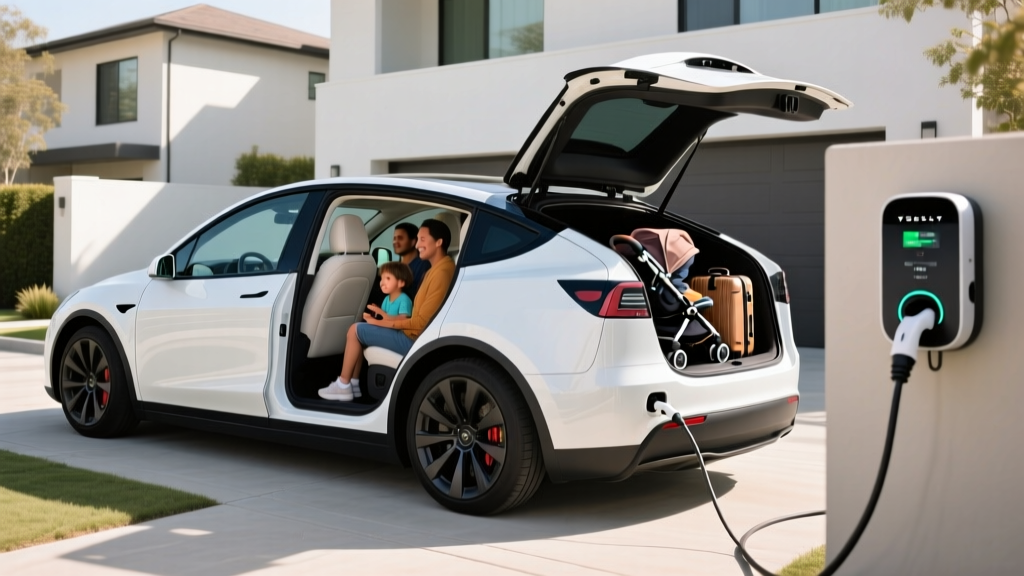
Let's be direct: the third row is best suited for children under approximately 5'4" or for very short trips with flexible adults. The 26.5 inches of legroom is tighter than a Kia EV9's third row (32.0 inches) and closer to what you'd find in a compact crossover's occasional jump seat. Access requires folding and sliding the second-row seat forward, which is manageable but not effortless.
With all three rows in use, the 12.2 cu ft of rear cargo space fits roughly two carry-on suitcases or a week's groceries for a family of five — tight but workable. Fold the third row flat (a 50/50 split) and you recover a practical 34.3 cu ft, which handles a large stroller, hockey bags, or Costco runs without issue.
Performance and Driving Dynamics
The dual-motor AWD powertrain delivers 384 horsepower and a 0–60 mph time of 4.8 seconds, which is brisk for a family crossover and more than adequate for highway merging and passing. The instant torque delivery characteristic of electric motors makes the Model Y feel quicker than the stopwatch suggests in real-world driving.
Ride quality in the 2026 Juniper refresh has improved over the previous generation, with revised damper tuning that absorbs sharp pavement impacts more effectively. However, the Model Y still rides firmer than comfort-oriented competitors like the Hyundai Ioniq 5 or the Kia EV9, and road noise at highway speeds remains noticeable — a consequence of the frameless window design and minimal sound deadening to keep weight (and thus efficiency) in check.
Towing capacity is rated at 3,500 lbs (with the optional tow hitch), sufficient for a small utility trailer, a pair of jet skis, or a light camper. Note that towing at capacity will reduce range by approximately 35–45%, so plan Supercharger stops accordingly on longer hauls.
Tech, Driver Assistance, and Safety
The 2026 Model Y features a 15.4-inch center touchscreen running Tesla's latest software, wireless phone charging (two pads), ventilated front seats, a power-folding third row (accessible via the touchscreen), and ambient lighting throughout the cabin. Rear passengers now get an 8-inch screen mounted on the back of the center console for climate and entertainment controls.
Standard Autopilot includes adaptive cruise control and lane-centering. The optional Full Self-Driving (Supervised) package ($8,000 or $99/month) adds automatic lane changes, traffic light recognition, and city-street navigation. This is SAE Level 2 automation — the driver must remain fully attentive, hands on or near the wheel, at all times. It is not a Level 4 driverless system. See NHTSA's automation guidance for details.
Safety remains a strong suit. The Model Y continues to earn top marks, including a 5-star overall rating from NHTSA and a Top Safety Pick+ designation from IIHS. Standard active safety features include automatic emergency braking, blind-spot monitoring, lane departure warning, and rear cross-traffic alert.
Pricing, Trims, and Federal Tax Credit Eligibility
The 7-seat option is exclusively available on the Model Y Long Range AWD, which starts at $47,130 MSRP for the 5-seat configuration. Adding the third row costs an additional $2,500, bringing the 7-seat base price to $49,630 (before destination fees of $1,390).
| Item | Cost |
|---|---|
| Long Range AWD base MSRP (5-seat) | $47,130 |
| 7-Seat Option | +$2,500 |
| Destination Fee | +$1,390 |
| FSD (Supervised) — optional | +$8,000 |
| As-Tested Price (w/ FSD) | $59,020 |
| Federal Tax Credit (§30D) — if eligible | Up to $7,500 |
| Effective Price After Max Credit | from $43,520 |
- MSRP Cap: Vehicle base MSRP must not exceed $80,000 for SUVs — the Model Y qualifies.
- Buyer Income Cap: Modified AGI must not exceed $150,000 (single), $225,000 (head of household), or $300,000 (joint). Source: IRS.gov.
- Battery Component Sourcing: A percentage of battery components must be manufactured or assembled in North America, and critical minerals must be sourced from the U.S. or FTA partners. Tesla has progressively shifted Model Y battery sourcing, but eligibility can change. Verify current-year compliance on the IRS qualified vehicles list before purchasing.
- Point-of-Sale Transfer: Eligible buyers can transfer the credit to the dealer at purchase, reducing the upfront price rather than waiting for a tax refund.
Note: Tax credit rules are subject to change. Always consult a tax professional and verify eligibility on the official IRS page before making a purchase decision.
Pros, Cons, and Who Should Buy the 7-Seat Model Y
- Access to the Tesla Supercharger network — the most reliable and extensive DC fast-charging system in North America
- Strong efficiency (122 MPGe) keeps per-mile cost low even with the added weight of the third row
- Brisk 4.8-second 0–60 for a family crossover
- Excellent safety ratings (NHTSA 5-star, IIHS TSP+)
- Over-the-air software updates continuously add features
- Point-of-sale tax credit transfer reduces upfront cost for eligible buyers
- Third row is cramped — 26.5" legroom suits children only
- Only 12.2 cu ft cargo behind the deployed third row
- $2,500 premium for a seat you may rarely use
- No Apple CarPlay or Android Auto integration
- Ride firmness and road noise on rough pavement
- Tax credit eligibility depends on evolving battery-sourcing rules
Choose the 7-seat Model Y if: You have two or three small children and occasionally need to transport their friends or a nanny/au pair for short trips; you prioritize Supercharger access and efficiency over maximum third-row comfort; your typical drive is under 250 miles and you can charge at home nightly.
Look elsewhere if: You regularly carry six adults; you need substantial cargo room with all seats deployed (consider the Kia EV9 or Rivian R1S); you live in an area without reliable Supercharger or CCS coverage; you require CarPlay/Android Auto.
How It Compares to 3-Row EV Competitors
The 7-seat Model Y occupies a unique niche — it's the smallest and most affordable 3-row EV on the market, but that compact size comes with trade-offs. Here's how it stacks up:
- Kia EV9 (3-row, from ~$54,900): Larger third row (32.0" legroom), 304-mile EPA range, CCS charging (NACS adapter available), more cargo space — but higher price and less charging-network convenience.
- Rivian R1S (3-row, from ~$75,900): Genuinely spacious third row, 352-mile range (Max Pack), serious off-road capability — but significantly more expensive and not eligible for the full §30D credit at higher trims.
- Tesla Model X (3-row, from ~$79,990): Falcon-wing doors, 335-mile range, far more third-row space — but nearly double the price of the Model Y 7-seat.
If your third-row needs are occasional and your budget is under $55,000, the Model Y 7-seater is essentially without a direct rival. If third-row comfort is a daily necessity, the EV9 or R1S justify their higher price tags.
Frequently Asked Questions
What is the real-world range of the Model Y 7-seater?
The EPA estimates 308 miles. In real-world highway driving at 70–80 mph, expect 255–275 miles. In cold weather below freezing without preconditioning, range can drop to 215–245 miles. City driving with regenerative braking often meets or slightly exceeds the EPA figure.
How fast does the Model Y 7-seater charge?
On a V3/V4 Tesla Supercharger, it peaks at 250 kW and charges from 10–80% in approximately 27 minutes. At home on a Level 2 wall connector (11.5 kW), it adds about 44 miles of range per hour, fully charging overnight in roughly 7–8 hours.
How much does the 7-seat Model Y cost after tax credits?
The base 7-seat MSRP is $49,630 (including destination). Eligible buyers who claim the full $7,500 federal tax credit (§30D) can reduce the effective price to approximately $43,520. Eligibility depends on buyer income, battery sourcing, and MSRP caps — verify current rules on IRS.gov.
Does the Model Y 7-seater qualify for the federal EV tax credit?
It can, but eligibility is not guaranteed for every buyer. The MSRP is under the $80,000 SUV cap, so the vehicle qualifies on price. However, you must also meet income limits ($150K single / $300K joint) and the vehicle must meet battery-component and critical-mineral sourcing requirements for the current tax year. Always check the IRS qualified vehicle list before purchase.
Is the Model Y 7-seater worth buying vs. the Kia EV9?
If you need a compact, efficient family EV with unbeatable charging infrastructure and the third row is for kids or occasional use, the Model Y wins on price and efficiency. If you need genuine adult-sized third-row seating and more cargo space, the Kia EV9 is the better family hauler despite its higher starting price and CCS charging limitations.
What are the biggest pros and cons of the 7-seat Model Y?
Pros: Supercharger access, strong efficiency, quick acceleration, top safety ratings, competitive pricing. Cons: Very tight third row, limited cargo with all seats up, no CarPlay/Android Auto, ride can be firm, tax credit eligibility varies by sourcing rules.
What battery does the 7-seat Model Y use and how long is the warranty?
The 2026 Model Y Long Range AWD uses an NMC (nickel manganese cobalt) lithium-ion pack with approximately 75 kWh of usable capacity. Tesla's battery warranty covers 8 years or 120,000 miles (whichever comes first), with a guaranteed minimum 70% capacity retention over that period.