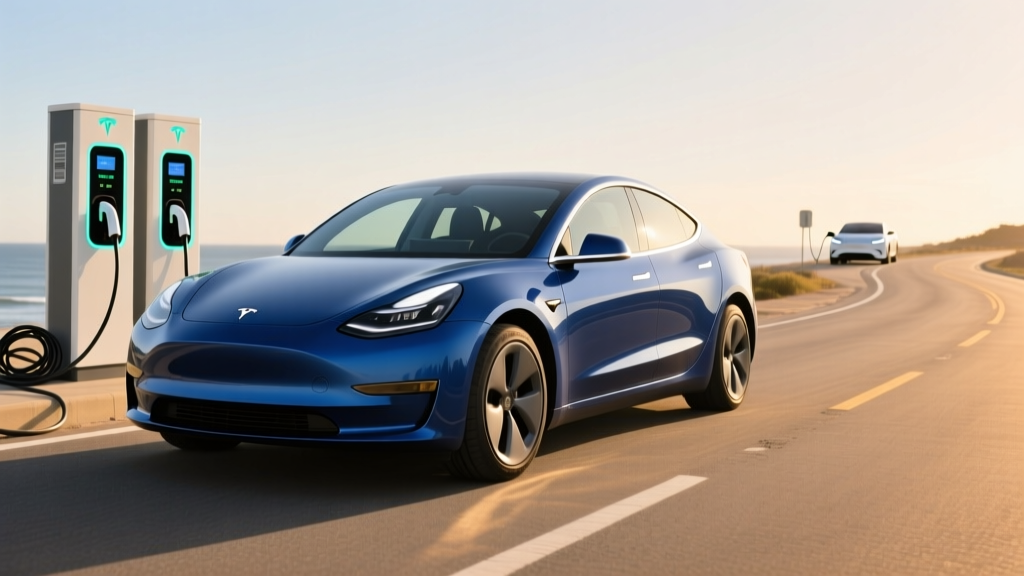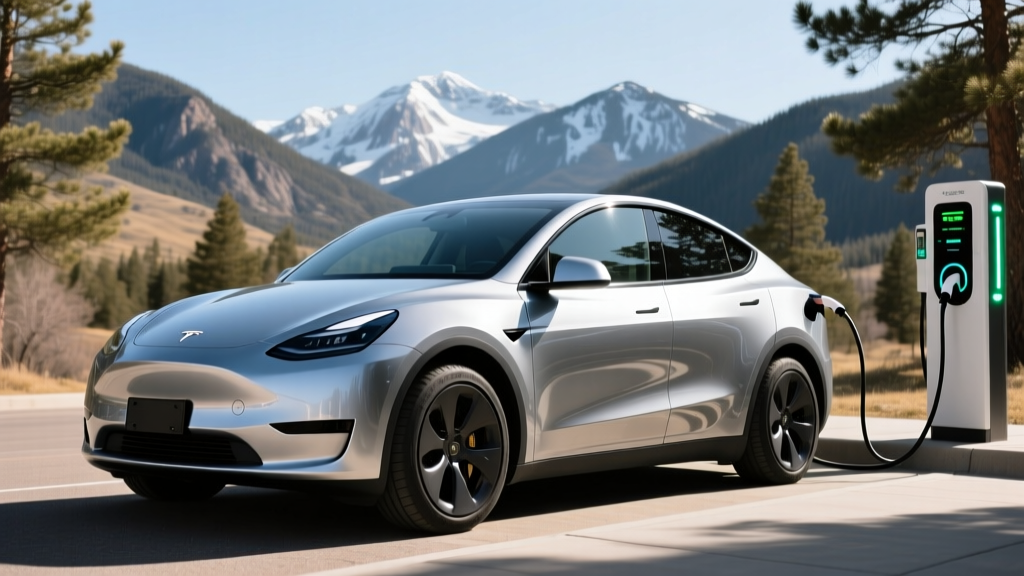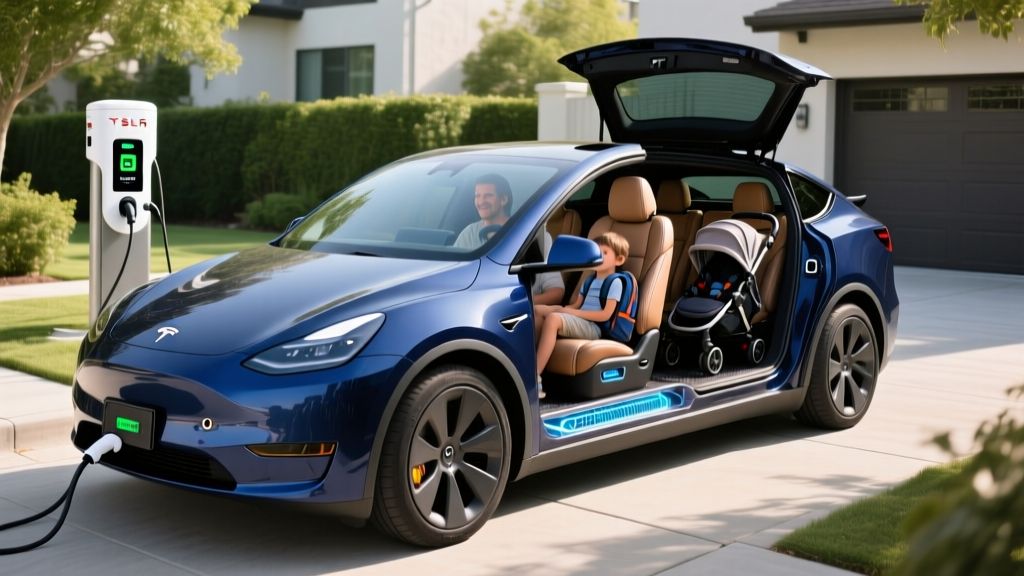
If you've been searching for what Tesla has 7 seats, the answer comes down to a single configuration: the Tesla Model Y Long Range AWD equipped with the optional third-row seat package. No other current Tesla — not the Model 3, Model S, Cybertruck, or the discontinued Model X (no longer in production as of late 2025) — offers seven-passenger seating in the 2026 model year. The Model Y's third row transforms this compact electric SUV from a five-seater into a family hauler, but it comes with meaningful trade-offs in cargo space, third-row comfort, and real-world range that every buyer needs to understand before checking that option box.
2026 Tesla Model Y 7-Seat: At-a-Glance Specs
| Specification | 2026 Model Y Long Range AWD (7-Seat) |
|---|---|
| EPA Estimated Range | 310 miles |
| Battery Capacity | ~75 kWh usable (NMC chemistry) |
| Drivetrain | Dual-Motor AWD |
| Horsepower | 384 hp combined |
| 0-60 mph | 4.8 seconds |
| Max DC Fast Charge | 250 kW peak |
| 10-80% DC Charge Time | ~27 minutes |
| Level 2 Home Charging | 11.5 kW (~44 mi/hr) |
| EPA Efficiency | 117 MPGe combined / 29 kWh/100mi |
| Seating Capacity | 7 (2+3+2 layout) |
| Cargo (behind 3rd row) | 12.0 cu ft |
| Cargo (3rd row folded) | 34.0 cu ft |
| Cargo (all rows folded) | 72.0 cu ft |
| 3rd Row Legroom | 26.5 inches |
| Base MSRP | $52,990 (incl. destination) |
| 7-Seat Option | +$3,000 |
| Battery Warranty | 8 years / 120,000 miles |
Real-World Range: What the EPA Sticker Doesn't Tell You
Real-World Highway (70-75 mph): ~255-275 miles
Real-World Cold Weather (below 32°F): ~220-250 miles
Combined Mixed Driving: ~275-295 miles
The 310-mile EPA figure is achievable in mild weather with a mix of city and suburban driving where regenerative braking recovers energy. However, highway speeds above 70 mph increase aerodynamic drag significantly — expect to lose roughly 12-18% of rated range on sustained interstate runs. Cold weather compounds this: battery heating demands and cabin climate use can reduce range by 20-30% in sub-freezing conditions, even with the Model Y's heat pump system.
The 7-seat option adds approximately 80-100 lbs of seat hardware and structural reinforcement, which Tesla accounts for in its EPA filing. In practice, a fully loaded Model Y with seven passengers and cargo will see range dip closer to 240-260 miles on a mixed trip. For most daily commutes under 60 miles round-trip, this is a non-issue with home charging. For road trips, plan charging stops every 200-220 miles to maintain a comfortable buffer.
Charging Speed: DC Fast, Level 2, and the Curve Reality
| Charging Method | Power (kW) | Speed (mi/hr added) | Notes |
|---|---|---|---|
| Level 1 (120V household) | ~1.4 kW | ~4-5 mi/hr | Emergency/trickle only |
| Level 2 (240V home, 48A) | 11.5 kW | ~44 mi/hr | Full charge in ~7 hours |
| DC Fast (Tesla Supercharger V3) | 250 kW peak | Up to 1,000 mi/hr (peak) | 10-80% in ~27 min |
| DC Fast (CCS adapter, 350 kW stations) | ~200 kW sustained | ~750 mi/hr (peak) | Adapter sold separately |
The Model Y Long Range AWD peaks at 250 kW on Tesla's V3 Superchargers, but that peak is sustained only between roughly 10-30% State of Charge (SoC). The charge curve tapers progressively: by 50% SoC you're seeing ~150 kW, and above 80% it drops below 50 kW. This is why Tesla and most EV analysts quote 10-80% times rather than 0-100% — the final 20% can take as long as the first 70%.
For home charging, a Tesla Wall Connector on a 60-amp circuit delivers the full 11.5 kW (48 amps continuous). This adds roughly 44 miles of range per hour, meaning an overnight session from 20% to 80% takes about 4 hours — more than sufficient for daily replenishment. Installation costs for a dedicated 240V/60A circuit typically run $800-$2,000 depending on panel proximity and local permit requirements, according to data from licensed electrician surveys.
Preconditioning matters: if you navigate to a Supercharger using the car's built-in navigation, the battery thermal management system warms the pack en route, enabling faster charge acceptance on arrival. Skipping preconditioning in cold weather can add 5-10 minutes to your 10-80% session.
Performance and Drivetrain: Dual-Motor Capability
The 7-seat Model Y uses Tesla's dual-motor all-wheel-drive powertrain: a permanent-magnet motor on the rear axle and an induction motor up front. Combined output is 384 horsepower and an estimated 376 lb-ft of torque, delivering a 4.8-second 0-60 mph time. That's genuinely quick for a 4,500-lb family SUV, and the instant torque delivery makes highway merging and passing effortless.
The AWD system provides confident traction in rain and light snow, with the front induction motor able to freewheel when not needed to reduce drag. Regenerative braking is strong enough for true one-pedal driving in most conditions — lift off the accelerator and the car decelerates briskly, feeding energy back into the battery. Tesla removed the user-adjustable regen setting in recent model years, so the car manages regen intensity automatically.
Interior Space: The Third-Row Compromise
This is where buyers searching for what Tesla has 7 seats need to manage expectations. The Model Y is a compact crossover — roughly the same exterior footprint as a Toyota RAV4 — and fitting a third row into that footprint means significant space compromises.
Third-row reality: With 26.5 inches of legroom, the third row is best suited for children under about 5'4" or very short trips for adults. The seat cushion sits low to the floor (to preserve headroom under the glass roof), creating a knees-up seating position that's uncomfortable for anyone with longer legs on drives over 20 minutes. Access requires folding and sliding the second-row bench, which is manageable but not as convenient as a minivan's walk-through.
Cargo with all seats in use: 12.0 cubic feet behind the third row — enough for a few grocery bags or two small backpacks, but not a full family's luggage. Fold the third row flat and you reclaim 34.0 cu ft, which handles a week's worth of gear for four people. Fold everything and the 72.0 cu ft maximum is competitive with midsize SUVs.
Second-row comfort: The 60/40-split bench slides fore/aft, offering 36-40 inches of legroom depending on position. The middle seat is narrow but usable for a child in a booster. Two USB-C ports and a small rear touchscreen (added in the 2025 refresh) give rear passengers climate and entertainment control.
Tech, Driver Assistance, and the Autopilot Clarification
The Model Y's 15.4-inch center touchscreen handles virtually every vehicle function — climate, navigation, media, vehicle settings, and even the glovebox release. The interface is responsive and logically organized, though the lack of physical buttons for wipers, turn signals (now on a steering-wheel stalk again after the 2025 refresh), and climate controls will frustrate some drivers.
Standard Autopilot includes Traffic-Aware Cruise Control and Autosteer (lane-centering). The optional Full Self-Driving (Supervised) package ($8,000 or $99/month) adds automated lane changes, traffic-light and stop-sign recognition, and city-street navigation. However, it is critical to understand what this system is and is not:
Both Autopilot and FSD (Supervised) are Level 2 driver-assistance systems per the SAE J3016 standard. The driver must remain fully engaged — eyes on the road, hands available to take over — at all times. Tesla's cabin camera monitors driver attention and will issue escalating warnings if you look away. This is not autonomous driving. Only Level 4 services like Waymo's robotaxi operate without a human driver, and those are geofenced to specific cities.
Standard safety features include automatic emergency braking, blind-spot monitoring, lane-departure warning, and 360-degree cameras. The Model Y earned a 5-star overall rating from NHTSA and a Top Safety Pick+ designation from IIHS in prior model years.
Pricing, Tax Credits, and Total Cost
| Configuration | MSRP | Est. Federal Credit | Effective Price |
|---|---|---|---|
| Model Y LR AWD (5-seat base) | $52,990 | Up to $7,500* | ~$45,490 |
| Model Y LR AWD + 7-Seat Option | $55,990 | Up to $7,500* | ~$48,490 |
| Model Y LR AWD 7-Seat + FSD | $63,990 | Up to $7,500* | ~$56,490 |
*Federal EV tax credit eligibility under IRS §30D is subject to multiple requirements:
- MSRP cap: SUVs must be priced at or below $80,000 — the 7-seat Model Y qualifies.
- Buyer income cap: Modified AGI must not exceed $150,000 (single), $225,000 (head of household), or $300,000 (joint).
- Battery sourcing: A percentage of critical minerals and battery components must be sourced from the US or free-trade-agreement countries. These thresholds increase annually; verify current-year compliance on the IRS clean vehicle credit page before purchasing.
- Point-of-sale transfer: As of 2024, eligible buyers can transfer the credit to the dealer at purchase, reducing the out-of-pocket price immediately rather than waiting for tax filing.
Always confirm eligibility with a tax professional and check the latest IRS guidance — battery sourcing rules tighten each year, and a vehicle that qualifies in January may not qualify in December if supply chains shift.
Model Y 7-Seat vs. Competitors: Is It Worth It?
The 7-seat Model Y occupies a narrow niche. Here's how it stacks up against the alternatives most cross-shoppers consider:
| Vehicle | Seats | EPA Range | Base MSRP | 3rd-Row Usability |
|---|---|---|---|---|
| Tesla Model Y LR AWD (7-seat) | 7 | 310 mi | $55,990 | Kids only, short trips |
| Kia EV9 GT-Line AWD | 6 or 7 | 270 mi | $60,900 | Adults feasible, 30" legroom |
| Hyundai Ioniq 9 (2026) | 6 or 7 | ~300 mi (est.) | ~$55,000 (est.) | Spacious, full-size 3rd row |
| Toyota Grand Highlander Hybrid | 7 or 8 | N/A (36 MPG combined) | $43,070 | Genuine adult 3rd row |
The Kia EV9 and Hyundai Ioniq 9 are purpose-built three-row EVs with meaningfully more usable third rows — if adult passengers will regularly ride in the back, either is a better choice. The Model Y's advantage is its Supercharger network access, software ecosystem, efficiency (117 MPGe vs. the EV9's ~89 MPGe), and lower starting price. If your 7-seat need is occasional — carpooling kids, hosting visiting nieces and nephews — the Model Y is a compelling package. If you need seven seats daily for teenagers or adults, look at the EV9 or a plug-in hybrid alternative.
- Access to Tesla Supercharger network (17,000+ US stalls)
- Class-leading efficiency at 117 MPGe
- Strong 250 kW DC fast charging
- Over-the-air updates continuously add features
- Quick 4.8-second 0-60 even with 7-seat weight
- Low center of gravity, confident handling
- Third row is children-only; 26.5" legroom
- Only 12 cu ft cargo with all seats up
- No physical buttons; steep learning curve
- FSD costs $8,000 extra and remains Level 2
- Insurance costs 15-25% above segment average
- Range drops noticeably with full passenger load
Who Should Buy the 7-Seat Model Y?
Choose the 7-seat Model Y if: You primarily need 5 seats with occasional 7-seat flexibility for children (school carpools, visiting family). You value Supercharger access for road trips, want best-in-class efficiency, and have home charging access for daily use. Your typical third-row passengers are under 5'4".
Look elsewhere if: You need seven seats daily for teenagers or adults, require substantial cargo space with all seats in use, or prioritize physical controls and traditional vehicle interfaces. Consider the Kia EV9, Hyundai Ioniq 9, or a PHEV like the Toyota Grand Highlander Hybrid instead.
Frequently Asked Questions
What Tesla models have 7 seats in 2026?
Only the Tesla Model Y Long Range AWD offers a 7-seat configuration via a $3,000 optional third-row package. The Model X (which previously offered 7 seats) was discontinued in late 2025. The Model 3 and Cybertruck seat five or fewer.
Is the Model Y third row safe for children?
Yes. The third row includes LATCH anchors on the outboard positions and is equipped with side-curtain airbags that extend to cover all three rows. However, rear-facing car seats will not fit in the third row due to limited space — reserve those for the second row.
Does the 7-seat Model Y qualify for the $7,500 federal tax credit?
It can, provided you meet IRS §30D requirements: the vehicle MSRP is under the $80,000 SUV cap, your modified adjusted gross income falls below the threshold ($150K single / $300K joint), and the battery's critical mineral and component sourcing meets current-year percentages. Verify on the IRS clean vehicle credit page and consult a tax professional.
How much does it cost to charge a Model Y at home per month?
At the US average residential electricity rate of ~$0.16/kWh (EIA, 2025), fully recharging the 75 kWh battery from empty costs about $12. Driving 1,000 miles per month at 29 kWh/100mi uses roughly 290 kWh, costing approximately $46/month — compared to ~$100-$120/month for a comparable gas SUV at 25 MPG and $3.20/gallon.
What is the real-world range with 7 passengers and cargo?
Expect approximately 240-260 miles in mild weather with a full passenger load and moderate cargo. Highway driving at 75 mph reduces this to roughly 220-240 miles. Cold weather (below freezing) with full load and cabin heating can drop range to 200-220 miles. Plan charging stops accordingly on road trips.
Can I tow with the 7-seat Model Y?
Yes. The Model Y Long Range AWD is rated to tow up to 3,500 pounds when equipped with the factory tow package ($1,000). However, towing significantly reduces range — expect a 40-50% reduction at highway speeds with a loaded trailer, bringing effective range to 150-180 miles.