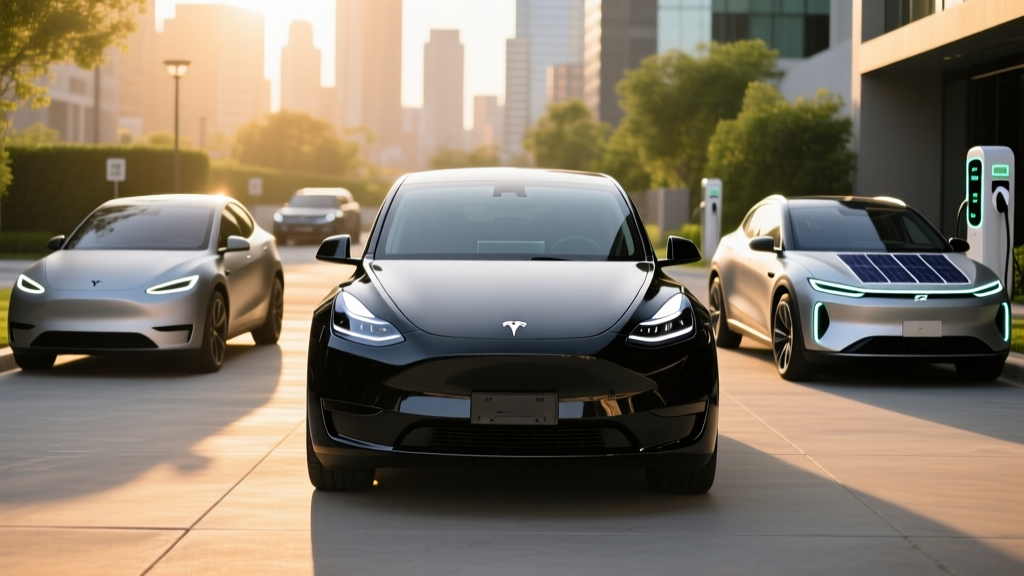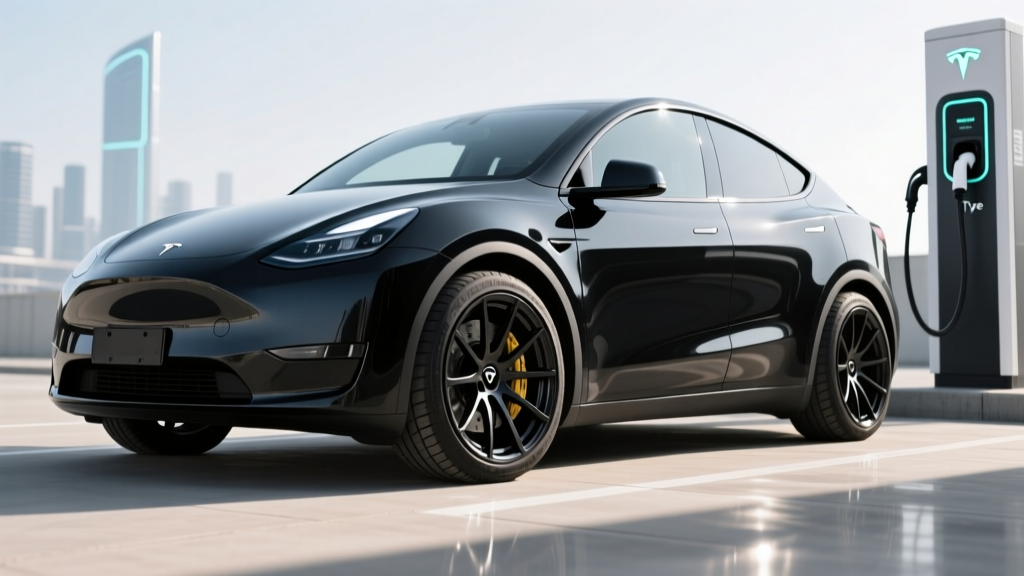
The Tesla Model Y remains one of the best-selling electric vehicles in the United States, and for 2026 it continues to dominate the compact electric crossover segment. But buyers eyeing the top-tier Performance trim face a recurring question: do the optional 22-inch Performance wheels justify their cost when range, ride comfort, and efficiency all take a measurable hit? This review breaks down the Tesla Model Y with the 22-inch Performance wheel package — covering real-world range, DC fast-charging behavior, ownership economics, and how it stacks up against the Hyundai Ioniq 5, Ford Mustang Mach-E, and BMW iX.
Quick Verdict: Who Should Buy the Model Y Performance with 22s?
If you prioritize acceleration, cornering grip, and visual presence over maximum range and ride compliance, the 22-inch Performance wheel option on the Model Y delivers. If your daily commute exceeds 60 miles round-trip, you frequently drive in sub-freezing climates, or you regularly take highway road trips, the standard 19- or 20-inch wheel configurations offer meaningfully better efficiency and comfort. The 22-inch Performance wheels are an aesthetic and handling upgrade — not a practical one.
Range, Efficiency, and the Real-World 22-Inch Penalty
The 2026 Tesla Model Y Performance with the optional 22-inch Überturbine wheels carries an EPA-estimated range of 277 miles, down from the 303-mile EPA rating on the same trim with standard 20-inch wheels. That 26-mile reduction comes from increased rotational mass, wider contact patches (255/35R22 front and rear), and higher aerodynamic drag from the larger wheel face.
| Condition | Estimated Range |
|---|---|
| EPA Combined | 277 miles |
| Highway (70 mph, 72°F) | ~240–250 miles |
| City / Suburban Mixed | ~265–275 miles |
| Cold Weather (20°F, highway) | ~195–215 miles |
| Cold Weather + Cabin Heat | ~180–200 miles |
The Model Y uses a heat pump for cabin and battery thermal management, which mitigates some cold-weather range loss compared to resistive-heater EVs. However, expect a 25–35% reduction in range during sustained sub-freezing highway driving. The 22-inch wheels compound this because wider tires increase rolling resistance on cold, stiff rubber compounds.
Efficiency on the EPA cycle rates at 111 MPGe combined (approximately 30 kWh/100 mi). On real-world highway segments at 75 mph, owners typically observe 33–36 kWh/100 mi, translating to roughly 2.7–3.0 miles per kWh. For comparison, the Model Y Long Range AWD with 19-inch wheels achieves closer to 28 kWh/100 mi on the same route.
Battery, Powertrain, and Performance Specs
The 2026 Model Y Performance is built on Tesla's refreshed Juniper platform with a dual-motor all-wheel-drive configuration. Here are the core specifications:
| Specification | Value |
|---|---|
| Battery Capacity (usable) | ~75 kWh (NMC chemistry) |
| Battery Chemistry | Nickel Manganese Cobalt (NMC) |
| Drivetrain | Dual-Motor AWD |
| Peak Horsepower | ~456 hp (combined) |
| Peak Torque | ~471 lb-ft |
| 0–60 mph | 3.5 seconds |
| Top Speed | 155 mph |
| EPA Range (22" wheels) | 277 miles |
| Efficiency | 111 MPGe / 30 kWh/100 mi |
| Cargo Volume (rear seats up) | 30.2 cu ft |
| Cargo Volume (rear seats folded) | 72.0 cu ft |
| Front Trunk (Frunk) | 4.1 cu ft |
| Rear Legroom | 38.2 inches |
| Curb Weight | ~4,400 lbs |
| Towing Capacity | 3,500 lbs (with tow package) |
Tesla uses NMC (nickel manganese cobalt) cells in the Performance trim, chosen for higher energy density compared to the LFP (lithium iron phosphate) chemistry used in the base RWD Model Y. NMC delivers better performance in cold conditions and supports higher charge/discharge C-rates, but it degrades slightly faster over thousands of cycles and should not be routinely charged to 100% for daily use — Tesla recommends 80% daily for NMC packs.
Charging Speed: DC Fast, Level 2, and the Charge Curve Reality
Charging is where many EV buyers get misled by peak-power marketing. The Model Y Performance supports a peak DC fast-charge rate of 250 kW on V3 Superchargers, but that peak is sustained for only a narrow window of the state-of-charge (SoC) curve.
| Charging Method | Power / Rate | Speed / Time |
|---|---|---|
| DC Fast Charge (V3 Supercharger) | Peak 250 kW | 10–80% in ~25 minutes |
| DC Fast Charge (V4 Supercharger) | Peak 250 kW | 10–80% in ~25 minutes |
| Level 2 (Tesla Wall Connector, 48A) | 11.5 kW | ~37 miles/hr added |
| Level 2 (Generic J1772/NACS, 32A) | 7.7 kW | ~25 miles/hr added |
| Level 1 (120V household outlet) | ~1.4 kW | ~4 miles/hr added |
Understanding the charge curve: The Model Y Performance will accept close to 250 kW between roughly 10% and 30% SoC. From 30–50%, the rate tapers to approximately 175 kW. Above 60%, it drops further to around 100 kW, and above 80% it slows dramatically to protect the NMC battery — often below 50 kW. This is why Tesla and the EPA quote 10–80% charge times rather than 0–100%. Charging from 80–100% on a DC fast charger can add another 20–25 minutes for just ~55 miles of range. For road trips, plan your stops around 10–80% windows.
At home, the Tesla Wall Connector at 48 amps on a 60-amp circuit delivers a full charge from 10% to 80% in approximately 6.5 hours — ideal for overnight replenishment. If your home electrical panel supports only a 40-amp circuit (32A charging), expect roughly 9 hours for the same 10–80% session. Home charging installation typically costs $500–$2,000 depending on panel proximity and local permitting; a 200-amp panel upgrade can add $1,500–$3,000.
Pricing, Trims, and Federal Tax Credit Eligibility
The 2026 Model Y lineup includes three primary configurations, with the Performance trim sitting at the top. The 22-inch Überturbine wheels are a $2,000 option on the Performance trim.
| Trim / Configuration | Base MSRP | Est. After §30D Credit* |
|---|---|---|
| Model Y Long Range AWD (19") | $44,990 | Varies — see eligibility below |
| Model Y Performance (20") | $48,990 | Varies — see eligibility below |
| Model Y Performance (22" option) | $50,990 | Varies — see eligibility below |
*Prices exclude destination fee (~$1,390) and do not reflect state/local incentives, which vary by jurisdiction.
Federal §30D tax credit eligibility for the Model Y depends on several requirements that change periodically. As of the current tax year, key rules include:
- MSRP Cap: SUVs/crossovers must have an MSRP at or below $80,000. The Model Y Performance with 22-inch wheels qualifies at ~$52,380 (including destination).
- Buyer Income Cap: Modified adjusted gross income must not exceed $150,000 (single), $225,000 (head of household), or $300,000 (joint filers).
- Battery Sourcing: A percentage of critical minerals and battery components must be sourced from the U.S. or free-trade-agreement countries. Tesla's supply chain has been shifting, and partial credit ($3,750) vs. full credit ($7,500) depends on the specific build month and sourcing compliance. Check IRS.gov §30D guidance for the latest VIN-specific eligibility.
- Point-of-Sale Transfer: Eligible buyers can transfer the credit to the dealer at purchase, reducing the upfront price rather than waiting for a tax refund.
- Assembly: The vehicle must undergo final assembly in North America. The Model Y is assembled at the Fremont, CA and Austin, TX factories — both qualifying.
Consult a tax professional before relying on credit eligibility. Battery-sourcing rules have tightened annually, and some Model Y build configurations may qualify for only $3,750 or none at all depending on the production batch.
Interior, Technology, and Driver Assistance
The refreshed Juniper-generation Model Y interior represents a significant step up from the pre-2025 models. The cabin features ventilated front seats, ambient lighting, a rear-seat touchscreen, improved sound deadening, and a power-folding second row. The 15.4-inch front touchscreen runs Tesla's proprietary infotainment system — no Apple CarPlay or Android Auto, though Bluetooth audio and phone integration work reliably.
Tech highlights:
- Over-the-air (OTA) software updates that regularly add features
- Sentry Mode dashcam recording with 360-degree cameras
- Tesla app with remote preconditioning, location tracking, and charging management
- Native navigation with real-time Supercharger routing and battery preconditioning
- Vehicle-to-load (V2L) not currently supported on Model Y (unlike Hyundai/Kia E-GMP vehicles)
Driver assistance — SAE Level 2, not self-driving: The Model Y comes standard with Autopilot (traffic-aware cruise control and lane-centering). The optional Full Self-Driving (Supervised) package ($8,000 or $99/month) adds automatic lane changes, intersection handling, and parking assist. Critically, FSD is an SAE Level 2 system — the driver must keep hands on the wheel and eyes on the road at all times. Tesla's cabin camera monitors engagement. This is not autonomous driving; Level 4 robotaxi services (Waymo, Zoox) operate without any driver supervision in geofenced areas. FSD (Supervised) performs well on highways but can behave unpredictably in construction zones, unmapped intersections, and adverse weather.
This is an SAE Level 2 driver-assist system. It does NOT make the vehicle self-driving. You are legally and physically responsible for all driving decisions. Expect disengagements in construction zones, heavy rain/snow, faded lane markings, and complex urban intersections. Review NHTSA guidance on automated driving systems for context.
How the Model Y 22" Performance Compares to Key Rivals
| Tesla Model Y Perf. (22") | Hyundai Ioniq 5 Limited AWD | Ford Mach-E GT | BMW iX xDrive50 | |
|---|---|---|---|---|
| EPA Range | 277 mi | 290 mi | 280 mi | 324 mi |
| Battery (usable) | ~75 kWh NMC | 77.4 kWh NMC | 91 kWh NMC | 105.2 kWh NMC |
| 0–60 mph | 3.5 sec | 4.5 sec | 3.5 sec | 4.4 sec |
| Peak DC Charge | 250 kW | 240 kW | 150 kW | 200 kW |
| 10–80% DCFC | ~25 min | ~18 min | ~38 min | ~31 min |
| Base MSRP | $50,990 | $56,250 | $59,995 | $87,250 |
| Charging Port | NACS (native) | NACS (2026) | NACS (adapter) | CCS (adapter) |
The Ioniq 5 charges faster from 10–80% thanks to its 800V architecture, despite a slightly lower peak kW rating — it sustains higher power across a wider SoC window. The Mach-E GT matches the Model Y's 0–60 but charges considerably slower. The BMW iX offers more range and luxury but at nearly double the price and well outside §30D eligibility.
Choose the Tesla Model Y Performance (22") if: You want the fastest-accelerating compact electric SUV under $55K, you value access to the Supercharger network (though competitors now have NACS access), and you accept the range and ride-quality trade-offs of large wheels.
Choose the Hyundai Ioniq 5 if: You prioritize charging speed over acceleration, you want V2L capability for camping or backup power, and you prefer a more conventional interior layout with physical climate controls.
Choose the Model Y Long Range (19") instead if: Maximum range matters more than 0–60 bragging rights. You gain ~26 miles of EPA range, a noticeably smoother ride, and save $2,000 on wheels alone.
Warranty, Ownership Costs, and Long-Term Considerations
Tesla provides the following warranty coverage for the 2026 Model Y:
- Basic Vehicle: 4 years / 50,000 miles
- Battery & Drive Unit: 8 years / 120,000 miles (whichever comes first), with a minimum 70% capacity retention guarantee
- Rust-Through: 12 years, unlimited miles
The 8-year/120,000-mile battery warranty on the Performance (AWD) trim is slightly more generous than the 100,000-mile threshold on the RWD variant. If the NMC battery degrades below 70% of original capacity within the warranty period, Tesla will repair or replace it. Real-world data from high-mileage Teslas suggests NMC packs typically retain 85–90% capacity after 100,000 miles when charged primarily to 80%.
Insurance: The Model Y Performance carries higher insurance premiums than the Long Range — typically 15–25% more due to higher repair costs and acceleration class. Expect annual premiums of $2,200–$3,400 depending on your state, driving record, and coverage level. Get a quote before purchasing; the difference over five years can exceed $4,000.
Tires: The 22-inch Performance tires (Pirelli P Zero or Michelin Pilot Sport) cost $300–$450 each and typically last 20,000–30,000 miles under normal driving. Budget $1,200–$1,800 for a full replacement set — roughly double the cost of the 19-inch all-season tires on the Long Range.
Pros and Cons at a Glance
- 3.5-second 0–60 mph in a practical family crossover
- Access to Tesla Supercharger network (most reliable DCFC in the U.S.)
- Strong OTA update cadence keeps software current
- Excellent cargo capacity (72 cu ft with seats folded)
- Heat pump standard — better cold-weather efficiency than resistive heating
- Qualifies for partial or full §30D credit (verify by VIN)
- 22-inch wheels reduce EPA range by 26 miles vs. 20-inch
- Firm ride quality on imperfect roads — potholes and expansion joints are noticeable
- Expensive tire replacement ($1,200–$1,800 per set)
- No Apple CarPlay or Android Auto
- FSD (Supervised) is Level 2, not autonomous — $8K option with real limitations
- No V2L capability for off-grid or backup power use
- Insurance premiums higher than Long Range and most competitors
Frequently Asked Questions
What is the real-world range of the Tesla Model Y Performance with 22-inch wheels?
The EPA rates it at 277 miles. In real-world highway driving at 70–75 mph in mild temperatures, expect 240–250 miles. In cold weather (below 32°F) with cabin heating, plan for 180–215 miles. Always keep a 10–15% buffer for unexpected detours or charger outages.
How fast does the Model Y Performance charge on DC fast chargers and at home?
On a V3 or V4 Tesla Supercharger, it peaks at 250 kW and charges from 10–80% in approximately 25 minutes. At home on a Level 2 Tesla Wall Connector (48A / 11.5 kW), a full overnight session adds roughly 37 miles of range per hour of charging. A standard 120V outlet adds only about 4 miles per hour — fine for topping off, not for daily replenishment from low SoC.
How much does the Model Y Performance with 22-inch wheels cost after the federal tax credit?
The MSRP is approximately $52,380 including destination. If you qualify for the full $7,500 §30D credit (income, sourcing, and assembly requirements all met), the effective price drops to ~$44,880. However, battery-sourcing rules have tightened, and some builds may only qualify for $3,750 or no credit. Always verify your specific VIN's eligibility on fueleconomy.gov before purchase.
Is the Model Y Performance worth buying over the Long Range or competitors?
If you value acceleration, handling, and the Supercharger ecosystem, yes — the Performance trim delivers sports-sedan thrust in a practical crossover. If range, ride comfort, and lower tire costs matter more, the Long Range AWD with 19-inch wheels is the smarter buy. For charging speed, the Ioniq 5's 18-minute 10–80% time is hard to beat.
Does the Tesla Model Y qualify for the $7,500 federal EV tax credit?
It can, but eligibility is not guaranteed for every buyer or every build. The MSRP is under the $80,000 SUV cap, and North American assembly qualifies. The limiting factors are buyer income caps ($150K single / $300K joint) and battery critical-mineral/component sourcing requirements that vary by production batch. The credit can be transferred at point-of-sale to reduce your upfront cost. Consult IRS.gov and a tax professional for your specific situation.
Are 22-inch wheels worth it on the Model Y?
For aesthetics and slightly sharper turn-in response, some buyers find them worthwhile. Objectively, they cost you 26 miles of EPA range, degrade ride quality on rough surfaces, and cost roughly twice as much to replace as 19-inch tires. For daily commuting and road trips, the 19- or 20-inch configurations are the more rational choice. Consider the 22s only if you understand and accept these trade-offs.
Sources: EPA range and efficiency data via fueleconomy.gov; Tesla official specifications via Tesla.com; federal tax credit rules via IRS.gov §30D; safety ratings via NHTSA and IIHS.