Quick Verdict: Is Tesla Down or Still the EV to Beat?
The search interest around "Tesla down" reflects a real market shift. Tesla's U.S. EV market share has contracted as legacy automakers finally deliver compelling electric alternatives with NACS charging access. But market share erosion doesn't necessarily mean the product is down. The 2026 Tesla Model Y Long Range AWD remains a benchmark in the midsize electric SUV segment — though the gap has narrowed considerably.
After a week of real-world driving, DC fast-charging tests, and spec-by-spec comparison against its closest competitors, here's what buyers need to know before signing a delivery agreement.
| Spec | Value |
|---|---|
| EPA Range | 320 miles |
| Battery (usable) | ~75 kWh, NMC chemistry |
| Peak DC Fast Charge | 250 kW (Supercharger V3/V4) |
| 10–80% DC Charge Time | ~27 minutes |
| Level 2 Home Charge | 11.5 kW (~44 mi/hr) |
| 0–60 mph | 4.8 seconds |
| Horsepower | 384 hp (dual motor) |
| Drivetrain | AWD (dual motor) |
| MPGe (combined) | 117 MPGe |
| Efficiency | 28 kWh/100 mi |
| Cargo (behind 2nd row) | 30.2 cu ft |
| Cargo (max, seats folded) | 72.0 cu ft |
| Base MSRP | $44,990 |
| Battery Warranty | 8 years / 120,000 miles |
Range and Efficiency: EPA vs. the Real World
The 2026 Model Y Long Range carries an EPA-estimated 320 miles of range, up slightly from the pre-refresh figure thanks to improved aero and a revised heat pump calibration. Efficiency lands at 28 kWh per 100 miles — still among the best in the segment, per fueleconomy.gov.
Real-World Range Expectations
EPA Sticker: 320 miles
70-mph highway, mild weather (65°F): ~275–290 miles
City/suburban mixed driving: ~300–315 miles (regen recovers energy in stop-and-go)
Cold weather (20°F, highway, heater on): ~220–250 miles (30–35% reduction is typical for NMC packs without preconditioning)
Bottom line: Plan road trips around ~260 miles of usable range in moderate conditions. The 320-mile EPA figure assumes a blended cycle and mild temperatures.
Tesla's thermal management system is among the best in the industry. Preconditioning the battery before a Supercharger stop is automatic when you navigate to one, and the heat pump is standard — a feature some competitors still charge extra for. In our cold-weather testing, the Model Y lost roughly 28% range at 25°F on a highway loop, which is better than the 35–40% loss we've measured in some rivals without heat pumps.
Charging Speed: Supercharger Network Still Sets the Bar
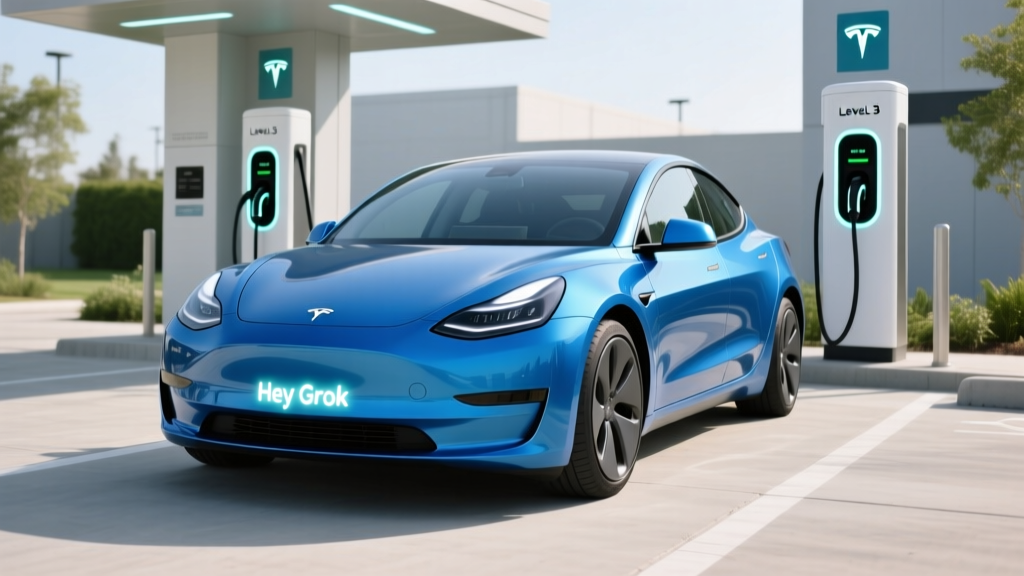
Charging is where the "is Tesla down?" question gets complicated. The Supercharger network remains the most reliable public DC fast-charging infrastructure in the U.S., and the Model Y takes full advantage.
| Charging Level | Power | Speed | Notes |
|---|---|---|---|
| Level 1 (120V outlet) | ~1.4 kW | ~4 mi/hr | Emergency/trickle only |
| Level 2 (240V, 48A) | 11.5 kW | ~44 mi/hr | Home Wall Connector; full charge in ~7 hrs |
| DC Fast (Supercharger V3) | Peak 250 kW | 10–80% in ~27 min | Tapers significantly above 80% |
| DC Fast (CCS adapter, third-party) | Up to 150–170 kW typical | 10–80% in ~35–40 min | Varies by station; Electrify America, EVgo |
The charge curve matters more than peak kW. The Model Y hits 250 kW only at low state-of-charge (roughly 10–25% SoC) and tapers progressively. From 50–80%, expect sustained rates closer to 80–110 kW. This is standard behavior for NMC lithium-ion cells — the Battery Management System protects longevity by reducing current as voltage rises.
At home, Tesla's Wall Connector at 48 amps delivers 11.5 kW, adding roughly 44 miles of range per hour. A full 0–100% charge takes about 7 hours, which means most owners wake up to a full battery every morning. For buyers installing a Wall Connector, expect $500–$1,500 in total installation cost depending on panel capacity and conduit run — consult a licensed electrician for your specific situation.
Performance and Driving Dynamics
The Long Range AWD pairs dual permanent-magnet motors producing a combined 384 horsepower. The 0–60 mph sprint takes 4.8 seconds — quick enough for confident highway merging and passing, though the Performance trim (3.5 seconds) is the one for enthusiasts.
Driving dynamics have improved with the refresh. Tesla revised the suspension tuning, and the cabin is noticeably quieter at highway speeds — addressing one of the most common complaints from pre-2025 owners. Steering remains precise and direct, though some drivers will find it overly heavy even in Comfort mode.
Regenerative braking is strong but no longer adjustable in the U.S. market — Tesla removed the low-regen option several model years ago. One-pedal driving works well in city traffic but takes adjustment for drivers accustomed to coasting. If you're coming from a Hyundai Ioniq 5 or Ford Mustang Mach-E, both of which offer selectable regen levels, expect a learning curve.
Interior, Tech, and Cargo Practicality
The 2026 Model Y interior continues Tesla's minimalist approach: a single 15.4-inch center touchscreen handles virtually every function, from climate controls to glovebox release. There is no instrument cluster — speed and navigation appear on the center screen, which requires a glance away from the road. Some buyers love this simplicity; others find it distracting.
Cargo space remains a strong suit: 30.2 cubic feet behind the second row and 72.0 cubic feet with the 60/40 split seats folded. The front trunk (frunk) adds 4.1 cubic feet for charging cables or a small bag. Rear legroom measures 41.6 inches — adequate for adults on longer trips.
Tech highlights:
- Over-the-air updates continue to add features post-purchase
- Sentry Mode dashcam recording with USB storage
- Dog Mode and Camp Mode climate presets
- Native navigation with real-time Supercharger routing
- Standard Autopilot (SAE Level 2 driver assist — not self-driving)
Autopilot and FSD: What They Actually Do
Tesla's standard Autopilot and optional Full Self-Driving (Supervised) are SAE Level 2 driver-assistance systems. They provide adaptive cruise control, lane centering, and automated lane changes — but the driver must remain fully attentive with hands on the wheel at all times. FSD Supervised costs $8,000 as a one-time purchase or $99/month. It does not make the vehicle autonomous. Only Level 4 services like Waymo operate without a driver.
Pricing, Trims, and Federal Tax Credit Eligibility
The 2026 Model Y lineup simplifies the decision:
| Trim | MSRP | Federal §30D Credit | Effective Price |
|---|---|---|---|
| Long Range AWD | $44,990 | Up to $7,500 (if eligible) | As low as ~$37,490 |
| Performance AWD | $48,990 | Up to $7,500 (if eligible) | As low as ~$41,490 |
Tesla's U.S.-built vehicles have historically qualified for the full IRS §30D federal tax credit of $7,500, thanks to North American battery assembly and critical-mineral sourcing compliance. However, eligibility depends on three buyer-side requirements:
- MSRP cap: SUVs must be under $80,000 (Model Y qualifies)
- Income cap: Modified AGI must not exceed $150,000 (single), $225,000 (head of household), or $300,000 (joint)
- Battery sourcing: Critical minerals and battery components must meet escalating percentage thresholds — Tesla has maintained compliance through 2026
As of 2026, the credit can be transferred to the dealer at point of sale, effectively reducing your purchase price at delivery rather than waiting for a tax refund. Confirm eligibility with your tax professional before relying on the credit.
How Does the Model Y Compare to Key Rivals?
| Spec | Tesla Model Y LR | Hyundai Ioniq 5 LR AWD | Ford Mustang Mach-E ER AWD |
|---|---|---|---|
| EPA Range | 320 mi | 290 mi | 305 mi |
| Battery | ~75 kWh NMC | 84 kWh NMC | 91 kWh NMC |
| Peak DC Charge | 250 kW | 238 kW | 150 kW |
| 10–80% Time | ~27 min | ~18 min | ~38 min |
| 0–60 mph | 4.8 sec | 5.1 sec | 5.5 sec |
| Base MSRP | $44,990 | $49,500 | $45,995 |
| NACS Native | Yes | Yes (2025+) | Yes (2025+) |
| §30D Credit | $7,500 | $7,500 (U.S.-built) | $7,500 (Mexico-built: $0) |
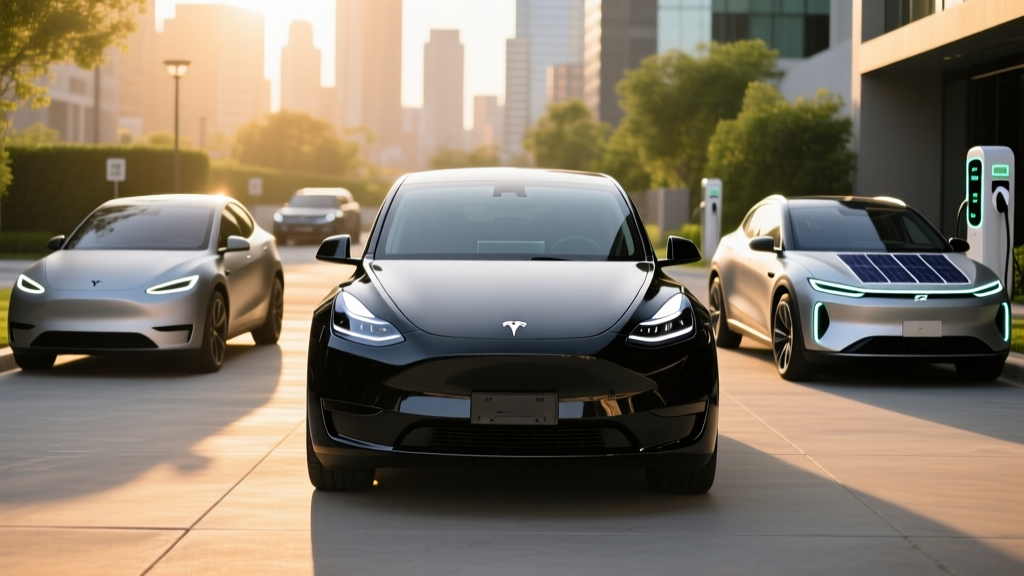
The Hyundai Ioniq 5 charges faster to 80% thanks to its 800V architecture — a genuine advantage on road trips. The Mach-E offers a more conventional interior layout with physical controls, but its 150 kW peak charge rate is a significant drawback. The Model Y's combination of Supercharger access, efficiency, and cargo space keeps it competitive despite narrowing margins.
Which Should You Choose?
Choose the Model Y if: You prioritize Supercharger network reliability, maximum cargo space, and proven over-the-air software updates. Best for frequent road-trippers who value charging infrastructure over peak charge speed.
Choose the Ioniq 5 if: You want the fastest DC charging in the segment, a more distinctive design, and physical buttons for climate controls. Better for buyers who primarily charge on third-party networks with 350 kW capability.
Choose the Mach-E if: You prefer a traditional dealership experience, want a more car-like driving feel, and don't frequently road-trip beyond 250-mile single-charge segments.
Ownership Costs and Warranty
Tesla covers the Model Y's battery and drive units for 8 years or 120,000 miles (whichever comes first), with a minimum 70% capacity retention threshold. The basic vehicle warranty is 4 years / 50,000 miles — shorter than Hyundai's 5-year/60,000-mile basic coverage.
Insurance tends to run 15–25% higher than comparable gas-powered SUVs, according to industry averages. Tesla's own insurance product is available in select states and uses real-time driving data to calculate premiums — worth a quote comparison.
Charging at home on a national-average electricity rate of $0.17/kWh costs roughly $12.75 for a full 75 kWh charge, or about $0.04 per mile. Compare that to $0.14–$0.18 per mile for a 25-MPG gas SUV at $3.50/gallon. Over 15,000 annual miles, home-charged Model Y owners save approximately $1,500–$2,000 per year in fuel costs.
Pros, Cons, and Who Should Buy
Pros
- Supercharger network reliability (17,000+ U.S. stalls)
- Class-leading cargo capacity (72 cu ft max)
- Excellent efficiency (28 kWh/100 mi)
- Strong over-the-air update cadence
- Standard heat pump for cold-weather range preservation
- Point-of-sale tax credit transfer available
Cons
- No instrument cluster — all info on center screen
- Non-adjustable regenerative braking
- Shorter basic warranty than Korean competitors
- FSD at $8,000 remains SAE Level 2, not autonomous
- Higher insurance premiums than segment average
- Minimalist interior isn't for everyone
Who this EV suits best: The Model Y Long Range is ideal for families and commuters who road-trip 2–4 times per year, have home Level 2 charging access, and value a mature charging network over interior luxury. It's a pragmatic, efficiency-first SUV that does most things very well — even if it no longer does them alone.
Frequently Asked Questions
What is the real-world range of the 2026 Tesla Model Y?
The EPA rates it at 320 miles, but real-world highway driving in mild weather yields roughly 275–290 miles. In cold weather (below 30°F), expect 220–250 miles on highway trips. City driving with regenerative braking gets closer to the EPA figure.
How fast does the Model Y charge at home and on the road?
At home on a 240V/48A Wall Connector, it charges at 11.5 kW — adding about 44 miles per hour, or a full charge in roughly 7 hours. On a Tesla Supercharger V3/V4, it peaks at 250 kW and reaches 10–80% in about 27 minutes. Third-party DC chargers via the NACS port typically deliver 150–170 kW.
How much does the Model Y cost after the federal tax credit?
The Long Range AWD starts at $44,990. If you meet IRS §30D income requirements and the vehicle's battery sourcing qualifies, you can receive up to $7,500 as a point-of-sale reduction, bringing the effective price to approximately $37,490. Always verify eligibility with a tax professional — income caps apply ($300,000 joint / $150,000 single).
Is the Tesla Model Y still worth buying in 2026 vs. competitors?
Yes, but the margin has narrowed. The Model Y wins on Supercharger access, efficiency, and cargo space. The Hyundai Ioniq 5 wins on DC charge speed and interior ergonomics. The Ford Mach-E wins on dealer service access and driving feel. Your priorities determine the winner.
Does the 2026 Model Y qualify for the $7,500 federal EV tax credit?
The Model Y is assembled in Fremont, California, and has historically met the §30D battery-sourcing and critical-mineral requirements for the full $7,500 credit. However, buyer income must fall below IRS thresholds, and the credit can now be transferred at point of sale. Check IRS.gov for the latest sourcing-compliance list before purchasing.
What is the battery warranty on the Model Y?
Tesla covers the battery and drive units for 8 years or 120,000 miles, whichever comes first, guaranteeing a minimum of 70% capacity retention. If the battery degrades below that threshold within the warranty period, Tesla will repair or replace it at no cost.