Why Tesla Stock Fell After a Blowout Quarter — And What It Means for Model Y Buyers
Wall Street's reaction to Tesla's latest earnings was predictably counterintuitive: Tesla stock fell after a blowout quarter driven largely by Model Y refresh deliveries and energy storage revenue. Investors took profits, questioned margin sustainability amid price cuts, and debated whether autonomous-driving timelines would materialize. But for buyers, a stock pullback often coincides with aggressive pricing, promotional financing, and strong inventory availability — making it one of the best windows to evaluate the vehicle on its merits, not its hype cycle.
This review covers the 2026 Tesla Model Y Long Range AWD, the volume seller in Tesla's lineup and the best-selling EV globally. We'll break down the exact EPA range, real-world efficiency, DC fast-charging curve, tax-credit eligibility under current IRS §30D rules, and how it stacks up against the Hyundai Ioniq 5, Ford Mustang Mach-E, and Chevrolet Equinox EV.
2026 Tesla Model Y Long Range AWD — Core Specifications
| Spec | Value |
|---|---|
| EPA Range | 320 miles |
| Battery (usable) | ~75 kWh, NMC (2170 cells) |
| Drivetrain | Dual-motor AWD |
| Horsepower | 384 hp (combined) |
| 0–60 mph | 4.8 seconds |
| Peak DC Fast Charge | 250 kW (Supercharger V3/V4) |
| 10–80% DC Time | ~25 minutes |
| Level 2 Home Charging | 11.5 kW (~44 mi/hr) |
| Efficiency | 122 MPGe / 28 kWh/100 mi |
| Cargo (rear seats up / folded) | 30.2 / 72.1 cu ft |
| Base MSRP | $44,990 |
| Battery Warranty | 8 years / 120,000 miles |
Real-World Range: What 320 EPA Miles Actually Looks Like
The EPA rates the 2026 Model Y Long Range AWD at 320 miles. That figure assumes a mixed city/highway cycle at moderate temperatures. In practice, your mileage depends heavily on speed, climate, and terrain.
Real-World Range Expectations
EPA Sticker: 320 miles
Highway (70 mph, 75°F): ~275–290 miles
City / Suburban (stop-and-go with regen): ~310–330 miles
Cold Weather (25°F, highway, heater on): ~225–250 miles
Towing (light trailer, ~2,000 lbs): ~180–200 miles
The Model Y's heat pump is standard and significantly reduces cold-weather cabin-heating draw compared to resistive heaters. Even so, expect a 20–30% range reduction in sustained sub-freezing highway driving. LFP chemistry isn't used on the Long Range — Tesla reserves LFP for the Standard Range RWD trim, which trades range for lower cost and longer cycle life. The Long Range uses NMC (nickel manganese cobalt) 2170 cells, offering higher energy density but slightly faster long-term degradation than LFP.
According to fueleconomy.gov, the Model Y Long Range AWD achieves 122 MPGe combined. In our experience, sustained highway driving at 75+ mph drops efficiency to roughly 30–32 kWh/100 mi, which translates to the 275-mile real-world highway figure above.
Charging Speed: Supercharger Network Advantage
Charging speed is where Tesla still holds a tangible edge over most competitors — not just in peak kW, but in network reliability and plug-and-charge simplicity.
2026 Model Y Charging Rates by Level
| Level | Power | Speed | Notes |
|---|---|---|---|
| Level 1 (120V) | ~1.4 kW | ~5 mi/hr | Emergency/top-off only |
| Level 2 (240V, 48A) | 11.5 kW | ~44 mi/hr | Full charge in ~7 hours |
| DC Fast (Supercharger V3) | 250 kW peak | 10–80% in ~25 min | Sustained ~150 kW avg to 80% |
| DC Fast (CCS adapter, EA/others) | ~150–175 kW typical | 10–80% in ~32 min | Varies by station; may need adapter |
Charge curve reality: The Model Y peaks at 250 kW only below ~30% state of charge. From 30–60%, it sustains roughly 170–200 kW. Above 60%, it tapers to ~100 kW, and above 80% it drops below 50 kW. This means the advertised "250 kW" is a peak, not a sustained rate. A 10–80% session averages closer to 150–170 kW, which is still among the fastest in the segment.
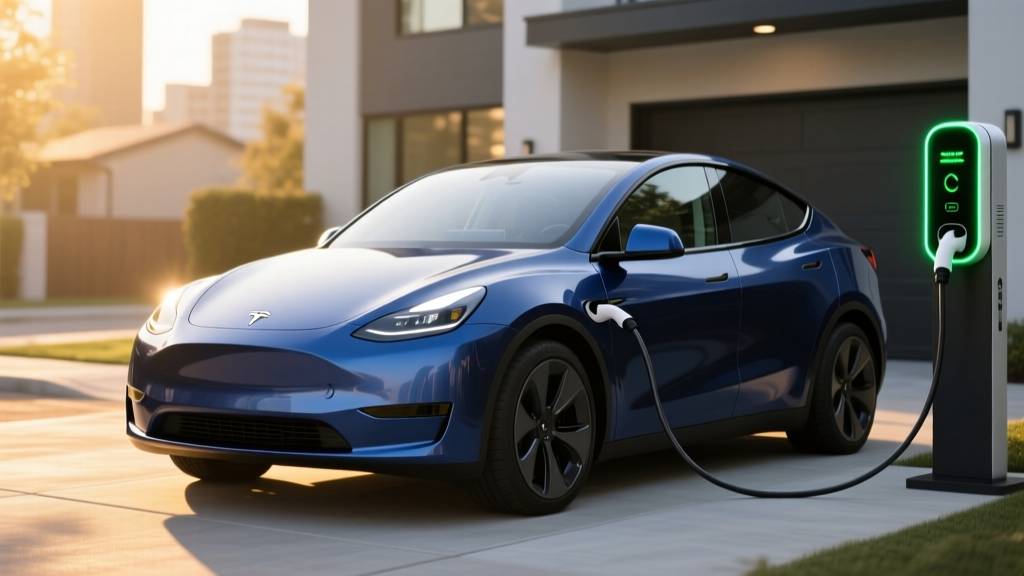
Home charging on a Wall Connector at 48 amps delivers 11.5 kW, adding roughly 44 miles of range per hour. An overnight charge (8 hours) replenishes about 350 miles — more than a full battery. Most owners installing a Tesla Wall Connector will need a NEMA 14-60 outlet or hardwired connection on a 60A circuit. Expect $800–$2,000 for professional installation depending on panel proximity and local permitting.
Performance, Efficiency, and Daily Drivability
The dual-motor AWD Long Range produces 384 horsepower and hits 0–60 mph in 4.8 seconds. That's quick enough for confident highway merging and passing, though the Performance trim (3.5 seconds) exists for those who want sports-sedan acceleration in a crossover.
Regenerative braking is aggressive and enables true one-pedal driving in most conditions. The steering is precise but light, and the suspension tuning favors firmness over plushness — you'll feel expansion joints and potholes more than in an Ioniq 5 or Mach-E. Road noise at highway speeds is noticeable, a common complaint in owner forums.
Efficiency is a Tesla strong point. At 28 kWh/100 miles combined, the Model Y is one of the most efficient electric crossovers sold. For comparison, the Ford Mustang Mach-E Extended Range AWD uses roughly 31 kWh/100 mi, and the Hyundai Ioniq 5 AWD sits at about 30 kWh/100 mi. Over 15,000 annual miles and a national average electricity rate of $0.16/kWh, the Model Y costs roughly $672/year to fuel — versus $1,800+ for a comparable gas crossover at 25 MPG and $3.50/gallon.
Pricing, Trims, and Federal Tax Credit Eligibility
The 2026 Model Y lineup has been streamlined compared to prior years:
2026 Tesla Model Y Pricing & Tax Credit Impact
| Trim | MSRP | Est. After §30D Credit | Credit Eligible? |
|---|---|---|---|
| Standard Range RWD (LFP) | $39,990 | ~$32,490 | Yes, if sourcing rules met |
| Long Range AWD (NMC) | $44,990 | ~$37,490 | Yes, if sourcing rules met |
| Performance AWD | $49,990 | ~$42,490 | Yes, if sourcing rules met |
Federal tax credit (§30D) caveats: The up-to-$7,500 credit is available as a point-of-sale transfer at the dealer (or directly from Tesla), reducing your purchase price upfront. However, eligibility depends on three IRS requirements that change periodically:
- MSRP cap: SUVs/crossovers must be under $80,000 — all Model Y trims qualify.
- Buyer income cap: AGI must not exceed $150,000 (single), $225,000 (head of household), or $300,000 (joint). Check IRS §30D guidelines for current-year thresholds.
- Battery sourcing: A percentage of critical minerals and battery components must be sourced from the U.S. or FTA partners. Tesla has been progressively shifting supply chains, but the exact credit amount ($3,750 or $7,500) can vary by production batch and model year. Verify at the point of sale.
Tesla also periodically offers low-APR financing (as low as 0.99–2.99% on select inventory) which, combined with the credit, can make monthly payments competitive with gas crossovers. The stock dip following the blowout quarter may prompt additional incentives — check Tesla's website for current offers.
Interior, Tech, and Cargo Space
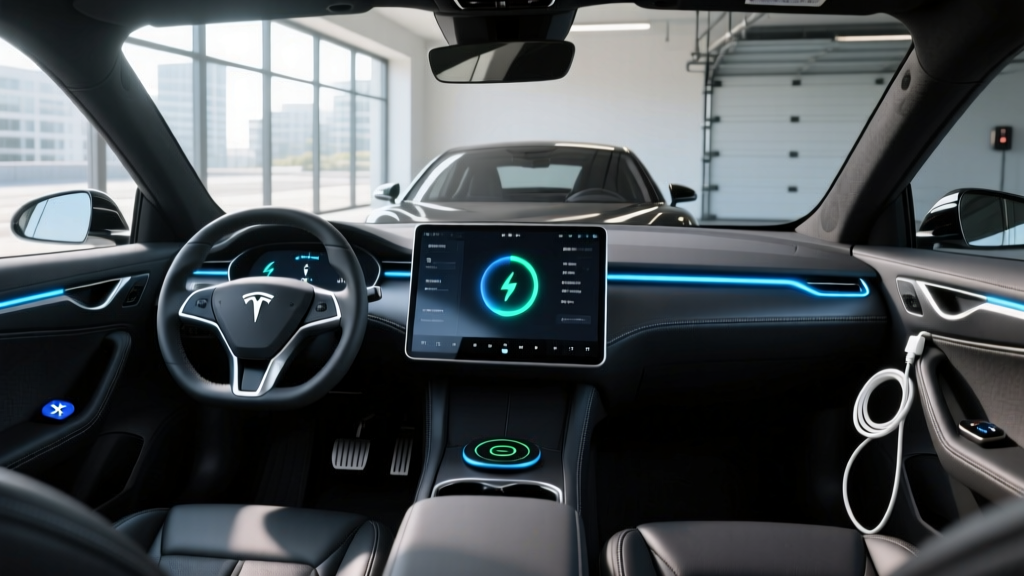
The 2026 Model Y "Juniper" refresh brought meaningful interior upgrades: ventilated front seats, ambient lighting, a rear-seat touchscreen, power-folding second row, and improved acoustic glass. The minimalist dashboard remains polarizing — no physical stalks (turn signals are on the steering wheel), no instrument cluster, and nearly all controls route through the 15.4-inch center touchscreen.
Cargo space: 30.2 cubic feet behind the second row, expanding to 72.1 cu ft with seats folded. The front trunk (frunk) adds 4.1 cu ft. Total usable volume is competitive with the Mach-E (29.7/59.7 cu ft) but slightly less than the Ioniq 5 (27.2/59.3 cu ft for cargo, though its hatchback shape is less practical for tall items).
Rear legroom: 41.6 inches — generous for adults on longer trips. Headroom is adequate for passengers under 6'2".
Tech highlights:
- Tesla's infotainment remains the benchmark for responsiveness, OTA updates, and integrated navigation with real-time Supercharger routing.
- Native streaming (Netflix, YouTube, Spotify) while parked.
- Sentry Mode dashcam recording and remote climate control via app.
- Dashcam and USB-C recording ports.
Notable drawbacks:
- No Apple CarPlay or Android Auto — a dealbreaker for some buyers.
- Turn-signal buttons on the steering wheel take weeks to build muscle memory.
- Visibility rearward is compromised by the sloping roofline; the camera-based mirror helps but isn't a full replacement.
- Panel gaps and paint quality, while improved, still lag behind Hyundai/Kia fit-and-finish.
Autopilot, FSD, and Driver Assistance
Every Model Y ships with Basic Autopilot (traffic-aware cruise control and lane centering). Enhanced Autopilot ($6,000) adds auto lane change, autosteer on navigation, and Smart Summon. Full Self-Driving (Supervised) ($8,000 or $99/month) adds traffic-light/stop-sign recognition and city-street autosteer.
SAE Automation Level: Level 2
Despite the "Full Self-Driving" name, Tesla's FSD (Supervised) is an SAE Level 2 driver-assistance system. The driver must remain fully engaged, hands on or near the wheel, and eyes on the road at all times. It is not autonomous driving. Level 4 robotaxis (Waymo, Zoox) operate without a driver in geofenced areas — Tesla does not currently offer this.
In practice, FSD (Supervised) handles most highway and suburban scenarios competently but still requires intervention for construction zones, unusual lane markings, and complex unprotected left turns. NHTSA continues to monitor Tesla's Autopilot/FSD safety record through its Standing General Order for crash reporting. Buyers should view FSD as a premium convenience feature, not a replacement for attentive driving.
Warranty and Long-Term Ownership Costs
Tesla's warranty coverage:
- Basic vehicle: 4 years / 50,000 miles
- Battery & drive unit: 8 years / 120,000 miles (Long Range/Performance), with a minimum 70% capacity retention guarantee
- Rust-through: 12 years, unlimited miles
Battery degradation on NMC 2170 cells is well-documented: expect roughly 10–12% capacity loss over the first 100,000 miles, after which the curve flattens. Tesla's 70% retention threshold at 120,000 miles is conservative — most owners report 85–90% state of health at that mileage. A full battery replacement out of warranty costs approximately $12,000–$16,000 at a Tesla service center, though partial module replacements are less.
Insurance: Model Y insurance premiums run 15–30% higher than comparable gas crossovers, averaging $2,200–$2,800/year nationally. Tesla Insurance (available in select states) uses real-time driving data and can be competitive for clean-record drivers.
5-year total cost of ownership (purchase price after credit, electricity, insurance, maintenance, estimated depreciation) lands roughly $5,000–$8,000 below a comparably equipped BMW X3 or Audi Q5, primarily due to fuel and maintenance savings. Depreciation on Teslas has stabilized after the 2023–2024 price-cut volatility but remains higher than Toyota/Honda benchmarks.
Model Y vs. Key Competitors: Which Should You Buy?
✅ Pros
- Best-in-class Supercharger network (17,000+ stalls in North America)
- Class-leading efficiency (28 kWh/100 mi)
- Strong OTA updates add features post-purchase
- Competitive pricing after $7,500 credit
- Excellent cargo space + frunk utility
- Fast DC charging (250 kW peak)
❌ Cons
- No Apple CarPlay / Android Auto
- Steering-wheel turn signals require adaptation
- Firm ride quality; road noise at speed
- FSD costs extra and isn't truly autonomous
- Service center wait times can be long in some markets
- Panel gap consistency still trails Korean/Japanese OEMs
Choose the Model Y if: You prioritize charging infrastructure, efficiency, and software integration. You live in an area with reliable Supercharger access, want the lowest cost-per-mile in the segment, and are comfortable with a screen-centric interface.
Choose the Hyundai Ioniq 5 if: You want CarPlay/Android Auto, a more comfortable ride, 800V ultra-fast charging capability (up to 350 kW on compatible stations), and a more conventional interior layout.
Choose the Ford Mustang Mach-E if: You prefer a more engaging driving feel, traditional dealership service, and Ford's BlueCruise hands-free highway driving (also Level 2, but with eye-tracking validation).
Choose the Chevrolet Equinox EV if: Budget is paramount — starting around $33,000 before credits, it undercuts the Model Y by over $10,000, though with less range (319 mi EPA on 3LT) and slower DC charging (~150 kW peak).
Frequently Asked Questions
What is the real-world range of the 2026 Tesla Model Y?
The EPA rates it at 320 miles. In real-world highway driving at 70 mph, expect 275–290 miles. In cold weather (below 30°F) with cabin heating, that drops to 225–250 miles. City driving with regenerative braking can match or slightly exceed the EPA figure.
How fast does the Model Y charge at home and on DC fast chargers?
At home on a Level 2 Wall Connector (11.5 kW), it adds ~44 miles per hour, fully charging in about 7 hours. On a Tesla Supercharger V3/V4, it peaks at 250 kW and charges from 10–80% in approximately 25 minutes. On non-Tesla DC chargers via CCS adapter, expect 150–175 kW and a 10–80% time of roughly 32 minutes.
Does the 2026 Model Y qualify for the $7,500 federal EV tax credit?
It can, but eligibility depends on your income (AGI caps apply), the vehicle's MSRP (all trims fall under the $80,000 SUV cap), and battery-sourcing requirements that vary by production batch. The credit can be applied as a point-of-sale reduction. Always verify current eligibility on IRS.gov and at the time of purchase.
Is the Model Y worth buying over competitors in 2026?
For buyers who value charging-network access, over-the-air updates, and efficiency, yes — it remains the segment benchmark. If CarPlay support, ride comfort, or traditional dealership service are higher priorities, the Ioniq 5 or Mach-E are strong alternatives. Test-drive both before deciding.
What are the biggest ownership costs beyond the purchase price?
Insurance ($2,200–$2,800/year), home charger installation ($800–$2,000 one-time), and electricity ($600–$800/year for 15,000 miles). Maintenance is minimal — no oil changes, fewer brake replacements due to regen — budget $300–$500/year for cabin filters, wiper fluid, and tire rotation.
How long will the Model Y battery last?
Tesla warranties the battery for 8 years / 120,000 miles with a 70% minimum capacity retention. Real-world data from high-mileage owners shows most NMC packs retain 85–90% capacity at 100,000 miles. Full out-of-warranty replacement costs $12,000–$16,000 if needed, though most packs outlast the vehicle's useful life.
Sources: EPA fueleconomy.gov, Tesla.com official specifications, IRS.gov §30D clean vehicle credits, NHTSA automated driving systems reporting. Pricing and credit eligibility current as of 2026 model year; verify at time of purchase.