The Juniper Update: Tesla's Response to a Shifting Landscape
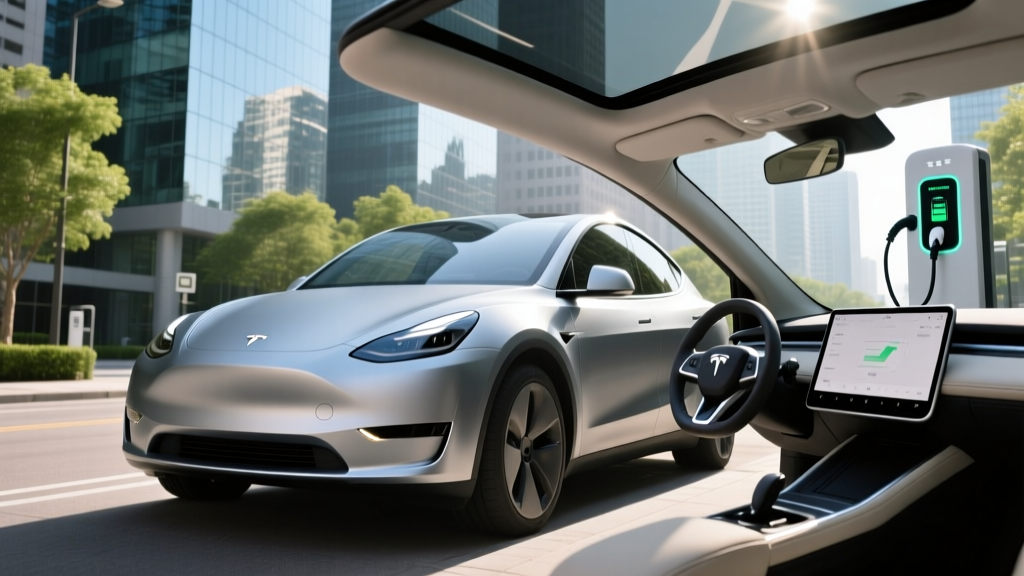
The 2026 Tesla Model Y arrives as more than a mid-cycle refresh. Following a highly publicized tesla leadership change that reshaped the company's executive priorities, the Juniper-generation Model Y reflects a pivot toward refinement, build quality, and competitive pricing over raw performance theater. With rivals like the Hyundai Ioniq 5, Ford Mustang Mach-E, and Chevrolet Equinox EV closing the gap on range and charging speed, Tesla's flagship crossover needed to evolve — and the 2026 model year delivers measurable improvements in efficiency, interior quality, and charging architecture.
This review covers the 2026 Tesla Model Y Long Range AWD and Performance trims with exact EPA data, real-world range observations, charging curves, pricing, and federal tax credit eligibility under current IRS §30D rules.
Range, Efficiency, and Battery: The Numbers That Matter
The 2026 Model Y Long Range AWD carries a 78.1 kWh usable battery pack (NMC chemistry) and achieves an EPA-estimated 320 miles of range. The Performance trim, with its stickier tires and more aggressive power delivery, drops to 298 miles EPA. Both trims now benefit from improved thermal management and a more efficient heat pump carried over from the Cybertruck engineering team.
| Spec | Long Range AWD | Performance |
|---|---|---|
| EPA Range | 320 mi | 298 mi |
| Battery (usable) | 78.1 kWh (NMC) | 78.1 kWh (NMC) |
| MPGe (combined) | 122 MPGe | 111 MPGe |
| Efficiency | 26 kWh/100 mi | 29 kWh/100 mi |
| 0-60 mph | 4.8 sec | 3.5 sec |
| Horsepower | 384 hp | 456 hp |
| Drivetrain | Dual-Motor AWD | Dual-Motor AWD |
| Max DC Charge Rate | 250 kW | 250 kW |
| 10-80% DC Time | ~25 min | ~25 min |
| Level 2 (11.5 kW) | ~44 mi/hr | ~44 mi/hr |
| Cargo (rear up/down) | 30.2 / 72.1 cu ft | 30.2 / 72.1 cu ft |
| Rear Legroom | 41.6 in | 41.6 in |
| Battery Warranty | 8 yr / 120,000 mi | 8 yr / 120,000 mi |
| Base MSRP | $44,990 | $51,490 |
Efficiency remains a Tesla strong suit. At 26 kWh per 100 miles (Long Range), the Model Y outperforms most rivals in its class, translating to lower per-mile electricity costs whether you're charging at home or on the road. The NMC (nickel-manganese-cobalt) chemistry prioritizes energy density — essential for fitting 78+ kWh into this platform — though it means Tesla recommends daily charging to 80% for longevity, unlike LFP-equipped models where 100% daily is encouraged.
Charging Speed: Supercharger Network and Home Setup
The 2026 Model Y retains a peak DC fast-charge rate of 250 kW on V3/V4 Superchargers. While competitors like the Hyundai Ioniq 5 (peak 350 kW on 800V architecture) post higher peak numbers, Tesla's charge curve is well-managed: the Model Y sustains strong charging rates through the 10-80% window in approximately 25 minutes, tapering meaningfully only above 85% State of Charge.
| Charging Level | Power | Miles Added per Hour | Notes |
|---|---|---|---|
| Level 1 (120V) | ~1.4 kW | ~4-5 mi/hr | Emergency/trickle only |
| Level 2 (240V, 48A) | 11.5 kW | ~44 mi/hr | Home Wall Connector; full charge in ~7 hr |
| DC Fast (Supercharger V3/V4) | 250 kW peak | ~1,000+ mi/hr (peak) | 10-80% in ~25 min; tapers above 85% |
At home, the Tesla Wall Connector delivers up to 11.5 kW (48 amps on a 60-amp circuit), adding roughly 44 miles of range per hour. A full charge from 10% takes about 7 hours — ideal for overnight replenishment. Installation costs for a home Level 2 setup typically run $500-$1,500 for the equipment and electrician labor if your panel is near the garage; a 200-amp panel upgrade (if needed) can add $1,500-$3,000. Always consult a licensed electrician for your specific situation.
The Supercharger network remains Tesla's strongest ownership advantage. With over 6,500 U.S. Supercharger stations and growing V4 deployments (which now support CCS vehicles as well), route planning via the in-car navigation is seamless. The car automatically preconditions the battery when you navigate to a Supercharger — warming it to optimal temperature for faster charging on arrival. This matters enormously in cold weather; without preconditioning, a cold-soaked battery can charge at half its peak rate.
Performance and Driving Dynamics
The Long Range AWD's dual-motor setup produces 384 horsepower and hits 0-60 mph in 4.8 seconds — brisk enough for any merge or passing situation. The Performance trim bumps output to 456 hp with a 3.5-second sprint. Both trims feature adaptive dampers (new for Juniper), which noticeably improve ride compliance over the pre-refresh Model Y's firm, sometimes crashy suspension.
Regenerative braking remains strong and predictable, enabling genuine one-pedal driving in most conditions. The steering, while quick, continues to feel artificially weighted — a common critique among reviewers and owners. Where the Juniper generation genuinely improves is NVH (noise, vibration, harshness): additional acoustic glass and improved door seals make the 2026 cabin noticeably quieter at highway speed than its predecessor.
Pricing, Tax Credit Eligibility, and Total Cost
The 2026 Model Y Long Range AWD starts at $44,990 (including destination). The Performance trim is $51,490. Both fall under the IRS §30D federal tax credit MSRP cap of $80,000 for SUVs, but eligibility is not automatic — it depends on your income, the vehicle's battery sourcing, and current-year critical mineral requirements.
| Trim | Base MSRP | As-Tested (typical) | Max §30D Credit | Effective Price (if eligible) |
|---|---|---|---|---|
| Long Range AWD | $44,990 | $46,490 (w/ FSD transfer) | Up to $7,500 | ~$37,490 - $38,990 |
| Performance | $51,490 | $53,990 (w/ red paint) | Up to $7,500 | ~$43,990 - $46,490 |
- Income caps: Modified AGI ≤ $150,000 (single), $225,000 (head of household), $300,000 (joint) — per IRS §30D guidelines
- MSRP cap: Vehicle must be ≤ $80,000 for SUVs (both Model Y trims qualify)
- Battery sourcing: Critical minerals and battery components must meet escalating annual thresholds; check Tesla's website and the IRS eligible-vehicle list at time of purchase
- Point-of-sale transfer: You can transfer the credit to the dealer at purchase for an immediate price reduction, or claim it on your tax return
The federal credit is subject to change based on legislative action and annual sourcing requirement escalations. Always verify current eligibility on irs.gov and consult a tax professional before relying on the credit in your purchase decision.
Interior, Tech, and Driver Assistance
The Juniper interior is a substantial step up in perceived quality: ventilated front seats, ambient lighting, a rear-seat touchscreen for climate and media, and improved materials throughout. The 15.4-inch center display handles all vehicle functions — there are still no physical buttons for climate or mirrors, which remains polarizing. Cargo space holds steady at 30.2 cubic feet behind the second row and 72.1 cubic feet with seats folded, plus a small front trunk (frunk) for charging cables or a bag.
Autopilot comes standard and includes adaptive cruise control, lane centering, and automatic emergency braking. Full Self-Driving (Supervised) remains a $8,000 add-on (or $99/month subscription) and is a SAE Level 2 driver-assist system — not autonomous driving. You must remain attentive, hands on or near the wheel, at all times. Tesla's camera-only vision approach (no LiDAR or radar) continues to draw scrutiny in low-visibility conditions.
How the Model Y Stacks Up Against Key Competitors
The tesla leadership change has pushed the company toward more competitive pricing and faster iteration. Here's how the 2026 Model Y Long Range AWD compares to its closest rivals:
| Spec | Tesla Model Y LR AWD | Hyundai Ioniq 5 Limited AWD | Ford Mustang Mach-E Ext. Range AWD |
|---|---|---|---|
| EPA Range | 320 mi | 290 mi | 312 mi |
| Battery | 78.1 kWh (NMC) | 84 kWh (NMC) | 91 kWh (NMC) |
| Max DC Charge | 250 kW | 350 kW (800V) | 150 kW |
| 10-80% Time | ~25 min | ~18 min | ~36 min |
| 0-60 mph | 4.8 sec | 5.1 sec | 5.0 sec |
| MPGe (combined) | 122 MPGe | 110 MPGe | 101 MPGe |
| Cargo (rear up) | 30.2 cu ft | 27.2 cu ft | 29.7 cu ft |
| Base MSRP (AWD) | $44,990 | $54,200 | $48,995 |
| Charging Network | Supercharger (native) | NACS adapter / Supercharger access | NACS adapter / Supercharger access |
The Model Y's efficiency advantage (122 MPGe combined) is clear — it goes further per kWh than either rival. The Ioniq 5 charges faster thanks to its 800V architecture, but the Mach-E lags significantly at 150 kW peak. Tesla's native Supercharger access remains the most seamless public charging experience in the U.S., though competitors now have NACS adapters granting Supercharger access (with some station and speed limitations).
Pros, Cons, and Who Should Buy
- Class-leading efficiency (122 MPGe, 26 kWh/100 mi)
- Native Supercharger network access — best public charging UX
- Strong cargo capacity (30.2 cu ft) with a frunk
- Improved ride quality and cabin quietness (Juniper generation)
- Competitive $44,990 starting price for Long Range AWD
- Over-the-air updates continue to add features post-purchase
- No physical buttons — all controls via touchscreen
- DC fast-charge rate (250 kW) trails Ioniq 5's 350 kW
- FSD (Supervised) is expensive and still Level 2 only
- NMC battery requires 80% daily charge limit for longevity
- Insurance premiums tend to run 15-25% above segment average
- Steering feel remains synthetic and disconnected
- Choose the Model Y if: You want the most efficient mid-size electric SUV, rely on frequent road trips (Supercharger network), value OTA updates, and prefer a minimalist interior.
- Look at the Ioniq 5 if: Fastest possible DC charging (18 min 10-80%) is your priority, or you prefer physical buttons and a more distinctive design.
- Look at the Mach-E if: You want a more traditional crossover feel with Ford dealer service access and don't mind slower DC charging.
Frequently Asked Questions
What is the real-world range of the 2026 Tesla Model Y?
The EPA rates the Long Range AWD at 320 miles. In real-world highway driving at 70-75 mph, expect 275-290 miles. Cold weather (below 30°F) can reduce range to 230-250 miles without battery preconditioning. City driving with regenerative braking can match or slightly exceed the EPA estimate.
How fast does the Model Y charge at home and on the road?
On a Tesla Supercharger (V3/V4), the Model Y peaks at 250 kW and charges from 10-80% in approximately 25 minutes. At home with a Level 2 Wall Connector (11.5 kW / 48A), it adds about 44 miles of range per hour, with a full charge taking roughly 7 hours.
How much does the 2026 Model Y cost after tax credits?
The Long Range AWD starts at $44,990. If you qualify for the full $7,500 federal tax credit under IRS §30D (income caps, battery sourcing, and MSRP requirements apply), the effective price drops to approximately $37,490. Eligibility is not guaranteed — verify current rules on irs.gov and with a tax professional.
Does the 2026 Model Y qualify for the federal EV tax credit?
The Model Y falls under the $80,000 MSRP cap for SUVs. However, eligibility depends on your modified adjusted gross income (≤ $150K single, $300K joint), the vehicle's battery component and critical mineral sourcing meeting current-year thresholds, and purchasing new from Tesla. Rules can change; always confirm at point of sale.
Is the Model Y worth buying vs. the Ioniq 5 or Mach-E?
The Model Y wins on efficiency (122 MPGe vs. 110 and 101 MPGe), native Supercharger access, and cargo space. The Ioniq 5 charges faster (350 kW peak, 18 min 10-80%). The Mach-E offers a more conventional crossover experience. If road-trip charging ease and per-mile efficiency are your top priorities, the Model Y remains the benchmark. Per fueleconomy.gov, the Model Y's combined efficiency rating leads the segment.
What is the battery warranty on the 2026 Model Y?
Tesla covers the battery and drive unit for 8 years or 120,000 miles (whichever comes first) with a minimum 70% capacity retention threshold. This is competitive with the industry standard, though some rivals like Hyundai offer 10-year/100,000-mile battery coverage.
How did the Tesla leadership change affect the 2026 Model Y?
The executive restructuring pushed Tesla toward faster iteration on build quality, NVH improvements, and competitive pricing rather than chasing headline-grabbing performance metrics. The Juniper refresh reflects this: better suspension tuning, quieter cabin, ventilated seats, and a rear entertainment screen — features buyers had been requesting for years. The leadership shift also accelerated the opening of the Supercharger network to non-Tesla EVs, which expands the network's revenue while maintaining Tesla's native charging advantage.