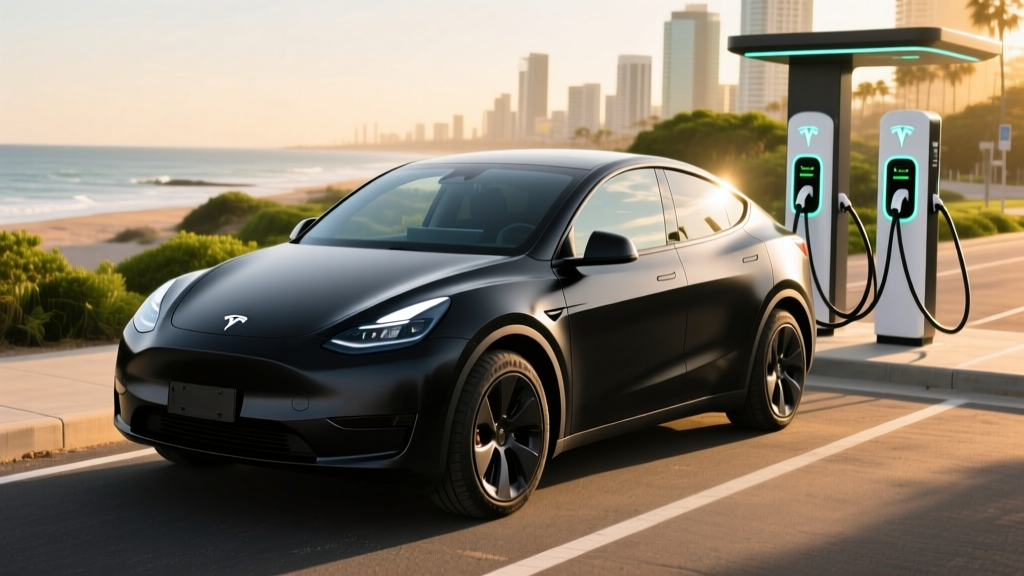
Quick Verdict: Does the 2026 Tesla Model Y Deliver a Real Return?
The phrase "Tesla return" gets thrown around in two ways: the financial return on investment owners expect from lower fueling and maintenance costs, and the driving return — the satisfaction of owning the best-selling electric vehicle in the world. The 2026 Model Y, now in its refreshed Juniper generation, makes a compelling case on both fronts, but the math is more nuanced than Tesla's marketing suggests.
With a starting MSRP around $44,990 for the Long Range AWD (the base RWD variant has been discontinued for 2026 in the U.S. market), the Model Y positions itself as a premium compact electric SUV. After factoring in the IRS §30D federal tax credit — up to $7,500 for eligible buyers — and real-world electricity costs, the five-year ownership picture is favorable for most commuters. But prospective buyers need to understand exactly what they're getting, what they're not, and where competitors close the gap.
Range and Efficiency: EPA Numbers vs. Reality
The 2026 Model Y Long Range AWD carries an EPA-estimated range of 320 miles on a full charge. The Performance trim drops slightly to 293 miles due to its stickier tires and sportier tuning. These are respectable numbers, but EPA estimates assume a mix of city and highway driving under moderate conditions.
- EPA Combined: 320 miles (Long Range AWD)
- Highway (70-80 mph, moderate temps): ~265-285 miles
- City / stop-and-go with regen: ~305-330 miles
- Cold weather (below 32°F, highway): ~215-245 miles
- Cold weather + cabin heat + highway: ~190-220 miles
Bottom line: plan road trips around 240-260 miles of usable range in fair weather, and under 200 miles in freezing conditions. The Model Y's heat pump helps mitigate winter losses compared to older EVs without one, but physics still applies.
Efficiency is rated at 122 MPGe combined (28 kWh/100 miles) for the Long Range AWD per fueleconomy.gov. In real-world mixed driving, expect closer to 30-33 kWh/100 miles, which remains among the best in the compact electric SUV segment. Tesla's powertrain efficiency continues to lead the industry.
Battery, Chemistry, and Longevity
The 2026 Model Y Long Range AWD uses a ~78 kWh usable battery pack (approximately 82 kWh gross). Tesla sources cells from multiple suppliers — primarily CATL (LFP chemistry for RWD variants in other markets) and Panasonic/LG Energy Solution (NMC chemistry for Long Range and Performance trims in the U.S.).
U.S.-spec Long Range and Performance models use NMC (nickel manganese cobalt) chemistry, which offers higher energy density and better cold-weather performance than LFP, but comes with a recommended daily charge limit of 80-90% for long-term battery health. LFP batteries can be charged to 100% daily without degradation concerns, but they are not currently used in U.S. Long Range models.
| Attribute | Long Range AWD | Performance AWD |
|---|---|---|
| EPA Range | 320 miles | 293 miles |
| Battery (usable) | ~78 kWh (NMC) | ~78 kWh (NMC) |
| Efficiency (MPGe) | 122 MPGe combined | 111 MPGe combined |
| 0-60 mph | 4.8 seconds | 3.5 seconds |
| Horsepower | ~384 hp | ~456 hp |
| Drivetrain | Dual-motor AWD | Dual-motor AWD |
| Top Speed | 125 mph | 155 mph |
| Base MSRP | $44,990 | $48,990 |
| Warranty (Battery) | 8 yr / 120,000 mi | 8 yr / 120,000 mi |
Charging Speed: DC Fast, Level 2, and the Supercharger Advantage
Charging speed is where the Model Y continues to set the pace, particularly within Tesla's proprietary Supercharger network — now open to other brands via the NACS standard, but still the most seamless experience for Tesla owners.
| Charging Level | Power / Rate | Time / Miles Added |
|---|---|---|
| Level 1 (120V household) | ~1.4 kW | ~3-4 miles per hour |
| Level 2 (240V home, 48A) | 11.5 kW | ~37 miles per hour; full charge in ~8.5 hrs |
| DC Fast Charge (V3 Supercharger) | Peak 250 kW | 10-80% in ~22 minutes |
| DC Fast Charge (V4 Supercharger) | Peak 250 kW (vehicle-limited) | 10-80% in ~22 minutes |
| Non-Tesla DC (CCS via adapter) | Up to 250 kW (charger-dependent) | Varies; 10-80% in ~25-30 min |
Charging curve reality: The Model Y peaks at 250 kW only at low states of charge (roughly 10-30% SoC). From 50-80%, the rate tapers to approximately 100-130 kW, and above 80% it drops sharply to protect battery health. A 10-80% session takes about 22 minutes at a V3 Supercharger; a 10-90% session is closer to 35 minutes. Plan accordingly on road trips — charging to 80% and driving is always faster than waiting for a full battery.
At home, a Wall Connector on a 60A circuit (48A continuous) delivers 11.5 kW, adding roughly 37 miles of range per hour. Most owners with a daily commute under 80 miles will replenish their battery overnight in 2-3 hours. Installation typically runs $500-$1,500 if your electrical panel has capacity; a panel upgrade can add $1,500-$3,000.
Performance, Ride, and Drivetrain
The dual-motor all-wheel-drive powertrain in the Long Range delivers 384 horsepower and a 4.8-second 0-60 mph time — brisk for a family SUV and more than adequate for highway merging and passing. The Performance trim bumps output to approximately 456 hp with a 3.5-second sprint, putting it in sports-car territory.
The Juniper refresh brought noticeable improvements to ride quality. Tesla retuned the suspension and added acoustic glass, reducing cabin noise substantially over the pre-2025 Model Y. The steering remains quick and direct, though some reviewers find it overly artificial. Body roll is well-controlled for the segment, and the low center of gravity (thanks to the under-floor battery) gives the Model Y a planted feel that taller SUVs can't match.
Regenerative braking remains strong and consistent. Tesla removed the adjustable regen setting several years ago, so one-pedal driving is the default experience. Most EV owners adapt within a week, but if you're coming from a Hyundai or Kia EV with configurable regen, expect a brief adjustment period.
Interior, Cargo, and Technology
The Juniper interior is minimalist by design — some would say too minimalist. A single 15.4-inch touchscreen handles nearly all vehicle controls, navigation, media, and climate functions. There is no traditional instrument cluster; speed and driving information appear in the upper-left corner of the main display. A rear 8-inch touchscreen now serves second-row passengers for climate and entertainment control.
Cargo and passenger dimensions:
- Cargo (behind 2nd row): 30.2 cu ft
- Cargo (2nd row folded): 72.1 cu ft
- Front trunk (frunk): 4.1 cu ft
- Rear legroom: 40.5 inches
- Front headroom: 40.7 inches
- Seating: 5 passengers (7-seat option no longer offered in the U.S. for 2026)
The ventilated front seats (new for Juniper) are a welcome addition, and the ambient lighting strip across the dash adds warmth to the otherwise austere cabin. Build quality has improved noticeably — panel gaps are tighter, and materials feel more premium than the 2023-2024 models.
Standout tech features:
- Tesla Autopilot (standard): adaptive cruise, lane centering, auto emergency braking — SAE Level 2, driver must remain engaged
- Full Self-Driving Supervised ($8,000 option): city street navigation, traffic light/stop sign recognition, lane changes — still SAE Level 2, not autonomous
- Sentry Mode (360° parked surveillance recording)
- Over-the-air updates that add features post-purchase
- Dog Mode, Camp Mode, and theater-mode streaming
Pricing, Tax Credits, and the True Tesla Return on Investment
Understanding the full cost picture is essential to evaluating whether a Tesla delivers a genuine return on your investment compared to a gas-powered SUV or a competing EV.
| Item | Long Range AWD | Performance AWD |
|---|---|---|
| Base MSRP | $44,990 | $48,990 |
| Destination Fee | $1,390 | $1,390 |
| FSD (Supervised) Option | +$8,000 | +$8,000 |
| Paint / Wheels Upgrades | $0-$2,500 | $0-$2,500 |
| Federal Tax Credit (§30D max) | -$7,500* | -$7,500* |
| Estimated Net Price (with credit) | ~$38,880 | ~$42,880 |
*§30D Tax Credit Eligibility Requirements (2026 rules, per IRS.gov):
- MSRP cap: Vehicle must have an MSRP at or below $80,000 for SUVs (Model Y qualifies)
- Buyer income cap: AGI must not exceed $150,000 (single), $225,000 (head of household), or $300,000 (joint)
- Battery sourcing: Critical minerals and battery components must meet phased-in domestic/free-trade sourcing thresholds — Tesla has largely met these requirements, but always verify current eligibility at purchase
- Point-of-sale transfer: The credit can be applied at the dealership as a price reduction rather than waiting for a tax refund
Five-year ownership cost comparison (Tesla return on investment):
Assuming 15,000 miles/year, electricity at $0.14/kWh (national average home charging), and gas at $3.50/gallon for a comparable 25 MPG AWD gas SUV:
- Model Y annual fuel cost: ~$630 (at 30 kWh/100 mi real-world)
- Gas SUV annual fuel cost: ~$2,100
- Annual fuel savings: ~$1,470
- Five-year fuel savings: ~$7,350
- Maintenance savings: ~$1,500-$2,500 over 5 years (no oil changes, fewer brake replacements due to regen, no transmission service)
Combined five-year savings of roughly $9,000-$10,000 offset a meaningful portion of the Model Y's price premium over a comparably equipped gas compact SUV. However, factor in higher insurance premiums (typically 15-30% more than gas equivalents) and potentially faster depreciation in a market increasingly saturated with EVs, and the net Tesla return narrows to approximately $5,000-$7,000 over five years for most owners.
Warranty and Long-Term Battery Health
Tesla provides the following warranty coverage for the 2026 Model Y:
- Basic vehicle: 4 years / 50,000 miles
- Battery and drive unit: 8 years / 120,000 miles (whichever comes first)
- Battery capacity retention: Tesla warrants at least 70% capacity retention during the warranty period
Real-world degradation data from Tesla's own fleet reports and third-party tracking (such as Recurrent Auto) shows NMC Model Y packs typically lose about 5-8% capacity in the first 50,000 miles, then degrade more slowly. At 150,000 miles, most Model Y batteries retain 85-92% of original capacity. Full battery replacement outside warranty currently runs $12,000-$16,000 — a figure that's come down from earlier years but remains a consideration for high-mileage buyers.
Battery care tips for NMC owners:
- Set daily charge limit to 80-90% (use the in-car slider)
- Charge to 100% only before long road trips, and drive soon after reaching full
- Precondition the battery before DC fast charging (the navigation system does this automatically when routing to a Supercharger)
- Avoid letting the battery sit at very low SoC (below 10%) for extended periods
Competitive Landscape: Is the Model Y Still the Best Buy?
The compact electric SUV segment has matured considerably. Here's how the Model Y stacks up against its primary rivals in 2026:
- Hyundai Ioniq 5: More distinctive styling, 800V architecture enabling 10-80% in ~18 minutes at 350 kW chargers, comparable range (~310 mi AWD). Less Supercharger access. Starting ~$42,500.
- Ford Mustang Mach-E: Strong driving dynamics, comfortable interior, ~312 mi range (Extended Range AWD). Ford has NACS access to Superchargers. Starting ~$43,000.
- Kia EV6: Shares Ioniq 5's 800V platform, sportier design, ~310 mi AWD range. Starting ~$43,500.
- Cadillac Optiq: Premium alternative with GM's Ultium platform, ~300+ mi range, luxury interior. Starting ~$52,000.
- You prioritize the Supercharger network for road trips
- You want the most energy-efficient powertrain in the segment
- You value over-the-air updates and Tesla's software ecosystem
- You're comfortable with a touchscreen-only interface
- You want faster peak charging (Hyundai/Kia 800V platforms at 350 kW chargers)
- You prefer physical buttons and a traditional instrument cluster
- You want more distinctive exterior styling
- You need a more plush, traditionally luxurious interior
- Best-in-class energy efficiency (28-33 kWh/100 mi real-world)
- Seamless Supercharger network access (20,000+ U.S. stalls)
- Strong real-world range (265-285 mi highway)
- Excellent cargo space (72.1 cu ft folded)
- Continuously improving via OTA updates
- Improved Juniper ride quality and cabin quietness
- Touchscreen-only controls frustrate some drivers
- Insurance premiums 15-30% above segment average
- FSD ($8,000) remains Level 2 despite the name
- NMC battery requires charge-limit discipline for longevity
- Resale values declining as EV market saturates
- Minimalist interior isn't for everyone
Frequently Asked Questions
What is the real-world range of the 2026 Tesla Model Y?
The EPA rates the Long Range AWD at 320 miles, but expect 265-285 miles on the highway at 70-80 mph in moderate temperatures. In freezing weather with cabin heat, plan for 190-245 miles. City driving with regenerative braking can actually exceed the EPA estimate, reaching 305-330 miles.
How fast does the Model Y charge at home and on the road?
At home on a 240V Level 2 Wall Connector (48A), the Model Y charges at 11.5 kW, adding about 37 miles of range per hour — a full charge takes roughly 8.5 hours. On a Tesla V3 Supercharger, it peaks at 250 kW and charges from 10-80% in approximately 22 minutes, though the charge curve tapers significantly above 50% SoC.
How much does the 2026 Model Y cost after tax credits?
The Long Range AWD starts at $46,380 including destination. With the full $7,500 federal tax credit (if eligible under IRS §30D rules), the effective price drops to approximately $38,880. The Performance trim lands around $42,880 after the credit. Always verify your personal eligibility — income caps and battery-sourcing requirements apply.
Does the Tesla Model Y qualify for the federal EV tax credit?
As of 2026, the Model Y qualifies for the full $7,500 §30D credit for eligible buyers. The vehicle meets the MSRP cap (under $80,000 for SUVs), and Tesla has largely satisfied the critical-mineral and battery-component sourcing requirements. However, buyer income must fall below $150K (single) / $300K (joint), and final eligibility should be confirmed at the point of sale. The credit can be transferred to Tesla as a point-of-sale price reduction.
Is the Model Y worth buying vs. competitors in 2026?
For buyers who road-trip frequently, the Model Y's Supercharger access and efficiency remain hard to beat. For those who primarily drive locally and value faster peak charging or a more traditional interior, the Hyundai Ioniq 5 and Kia EV6 are compelling alternatives. The Model Y's total cost of ownership is favorable thanks to low fueling costs, but higher insurance and declining resale values narrow the gap. Test-drive at least two competitors before committing.
Is Tesla's Full Self-Driving actually self-driving?
No. FSD (Supervised) is an SAE Level 2 driver-assistance system. Despite its name, it requires the driver to remain fully attentive, keep hands available, and be prepared to take over at any moment. It does not make the vehicle autonomous. Only Level 4 services like Waymo operate without a human driver, and those are limited to specific geofenced areas.