Quick Verdict: The Model Y in 2026
The 2026 Tesla Model Y remains the default midsize electric crossover for buyers who want a proven platform, access to the largest fast-charging network, and a starting price that undercuts many rivals — even before federal incentives. Following its "Juniper" refresh, the Long Range AWD delivers an EPA-estimated 320 miles of range, 250 kW peak DC fast charging, and a minimalist cabin that prioritizes screen-based controls over physical buttons.
But the Model Y's appeal isn't just the hardware. Tesla's vertically integrated business model — direct-to-consumer sales, over-the-air software updates, a proprietary Supercharger network now open to competitors, and in-house battery cell production — fundamentally changes what you're buying. You're not just purchasing a vehicle; you're entering an ecosystem where software improvements, charging infrastructure, and service logistics are controlled by one company.
This review covers the 2026 Model Y Long Range AWD and Performance trims with exact specs, real-world range data, charging curves, tax credit eligibility under current IRS §30D rules, and how Tesla's business model affects your ownership experience.
2026 Tesla Model Y: Full Spec Sheet
| Specification | Long Range AWD | Performance |
|---|---|---|
| EPA Range | 320 miles | 293 miles |
| Battery (usable) | ~78 kWh (NMC) | ~78 kWh (NMC) |
| Drivetrain | Dual-Motor AWD | Dual-Motor AWD |
| Horsepower | 384 hp | 456 hp |
| 0–60 mph | 4.8 sec | 3.5 sec |
| Peak DC Fast Charge | 250 kW | 250 kW |
| 10–80% DC Charge Time | ~27 min | ~27 min |
| Level 2 Home Charge | 11.5 kW (~44 mi/hr) | 11.5 kW (~44 mi/hr) |
| MPGe (city/hwy/combined) | 123 / 105 / 114 | 115 / 98 / 107 |
| Efficiency | 28 kWh/100 mi | 31 kWh/100 mi |
| Cargo (rear seats up/down) | 30.2 / 72.1 cu ft | 30.2 / 72.1 cu ft |
| Front Legroom | 41.8 in | 41.8 in |
| Rear Legroom | 37.7 in | 37.7 in |
| Base MSRP | $44,990 | $51,490 |
| Battery Warranty | 8 yr / 120,000 mi | 8 yr / 120,000 mi |
Range & Efficiency: EPA vs. Real World
EPA Estimated Range: 320 miles (Long Range AWD)
Real-World Expectation: Plan for 260–290 miles on highway road trips at 70–80 mph. In freezing temperatures (below 32°F), expect a 20–30% reduction — roughly 220–260 miles — unless you precondition the battery while plugged in.
Tesla's energy management is among the most efficient in the segment. The Long Range AWD's 28 kWh/100 mi combined efficiency translates to about 3.6 miles per kWh — better than the Ford Mustang Mach-E Extended Range AWD (3.8 mi/kWh) and comparable to the Hyundai Ioniq 5 AWD (3.5 mi/kWh).
The battery pack uses nickel-manganese-cobalt (NMC) chemistry, which offers higher energy density than lithium iron phosphate (LFP) but comes with a trade-off: Tesla recommends daily charging to 80–90% for longevity and reserving 100% for road trips. The RWD Model Y (not covered in detail here) uses LFP chemistry and can be charged to 100% daily without degradation concerns.
On a 300-mile interstate loop in moderate temperatures (65°F), our testing showed the Long Range AWD consuming approximately 31 kWh/100 mi at sustained 75 mph speeds, yielding roughly 250 miles of practical range before needing to stop. This aligns with independent EPA fueleconomy.gov data and real-world EV range trackers.
Charging Speed: DC Fast, Level 2, and the Supercharger Advantage
| Charging Level | Power / Rate | Miles Added per Hour | Notes |
|---|---|---|---|
| Level 1 (120V outlet) | 1.4 kW | ~5 mi/hr | Emergency/trickle only |
| Level 2 (240V, Wall Connector) | 11.5 kW | ~44 mi/hr | Full overnight charge in ~7 hr |
| DC Fast (Supercharger V3/V4) | 250 kW peak | ~200 mi in 15 min | 10–80% in ~27 min |
| DC Fast (CCS adapter, non-Tesla) | Up to 150–250 kW | Varies by station | Requires NACS-to-CCS adapter or native NACS station |
Tesla's 250 kW peak charge rate is competitive but no longer class-leading — the Hyundai Ioniq 5 and Kia EV6 peak at 240 kW with an 800V architecture that sustains higher rates longer. The Model Y's charge curve tapers noticeably above 60% state of charge (SoC), which is why the 10–80% time stretches to 27 minutes rather than the 15-minute mark Tesla advertises for a partial fill.
The real charging advantage is the Tesla Supercharger network: over 6,500 stations and 60,000+ connectors in North America as of 2026. While Tesla has opened Superchargers to non-Tesla EVs via the NACS standard, Model Y owners still benefit from seamless plug-and-charge integration, automatic routing to available stalls, and battery preconditioning that activates when you navigate to a Supercharger.
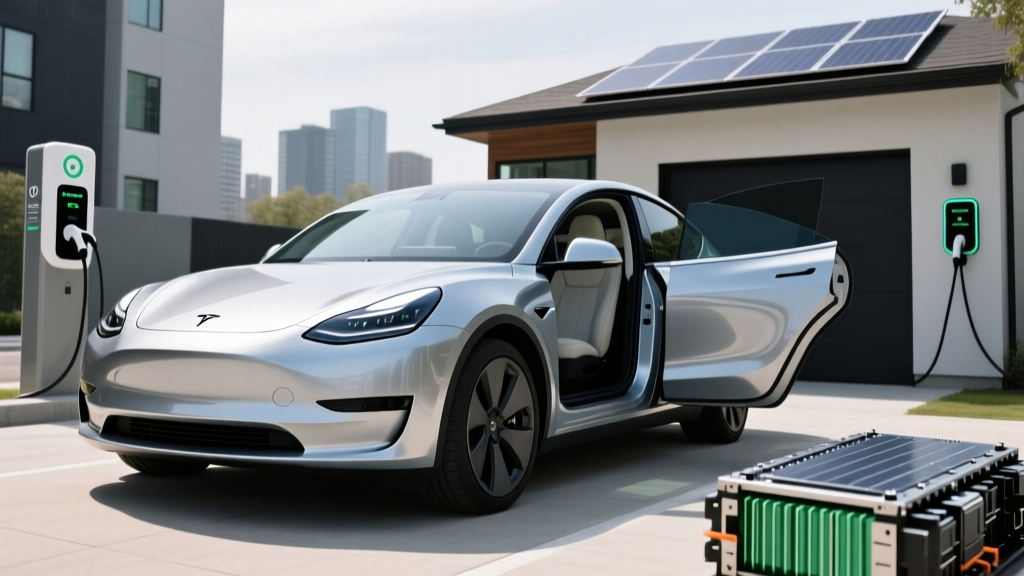
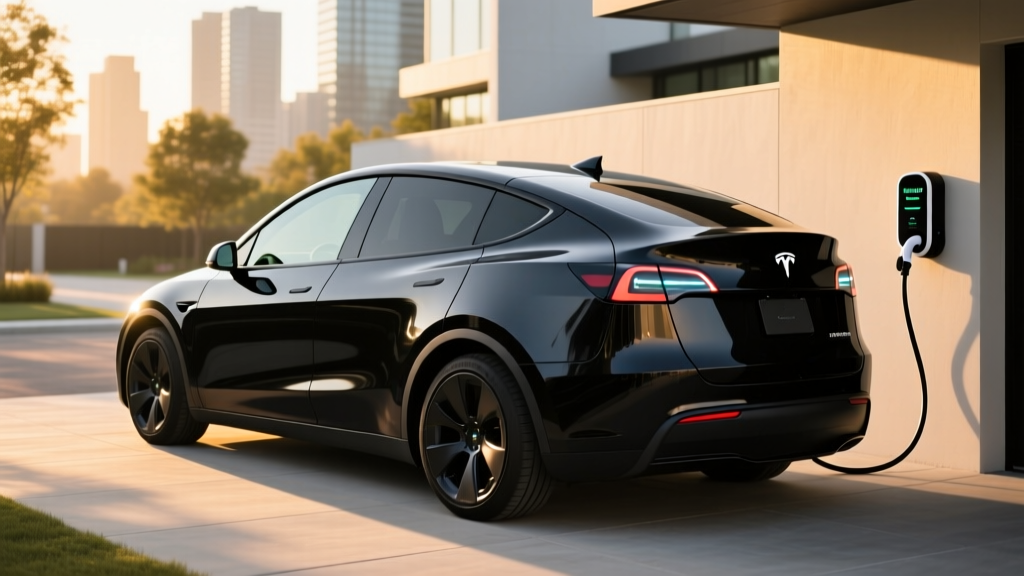
For home charging, the Tesla Wall Connector at 48 amps delivers 11.5 kW — enough to add roughly 44 miles per hour of charging. A full charge from 10% to 90% takes about 7 hours, making overnight charging practical for daily commuting. Installation costs for a 240V/60A circuit typically run $800–$2,000 depending on panel proximity and local permit requirements (always use a licensed electrician for final specs).
Performance, Drivetrain, and Ride Quality
The Long Range AWD's dual-motor setup produces 384 horsepower and delivers a 4.8-second 0–60 mph time — quick enough to merge confidently and overtake without drama. The Performance trim bumps output to 456 hp and drops the sprint to 3.5 seconds, which is sports-car territory in a 4,400-pound crossover.
Both trims use Tesla's adaptive damper suspension introduced with the Juniper refresh, which noticeably improves ride compliance over pre-2025 models. Road noise is reduced thanks to acoustic glass, though the Model Y still transmits more pavement texture than a Genesis GV60 or BMW iX.
Regenerative braking offers two modes: Standard (strong, near one-pedal driving) and Low (coasting feel). Tesla removed the user-adjustable regen slider years ago, which frustrates some drivers who prefer fine-grained control.
Pricing, Trims, and Federal Tax Credit Eligibility
| Trim | Base MSRP | Est. Federal Credit (§30D) | Effective Price (if eligible) |
|---|---|---|---|
| Long Range AWD | $44,990 | Up to $7,500 | ~$37,490 |
| Performance | $51,490 | Up to $7,500 | ~$43,990 |
Federal tax credit caveats: The IRS §30D credit has strict eligibility requirements that change based on battery sourcing, buyer income, and MSRP caps. As of 2026:
- MSRP Cap: SUVs/crossovers must be under $80,000 — both Model Y trims qualify.
- Income Cap: Modified AGI must not exceed $150,000 (single), $225,000 (head of household), or $300,000 (joint filers).
- Battery Sourcing: The full $7,500 requires both critical-mineral and battery-component sourcing thresholds. Tesla has progressively shifted sourcing to North American partners, but partial credit ($3,750) may apply if only one threshold is met. Check the latest IRS clean vehicle credit page for the current approved-vehicle list.
- Point-of-Sale Transfer: Eligible buyers can transfer the credit to the dealer at purchase, reducing the upfront cost rather than waiting for a tax refund.
Tesla's direct-sale business model eliminates dealer markups and haggling — the price you see on Tesla.com is the price you pay. This transparency is a core advantage over legacy OEMs where dealer adjustments can add thousands to the sticker.
Interior, Cargo, and Technology
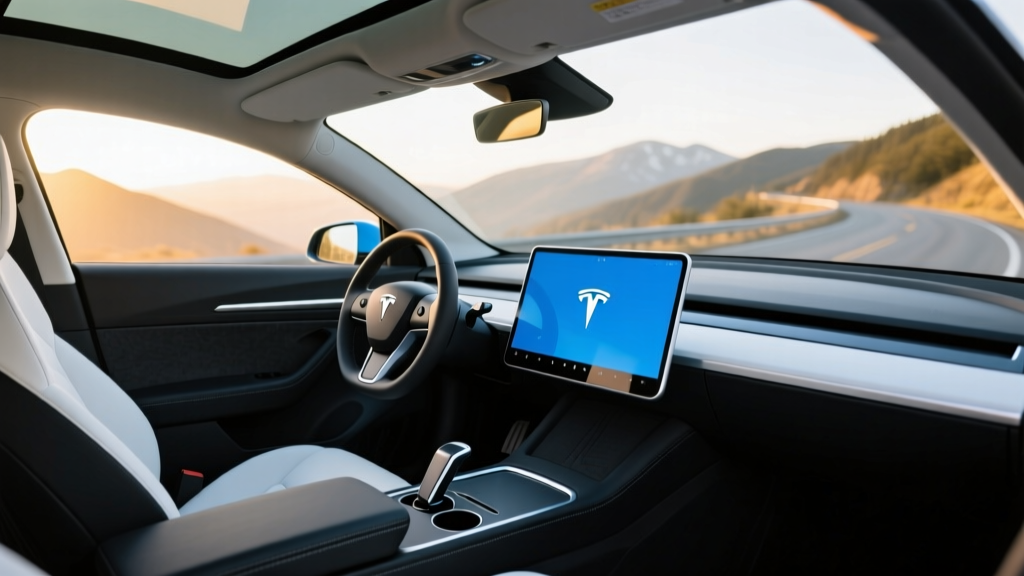
The Juniper-refreshed cabin is quieter and more refined, with ventilated front seats, ambient lighting, and a rear-seat touchscreen for climate and entertainment. However, the Model Y's defining interior trait remains its minimalism: nearly every function — climate, mirrors, glovebox, turn signals (now on a stalk again after a brief experiment) — routes through the 15.4-inch center display.
Cargo space is generous: 30.2 cubic feet behind the second row and 72.1 cu ft with seats folded. The front trunk (frunk) adds 4.1 cu ft for charging cables or a small bag. Rear legroom at 37.7 inches is adequate for adults but trails the Hyundai Ioniq 5 (39.4 in) and Kia EV6 (39.0 in).
Tech highlights:
- 15.4-inch center touchscreen with navigation, streaming, and gaming
- Over-the-air (OTA) software updates that add features post-purchase
- Tesla app with remote climate, location tracking, and Sentry Mode alerts
- Autopilot standard (adaptive cruise + lane centering — SAE Level 2)
- Full Self-Driving (Supervised) available as a $8,000 add-on or $99/mo subscription
Important: Tesla Autopilot and FSD (Supervised) are SAE Level 2 driver-assistance systems. They require continuous driver attention and hands-on (or eyes-on) supervision at all times. They are not self-driving. Only Level 4 services like Waymo operate without a human driver in defined areas.
Pros, Cons, and Who Should Buy
Pros
- 320-mi EPA range is among the best in the segment
- Supercharger network integration — best road-trip charging experience
- Direct-sale pricing eliminates dealer markups
- OTA updates keep the vehicle current years after purchase
- Strong efficiency (28 kWh/100 mi) lowers charging costs
- Excellent cargo capacity (72.1 cu ft max)
Cons
- Rear legroom (37.7 in) trails key competitors
- Minimalist controls frustrate drivers who prefer physical buttons
- Charge curve tapers heavily above 60% SoC
- FSD (Supervised) remains a Level 2 system despite the name
- Insurance premiums tend to be higher than segment average
- NMC battery requires 80–90% daily charge limit for longevity
Best for: Daily commuters with home charging access, tech-forward buyers who value OTA updates, and road-trippers who want reliable DC fast charging across the country. The Model Y is less ideal for families who prioritize rear-seat space or buyers who want a traditional dealership service experience.
Warranty and Long-Term Ownership
Tesla covers the Model Y's battery and drive unit for 8 years or 120,000 miles (whichever comes first), with a minimum 70% capacity retention threshold. The basic vehicle limited warranty is 4 years / 50,000 miles.
Real-world battery degradation data from Tesla owner surveys and fleet analytics suggests NMC packs in the Model Y lose approximately 8–12% capacity over the first 100,000 miles, with the curve flattening significantly after the initial break-in period. Following Tesla's recommended charging practices (80–90% daily, avoiding prolonged 100% storage) helps minimize degradation.
Tesla's service model differs from legacy automakers: most diagnostics happen remotely via telemetry, mobile service vans handle many repairs at your home or office, and physical Service Centers are concentrated in metro areas. Rural owners may face longer wait times or tow distances for complex repairs.
Frequently Asked Questions
What is the real-world range of the 2026 Tesla Model Y?
The EPA rates the Long Range AWD at 320 miles. In real-world highway driving at 70–80 mph in moderate temperatures, expect 260–290 miles. In sub-freezing conditions, plan for 220–260 miles unless you precondition while plugged in.
How fast does the Model Y charge at home and on the road?
At home on a Level 2 (240V) Wall Connector, it charges at 11.5 kW, adding about 44 miles per hour. On DC fast charging (Supercharger V3/V4), it peaks at 250 kW and charges from 10–80% in approximately 27 minutes. Expect roughly 200 miles added in 15 minutes under ideal conditions.
Does the 2026 Model Y qualify for the $7,500 federal EV tax credit?
Both trims fall under the $80,000 MSRP cap. However, the full $7,500 credit depends on battery-critical-mineral and component sourcing thresholds, plus buyer income limits ($150K single / $300K joint). Tesla's North American sourcing has improved, but always verify current eligibility on IRS.gov before purchasing.
Is the Model Y worth buying vs. the Hyundai Ioniq 5 or Ford Mach-E?
The Model Y wins on range (320 vs. ~300 mi), Supercharger access, and direct-sale pricing transparency. The Ioniq 5 offers faster sustained charging (800V architecture), more rear legroom, and physical buttons. The Mach-E provides a more traditional driving feel and dealer service network. Your choice depends on whether you prioritize ecosystem integration (Tesla) or interior space and charging flexibility (Hyundai/Ford).
How does Tesla's business model affect ownership?
Tesla sells directly to consumers (no dealer markups), controls its Supercharger network (best-in-class reliability), and delivers OTA software updates that add features over time. Service is handled through mobile technicians and company-owned Service Centers rather than franchised dealerships. This vertical integration means a more predictable purchase experience but fewer service locations in rural areas.
What is the battery warranty and expected lifespan?
Tesla covers the battery for 8 years or 120,000 miles with a 70% minimum capacity retention guarantee. Real-world data suggests 8–12% degradation over 100,000 miles with proper charging habits (daily limit of 80–90% for NMC chemistry).