Quick Verdict: The Workhorse EV Truck That Makes Sense
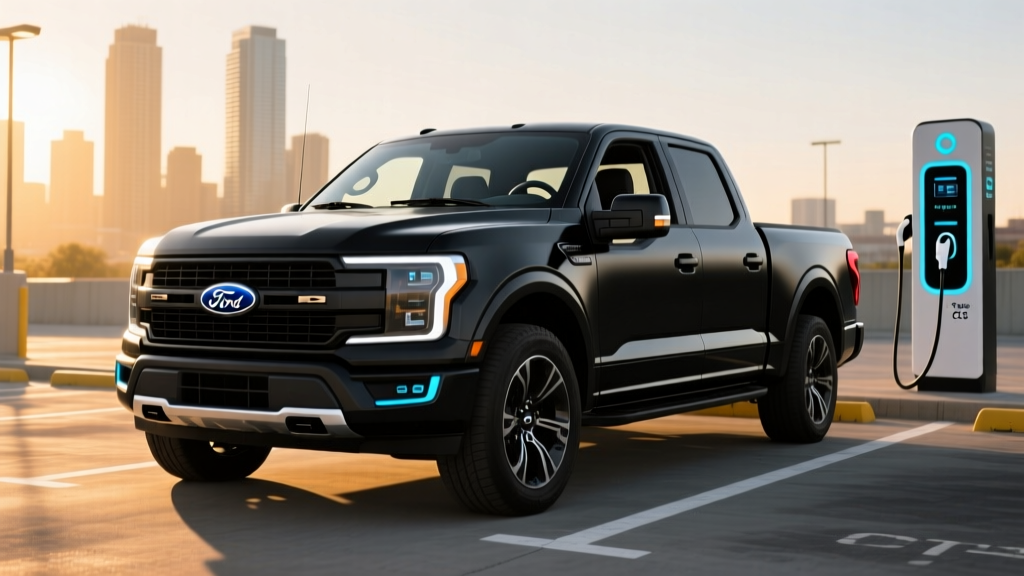
The 2025 Ford F-150 Lightning Pro isn't trying to be a luxury statement. It's a fleet-ready, job-site-capable electric pickup that undercuts nearly every competitor on price while delivering usable range, genuine payload, and the kind of bidirectional power capability that turns a truck into a mobile generator. For buyers who need a truck first and an EV second, the Pro trim is where the value math actually works.
Range Reality Check
EPA Estimated: 240 miles (Standard Range battery)
Real-World Expectation: Expect 200–220 miles in mixed highway driving at 70+ mph. In cold weather (below 32°F), plan for 160–180 miles. Towing a 5,000-lb trailer cuts range roughly in half—plan for 110–130 miles between charges.
Range and Efficiency: What the EPA Number Doesn't Tell You
The Lightning Pro comes with Ford's Standard Range battery, a 98 kWh usable lithium-ion pack using NMC (nickel manganese cobalt) chemistry. That translates to an EPA-estimated 240 miles—a figure that holds up reasonably well in city and suburban driving where regenerative braking recaptures energy.
But trucks are aerodynamic bricks, and the Lightning is no exception. At highway speeds, efficiency drops noticeably. According to fueleconomy.gov, the 2025 Lightning achieves 78 MPGe combined, which works out to roughly 43 kWh per 100 miles. That's thirstier than a Tesla Model Y or even the Rivian R1T, but expected for a full-size truck with an 8-foot bed.
If your daily driving is under 150 miles and you can charge at home overnight, the Standard Range battery is plenty. Road-trippers and frequent towers should strongly consider the Extended Range option (131 kWh usable, EPA 320 miles), though that adds roughly $10,000 to the price and pushes you into Lariat territory.
Charging Speed: Home and DC Fast Charging
Charging speed is where the Lightning Pro shows its age compared to newer 800-volt platforms like the Hyundai Ioniq 5 or Kia EV9. The Pro maxes out at 150 kW on a DC fast charger—adequate but not class-leading.
| Charging Level | Power (kW) | Charge Time | Miles Added Per Hour |
|---|---|---|---|
| Level 1 (120V household) | 1.4 kW | N/A (trickle) | ~3 miles/hour |
| Level 2 (240V, 32A) | 7.7 kW | ~14 hours (0–100%) | ~23 miles/hour |
| Level 2 (240V, 48A) | 11.5 kW | ~10 hours (0–100%) | ~34 miles/hour |
| DC Fast Charge (peak) | 150 kW | ~41 minutes (10–80%) | N/A |
The 10–80% DC fast-charge time of roughly 41 minutes is the real number to watch. That's competitive with the Chevrolet Silverado EV's base trim but noticeably slower than the Rivian R1T (which can hit 200+ kW on newer battery packs). The charge curve tapers significantly above 80% state of charge—plan to unplug at 80% on road trips to avoid sitting at a charger watching single-digit kW trickles.
For home charging, Ford includes a Mobile Power Cord that handles both 120V and 240V outlets. Most buyers will want to install a dedicated Level 2 wall connector. Budget $500–$800 for the charger itself and $800–$2,000 for professional installation, depending on whether your electrical panel needs an upgrade to support a 48-amp circuit.
Performance and Drivetrain
The Lightning Pro uses a dual-motor all-wheel-drive setup producing 563 horsepower and 775 lb-ft of torque. That's identical to every other Standard Range Lightning, and it's genuinely quick for a 6,500-pound truck.
| Drivetrain | Dual-motor AWD |
| Horsepower | 563 hp |
| Torque | 775 lb-ft |
| 0–60 mph | ~4.0 seconds |
| Top Speed | 110 mph (electronically limited) |
| Max Payload | 2,235 lbs |
| Max Towing | 7,700 lbs (10,000 lbs with Max Trailer Tow Package) |
The instant torque delivery makes the Lightning feel lighter than it is, especially around town. Merge onto a highway with a bed full of lumber and you'll forget you're hauling. The trade-off is that the truck's weight is always present in braking distances and cornering—this is a work vehicle, not a canyon carver.
For towing, the Pro's 7,700-pound base rating is respectable, and the optional Max Trailer Tow Package bumps it to 10,000 pounds. But remember: towing at max capacity will cut your range to roughly 100–130 miles. Plan accordingly.
Pricing, Trims, and Federal Tax Credit Eligibility
The 2025 F-150 Lightning Pro starts at $55,990 (including destination), making it the most affordable full-size electric pickup on the market. For comparison, the Chevrolet Silverado EV 3WT starts around $57,000, and the Rivian R1T Dual-Motor begins at $75,900.
| Item | Amount |
|---|---|
| Base MSRP (Pro trim) | $55,990 |
| As-tested (with common options) | $59,000–$62,000 |
| Federal Tax Credit (§30D) | Up to $7,500 (see eligibility below) |
| Effective price after max credit | ~$48,490 |
Federal Tax Credit Eligibility: The Lightning Pro qualifies for up to $7,500 under IRS §30D, but eligibility depends on multiple factors:
- MSRP Cap: Trucks must be under $80,000 MSRP. The Pro easily clears this.
- Buyer Income Limits: Modified AGI must not exceed $150,000 (single), $225,000 (head of household), or $300,000 (joint). Check IRS.gov for current-year thresholds.
- Battery Sourcing: The $7,500 credit splits into two $3,750 halves—one for critical minerals, one for battery components. Sourcing requirements tighten annually. Verify current compliance on Ford's official site or with your dealer before purchase.
- Point-of-Sale Transfer: As of 2024, you can transfer the credit to the dealer at purchase, reducing your out-of-pocket cost immediately rather than waiting for tax filing.
State and local incentives vary widely. California's CVRP, Colorado's Innovative Motor Vehicle Credit, and various utility rebates can stack on top of the federal credit. Check your state's energy office or utility provider for current programs.
Cargo, Interior, and Practical Features
The Lightning Pro is a crew cab with a 5.5-foot bed—the same configuration as most gas F-150s. Interior space is generous:
- Front legroom: 43.9 inches
- Rear legroom: 43.6 inches
- Bed volume: 52.8 cubic feet
- Front trunk (frunk): 14.1 cubic feet (lockable, drainable, with 400 lbs payload capacity)
The frunk is the Lightning's secret weapon. It's large enough for tools, groceries, or a weekend's worth of gear, and because it's sealed and drainable, you can use it as a cooler. Ford also includes four 120V outlets in the frunk, part of the Pro Power Onboard system.
Speaking of Pro Power: the Pro trim includes 2.4 kW of onboard power (two 120V outlets in the bed, two in the frunk, two in the cabin). That's enough to run job-site tools, a small refrigerator, or emergency home backup for essentials. The optional 9.6 kW system (standard on higher trims) can power an entire home during an outage when paired with Ford's Home Integration System.
The infotainment system uses Ford's SYNC 4 with a 12-inch touchscreen (larger screens are reserved for Lariat and up). Apple CarPlay and Android Auto are wireless. The Pro also includes Ford Co-Pilot360 2.0, which bundles automatic emergency braking, blind-spot monitoring, lane-keeping assist, and rear cross-traffic alert.
Pros and Cons
Pros
- Lowest starting price in the full-size EV truck segment
- Standard AWD and 563 hp on every Pro
- Pro Power Onboard turns the truck into a mobile generator
- Massive frunk with 400-lb capacity and 120V outlets
- Qualifies for up to $7,500 federal tax credit (subject to eligibility)
- Genuine payload and towing capability
Cons
- 240-mile range is tight for road trips and towing
- 150 kW peak DC charging is slower than newer rivals
- Pro trim uses basic cloth seats and a smaller 12-inch screen
- Efficiency drops significantly at highway speeds
- Extended Range battery adds ~$10,000 and requires stepping up to Lariat
Who Should Buy the Lightning Pro?
Buy it if: You need a work truck with job-site power capability, your daily driving is under 150 miles, you can charge at home, and you want the lowest entry price into a full-size electric pickup. Fleet buyers and tradespeople will find the Pro Power Onboard system alone justifies the purchase.
Look elsewhere if: You frequently tow long distances, you take regular road trips beyond 200 miles one-way, or you want premium interior materials and the latest infotainment tech. In those cases, step up to a Lightning Lariat with Extended Range, or consider the Rivian R1T for better efficiency and faster charging (at a significantly higher price).
Warranty and Long-Term Ownership
Ford backs the Lightning's battery and electric powertrain with an 8-year/100,000-mile warranty, covering defects and capacity loss below 70% state of health. The bumper-to-bumper warranty is 3 years/36,000 miles.
Long-term battery degradation data for the Lightning is still limited (the truck launched for the 2022 model year), but Ford's NMC chemistry and liquid thermal management system are proven in other applications. Expect 10–15% capacity loss over 150,000 miles based on industry averages for similar packs.
Maintenance costs are significantly lower than a gas F-150—no oil changes, no transmission fluid, no spark plugs. Budget for tire rotation, cabin air filter, and brake fluid checks. Regenerative braking extends pad life substantially; many EV truck owners report original brake pads lasting 80,000+ miles.
Frequently Asked Questions
What is the real-world range of the 2025 F-150 Lightning Pro?
The EPA estimates 240 miles, but real-world highway driving at 70+ mph typically yields 200–220 miles. In cold weather (below freezing), expect 160–180 miles. Towing at max capacity cuts range to roughly 110–130 miles.
How fast does the Lightning Pro charge?
On a DC fast charger, it peaks at 150 kW and charges from 10–80% in about 41 minutes. At home on a 240V Level 2 charger, expect roughly 10 hours for a full charge at 11.5 kW (48 amps).
Does the Lightning Pro qualify for the $7,500 federal tax credit?
It can, but eligibility depends on your income, the truck's MSRP (under $80,000—check), and battery sourcing compliance. Verify current-year rules on IRS.gov and confirm with your dealer before purchase.
Is the Lightning Pro worth buying vs. the Silverado EV or Rivian R1T?
If you prioritize price and job-site utility, the Lightning Pro wins. The Silverado EV offers slightly more range but costs more and has limited availability. The Rivian R1T is more refined and charges faster, but starts $20,000 higher. For fleet and work use, the Pro is the value leader.
Can I use the Lightning Pro to power my home during an outage?
Yes, but you'll need Ford's Home Integration System (a $5,000–$7,000 add-on with installation) to enable automatic transfer. The Pro's standard 2.4 kW Pro Power Onboard can run essentials manually via extension cords; the optional 9.6 kW system (not standard on Pro) can power an entire home.