The Tesla Model Y enters 2026 with a refreshed interior, the long-awaited NACS standard fully integrated across all trims, and a pricing structure that makes it one of the most compelling compact electric SUVs on the market. But beyond the spec sheet, how does it perform in real-world driving, charging, and daily ownership? We break down every metric that matters — including the often-overlooked audio experience and speaker system that buyers increasingly search for before committing to a minimalist cabin.
2026 Tesla Model Y at a Glance: Core Specifications
| Spec | Long Range AWD | RWD (Standard) | Performance |
|---|---|---|---|
| EPA Range | 320 miles | 280 miles | 295 miles |
| Battery (usable) | ~78 kWh (NMC) | ~60 kWh (LFP) | ~78 kWh (NMC) |
| Drivetrain | Dual-Motor AWD | Single-Motor RWD | Dual-Motor AWD |
| Horsepower | 384 hp | 295 hp | 456 hp |
| 0–60 mph | 4.8 sec | 6.6 sec | 3.5 sec |
| Max DC Charge Rate | 250 kW | 170 kW | 250 kW |
| 10–80% DC Fast Charge | ~25 min | ~30 min | ~25 min |
| Level 2 Home Charge | 11.5 kW (~44 mi/hr) | 11.5 kW (~44 mi/hr) | 11.5 kW (~44 mi/hr) |
| MPGe (combined) | 117 MPGe | 123 MPGe | 111 MPGe |
| Efficiency | 28 kWh/100 mi | 27 kWh/100 mi | 30 kWh/100 mi |
| Base MSRP | $48,990 | $44,990 | $53,990 |
Charging Speed and Infrastructure: What to Expect
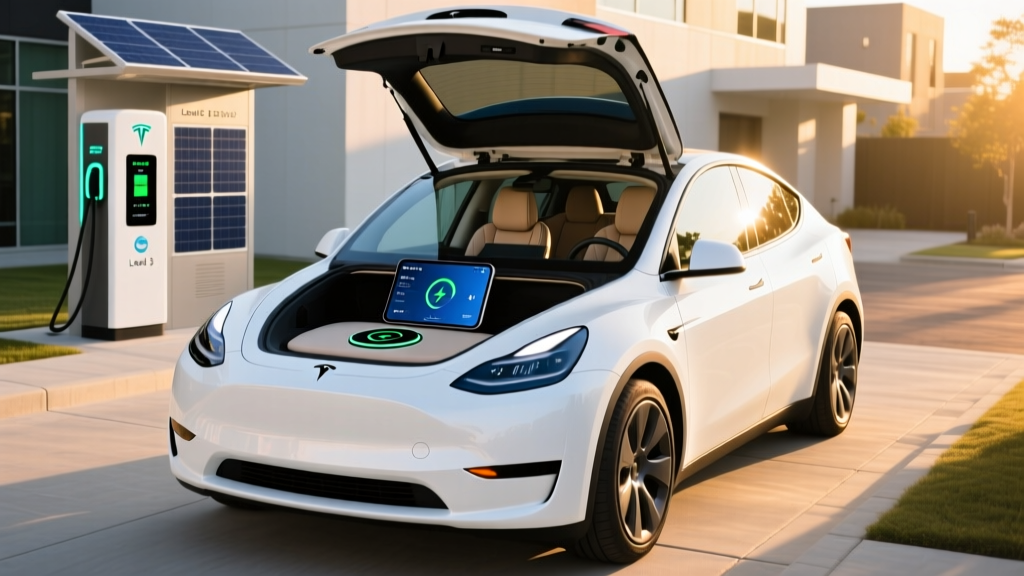
The 2026 Model Y supports Tesla's Supercharger network natively via the NACS connector — no adapter needed. The Long Range and Performance trims peak at 250 kW on V3 Superchargers, though sustained rates taper significantly above 60% State of Charge (SoC). Expect roughly 150 kW average from 10–80%, which is why the 10–80% time of ~25 minutes is more meaningful than the peak number.
| Charging Level | Power (kW) | Miles Added Per Hour | Typical Use Case |
|---|---|---|---|
| Level 1 (120V outlet) | 1.4 kW | ~5 mi/hr | Overnight trickle, emergencies |
| Level 2 (240V home) | 11.5 kW | ~44 mi/hr | Daily home charging |
| DC Fast (V3 Supercharger) | 250 kW peak | ~1,000 mi/hr (peak) | Road trips, rapid top-ups |
Home charging at 11.5 kW requires a 60-amp dedicated circuit (48-amp continuous draw). Budget $800–$2,200 for a professional Level 2 installation, depending on whether your electrical panel needs an upgrade. The Tesla Wall Connector is included with some purchase bundles; otherwise, it retails around $475. For the LFP battery in the RWD trim, Tesla recommends regular charging to 100% — a key advantage of lithium iron phosphate chemistry over NMC, which benefits from staying below 90% for daily use.
Speaker System and Audio: The 'Tesla Model Y Speaker' Question
One of the most searched ownership questions is about the Tesla Model Y speaker setup. The 2026 Long Range and Performance trims come equipped with Tesla's Premium Audio system: 14 speakers, 1 subwoofer, and 2 amplifiers delivering immersive sound. The RWD base trim includes a simplified system with 8 speakers and a single amplifier.
Tesla does not brand its audio with a third-party name (no Bose, no Burmester), but independent testing and owner reviews consistently rate the Premium system on par with premium branded setups in the $50K–$70K segment. The cabin's minimalist design means audio controls live entirely on the 15.4-inch center touchscreen — there are no physical knobs. For audiophiles, the system supports lossless audio streaming via USB and Bluetooth 5.0, though Bluetooth introduces compression. The lack of Apple CarPlay and Android Auto remains a sticking point for buyers who prefer phone-projected interfaces, though Tesla's native streaming apps (Spotify, Apple Music, Tidal) cover most use cases.
Pricing, Tax Credits, and Total Cost
| Trim | Base MSRP | Federal §30D Credit* | Effective Price | Destination Fee |
|---|---|---|---|---|
| RWD (Standard) | $44,990 | Up to $7,500 | ~$37,490 | $1,390 |
| Long Range AWD | $48,990 | Up to $7,500 | ~$41,490 | $1,390 |
| Performance | $53,990 | Up to $7,500 | ~$46,490 | $1,390 |
*The IRS §30D federal tax credit requires meeting battery critical-mineral and component sourcing thresholds, buyer income caps ($150K single / $300K joint AGI), and an MSRP cap of $80,000 for SUVs (all Model Y trims qualify). As of 2026, the credit can be transferred at point of sale, reducing your purchase price directly at the dealer. Always verify current-year eligibility on irs.gov or with a tax professional — sourcing rules tighten annually.
With a potential $7,500 credit applied, the Long Range AWD drops to roughly $41,490 before state incentives. States like Colorado, California, and New York offer additional rebates ($2,500–$5,000) that can stack, though these vary by income and residency. Total cost of ownership over 5 years remains favorable compared to gas-powered rivals: electricity at $0.14/kWh nationally yields ~$0.04/mile, versus ~$0.12/mile for a 25 MPG gas SUV at $3.00/gallon.
Interior Space, Cargo, and Practicality
The 2026 Model Y retains the spacious cabin that has made it a top family EV. Cargo volume behind the second row measures 30.2 cubic feet, expanding to 72.1 cubic feet with seats folded — competitive with the Hyundai Ioniq 5 (27.2 / 56.2 cu ft) and significantly ahead of the Ford Mustang Mach-E (29.7 / 59.7 cu ft). The front trunk (frunk) adds 4.1 cubic feet of secure storage.
Legroom is generous: 41.8 inches up front and 37.4 inches in the rear. The flat floor and panoramic glass roof create an airy feel, though the glass roof contributes to cabin heat in summer — preconditioning via the Tesla app before entering is practically mandatory in hot climates. The refreshed 2026 interior adds ambient lighting, ventilated front seats (previously absent), and a rear 8-inch touchscreen for climate and media control.
Driver Assistance and Smart Tech
Every 2026 Model Y includes Tesla's basic Autopilot (adaptive cruise control, lane-centering, automatic emergency braking). The optional FSD (Supervised) package ($8,000 one-time or $99/month subscription as of 2026) adds Navigate on Autopilot, Auto Lane Change, Smart Summon, and traffic-light recognition. Real-world performance has improved substantially with the latest neural-network updates, but NHTSA data reminds us that Level 2 systems still require constant human oversight. The IIHS has rated the 2026 Model Y as a Top Safety Pick+, citing excellent crash-test performance across all categories.
Warranty and Battery Longevity
Tesla provides a 4-year/50,000-mile basic vehicle warranty and an 8-year/120,000-mile battery and drive unit warranty for the Long Range and Performance trims (8-year/100,000-mile for the RWD). The warranty guarantees at least 70% battery capacity retention over the coverage period. Real-world degradation data from owner surveys suggests NMC batteries lose approximately 10–12% capacity over 100,000 miles, while LFP batteries in the RWD trim show slower degradation curves — often under 8% at the same mileage — owing to LFP's superior cycle life.
Battery replacement out of warranty remains expensive: estimates range from $12,000–$16,000 for the NMC pack and $8,000–$12,000 for the smaller LFP pack. However, catastrophic failure before 150,000 miles is statistically rare based on fleet data.
Pros, Cons, and Who Should Buy
- Class-leading Supercharger network access (NACS native)
- Excellent efficiency (27–30 kWh/100 mi)
- Strong cargo space (30.2 / 72.1 cu ft)
- LFP option with 100% daily charge capability (RWD)
- Premium audio system on Long Range/Performance
- Over-the-air updates continuously add features
- No Apple CarPlay or Android Auto
- All controls on touchscreen — no physical knobs
- FSD is Level 2, not autonomous (despite the name)
- Highway range drops significantly in cold weather
- Insurance premiums 15–25% above segment average
- Panel gaps and build quality still inconsistent per owner reports
Best for: Daily commuters with home charging access, tech-forward families who value cargo space and efficiency, and road-trippers who want reliable Supercharger coverage. The RWD trim is ideal for warm-climate urban commuters who can charge to 100% daily. The Long Range AWD suits cold-weather drivers and those who regularly exceed 200 miles between charges.
Consider alternatives if: You need Apple CarPlay (look at the Hyundai Ioniq 5 or Kia EV6), prefer physical controls (Volkswagen ID.4), or need a third row (Kia EV9).
Frequently Asked Questions
What is the real-world range of the 2026 Tesla Model Y?
The EPA estimates 320 miles for the Long Range AWD, but real-world highway driving at 70 mph typically yields 265–285 miles. In freezing temperatures, expect 220–250 miles. The RWD trim delivers roughly 230–245 miles real-world from its 280-mile EPA rating.
How fast does the Model Y charge at home and on DC fast chargers?
On a Level 2 home charger (11.5 kW), the Model Y adds ~44 miles per hour — a full overnight charge covers most daily needs. On a V3 Supercharger, the Long Range peaks at 250 kW and charges 10–80% in ~25 minutes, though the charge curve tapers heavily above 60% SoC.
Does the 2026 Tesla Model Y qualify for the federal EV tax credit?
Yes, all Model Y trims fall under the $80,000 SUV MSRP cap. However, buyer eligibility depends on AGI limits ($150K single / $300K joint), and the vehicle must meet critical-mineral and battery-component sourcing requirements that tighten each year. Check IRS §30D guidelines for current-year rules.
Is the Tesla Model Y worth buying over the Hyundai Ioniq 5 or Ford Mustang Mach-E?
The Model Y wins on Supercharger network reliability, cargo space, and efficiency. The Ioniq 5 offers 800V architecture (faster peak charging on compatible chargers), CarPlay, and more distinctive styling. The Mach-E provides a more traditional driving feel and physical controls. If Supercharger access and OTA updates matter most, the Model Y leads. If CarPlay and design matter more, test-drive the Ioniq 5.
How good are the speakers in the Tesla Model Y?
The Premium Audio system (14 speakers + subwoofer + 2 amplifiers) on Long Range and Performance trims is rated highly by owners and reviewers, comparable to branded premium systems in this price range. The base RWD trim's 8-speaker system is adequate but noticeably thinner. All audio is controlled via the touchscreen with no physical volume knob.
What is the battery chemistry and how does it affect ownership?
The RWD uses LFP (lithium iron phosphate), which offers slower degradation, safer thermal characteristics, and the ability to charge to 100% daily — ideal for commuters. The Long Range and Performance use NMC (nickel manganese cobalt), which provides higher energy density (more range per kg) but benefits from staying between 20–90% SoC for daily use to maximize longevity.