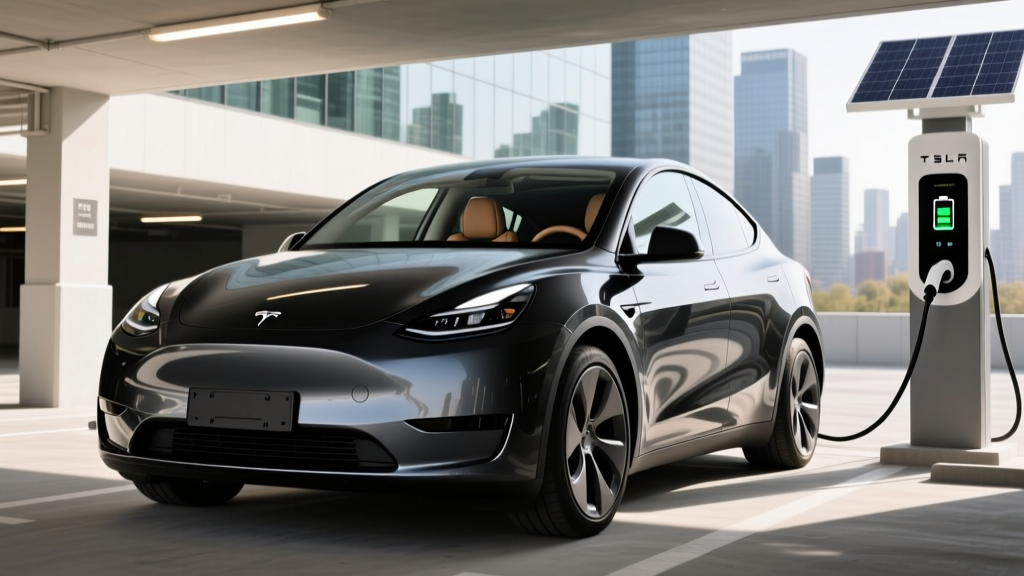
The headlines are hard to ignore: Tesla European sales decline stories have dominated automotive news through late 2025 and into 2026, with registration data showing double-digit drops in markets like Germany, Norway, and the Netherlands. But strip away the geopolitical noise and brand-controversy chatter, and the 2026 Tesla Model Y remains one of the most capable, efficient, and well-supported electric SUVs available in the United States. This review evaluates the current Model Y purely on its engineering merits, ownership economics, and real-world usability — the factors that actually matter when you're spending north of $44,000 on a family EV.
2026 Model Y Lineup: Trims, Specs, and Pricing
Tesla simplified the Model Y lineup for 2026 following the "Juniper" refresh that debuted in early 2025. Three configurations remain, each built on Tesla's 4680-cell battery architecture and structural battery pack design.
| Specification | Standard Range RWD | Long Range AWD | Performance AWD |
|---|---|---|---|
| Base MSRP | $44,990 | $48,990 | $53,990 |
| EPA Range | 280 mi | 320 mi | 298 mi |
| Battery (usable) | ~60 kWh (LFP) | ~78 kWh (NMC) | ~78 kWh (NMC) |
| Drivetrain | RWD (single motor) | AWD (dual motor) | AWD (dual motor) |
| Horsepower | 295 hp | 384 hp | 456 hp |
| 0–60 mph | 6.2 sec | 4.8 sec | 3.5 sec |
| MPGe (combined) | 128 MPGe | 122 MPGe | 115 MPGe |
| Efficiency | 26 kWh/100mi | 28 kWh/100mi | 30 kWh/100mi |
| Cargo (rear seats up) | 30.2 cu ft | 30.2 cu ft | 30.2 cu ft |
| Cargo (seats folded) | 72.1 cu ft | 72.1 cu ft | 72.1 cu ft |
| Rear Legroom | 38.4 in | 38.4 in | 38.4 in |
The Standard Range model uses a lithium iron phosphate (LFP) battery, which trades energy density for longevity — Tesla recommends charging LFP packs to 100% regularly, which helps offset the smaller capacity. The Long Range and Performance trims use nickel manganese cobalt (NMC) chemistry, where Tesla recommends an 80% daily charge limit to preserve long-term battery health, reserving 100% for road trips.
Charging Speed: DC Fast, Level 2, and the Supercharger Advantage
Charging infrastructure is where the Model Y still holds a tangible edge over competitors, even as networks like Electrify America and EVgo expand. Tesla's Supercharger network in North America now exceeds 28,000 stalls, and the Model Y's native NACS connector means no adapter is required at any Tesla station.
| Charging Method | Max Power (kW) | Speed / 10–80% Time | Notes |
|---|---|---|---|
| DC Fast (V4 Supercharger) | 250 kW (peak) | 10–80% in ~22 min (Long Range) | Sustained rate ~170 kW avg; tapers sharply above 80% |
| DC Fast (Standard Range) | 170 kW (peak) | 10–80% in ~28 min | LFP chemistry limits peak C-rate |
| Level 2 (Tesla Wall Connector) | 11.5 kW (48A) | ~37 mi/hr added | Full charge in ~7 hr (Long Range) |
| Level 2 (Generic J1772/NACS) | Up to 11.5 kW | ~37 mi/hr added | Requires NACS-to-J1772 adapter for non-Tesma L2 stations |
| Level 1 (120V household) | ~1.4 kW | ~4 mi/hr added | Emergency/trickle only |
A critical nuance: the 250 kW peak on the Long Range is just that — a peak. The actual charge curve holds around 200–250 kW up to roughly 40% state of charge, then steps down progressively. From 80% to 100%, charging slows dramatically to protect the NMC cells, adding perhaps 15–20 minutes for the final 20%. For road trips, the practical strategy is charging from 10% to 80% at each stop (~22 minutes) rather than topping off fully.
The Standard Range LFP model charges more slowly at DC fast chargers but accepts 100% charges without degradation concerns, making it arguably more practical for daily home charging on a Level 2 setup.
What the Tesla European Sales Decline Actually Means for US Buyers
Let's address the keyword directly: the Tesla European sales decline is real, driven by a convergence of factors including intensifying competition from BYD's expanding European lineup, Volkswagen's ID.4 and ID.7 refreshes, Hyundai-Kia's strong EV portfolio, and some brand-sentiment headwinds tied to CEO Elon Musk's public political activities. European EV registration data from ACEA showed Tesla's market share slipping from roughly 20% of BEV registrations in early 2024 to under 14% by late 2025.
For US buyers, this matters in three concrete ways:
- Pricing pressure is your friend. Tesla has historically used price as a competitive lever. As European volume softens, there's added incentive to maintain aggressive US pricing and promotional offers — we've already seen Tesla extend referral credits and offer discounted Supercharging bundles in early 2026.
- Supercharger expansion continues regardless. Tesla's energy and charging division is now a profit center independent of vehicle sales. The network is expanding and opening to NACS-equipped competitors (Ford, Rivian, GM vehicles), which actually improves its financial sustainability.
- Parts and service remain well-supported. The US Model Y is built at Giga Texas. A European sales dip doesn't threaten domestic parts availability or service capacity. The Fremont and Austin factories continue to supply the North American market with strong production volumes.
In short: the European headwinds are a brand and market-share story, not a product-quality or ownership-support story for American buyers. The Model Y sold in the US is built in the US, serviced in the US, and charged on the most reliable DC fast-charging network in the country.
Tax Credits and Real Ownership Cost
The 2026 Model Y qualifies for the federal EV tax credit under IRS §30D, but eligibility depends on several buyer-specific factors. Here's the current framework:
| Factor | Requirement (2026 Tax Year) |
|---|---|
| MSRP Cap (SUVs/vans/pickups) | ≤ $80,000 — all Model Y trims qualify |
| Buyer Income Cap (Modified AGI) | $150K single / $225K HOH / $300K joint |
| Battery Component Sourcing | Must meet North American assembly + critical minerals thresholds (Tesla's LFP Standard Range has faced sourcing scrutiny; verify current-year status on IRS eligible vehicles list) |
| Point-of-Sale Transfer | Available — credit can be applied at purchase as a down-payment reduction |
| Credit Amount | Up to $7,500 if all requirements met; $3,750 if only one sourcing threshold met |
Effective pricing after maximum credit:
- Standard Range RWD: $44,990 → ~$37,490 (with full $7,500 credit)
- Long Range AWD: $48,990 → ~$41,490 (with full $7,500 credit)
- Performance AWD: $53,990 → ~$46,490 (with full $7,500 credit)
Critical caveat: the Standard Range model's LFP battery uses cathode materials that have faced scrutiny under the critical-minerals sourcing requirement. As of early 2026, Tesla has worked to restructure its LFP supply chain, but buyers should verify the current IRS eligibility list before assuming the full $7,500. The Long Range and Performance NMC models have historically met both sourcing thresholds. Always confirm with your tax professional and the latest IRS guidance.
Driving, Tech, and Daily Ownership
The Juniper-refreshed Model Y interior is materially improved over the pre-2025 versions. The cabin is noticeably quieter thanks to acoustic glass, there's a rear touchscreen for passengers, ventilated front seats are standard, and ambient lighting replaces the previous austerity. The 15.4-inch front touchscreen handles all vehicle controls, navigation, and entertainment — no phone projection (Apple CarPlay or Android Auto) is offered, which remains a dealbreaker for some buyers.
Autopilot and FSD (Supervised): Every Model Y ships with Basic Autopilot (lane centering + adaptive cruise). The $8,000 Full Self-Driving (Supervised) package adds automated lane changes, traffic light/stop sign recognition, and city-street navigation. It is critical to understand that FSD is an SAE Level 2 driver-assistance system — you must keep your eyes on the road and hands available to take over at all times. It is not autonomous driving. Tesla's camera-only "Tesla Vision" approach works well in clear conditions but can struggle in heavy rain, construction zones, and faded lane markings.
Notable tech highlights:
- Over-the-air (OTA) updates that add features and improve performance post-purchase
- Sentry Mode dashcam/security recording (requires USB drive or built-in storage)
- Dog Mode and Camp Mode for climate control while parked
- Tesla app with remote preconditioning, location tracking, and service scheduling
- HEPA air filtration with Bioweapon Defense Mode (Long Range/Performance)
Notable drawbacks:
- No Apple CarPlay or Android Auto — Tesla's native infotainment only
- Minimalist controls require touchscreen interaction for basic adjustments (mirror positioning, glovebox release, vent direction)
- Service center wait times can stretch weeks in lower-density markets
- Insurance premiums run 15–30% higher than comparable ICE SUVs in most states
- Ride quality is firm — the Juniper refresh improved damping, but it's still sportier than a Hyundai Ioniq 5 or Ford Mustang Mach-E over rough pavement
Model Y vs. the Competition: Is It Still the One to Beat?
The midsize electric SUV segment is far more competitive in 2026 than it was even two years ago. Here's how the Model Y Long Range stacks up against key rivals:
| Metric | Tesla Model Y LR | Hyundai Ioniq 5 LR AWD | Ford Mustang Mach-E ER AWD | Kia EV6 LR AWD |
|---|---|---|---|---|
| EPA Range | 320 mi | 305 mi | 300 mi | 310 mi |
| Peak DC Charge kW | 250 kW | 240 kW | 150 kW | 240 kW |
| 10–80% Time | ~22 min | ~18 min (800V) | ~38 min | ~18 min (800V) |
| Base MSRP (AWD) | $48,990 | $52,500 | $51,995 | $52,900 |
| Cargo (seats up) | 30.2 cu ft | 27.2 cu ft | 29.7 cu ft | 24.4 cu ft |
| NACS Native | Yes | Yes (2025+) | Adapter required | Yes (2025+) |
The Ioniq 5 and EV6 charge faster from 10–80% thanks to their 800-volt architectures — a meaningful advantage on road trips if you're doing multiple DC fast-charge stops. The Mach-E lags significantly in charging speed. But the Model Y wins on cargo volume, efficiency (kWh/100mi), and native Supercharger access without adapters.
- Best-in-class cargo volume (30.2 / 72.1 cu ft)
- Industry-leading efficiency: 28 kWh/100mi (Long Range)
- Native NACS + Supercharger network = lowest-friction road-trip charging
- OTA updates continuously add features
- Strong resale value relative to most EVs
- LFP Standard Range option allows daily 100% charging
- No CarPlay/Android Auto
- FSD (Supervised) is expensive ($8,000) and still Level 2
- Service center availability uneven outside major metros
- Insurance costs above segment average
- Firm ride compared to Hyundai/Kia competitors
- Brand sentiment headwinds may affect long-term resale
Warranty, Battery Longevity, and Total Cost of Ownership
Tesla's warranty package is straightforward and competitive:
- Vehicle Limited Warranty: 4 years / 50,000 miles
- Battery & Drive Unit Warranty: 8 years / 120,000 miles (Long Range & Performance); 8 years / 100,000 miles (Standard Range)
- Battery Capacity Guarantee: Minimum 70% retention over the warranty period
Real-world degradation data from Tesla's fleet shows that Model Y NMC packs typically lose about 5–8% capacity in the first 50,000 miles, then degrade much more slowly. LFP packs in the Standard Range model show even slower degradation curves, with many owners reporting 95%+ capacity retention at 50,000 miles. Battery replacement outside warranty currently runs approximately $12,000–$16,000 including labor, though prices continue to decline as cell manufacturing scales.
Over a 5-year/75,000-mile ownership horizon, the Model Y Long Range at $41,490 (after tax credit) typically costs less than a comparably equipped gas SUV when you factor in fuel savings (~$4,500–$6,000 in avoided gasoline, depending on electricity rates and driving patterns), reduced maintenance (no oil changes, fewer brake replacements due to regenerative braking), and current EPA efficiency data. The break-even point against a $38,000 gas SUV is typically around 3.5–4 years for a driver covering 15,000 miles annually with home charging.
Who Should Buy the 2026 Tesla Model Y?
Choose the Model Y Standard Range RWD if: You commute under 50 miles round-trip, charge at home nightly, live in a mild climate, and want the lowest entry price with LFP battery longevity.
Choose the Model Y Long Range AWD if: You take road trips of 200+ miles, live in a region with cold winters, need dual-motor traction, and want the best balance of range, performance, and value. This is the sweet-spot trim for most buyers.
Choose the Model Y Performance AWD if: You prioritize acceleration (3.5 sec 0–60) and track-mode capability over maximum range, and the ~$5,000 premium over Long Range fits your budget.
Look at competitors if: You demand Apple CarPlay, prefer a softer ride, need faster 10–80% DC charging (Ioniq 5/EV6 with 800V), or want a traditional dealership service experience.
Frequently Asked Questions
What is the real-world range of the 2026 Tesla Model Y?
The EPA rates the Long Range AWD at 320 miles. In real-world highway driving at 70 mph, expect 275–295 miles. In sub-freezing temperatures, plan for 230–255 miles. The Standard Range RWD is EPA-rated at 280 miles with real-world expectations of ~240 highway, ~200 in deep cold.
How fast does the Model Y charge at home and on the road?
On DC fast charging, the Long Range peaks at 250 kW, reaching 10–80% in about 22 minutes at a V4 Supercharger. The Standard Range peaks at 170 kW (~28 min 10–80%). At home on a Level 2 Tesla Wall Connector (11.5 kW / 48 amps), you'll add about 37 miles of range per hour, fully recharging the Long Range in roughly 7 hours overnight.
Does the 2026 Model Y qualify for the $7,500 federal EV tax credit?
The Model Y's MSRP is well under the $80,000 SUV cap. Buyer income must not exceed $150K (single) / $300K (joint). Battery component and critical-mineral sourcing requirements must be met — the Long Range and Performance NMC models have historically qualified for the full $7,500, while the Standard Range LFP model's eligibility has fluctuated. Always check the current IRS eligible vehicles list before purchasing.
How does the Tesla European sales decline affect US buyers?
Directly, it doesn't. US-market Model Y vehicles are built at Giga Texas, serviced through Tesla's US network, and charge on the North American Supercharger network. Indirectly, European market-share pressure may incentivize Tesla to maintain aggressive US pricing and promotions. The primary risk is to long-term brand perception and resale value, which bears watching.
Is the Model Y worth buying over the Hyundai Ioniq 5 or Ford Mach-E?
The Model Y wins on cargo space, efficiency, and native Supercharger access. The Ioniq 5 and Kia EV6 charge faster (10–80% in ~18 min vs. ~22 min) thanks to 800V architecture and offer Apple CarPlay. The Mach-E offers a more traditional dealership service experience but charges significantly slower. If road-trip charging convenience and cargo volume are top priorities, the Model Y retains the edge. If charging speed and infotainment flexibility matter more, the Ioniq 5 is a compelling alternative.
Is Tesla's Full Self-Driving actually self-driving?
No. FSD (Supervised) is an SAE Level 2 driver-assistance system. You must remain attentive, keep your eyes on the road, and be ready to take control at any moment. It is not a Level 4 autonomous system like Waymo. The $8,000 cost is difficult to justify for most buyers given its current capabilities.