Quick Answer: What Is National Electric Vehicle Sweden AB?
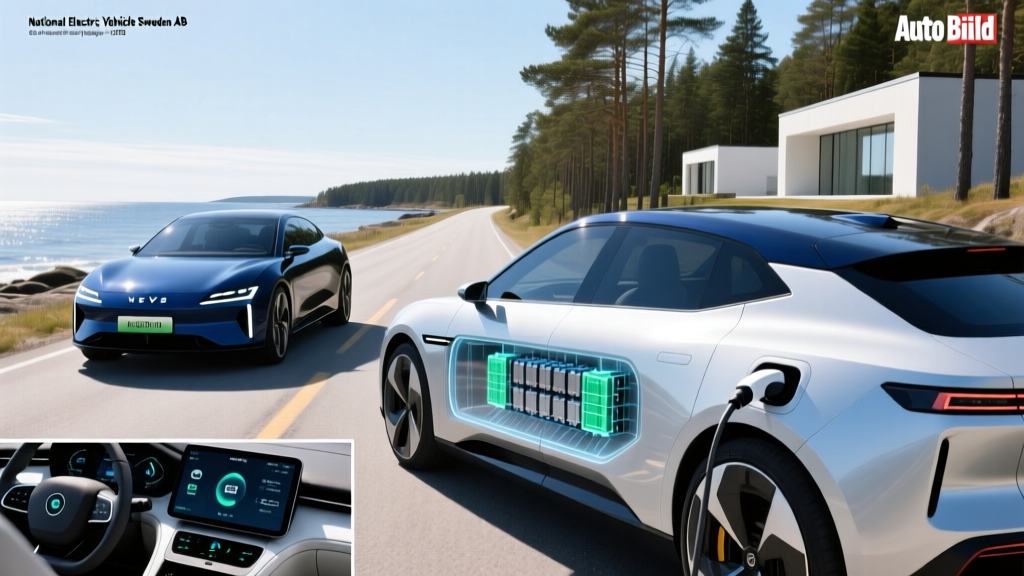
National Electric Vehicle Sweden AB (NEVS) is a Swedish-registered automotive company originally formed in 2012 to acquire assets from the bankrupt Saab Automobile. As of 2026, NEVS is not selling vehicles to US consumers and does not participate in the American EV market. The company has pivoted toward autonomous fleet technology and mobility services rather than direct-to-consumer vehicle sales. US buyers searching for NEVS vehicles at American dealerships will not find any available models. If you're researching NEVS for investment, partnership, or general EV industry awareness, this guide covers what the company is, what happened to its vehicle programs, and what alternatives make sense for US EV shoppers.
The NEVS Story: From Saab's Ashes to EV Ambitions
National Electric Vehicle Sweden AB was established in Trollhättan, Sweden — the historic home of Saab Automobile manufacturing. When Saab filed for bankruptcy in 2011, NEVS acquired the core assets including the 9-3 sedan platform, factory tooling, and select intellectual property rights. The initial vision was straightforward: resurrect Saab's engineering legacy as a modern electric vehicle manufacturer.
Between 2013 and 2019, NEVS produced limited runs of the Saab 9-3 (badged without Saab branding due to trademark disputes) and developed an EV concept called the NEVS 9-3 electric sedan. The company also unveiled the NEVS 9-3X, an electric crossover concept at CES 2019. However, these vehicles never reached mass production or international distribution.
Ownership of NEVS has shifted multiple times. The company was acquired by China-based Evergrande Group's automotive division (later rebranded as Hengchi/NEVS), linking it to the broader and often turbulent Chinese EV manufacturing sector. As of early 2026, NEVS has undergone significant restructuring, with reports indicating a strategic pivot away from consumer vehicle manufacturing toward software-defined autonomous fleet platforms.
NEVS Vehicle Specs: What Was Promised vs. Reality
For context on what NEVS once planned to bring to market, here are the last published specifications for the NEVS 9-3 EV sedan concept — keeping in mind these were preliminary and never independently EPA-certified:
| Specification | NEVS 9-3 EV (Concept/Announced) | Comparable US EV (2026 Tesla Model 3 LR) |
|---|---|---|
| Battery Capacity | ~50 kWh (announced) | 75 kWh usable (NMC) |
| Range (Claimed/Est.) | ~190 mi (NEDC-cycle, optimistic) | 363 mi (EPA) |
| DC Fast Charge (Peak) | ~50 kW (estimated, CCS) | 250 kW (NACS/CCS) |
| 10–80% Charge Time | ~55 min (estimated) | ~18 min |
| 0–60 mph | Not published | 4.2 sec |
| Horsepower | ~177 hp (announced) | 346 hp |
| MSRP | Never priced for US market | $44,130 (base) |
| Federal Tax Credit (§30D) | N/A — not sold in US | Up to $7,500 (eligibility varies) |
| Availability | Never entered US market | Available nationwide |
The gap between NEVS's announced specs and what US buyers can actually purchase in 2026 is enormous. A 50 kWh battery with ~50 kW DC charging is roughly a decade behind current mainstream EVs. For reference, the 2026 Hyundai Ioniq 6 SE Long Range offers a 77.4 kWh battery, 361 miles of EPA range, and 240 kW peak DC charging — all starting under $42,000.
Why NEVS Doesn't Matter for US EV Buyers
If you landed on this page searching for NEVS, you likely encountered the name in an industry news article or financial report. Here's the practical reality for anyone shopping for an electric vehicle in the United States:
Decision Framework: Should You Wait for NEVS or Buy Now?
- If you need an EV in the next 12 months: NEVS has no US sales presence, no EPA-certified vehicles, and no dealer network. Choose from established brands like Tesla, Hyundai, Ford, Chevrolet, BMW, or Rivian.
- If you're researching EV stocks or investments: NEVS is tied to the financially volatile Evergrande automotive ecosystem. Conduct independent due diligence — this is a high-risk entity with no revenue from US vehicle sales.
- If you want a Scandinavian-designed EV: The Volvo EX30, EX90, and Polestar 2/4 are all available in the US with full warranty support, EPA certification, and federal tax credit eligibility. These represent the actual Swedish EV legacy in America.
- If you're drawn to the Saab name: No current EV carries the Saab badge. The closest spiritual successor in terms of quirky, driver-focused design might be the Polestar 2 or the Fisker Ocean (though Fisker's future is also uncertain as of 2026).
Cost Comparison: What US Buyers Actually Pay for an EV vs. Gas Car in 2026
Since NEVS isn't an option, let's ground this in real numbers for US shoppers comparing a mainstream EV against a comparable gasoline vehicle. The following uses a 2026 Tesla Model 3 Long Range vs. a 2026 Toyota Camry LE (gas) as representative benchmarks:
| Cost Factor | 2026 Tesla Model 3 LR (EV) | 2026 Toyota Camry LE (Gas) |
|---|---|---|
| Base MSRP | $44,130 | $29,500 |
| Federal Tax Credit (§30D) | Up to $7,500 (income/MSRP/sourcing rules apply — see IRS §30D) | $0 |
| Effective Purchase Price | ~$36,630 (if full credit applies) | $29,500 |
| Fuel/Energy Cost per Mile | ~$0.045/mi (at $0.15/kWh, 28 kWh/100mi) | ~$0.12/mi (at $3.40/gal, 28 MPG combined) |
| Annual Fuel (12,000 mi) | ~$540 | ~$1,440 |
| Annual Maintenance | ~$300 (no oil, fewer wear items) | ~$700 (oil, filters, belts) |
| 5-Year Fuel + Maintenance | ~$4,200 | ~$10,700 |
| Average Annual Insurance | ~$2,100 (EVs typically 15–25% higher) | ~$1,650 |
| 5-Year Insurance | ~$10,500 | ~$8,250 |
| 5-Year Total Operating Cost | ~$14,700 | ~$18,950 |
Net 5-year savings for the EV: approximately $4,250 in operating costs, partially offset by higher insurance. The breakeven point vs. the Camry depends heavily on whether you qualify for the full §30D credit, your electricity rate, and your annual mileage. High-mileage drivers (15,000+ miles/year) in states with cheap electricity see faster payback. For detailed eligibility rules on the federal credit, consult a tax professional and the official IRS guidance.
Myths vs. Facts: Common EV Misconceptions US Buyers Still Believe
| Myth | Fact (with Data) |
|---|---|
| "EV batteries need replacing every few years." | Modern LFP and NMC batteries are warranted for 8 years/100,000 miles minimum (federal mandate). Real-world degradation averages 10–15% over 8 years based on fleet data. Full replacement costs $5,000–$20,000 depending on the model, but most batteries outlast the vehicle. |
| "You can't drive an EV in cold weather." | Cold weather reduces range by 15–30% depending on temperature and whether you precondition. A 363-mile EPA Tesla Model 3 LR might deliver ~260–290 miles at 20°F. A heat pump (standard on most 2026 EVs) mitigates this. Preconditioning while plugged in preserves range. |
| "Charging takes too long for road trips." | At a 250 kW DC fast charger, a 2026 Tesla Model 3 adds 10–80% in ~18 minutes. A 300-mile trip typically requires one 20-minute stop. The real bottleneck is charger availability and reliability — check fueleconomy.gov and PlugShare for route planning. |
| "EVs are worse for the environment because of battery mining." | Over a full lifecycle (manufacturing + 150,000 miles of driving), EVs produce 50–70% fewer emissions than comparable gas cars even on the current US grid mix, per Argonne National Laboratory analysis. The gap widens as the grid decarbonizes. |
| "I need a special panel upgrade to charge at home." | Most homes with a 200-amp electrical panel can support a Level 2 (7.7–11.5 kW) charger on a 40–60 amp circuit without a panel upgrade. Installation costs range from $500–$2,500 depending on run distance and permitting. A panel upgrade adds $1,500–$3,500 but is only needed in older homes with 100-amp service. |
Real-World Ownership: What First-Time EV Buyers Must Know
Before you sign any purchase agreement — whether it's a Tesla, Hyundai, Ford, or any other brand currently available in the US — here are the ownership realities that don't appear on the window sticker:
Home Charging Is Non-Negotiable for Most Owners
Over 80% of EV charging happens at home. If you live in an apartment without charging access, or your HOA restricts charger installation, public-charging-only ownership is possible but significantly more expensive ($0.25–$0.50/kWh at DC fast chargers vs. $0.10–$0.18/kWh at home) and less convenient. Confirm your charging situation before buying.
Understand kW vs. kWh
This is the single most common point of confusion. kW (kilowatts) measures power — how fast energy flows into your car during charging. kWh (kilowatt-hours) measures energy capacity — how much total energy your battery holds. Think of kW as the width of a hose and kWh as the size of the bucket. A 250 kW charger fills a 75 kWh battery fast; a 1.4 kW Level 1 outlet fills it painfully slowly.
Charging Curves Are Not Flat
When a manufacturer says "250 kW peak charging," that rate applies only between roughly 10–30% state of charge. Above 50%, charging speed tapers significantly. Above 80%, it slows to a trickle to protect battery health. This is why 10–80% charge time is the standard metric — and why you should never plan road-trip stops assuming sustained peak rates.
The §30D Tax Credit Is Not Guaranteed
The federal EV tax credit under IRS §30D has multiple eligibility gates in 2026:
- MSRP caps: $80,000 for SUVs/vans/pickups; $55,000 for sedans and other body styles
- Buyer income caps: $150,000 single / $300,000 married filing jointly (modified AGI)
- Battery sourcing requirements: Increasingly strict critical-mineral and battery-component rules tied to US or FTA-partner sourcing — these tighten annually
- Point-of-sale transfer: You can elect to transfer the credit to the dealer at purchase, reducing your upfront cost, but this requires dealer participation
Always verify eligibility for the specific trim and build date you're considering. Rules change, and not every EV qualifies for the full $7,500.
If Not NEVS: Which EVs Should US Buyers Actually Consider?
Based on 2026 pricing, range, charging speed, and tax-credit eligibility, here's a quick-reference comparison of mainstream EVs that are actually purchasable in the US:
| Model (2026) | EPA Range | Battery | Peak DC Charge | 10–80% Time | Base MSRP | §30D Credit |
|---|---|---|---|---|---|---|
| Tesla Model 3 LR | 363 mi | 75 kWh (NMC) | 250 kW | ~18 min | $44,130 | Partial/Full (varies) |
| Hyundai Ioniq 6 SE LR | 361 mi | 77.4 kWh (NMC) | 240 kW | ~18 min | $41,600 | Partial (sourcing dependent) |
| Chevrolet Equinox EV LT | 319 mi | 85 kWh (NMC) | 150 kW | ~28 min | $34,900 | Full $7,500 (if eligible) |
| Ford Mustang Mach-E Select | 250 mi | 70 kWh (LFP) | 150 kW | ~26 min | $39,995 | Partial/Full (varies) |
| Volkswagen ID.4 Pro | 291 mi | 82 kWh (NMC) | 170 kW | ~28 min | $40,790 | Partial (sourcing dependent) |
All of the above vehicles come with at minimum an 8-year/100,000-mile battery and powertrain warranty as federally mandated. For real-world range expectations, subtract 10–15% for highway-heavy driving and 15–30% for sustained sub-freezing temperatures. For verified EPA data, cross-check on fueleconomy.gov.
Frequently Asked Questions
Is NEVS (National Electric Vehicle Sweden AB) selling cars in the US?
No. As of 2026, NEVS has no US sales presence, no EPA-certified vehicles, and no dealer or service network in America. The company has pivoted toward autonomous fleet software and is not manufacturing consumer vehicles at scale.
Can I import a NEVS vehicle to the United States?
Practically, no. Importing a vehicle that lacks EPA and DOT certification is extremely difficult for individual buyers. The vehicle would need to meet all Federal Motor Vehicle Safety Standards (FMVSS), emissions requirements, and be modified by a Registered Importer — a process that typically costs $10,000–$30,000+ and is rarely approved for non-historic vehicles.
What happened to the Saab brand?
The Saab Automobile brand was split from Saab AB (the aerospace/defense company) decades ago. After GM sold Saab Automobile in 2010, the brand passed through Spyker Cars, then bankruptcy, then NEVS. Saab AB retained the right to the Saab name and logo for certain uses, which is why NEVS vehicles could not use the Saab badge. Today, the Saab automotive legacy is effectively dormant.
What's the best EV for a first-time buyer in 2026?
For budget-conscious buyers: the Chevrolet Equinox EV (~$34,900, 319 mi range, full §30D eligibility possible). For tech-forward buyers: the Tesla Model 3 Long Range (363 mi, Supercharger network access). For value and charging speed: the Hyundai Ioniq 6 SE (361 mi, 240 kW peak charging). Always verify tax credit eligibility for the specific build and your income situation before committing.
How do I check if an EV qualifies for the federal tax credit?
Start with the IRS Clean Vehicle Credits page. You'll need to confirm: (1) the vehicle's MSRP is under the cap, (2) your modified AGI is under the income limit, (3) the battery meets current-year critical mineral and component sourcing requirements, and (4) the vehicle was assembled in North America (for new vehicles). The dealer can also confirm eligibility at point of sale and facilitate the credit transfer if applicable.