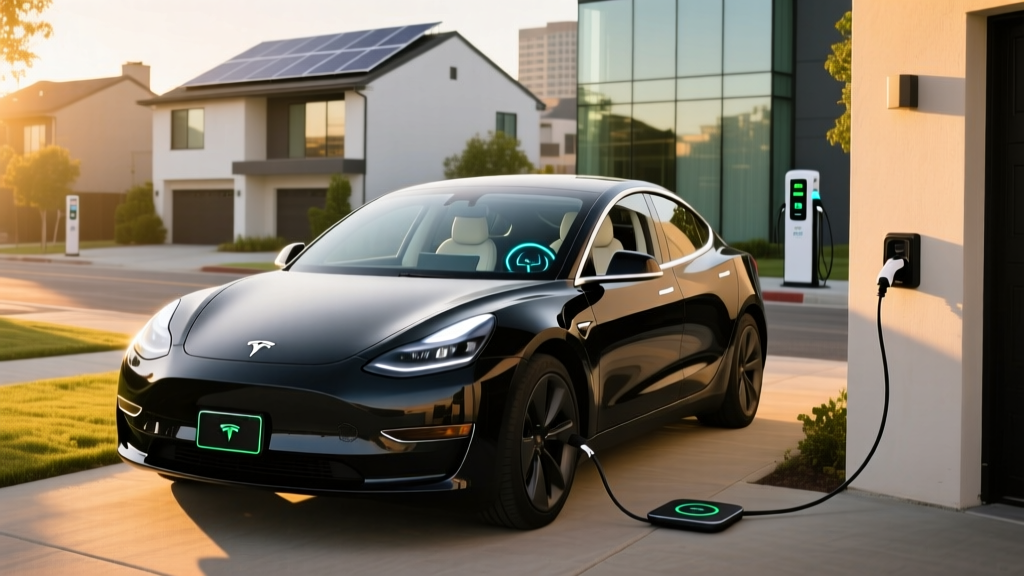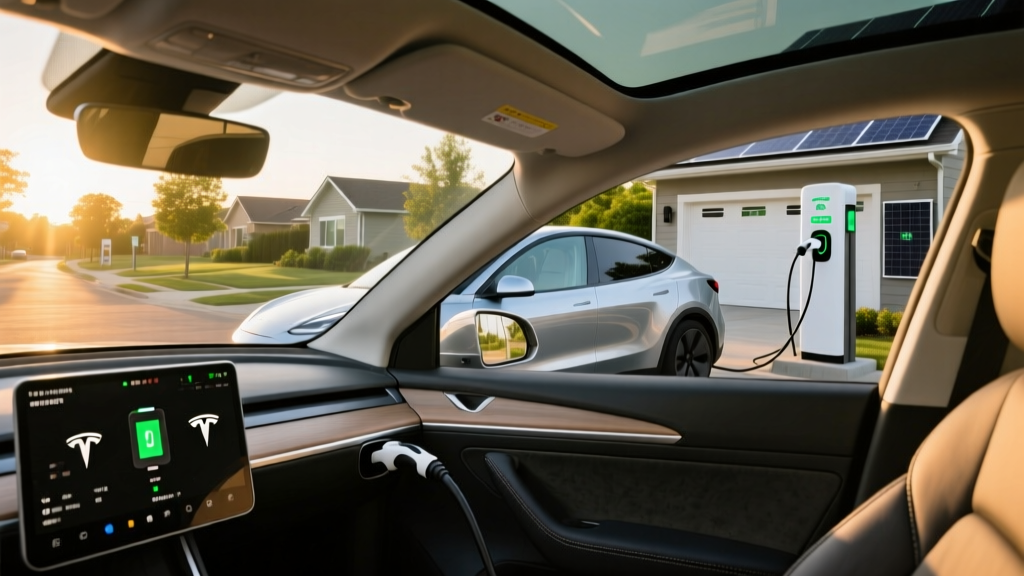
The Tesla Model Y launched in early 2020 as a compact electric crossover built on the Model 3 platform, and it quickly became Tesla's best-selling vehicle worldwide. For buyers in 2026 evaluating a used 2020 Model Y — or comparing it against newer electric SUVs — the critical questions are how its original specs translate to real-world ownership five years later. This review covers the 2020 Model Y Long Range AWD and Performance variants with exact figures on range, charging, battery health expectations, and current market positioning.
2020 Tesla Model Y: Quick Verdict
The 2020 Model Y Long Range AWD delivers an EPA-estimated 316 miles of range, dual-motor all-wheel drive, and access to Tesla's Supercharger network — a combination that still competes with 2026 compact EV SUVs. The Performance trim sacrifices 16 miles of range for a 3.5-second 0-60 time. Both trims use a 75 kWh NMC lithium-ion battery pack. If you're buying used in 2026, expect battery State of Health (SoH) between 85-92% depending on charging history and climate, which translates to roughly 270-290 miles of usable range on a Long Range AWD. Federal tax credits do not apply to used 2020 Model Y purchases unless the vehicle qualifies under the separate §25E used-EV credit (capped at $4,000 with strict income and price limits).
Range and Efficiency: EPA Sticker vs Reality
Real-World Expectation: 260-290 miles highway (Long Range); 230-260 miles (Performance). In freezing temperatures (below 32°F), expect 20-30% range reduction, dropping the Long Range to approximately 220-250 miles without preconditioning.
The 2020 Model Y Long Range AWD carries an EPA rating of 316 miles, while the Performance variant is rated at 280 miles. These figures were class-leading at launch. However, EPA range is measured under mixed city/highway conditions at moderate temperatures. On sustained highway driving at 70-75 mph, the Long Range typically delivers 260-290 miles depending on elevation, wind, and tire condition. The 2020 Model Y was originally equipped with Michelin Primacy MXM4 or Continental ProContact RX tires — replacement tire choice significantly affects efficiency.
According to fueleconomy.gov, the 2020 Model Y Long Range AWD achieves 121 MPGe combined (city: 127 MPGe, highway: 114 MPGe), translating to roughly 28 kWh per 100 miles. The Performance trim drops to 111 MPGe combined. In real-world ownership, expect 26-32 kWh/100mi depending on driving style, climate control usage, and terrain. Cold-weather efficiency losses are significant: the 2020 Model Y uses a resistive PTC heater rather than the heat pump Tesla introduced with the 2021 refresh, meaning winter range loss is more pronounced than in newer Model Y variants.
| Specification | Long Range AWD | Performance |
|---|---|---|
| EPA Range | 316 miles | 280 miles |
| Battery Capacity (usable) | ~75 kWh (NMC) | ~75 kWh (NMC) |
| Efficiency (EPA combined) | 121 MPGe / 28 kWh/100mi | 111 MPGe / 30 kWh/100mi |
| 0-60 mph | 4.8 seconds | 3.5 seconds |
| Horsepower | ~384 hp (combined) | ~456 hp (combined) |
| Drivetrain | Dual-motor AWD | Dual-motor AWD |
| Top Speed | 135 mph | 155 mph |
| Max DC Fast Charge | 250 kW (peak) | 250 kW (peak) |
| 10-80% DC Charge Time | ~27 minutes | ~27 minutes |
| Level 2 Charge Rate | 11.5 kW (44 mi/hr) | 11.5 kW (44 mi/hr) |
| Cargo Volume (rear seats up) | 30.2 cu ft | 30.2 cu ft |
| Cargo Volume (seats folded) | 76.2 cu ft | 76.2 cu ft |
| Rear Legroom | 40.5 inches | 40.5 inches |
| Original MSRP (2020) | $52,990 | $60,990 |
Battery Chemistry, Degradation, and 2026 Health Expectations
The 2020 Model Y uses an NMC (nickel manganese cobalt) lithium-ion battery pack manufactured by Panasonic at the Gigafactory. NMC chemistry offers higher energy density than LFP (lithium iron phosphate), enabling the 316-mile range in a relatively compact pack. The trade-off is that NMC is more sensitive to sustained high State of Charge (SoC) and extreme temperatures. Tesla recommends daily charging to 80-90% for NMC packs, reserving 100% charges for road trips.
For a 2020 Model Y evaluated in 2026, expect battery degradation of approximately 8-15% depending on usage patterns. Vehicles that were regularly charged to 100%, frequently Supercharged, or operated in hot climates (Arizona, Texas) will show higher degradation. Data from owner communities and fleet analyses suggest the average 2020 Model Y retains 85-92% of original capacity after five years. At 88% SoH, a Long Range AWD would show approximately 278 miles at 100% charge.
Tesla's battery warranty for the 2020 Model Y covers 8 years or 120,000 miles (whichever comes first) with a minimum 70% capacity retention threshold. This means the warranty remains active for most 2020 vehicles through early 2028. If the battery drops below 70% SoH within the warranty period, Tesla will repair or replace it. Battery replacement outside warranty currently costs between $12,000-$16,000 depending on pack configuration and labor.
Charging Speed: DC Fast, Level 2, and Level 1
The 2020 Model Y supports a peak DC fast-charge rate of 250 kW at V3 Superchargers. However, peak rate is not sustained rate. The charging curve on a 2020 Model Y typically holds 200-250 kW from roughly 10-30% SoC, then tapers progressively. The 10-80% charge takes approximately 27 minutes at a V3 Supercharger under optimal conditions (battery preconditioned via navigation routing to the charger). Above 80%, charging slows dramatically — 80-100% can add another 20-25 minutes, which is why road-trip strategy focuses on 10-80% cycles.
| Charging Level | Power (kW) | Rate (miles/hour) | Full Charge Time |
|---|---|---|---|
| Level 1 (120V standard outlet) | ~1.4 kW | ~3-4 mi/hr | ~55+ hours (0-100%) |
| Level 2 (240V, 48A Tesla Wall Connector) | 11.5 kW | ~44 mi/hr | ~7 hours (0-100%) |
| Level 2 (240V, 32A mobile connector) | 7.7 kW | ~30 mi/hr | ~10 hours (0-100%) |
| DC Fast (V3 Supercharger, 250 kW peak) | 250 kW peak | ~1,000 mi/hr (peak) | ~27 min (10-80%) |
| DC Fast (V2 Supercharger, 150 kW peak) | 150 kW peak | ~600 mi/hr (peak) | ~38 min (10-80%) |
| CCS Adapter (Electrify America, etc.) | Up to 250 kW* | Varies | Similar to V3 Supercharger |
*The 2020 Model Y uses Tesla's proprietary connector (now called NACS). A Tesla CCS adapter ($175-$250) enables charging at non-Tesla CCS stations. In 2026, most major networks support NACS natively or via adapter.
For home Level 2 charging, the 2020 Model Y's onboard charger accepts up to 11.5 kW (48 amps). A Tesla Wall Connector on a 60-amp circuit delivers the full 48A, adding roughly 44 miles of range per hour — sufficient to fully recharge overnight. Installation costs for a 240V/60A circuit typically range from $800-$2,500 depending on panel proximity and local permitting. Homes with older 100-amp electrical panels may require a panel upgrade ($1,500-$3,000 additional).
Performance and Driving Dynamics
The 2020 Model Y Long Range AWD uses a dual-motor configuration: a permanent-magnet reluctance motor on the rear axle and an induction motor on the front axle. Combined output is approximately 384 horsepower, delivering a 4.8-second 0-60 mph time. The Performance trim increases output to roughly 456 horsepower with a 3.5-second 0-60 — figures that embarrass most gasoline performance SUVs costing twice as much.
Regenerative braking on the 2020 Model Y is aggressive and enables genuine one-pedal driving in most conditions. Tesla removed the regenerative braking adjustability setting in 2020 (it was later restored in 2023 models), so all 2020 vehicles operate in strong-regen mode exclusively. The low center of gravity from the floor-mounted battery pack keeps body roll controlled, though the 2020 Model Y's ride quality drew criticism for being firm over rough pavement — a characteristic Tesla addressed with suspension revisions in later model years.
Interior, Cargo, and Technology
The 2020 Model Y interior follows Tesla's minimalist approach: a single 15-inch landscape touchscreen handles all infotainment, climate, and vehicle controls. There is no traditional instrument cluster — speed and navigation appear in the upper-left corner of the main screen. The cabin seats five (an optional third row for two small children was available but extremely cramped). Rear legroom measures 40.5 inches, and headroom is generous thanks to the full glass roof.
Cargo capacity is a standout: 30.2 cubic feet behind the rear seats and 76.2 cubic feet with seats folded — competitive with midsize SUVs despite the Model Y's compact exterior footprint. A small front trunk (frunk) adds 4.1 cubic feet for charging cables or groceries. Build quality on the 2020 Model Y, particularly early-production units from the Fremont factory, was inconsistent — panel gaps, paint imperfections, and interior rattles were common complaints. Tesla improved assembly consistency throughout 2020 and into 2021.
Tech features include Tesla's native navigation with real-time Supercharger routing, over-the-air software updates, Sentry Mode (surveillance camera system), Tesla Arcade gaming, and a premium audio system with 14 speakers. The 2020 Model Y came standard with Autopilot (SAE Level 2 driver assistance), which includes adaptive cruise control, lane-keeping assist, and automatic emergency braking. Full Self-Driving (FSD) capability was available as a $7,000-$10,000 add-on — in 2026, FSD Supervised remains a Level 2 system requiring continuous driver attention and is not autonomous driving.
Pricing, Tax Credits, and Used Market Value
The 2020 Model Y Long Range AWD originally started at $52,990 (before destination), and the Performance started at $60,990. Both exceeded the current IRS §30D MSRP cap of $55,000 for SUVs, meaning they were ineligible for the federal new-EV tax credit even when new (the §30D rules at the time were different, and Tesla had already exceeded the manufacturer credit phase-out cap).
For 2026 used buyers, the federal §30D new-vehicle credit does not apply. However, the §25E used-EV tax credit may provide up to $4,000 (30% of the sale price, capped) if the following conditions are met:
- Sale price must be $25,000 or less
- Buyer income must not exceed $75,000 (single), $112,500 (head of household), or $150,000 (joint)
- Vehicle must be at least two model years old (2020 qualifies)
- Vehicle must be purchased from a licensed dealer (private-party sales excluded)
- Buyer must not have claimed the used-EV credit in the prior three years
As of 2026, used 2020 Model Y Long Range AWD vehicles typically sell for $24,000-$32,000 depending on mileage, condition, and battery health. Units priced at or below $25,000 from a dealer may qualify the buyer for the $4,000 §25E credit if income limits are met, bringing effective cost as low as $20,000-$21,000. Verify current eligibility at IRS.gov as rules are subject to legislative change.
| Trim | Original MSRP | 2026 Used Range | §25E Credit Eligible? | Effective Cost (with credit) |
|---|---|---|---|---|
| Long Range AWD | $52,990 | $24,000-$30,000 | Yes, if ≤$25,000 dealer sale | As low as ~$20,000-$21,000 |
| Performance | $60,990 | $27,000-$34,000 | Rarely (most exceed $25K cap) | Typically no credit applied |
Warranty Coverage
Tesla's original warranty for the 2020 Model Y includes:
- Basic Vehicle: 4 years / 50,000 miles — expired for all 2020 vehicles by 2024
- Battery & Drive Unit: 8 years / 120,000 miles, minimum 70% capacity retention — active through early 2028 for most vehicles
- Safety Restraint System: 5 years / 60,000 miles
The battery and drive unit warranty is the most valuable remaining coverage. If you're evaluating a 2020 Model Y in 2026, confirm the odometer reading is below 120,000 miles and check the vehicle's battery health display (Settings → Software → Battery Health on newer firmware versions, or via third-party tools like Tessie or TeslaFi).
Pros and Cons
Pros
- Class-leading 316-mile EPA range (Long Range) still competitive in 2026
- 250 kW DC fast charging with access to 60,000+ Tesla Superchargers globally
- 76.2 cu ft cargo capacity with seats folded — practical for families
- Dual-motor AWD with strong traction in snow and rain
- Over-the-air updates continue to add features years after purchase
- Strong used-market value retention relative to non-Tesla EVs
- Low center of gravity and responsive handling for a crossover
Cons
- No heat pump — cold-weather range loss worse than 2021+ Model Y
- Early 2020 build quality issues (panel gaps, paint, interior rattles)
- Firm ride quality over rough pavement
- Regenerative braking not adjustable (strong mode only)
- Basic vehicle warranty already expired — only battery/drive unit covered
- No Apple CarPlay or Android Auto — Tesla's native ecosystem only
- Insurance costs 15-30% higher than comparable gas-powered SUVs
- FSD purchase does not transfer reliably to used buyers
Who Should Buy a 2020 Model Y in 2026?
Choose the 2020 Model Y Long Range AWD if:
- You need 260+ real-world miles of range for commuting and occasional road trips
- You have access to home Level 2 charging (essential for convenient EV ownership)
- You want Supercharger network access for long-distance travel
- You need practical cargo space for a family of 3-5
- You're budget-conscious and want strong EV value under $30,000
Look at newer alternatives (2024-2026 Model Y, Hyundai Ioniq 5, Ford Mustang Mach-E) if:
- You need a heat pump for cold-climate efficiency
- You want current basic/bumper-to-bumper warranty coverage
- You prefer Apple CarPlay integration
- You want the latest ADAS hardware (HW4 cameras vs 2020's HW3)
- Build quality and ride comfort are top priorities
Frequently Asked Questions
What is the real-world range of the 2020 Tesla Model Y?
The EPA rates the 2020 Model Y Long Range AWD at 316 miles and the Performance at 280 miles. In real-world highway driving at 70-75 mph, expect 260-290 miles for the Long Range and 230-260 miles for the Performance. In freezing temperatures without preconditioning, range can drop to 220-250 miles (Long Range) due to the lack of a heat pump.
How fast does the 2020 Model Y charge?
At a V3 Tesla Supercharger (250 kW peak), the 2020 Model Y charges from 10-80% in approximately 27 minutes with a preconditioned battery. At home on a 48-amp Level 2 charger (11.5 kW), it adds about 44 miles of range per hour, achieving a full charge in roughly 7 hours.
Does a used 2020 Model Y qualify for the federal EV tax credit?
The §30D new-vehicle credit does not apply to used purchases. The §25E used-EV credit may provide up to $4,000 if the vehicle is purchased from a dealer for $25,000 or less, and the buyer meets income limits ($75K single / $150K joint). Check current rules at IRS.gov.
Is the 2020 Model Y worth buying vs newer competitors?
The 2020 Model Y remains competitive on range, charging speed, cargo space, and Supercharger access. Its main weaknesses versus 2024-2026 competitors are the lack of a heat pump (worse cold-weather efficiency), expired basic warranty, early-production build quality concerns, and older HW3 Autopilot hardware. If priced under $28,000 with verified battery health above 88%, it offers strong value.
What are the biggest issues with the 2020 Model Y?
The most common complaints are build quality inconsistencies (panel gaps, paint defects, interior rattles — especially on early 2020 production), firm ride quality, cold-weather range loss without a heat pump, and non-adjustable regenerative braking. Mechanically, the battery and drive units have proven reliable, and the 8-year/120,000-mile battery warranty provides protection through 2028.
How long will the 2020 Model Y battery last?
Tesla's NMC battery packs are designed to retain at least 70% capacity over 8 years or 120,000 miles (the warranty threshold). Real-world data from 2020 vehicles in 2026 shows average SoH of 85-92%. With proper care (daily charging limited to 80-90%, minimizing DC fast charging, avoiding extreme heat exposure), the battery should provide usable service well beyond 150,000 miles. Full replacement, if needed outside warranty, costs approximately $12,000-$16,000.