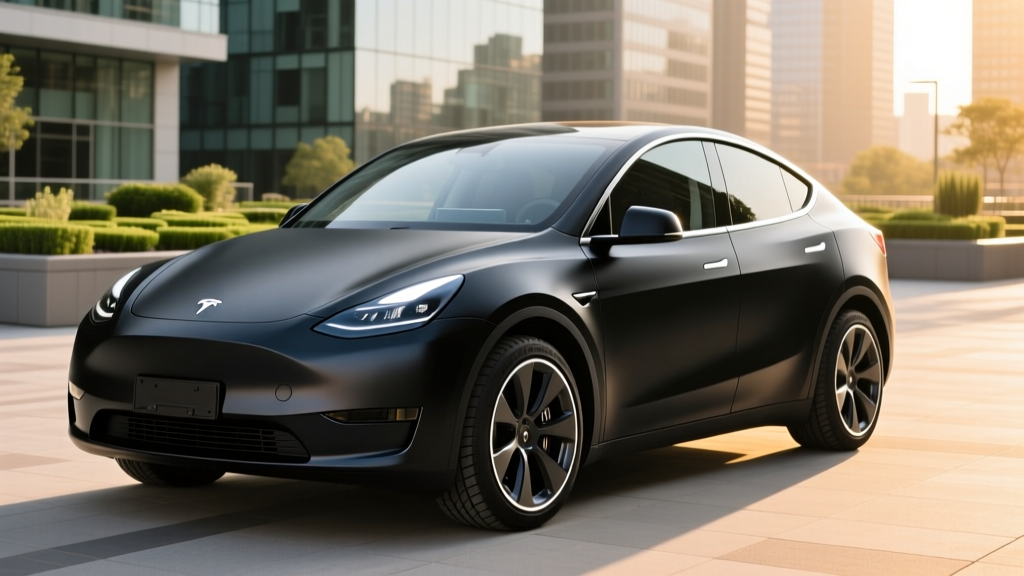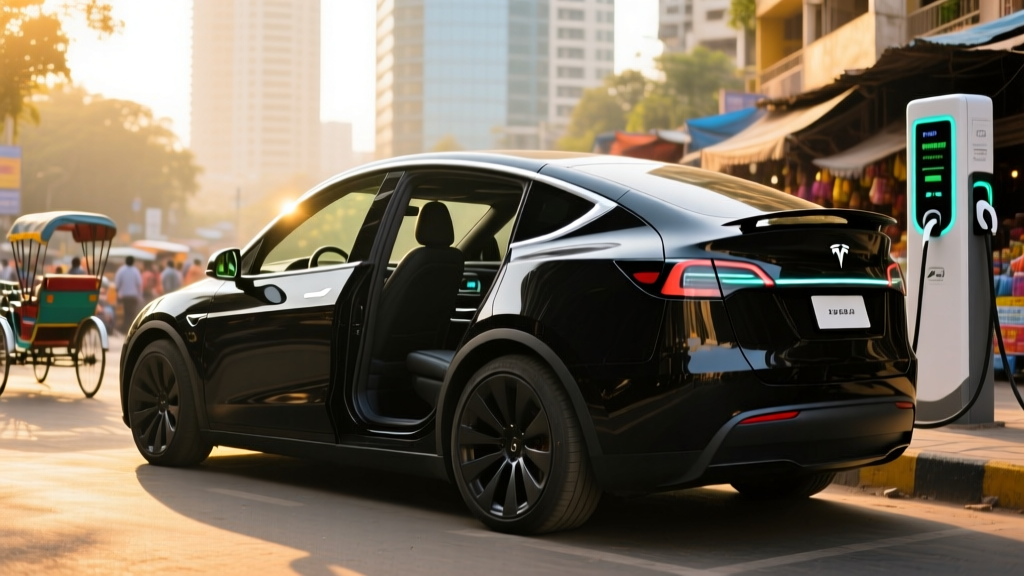
Tesla periodically rolls out promotional financing to move inventory, and the Tesla 1.99% APR Model Y offer has drawn serious attention from buyers weighing an electric crossover in 2026. A sub-2% annual percentage rate on a 48- to 72-month loan can shave thousands off total financing costs compared to prevailing auto-loan rates hovering near 6–7%. But low financing only matters if the underlying vehicle — and its real-world ownership economics — checks your boxes for range, charging speed, cargo space, and daily usability.
This review breaks down the 2026 Tesla Model Y Long Range AWD and Performance trims with exact EPA figures, real-world range expectations, DC fast-charge curves, home charging rates, federal tax credit eligibility under IRS §30D, and a clear-eyed look at where the Model Y excels and where competitors may serve you better.
2026 Tesla Model Y: Quick Verdict
The Model Y remains the best-selling EV in the United States for good reason: a mature Supercharger network, strong efficiency, practical hatchback cargo space, and continuous over-the-air improvements. The 1.99% APR financing offer makes an already compelling total-cost-of-ownership story even more attractive for qualified buyers. However, the minimalist interior, firm ride quality, and Tesla's panel-gap inconsistencies are trade-offs you should test-drive before committing. If you need a daily-driver EV with road-trip capability and home-charging convenience, the Model Y Long Range AWD at promotional financing is difficult to beat on paper.
Range, Efficiency & Real-World Expectations
| Spec | Long Range AWD | Performance |
|---|---|---|
| EPA Range | 320 miles | 293 miles |
| Battery (usable) | ~75 kWh, NMC | ~75 kWh, NMC |
| MPGe (combined) | 122 MPGe | 111 MPGe |
| Energy Consumption | 28 kWh/100 mi | 30 kWh/100 mi |
| Drivetrain | Dual Motor AWD | Dual Motor AWD |
| 0–60 mph | 4.8 seconds | 3.5 seconds |
| Horsepower | ~384 hp | ~456 hp |
| Top Speed | 135 mph | 155 mph |
According to fueleconomy.gov, the Long Range AWD achieves 122 MPGe combined — among the most efficient all-wheel-drive electric crossovers available. Tesla's thermal management system and aerodynamic drag coefficient (~0.23 Cd) contribute heavily to this figure.
Charging Speed: DC Fast, Level 2 & Home Setup
| Charging Level | Power / Rate | Speed |
|---|---|---|
| DC Fast Charge (peak) | 250 kW (CCS via NACS adapter or native NACS at V3 Superchargers) | 10–80% in ~25 min; adds up to 175 mi in 15 min |
| DC Fast Charge (sustained avg.) | ~150 kW average from 10–80% | Charge curve tapers above 55% SoC |
| Level 2 (240V, 48A) | 11.5 kW | ~37 miles of range per hour |
| Level 2 (240V, 32A) | 7.7 kW | ~25 miles of range per hour |
| Level 1 (120V, 12A) | ~1.4 kW | ~4 miles of range per hour |
The Model Y's peak 250 kW DC fast-charge rate is competitive but not class-leading — the Hyundai Ioniq 5 and Kia EV6 can peak at 350 kW on 800-volt architectures. However, Tesla's Supercharger network reliability and plug-and-charge seamlessness offset the raw kW disadvantage for road-trippers. On a V3 Supercharger, the Model Y sustains strong charge rates through the 10–55% window before tapering, meaning your typical 10–80% stop takes about 25 minutes.
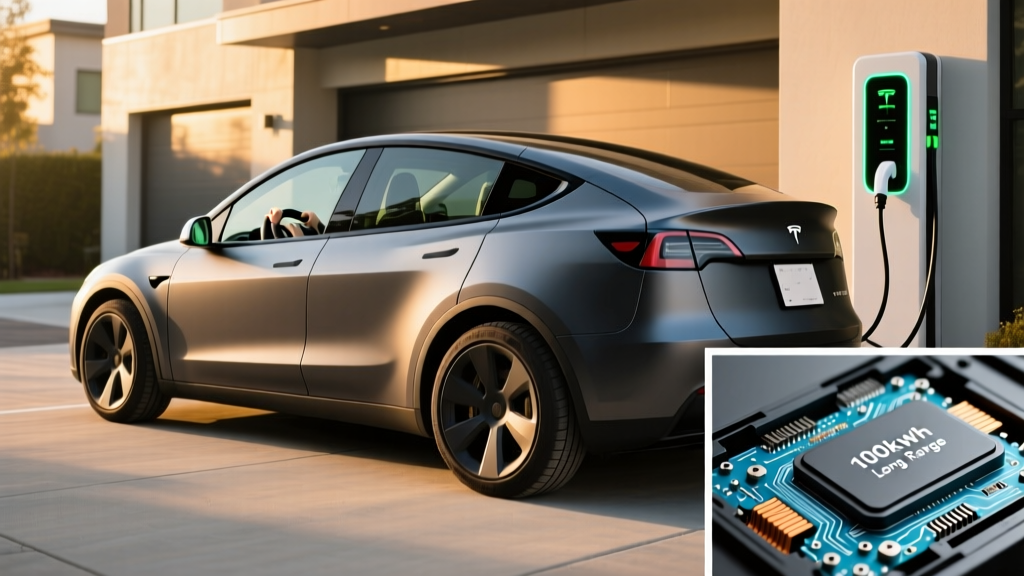
For home charging, Tesla's Wall Connector at 48 amps delivers 11.5 kW — enough to fully replenish the 75 kWh battery in roughly 7 hours. If your electrical panel supports a 60-amp dedicated circuit, this is the optimal home setup. Buyers with older 100-amp panels may need a $1,500–$3,000 panel upgrade; consult a licensed electrician for a site assessment.
Pricing, Trims & Federal Tax Credit Eligibility
| Trim | Base MSRP | Est. After §30D Credit* |
|---|---|---|
| Long Range AWD | $44,990 | $37,490 |
| Performance | $48,990 | $41,490 |
*Federal tax credit eligibility depends on multiple IRS §30D requirements. See checklist below.
The Tesla 1.99% APR Model Y financing offer typically applies to well-qualified buyers (credit score 720+) on 48- to 72-month terms through Tesla's lending partners. On a $44,990 Long Range AWD financed at 1.99% APR over 72 months, your monthly payment would be approximately $655, with total interest paid around $2,170 over the loan term. Compare that to a 6.5% APR loan at the same term: roughly $755/month and $9,370 in total interest — a savings of over $7,000 with the promotional rate.
Federal EV Tax Credit (§30D) Eligibility Checklist
- MSRP Cap: SUVs/crossovers must have an MSRP at or below $80,000 (Model Y qualifies)
- Buyer Income Cap: Modified AGI ≤ $150,000 (single), $225,000 (head of household), $300,000 (joint)
- Battery Sourcing: Critical minerals and battery components must meet phased-in domestic/free-trade sourcing thresholds — Tesla's US-built Model Y has historically qualified for the full $7,500, but verify current-year rules at IRS.gov
- Point-of-Sale Transfer: You can transfer the credit to the dealer at purchase, reducing your out-of-pocket cost immediately
- Assembly: Must be assembled in North America (Model Y is built in Fremont, CA and Austin, TX)
Always confirm eligibility with a tax professional before purchase — battery-sourcing requirements have tightened annually and can change mid-year.
Interior, Cargo & Technology
The Model Y's interior is polarizing: a single 15.4-inch touchscreen controls virtually everything, including climate vent direction, glovebox release, and mirror adjustment. There is no traditional instrument cluster — speed and navigation appear on the upper-left corner of the center display. Some buyers love the minimalism; others find it distracting.
Cargo dimensions:
- Behind rear seats: 30.2 cu ft
- Seats folded: 72.0 cu ft
- Front trunk (frunk): 4.1 cu ft
- Rear legroom: 41.6 inches
- Front headroom: 41.0 inches
The hatchback design and flat load floor make the Model Y practical for bulky cargo — IKEA runs, camping gear, or two large dogs. The optional third row (available on some configurations) adds two small seats suitable only for children, reducing cargo space significantly when deployed.
Tech highlights:
- Tesla Autopilot (SAE Level 2): adaptive cruise, lane centering, auto lane change — driver must remain engaged
- Full Self-Driving (Supervised): city-street navigation, traffic-light recognition — still Level 2, not autonomous
- Over-the-air updates continuously add features
- Sentry Mode dashcam recording, Dog Mode cabin climate, theater-mode streaming while parked
- Native navigation with real-time Supercharger routing and battery preconditioning
Warranty & Long-Term Battery Outlook
Tesla covers the Model Y with:
- Basic Vehicle Warranty: 4 years / 50,000 miles
- Battery & Drive Unit Warranty: 8 years / 120,000 miles (Long Range & Performance), with a guaranteed minimum 70% capacity retention over the warranty period
The NMC (nickel manganese cobalt) chemistry in the Long Range and Performance trims offers higher energy density than LFP (lithium iron phosphate) but is more sensitive to sustained high-state-of-charge storage. Tesla recommends daily charging to 80–90% for NMC packs and only charging to 100% before long trips. Real-world degradation data from Tesla's fleet shows approximately 10–12% capacity loss at 150,000 miles for NMC packs — meaning a 320-mile Model Y might deliver roughly 282–288 miles at that mileage.
Out-of-warranty battery replacement currently costs between $12,000 and $16,000 depending on the pack, though most owners will sell or trade the vehicle before reaching that point.
Pros, Cons & Who the Model Y Suits Best
Pros
- Best-in-class Supercharger network access with reliable plug-and-charge
- Excellent efficiency: 122 MPGe combined, 28 kWh/100 mi
- Strong 0–60 performance (4.8s Long Range, 3.5s Performance)
- Spacious hatchback cargo area (72 cu ft seats folded)
- Continuous OTA updates add real feature value over time
- 1.99% APR financing saves $7,000+ vs market-rate loans
- Qualifies for full $7,500 federal tax credit (verify sourcing rules)
Cons
- Minimalist interior lacks physical buttons — steep learning curve
- Firm ride quality, especially with 21-inch wheels
- No Apple CarPlay or Android Auto support
- Panel-gap inconsistency still reported by some owners
- 250 kW peak DC charge rate trails 800V competitors (Ioniq 5, EV6)
- FSD (Supervised) costs $8,000 extra and remains Level 2 only
- Insurance premiums 15–25% higher than comparable gas crossovers
Who Should Buy the Model Y?
Choose the Model Y Long Range AWD if: You commute 30–80 miles daily, have home Level 2 charging, take 2–4 road trips per year, and value Supercharger network reliability and strong cargo versatility.
Choose the Model Y Performance if: You want sports-sedan acceleration in a crossover body and don't mind sacrificing 27 miles of EPA range for a 3.5-second 0–60 time and track mode.
Look at competitors (Ioniq 5, EV6, Ford Mustang Mach-E) if: You prefer physical buttons, need Apple CarPlay, want faster 800V DC charging, or want a more traditional dealership service experience.
Frequently Asked Questions
What is the real-world range of the Tesla Model Y Long Range?
The EPA rates it at 320 miles. In real-world highway driving at 75 mph, expect 270–290 miles. In sub-freezing temperatures, that drops to roughly 210–240 miles due to battery chemistry limitations and increased cabin heating demand.
How fast does the Model Y charge at home and on road trips?
At home on a 48-amp Level 2 charger (11.5 kW), you gain about 37 miles per hour — a full charge overnight. On Tesla V3 Superchargers, peak rate is 250 kW, with a 10–80% charge taking approximately 25 minutes. The charge curve tapers noticeably above 55% state of charge.
How much does the Model Y cost after the federal tax credit?
The Long Range AWD starts at $44,990 MSRP. If you qualify for the full $7,500 §30D credit (income caps, sourcing rules apply), your effective price drops to $37,490. Combined with 1.99% APR financing, the monthly payment is approximately $655 over 72 months. Verify current eligibility at IRS.gov.
Does the Tesla Model Y qualify for the $7,500 federal EV tax credit?
The US-built Model Y has historically qualified for the full credit, but eligibility depends on your income (≤$150K single / $300K joint), the vehicle's MSRP (must be ≤$80K for SUVs), and current battery-sourcing requirements. Rules tighten annually — confirm before purchasing.
Is the Model Y worth buying over the Hyundai Ioniq 5 or Ford Mach-E?
The Model Y wins on efficiency, Supercharger access, and cargo volume. The Ioniq 5 and EV6 win on DC charge speed (800V architecture), physical controls, and Apple CarPlay. The Mach-E offers a more traditional interior and competitive pricing. Test-drive all three — the best choice depends on your daily priorities.
How long will the Model Y battery last?
Tesla warranties the NMC battery for 8 years / 120,000 miles with at least 70% capacity retention. Fleet data suggests roughly 10–12% degradation at 150,000 miles. Charging to 80–90% daily (not 100%) and avoiding frequent DC fast charging can extend battery life significantly.
Is Tesla Autopilot self-driving?
No. Autopilot and FSD (Supervised) are SAE Level 2 driver-assist systems. You must remain fully attentive with hands on the wheel. These systems assist with steering, braking, and lane changes but do not replace the driver.