Why the Tesla Model X Windshield Is a Hot Topic Among Owners
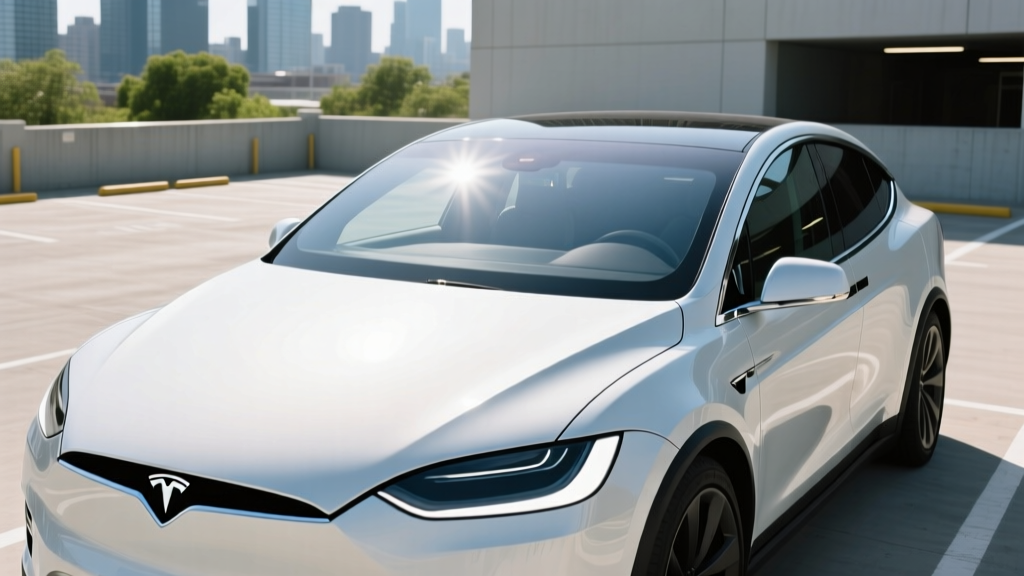
Search forums, Reddit threads, or Tesla owner groups and you'll find a recurring theme: the Tesla Model X windshield. Specifically, owners want to know why it cracks so easily, what it costs to replace, and whether the 2026 refresh addressed the issue. The panoramic windshield on the Model X is one of the most striking design features in the EV market — a single sweeping piece of glass that extends from the cowl to the rear of the roof. But that dramatic glass also carries dramatic replacement costs and some well-documented vulnerability to rock chips and stress fractures.
This guide covers everything a current or prospective Model X owner needs to know about the windshield — and then goes further with a full 2026 Tesla Model X review: real-world range, charging speeds, pricing, tax credit eligibility, and whether this flagship SUV still justifies its six-figure price tag against rivals like the Rivian R1S and BMW iX.
| Spec | Long Range (Dual Motor) | Plaid (Tri-Motor) |
|---|---|---|
| EPA Range | 335 miles | 326 miles |
| Battery (usable) | ~100 kWh, NMC | ~100 kWh, NMC |
| Peak DC Fast Charge | 250 kW | 250 kW |
| 10–80% DCFC Time | ~30 min | ~30 min |
| Level 2 Charge Rate | 11.5 kW (44 mi/hr) | 11.5 kW (44 mi/hr) |
| 0–60 mph | 3.8 sec | 2.5 sec |
| Horsepower | 670 hp | 1,020 hp |
| Drivetrain | AWD Dual Motor | AWD Tri-Motor |
| MPGe (combined) | 109 MPGe | 101 MPGe |
| Efficiency | 31 kWh/100 mi | 33 kWh/100 mi |
| Base MSRP | $79,990 | $94,990 |
| Battery Warranty | 8 yr / 150,000 mi | 8 yr / 150,000 mi |
The Tesla Model X Windshield: Cost, Problems, and What to Know
The Model X panoramic windshield is a laminated acoustic glass panel that spans roughly 17 square feet — significantly larger than a conventional SUV windshield. Its size, curvature, and integration with the vehicle's sensor suite (cameras for Autopilot sit behind the glass near the rearview mirror) make it one of the most expensive windshields in the automotive market.
Replacement Cost Breakdown
Based on owner reports, Tesla service center invoices, and third-party glass specialists, here's what you can expect to pay for a Model X windshield replacement in 2026:
| Item | Estimated Cost |
|---|---|
| OEM Glass (Tesla) | $1,200–$1,600 |
| Labor (Tesla Service Center) | $400–$700 |
| ADAS Camera Recalibration | $150–$300 |
| Mobile Service Surcharge (if applicable) | $100–$250 |
| Total (Tesla OEM) | $1,500–$2,500+ |
| Aftermarket Glass (Safelite, etc.) | $800–$1,400 (total) |
Several factors push costs higher than a typical vehicle windshield. The panoramic glass is a single, custom-curved piece. The acoustic interlayer adds material cost. And the forward-facing cameras mounted behind the glass must be recalibrated after any replacement — a process Tesla handles through software but which adds labor time. If you opt for aftermarket glass through a chain like Safelite, you may save $500–$800, but fitment and optical clarity can vary, and some owners report wind noise issues with non-OEM replacements.
Common Windshield Issues Reported by Owners
- Rock chip propagation: The steep rake angle of the Model X windshield means highway debris hits at a more direct angle. Small chips tend to spread into long cracks faster than on vehicles with more upright glass.
- Stress fractures: Some owners report cracks appearing without obvious impact — likely caused by chassis flex, temperature differentials, or manufacturing tension in the large glass panel.
- Delamination at edges: Early 2016–2020 models saw edge delamination where the glass meets the trim. Tesla improved the adhesive bonding in later model years.
- Sensor interference: Chips or cracks in the camera zone (upper-center of the glass) can trigger Autopilot warnings or disable features entirely until repaired.
2026 Tesla Model X: Real-World Range and Efficiency
The 2026 Model X Long Range carries an EPA-estimated 335 miles of range, while the Plaid drops to 326 miles due to its more power-hungry tri-motor setup. Both figures come from the same ~100 kWh usable battery pack using nickel-manganese-cobalt (NMC) chemistry — chosen for its high energy density, which is critical for a 5,185-lb SUV.
But EPA estimates assume a blend of city and highway driving at moderate temperatures. Real-world results diverge meaningfully:
- EPA sticker: 335 miles
- Highway (70 mph, 72°F): ~280–300 miles
- Highway (70 mph, 30°F): ~230–260 miles
- City/suburban mixed: ~310–330 miles
- Towing (5,000-lb trailer): ~180–210 miles
The Model X's large frontal area and 0.25 Cd drag coefficient — excellent for an SUV but still higher than a sedan — mean highway efficiency drops noticeably above 70 mph. Cold weather compounds this: the battery's internal resistance rises, cabin heating draws power (the Model X uses a heat pump, which helps but doesn't eliminate the penalty), and regenerative braking is reduced until the pack warms.
Efficiency sits at roughly 31 kWh/100 miles (Long Range) and 33 kWh/100 miles (Plaid), translating to 109 MPGe and 101 MPGe combined, respectively, per fueleconomy.gov. For a vehicle this size and this quick, those numbers are competitive — but they're not the efficiency benchmark that the smaller Model Y represents.
Charging Speed: DC Fast Charging and Home Level 2
The Model X supports a peak DC fast-charge rate of 250 kW on Tesla's V3 and V4 Superchargers using the native NACS connector. Here's how the charge curve actually behaves — because peak kW is not sustained kW:
| Charging Level | Power / Rate | Time / Miles Added |
|---|---|---|
| Level 1 (120V outlet) | ~1.4 kW | ~4 mi/hr |
| Level 2 (240V, 48A) | 11.5 kW | ~44 mi/hr (full charge ~9 hr) |
| DC Fast Charge (250 kW peak) | 250 kW (tapers above 50%) | 10–80% in ~30 min |
| DC Fast Charge (150 kW V2) | 150 kW | 10–80% in ~40 min |
At a V3 Supercharger, the Model X will pull close to 250 kW between roughly 10% and 35% state of charge, then taper progressively. By 60% SoC, you're likely seeing 100–130 kW. By 80%, it drops below 60 kW. This is typical NMC charge-curve behavior — the battery management system protects cell longevity by reducing current as the pack fills.
For home charging, the Model X accepts 11.5 kW on a 240V/48A Wall Connector circuit. That translates to roughly 44 miles of range per hour, meaning a full overnight charge from 20% to 100% takes about 9 hours. Most owners who charge nightly from 80% to 100% (or use scheduled departure with preconditioning) wake up with a full battery every morning. Installation of a Tesla Wall Connector typically runs $800–$2,000 including electrician labor and permitting, depending on whether your panel needs an upgrade to support a 60A dedicated circuit.
Preconditioning matters: If you navigate to a Supercharger using the Tesla app or in-car nav, the vehicle will automatically precondition the battery — warming it to optimal temperature for maximum charge acceptance. Skip this step on a cold day and your initial charge rate may be cut in half until the pack warms naturally.
Performance, Interior, and Technology
The Model X Long Range delivers 670 horsepower and a 3.8-second 0–60 mph time from its dual-motor all-wheel-drive powertrain. The Plaid escalates to 1,020 hp and a 2.5-second sprint — numbers that were supercar territory a decade ago, now available in a seven-seat SUV with falcon-wing rear doors.
Interior and Cargo
The Model X seats five, six, or seven depending on configuration. The six-seat layout with second-row captain's chairs is the most popular and provides the best access to the third row. Cargo volume measures:
- Behind third row: 15.0 cu ft (limited but usable for groceries)
- Third row folded: 40.2 cu ft
- All rear seats folded: 73.8 cu ft
- Front trunk (frunk): 6.5 cu ft
Legroom is generous: 41.2 inches up front, 38.4 inches in the second row. Third-row legroom is 32.7 inches — adequate for children or short trips but tight for adults on longer drives. The falcon-wing doors, while dramatic and genuinely useful for loading car seats in tight parking spaces, add weight and complexity. Owners report occasional sensor-related issues where the doors hesitate to open near low obstacles.
Tech and Driver Assistance
The 2026 Model X runs Tesla's current software stack on a 17-inch center touchscreen with a rear-seat entertainment display. Key tech includes:
- Autopilot (standard): Adaptive cruise control, lane centering, automatic emergency braking. This is SAE Level 2 — the driver must remain attentive and keep hands on the wheel.
- Full Self-Driving (Supervised): Available as a $8,000 option or $99/month subscription. Adds automatic lane changes, traffic light/stop sign recognition, and Navigate on Autopilot. Still SAE Level 2. Despite the name, the driver is responsible for all driving decisions.
- Over-the-air updates: Tesla regularly pushes feature improvements, UI changes, and efficiency optimizations.
- HEPA air filtration: The "Bioweapon Defense Mode" uses a hospital-grade HEPA filter — genuinely one of the best cabin air systems in any vehicle.
Pricing, Tax Credit Eligibility, and Total Cost
The 2026 Tesla Model X starts at $79,990 for the Long Range dual-motor and $94,990 for the Plaid tri-motor. Destination and order fees add roughly $1,390. Popular options include:
- FSD (Supervised): $8,000 or $99/mo
- 22" Turbine wheels: $5,500 (reduces range to ~311 mi)
- Six-seat interior: $6,500
- Premium paint (Ultra Red, Deep Blue): $2,500
A well-equipped Long Range with six seats, FSD, and premium paint lands around $102,000 before any incentives.
Federal Tax Credit (§30D)
As of 2026, the Tesla Model X does not qualify for the full $7,500 federal EV tax credit under IRS §30D. The reason: the Model X's MSRP exceeds the $80,000 cap for SUVs set by the Inflation Reduction Act. The Long Range at $79,990 sits right at the threshold, and any added options push it over. Additionally, buyers must meet income caps ($300,000 joint / $150,000 single) and the vehicle must meet battery critical-mineral and component sourcing requirements that Tesla has not fully confirmed for all Model X configurations.
Always verify current eligibility on IRS.gov and consult a tax professional. Point-of-sale transfer of the credit is available for eligible vehicles, but the MSRP cap is the primary barrier for the Model X.
- Vehicle MSRP cap: $80,000 for SUVs/vans/pickups (Model X Long Range is at or above this)
- Buyer AGI cap: $300,000 joint / $225,000 head of household / $150,000 single
- Battery critical minerals: must meet escalating percentage thresholds (80% in 2026)
- Battery components: must meet North American manufacturing thresholds
- Final assembly: must occur in North America (Model X: Fremont, CA ✓)
- Credit is non-refundable — you must have sufficient tax liability to claim it
Pros, Cons, and Competitor Comparison
- 335-mile EPA range is competitive for a full-size luxury EV SUV
- Supercharger network access (17,000+ stalls in North America) is a genuine road-trip advantage
- Falcon-wing doors are practical for car-seat loading in tight spaces
- Class-leading acceleration (Plaid: 2.5 sec 0–60)
- HEPA cabin air filtration is best-in-class
- Over-the-air updates keep the vehicle current
- 5,000-lb towing capacity (with range trade-off)
- Windshield replacement cost ($1,500–$2,500) is a known ownership pain point
- Falcon-wing doors add mechanical complexity and occasional sensor glitches
- Third-row space is tight for adults
- Does not qualify for $7,500 federal tax credit due to MSRP cap
- Build quality inconsistencies still reported (panel gaps, interior trim)
- 250 kW peak DCFC is outpaced by 800V competitors (Hyundai Ioniq 9, Porsche Macan EV at 350 kW)
- Insurance premiums are above average for the segment
Model X vs. Key Competitors
| Spec | Tesla Model X LR | Rivian R1S Dual | BMW iX xDrive50 |
|---|---|---|---|
| EPA Range | 335 mi | 352 mi | 324 mi |
| Base MSRP | $79,990 | $75,900 | $87,250 |
| 0–60 mph | 3.8 sec | 4.5 sec | 4.4 sec |
| Seating | 5/6/7 | 7 | 5 |
| DCFC Peak | 250 kW | 220 kW | 200 kW |
| Towing | 5,000 lb | 7,700 lb | 3,500 lb |
| Fed. Tax Credit | Likely ineligible (MSRP) | Up to $7,500 (elig. varies) | Likely ineligible (MSRP) |
The Rivian R1S is the strongest alternative for buyers who need genuine off-road capability, higher towing, and a better chance at the federal credit. The BMW iX offers a more refined interior and quieter ride but only seats five. The Model X retains advantages in Supercharger access, acceleration, and available seating for seven.
Who Should Buy the Tesla Model X?
The Model X is best suited for:
- Families needing three rows who want electric and value falcon-wing door access for car seats
- Tech-forward buyers who prioritize Autopilot/FSD, OTA updates, and the Supercharger network for road trips
- Performance-oriented SUV buyers who want supercar acceleration with practicality
It's less ideal for:
- Budget-conscious buyers: The ~$80K+ price and lack of federal credit make it a premium proposition
- Heavy towing users: 5,000-lb capacity and ~200-mile towing range limit utility vs. Rivian R1S
- Build-quality perfectionists: Panel gap and trim inconsistencies still surface in owner reports
Warranty and Long-Term Ownership
Tesla covers the Model X with:
- Basic vehicle warranty: 4 years / 50,000 miles
- Battery and drive unit warranty: 8 years / 150,000 miles (whichever comes first), with a guaranteed minimum 70% capacity retention over that period
The NMC battery pack in the Model X has demonstrated relatively low degradation in real-world data. Owners reporting to TeslaFi and other tracking platforms show an average of 8–12% degradation at 100,000 miles — meaning a 335-mile Model X might realistically offer ~295–305 miles of range at that mileage. Battery replacement, should it be needed out of warranty, is estimated at $15,000–$22,000 based on current service pricing.
The windshield, as discussed, is not covered under warranty unless a manufacturing defect can be proven (e.g., spontaneous stress fracture without impact). Rock chips and road-debris damage are insurance claims. Given the replacement cost, comprehensive glass coverage is strongly recommended.
Frequently Asked Questions
How much does a Tesla Model X windshield cost to replace?
Expect $1,500–$2,500+ for OEM glass through a Tesla service center, including ADAS camera recalibration. Aftermarket glass through providers like Safelite can reduce the cost to $800–$1,400, though fitment and optical quality may vary.
Does the Model X windshield crack easily?
The large, steeply raked windshield is more exposed to direct debris impacts than an upright SUV windshield. Rock chips can propagate into cracks faster due to the glass size and tension. Stress fractures without visible impact have been reported, though they are less common on 2022+ models with improved bonding.
What is the real-world range of the 2026 Tesla Model X?
EPA-rated at 335 miles (Long Range), expect roughly 280–300 miles at highway speeds in moderate temperatures, 230–260 miles in freezing conditions, and 180–210 miles when towing a 5,000-lb trailer.
Does the Tesla Model X qualify for the $7,500 federal tax credit?
Most likely not. The base Long Range MSRP of $79,990 sits at the $80,000 SUV cap, and any factory options push it over. Additionally, battery sourcing requirements under §30D must be met. Verify on IRS.gov before purchasing.
How fast does the Model X charge at home?
On a 240V/48A Tesla Wall Connector, the Model X charges at 11.5 kW, adding roughly 44 miles of range per hour. A full charge from near-empty takes about 9 hours. Most owners charging overnight have no issues maintaining a full battery.
Is the Model X worth it vs. the Rivian R1S?
Choose the Model X if Supercharger network access, acceleration, and falcon-wing doors matter most. Choose the R1S if you need higher towing capacity (7,700 lb), better off-road capability, potential federal tax credit eligibility, and a slightly lower starting price. Both are excellent three-row electric SUVs serving different priorities.