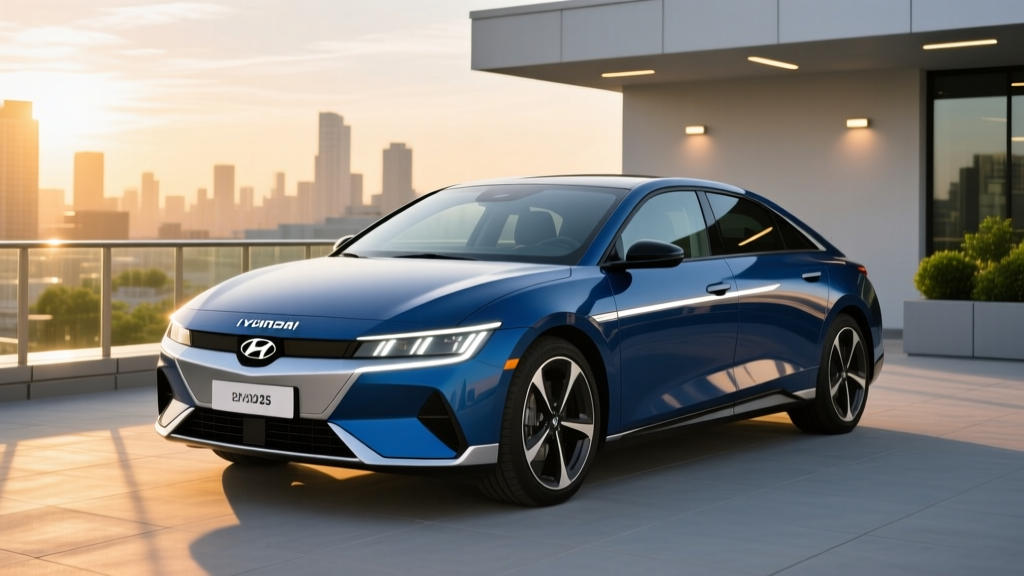
The Hyundai Ioniq 9 arrives for the 2025 model year as the brand's flagship three-row electric SUV, built on the same E-GMP (Electric Global Modular Platform) that underpins the Ioniq 5 and Ioniq 6 but stretched to accommodate up to seven passengers. With an EPA-estimated range reaching 335 miles on the Long Range RWD trim and a peak DC fast-charge rate of up to 350 kW, Hyundai is positioning the Ioniq 9 as a serious alternative to the Tesla Model X, Rivian R1S, and Kia EV9. But how does it perform once you move past the spec sheet? We break down every number that matters for real-world ownership.
Range, Battery, and Real-World Efficiency
The 2025 Ioniq 9 uses an 84 kWh usable lithium-ion battery pack with NMC (nickel manganese cobalt) chemistry — Hyundai has not offered an LFP variant for this model at launch. NMC provides higher energy density than LFP, which is critical in a large, heavy three-row SUV where maximizing range per kilogram of battery matters. The pack sits low in the chassis between the axles, contributing to a low center of gravity.
| Trim / Drivetrain | Battery (usable) | Chemistry | EPA Range | MPGe (city/hwy/combined) | kWh/100 mi |
|---|---|---|---|---|---|
| Long Range RWD | 84 kWh | NMC | 335 mi | 111 / 94 / 103 | ~33 |
| Long Range AWD | 84 kWh | NMC | 311 mi | 99 / 84 / 92 | ~37 |
| Performance AWD | 84 kWh | NMC | 290 mi | 93 / 79 / 86 | ~39 |
For a vehicle of this size — curb weight exceeds 5,500 lbs — the Long Range RWD's combined 103 MPGe is competitive. For context, the Kia EV9 Long Range RWD achieves 100 MPGe combined, while the Tesla Model X Long Range posts 102 MPGe combined, according to fueleconomy.gov.
Charging Speed: DC Fast, Level 2, and the 800V Advantage
The Ioniq 9 inherits the E-GMP platform's 800-volt architecture, which enables significantly faster DC charging than the 400V systems used in many competitors. Hyundai rates the peak DC fast-charge rate at up to 350 kW when connected to a compatible charger, though sustained rates depend on battery temperature, state of charge, and ambient conditions.
| Charging Level | Power (kW) | Time / Rate | Notes |
|---|---|---|---|
| Level 1 (120V household) | ~1.4 kW | ~3-4 mi/hr | Emergency/trickle only; full charge takes 60+ hours |
| Level 2 (240V home, 48A) | 11.5 kW | ~33 mi/hr, full charge ~9 hrs | Requires NACS or J1772 adapter; recommended for daily use |
| DC Fast Charge (peak) | Up to 350 kW | 10–80% in ~24 minutes | Requires 350 kW+ station; preconditioning recommended |
| DC Fast Charge (typical 150 kW) | ~150 kW | 10–80% in ~38 minutes | More common at Electrify America, EVgo locations |
A few practical notes on charging the Ioniq 9:
- Charge curve taper: Like all EVs, the Ioniq 9 does not sustain its peak 350 kW rate for the entire session. Power typically peaks between 10–40% state of charge and then progressively tapers. The 10–80% time of approximately 24 minutes reflects this taper. Pushing from 80–100% adds significant time — plan to charge to 80% on road trips unless you need the full range for the next leg.
- Preconditioning: The Ioniq 9 supports battery preconditioning when you navigate to a DC fast charger via the built-in navigation system. This warms the battery to optimal temperature before you arrive, which can shave several minutes off your charging session — especially important in cold weather when an unprepared battery may accept only a fraction of peak power.
- NACS adoption: Hyundai has committed to the NACS (North American Charging Standard) connector for future models. For the 2025 Ioniq 9, the vehicle ships with a CCS1 port in the U.S. market. Hyundai provides a NACS adapter, granting access to Tesla Supercharger stations. Verify adapter inclusion with your dealer, as policies have evolved through 2025.
Performance and Drivetrain
The Ioniq 9 offers three powertrain configurations:
| Trim | Drivetrain | Motors | Horsepower | Torque (lb-ft) | 0–60 mph |
|---|---|---|---|---|---|
| Long Range RWD | Rear-wheel drive | 1 (rear) | 215 hp | 258 | ~8.0 sec |
| Long Range AWD | Dual-motor AWD | 2 (front + rear) | 338 hp | 446 | ~5.7 sec |
| Performance AWD | Dual-motor AWD | 2 (front + rear) | 422 hp | 523 | ~4.9 sec |
The Long Range RWD's 8.0-second 0–60 time is leisurely by EV standards but adequate for a family hauler. The dual-motor AWD trims transform the driving character entirely — the Performance AWD's sub-5-second sprint is genuinely quick for a three-row SUV that weighs nearly three tons. All trims feature one-pedal driving via adjustable regenerative braking levels, selectable through steering-wheel paddles. The strongest regen setting enables true one-pedal operation in most city driving scenarios.
Towing capacity is rated at up to 2,000 lbs for the RWD and 4,500 lbs for AWD trims when properly equipped — enough for a small utility trailer or a pair of jet skis, but not a large camper. If you need serious towing capability, the Rivian R1S (up to 7,700 lbs) remains the segment leader.
Interior Space, Cargo, and Practicality
The Ioniq 9's wheelbase stretches to approximately 120.3 inches, giving it one of the longest wheelbases in the segment and translating directly into interior volume. Hyundai offers both six-passenger (2+2+2 with second-row captain's chairs) and seven-passenger (2+3+2 with a second-row bench) configurations depending on trim.
| Measurement | Specification |
|---|---|
| Front headroom | ~40.2 in |
| Front legroom | ~41.7 in |
| Second-row legroom | ~38.0 in |
| Third-row legroom | ~30.0 in |
| Cargo (behind 3rd row) | ~12.8 cu ft |
| Cargo (3rd row folded) | ~38.0 cu ft |
| Cargo (all rear rows folded) | ~80.0 cu ft |
| Frunk (front trunk) | ~1.6 cu ft (RWD) / ~0.9 cu ft (AWD) |
The third row is genuinely usable for adults on shorter trips — a notable advantage over many midsize SUVs where the third row is strictly for children. However, with all three rows upright, the 12.8 cu ft of cargo space behind the third row is tight for a family road trip. Most buyers will run in five- or six-passenger mode with the third row folded, unlocking a practical 38 cu ft. The frunk is modest — useful for storing charging cables or a small bag, but not a primary cargo area.
Pricing, Trims, and Federal Tax Credit Eligibility
The 2025 Ioniq 9 is positioned as a premium offering within Hyundai's lineup. Pricing starts in the low $60,000s and climbs into the low $70,000s for the top Performance trim:
| Trim | Drivetrain | Base MSRP (approx.) | Key Features |
|---|---|---|---|
| SE Long Range | RWD | ~$60,000 | 335-mi range, 11.5 kW L2, 12.3-in dual displays |
| SEL Long Range | AWD | ~$65,000 | AWD, leatherette, heated/ventilated front seats |
| Limited Long Range | AWD | ~$69,000 | Premium audio, panoramic roof, HUD, captain's chairs |
| Performance AWD | AWD | ~$72,000 | 422 hp, sport suspension, 21-in wheels |
Federal Tax Credit Eligibility (IRS §30D)
The 2025 Ioniq 9 may qualify for up to $7,500 under the federal Clean Vehicle Credit, but eligibility depends on several factors that buyers must verify before purchase:
- MSRP cap: SUVs must have an MSRP at or below $80,000. All current Ioniq 9 trims fall under this cap.
- Buyer income limits: Modified AGI must not exceed $300,000 (joint), $225,000 (head of household), or $150,000 (single).
- Battery sourcing: A percentage of critical minerals and battery components must be sourced from the U.S. or free-trade-agreement countries. These thresholds increase annually, and eligibility can change mid-year. Hyundai manufactures the Ioniq 9 at its Metaplant in Ellabell, Georgia, which supports domestic content requirements.
- Point-of-sale transfer: Under current IRS rules, eligible buyers can transfer the credit to the dealer at purchase, receiving it as an immediate price reduction rather than waiting to claim it on their tax return.
Always confirm current eligibility with your dealer and consult IRS.gov §30D guidance or a tax professional before relying on the credit in your purchase decision.
Technology, Safety, and Driver Assistance
The Ioniq 9 comes equipped with Hyundai's latest digital cockpit: a curved display panel housing a 12.3-inch instrument cluster and a 12.3-inch infotainment touchscreen. Wireless Apple CarPlay and Android Auto are standard across all trims. Higher trims add a head-up display (HUD) with augmented-reality navigation overlays, a premium Bose audio system, and Hyundai's Digital Key 2, which allows your smartphone to function as the vehicle key.
On the driver-assistance front, the Ioniq 9 includes Hyundai SmartSense as standard:
- Forward collision-avoidance assist with pedestrian and cyclist detection
- Blind-spot collision-avoidance assist
- Rear cross-traffic collision-avoidance assist
- Lane keeping assist and lane following assist
- Highway driving assist (HDA) with stop-and-go adaptive cruise control
- Available Highway Driving Assist 2 (HDA2) on higher trims, which adds lane-change assist and curve speed reduction
The Ioniq 9 also features Vehicle-to-Load (V2L) capability via an interior outlet and available exterior adapter, allowing you to power devices, tools, or even small appliances from the vehicle's battery — a practical feature for camping, tailgating, or emergency backup power.
Warranty Coverage
Hyundai's warranty package remains one of the strongest in the industry and applies fully to the Ioniq 9:
| Coverage Type | Term |
|---|---|
| New vehicle limited | 5 years / 60,000 miles |
| Powertrain | 10 years / 100,000 miles |
| EV battery (capacity retention) | 10 years / 100,000 miles (below 70% SoH threshold) |
| Corrosion perforation | 7 years / unlimited miles |
| Roadside assistance | 5 years / unlimited miles |
The 10-year/100,000-mile battery warranty is particularly important for a vehicle in this price range. Hyundai guarantees the battery will retain at least 70% of its original capacity during the warranty period. Based on E-GMP platform data from the Ioniq 5 and Ioniq 6, degradation has been modest — most owners report 95%+ state of health after the first year. The NMC chemistry in the Ioniq 9 is expected to follow similar patterns, though the larger pack and heavier vehicle may introduce different thermal management demands over time.
Pros, Cons, and Who Should Buy the Ioniq 9
Pros
- Class-leading 335-mile EPA range (RWD)
- 800V architecture enables ~24-min 10–80% DC charging
- Genuinely usable third row for adults
- Strong 10-year/100,000-mile battery warranty
- V2L capability for off-grid power
- U.S.-assembled (Georgia), supporting tax credit eligibility
- Heat pump standard for cold-weather efficiency
Cons
- Third-row cargo space is tight (12.8 cu ft)
- No hands-free driver-assist (no Super Cruise/BlueCruise competitor)
- Frunk is small, especially on AWD trims
- Towing limited to 4,500 lbs (AWD) — trails Rivian R1S
- Performance AWD range drops to 290 miles
- Premium pricing; no trim below ~$60,000
- CCS1 port with NACS adapter rather than native NACS
Who the Ioniq 9 Suits Best
- Families needing three rows: If you need a genuinely usable third row for carpool duty or extended family, the Ioniq 9 delivers without the compromises of smaller SUVs.
- Daily commuters with home charging: The 335-mile range means most owners will charge at home 2–3 times per week and never visit a public charger during the work week.
- Road trippers who plan ahead: The 800V fast-charging capability makes long-distance travel practical, though you'll want to map 350 kW-capable stations along your route for the quickest stops.
- Not ideal for: Heavy towing needs (look at the R1S), buyers wanting hands-free highway driving (consider GM vehicles with Super Cruise), or budget shoppers (the EV9 starts lower).
How It Compares: Ioniq 9 vs. Key Rivals
| Spec | Hyundai Ioniq 9 LR RWD | Kia EV9 LR RWD | Tesla Model X LR AWD | Rivian R1S Dual-Motor |
|---|---|---|---|---|
| EPA Range | 335 mi | 304 mi | 335 mi | 321 mi (Max Pack) |
| Battery | 84 kWh NMC | 100 kWh NMC | ~100 kWh | 149 kWh (Max) |
| Peak DC Charge | 350 kW | 236 kW | 250 kW | 200+ kW |
| 10–80% DCFC | ~24 min | ~24 min | ~30 min | ~30 min |
| 0–60 mph | ~8.0 sec | ~7.7 sec | ~3.8 sec | ~5.0 sec |
| Towing (max) | 4,500 lbs | 4,500 lbs | 5,000 lbs | 7,700 lbs |
| Starting MSRP | ~$60,000 | ~$56,000 | ~$81,000 | ~$79,000 |
The Ioniq 9 and its corporate cousin, the Kia EV9, share the E-GMP platform and are closely matched. The Ioniq 9 edges ahead on EPA range (335 vs. 304 miles for RWD) and offers a more premium interior, while the EV9 starts at a lower price point. The Tesla Model X offers superior performance and access to the Supercharger network natively, but its MSRP pushes past the $80,000 §30D tax credit cap for SUVs. The Rivian R1S dominates on towing and off-road capability but costs significantly more.
Frequently Asked Questions
What is the real-world range of the 2025 Hyundai Ioniq 9?
The EPA rates the Long Range RWD at 335 miles and the AWD at 311 miles. In real-world highway driving at 70–75 mph, expect 270–295 miles for the RWD and 255–280 miles for the AWD. Cold weather (below freezing) can reduce range by 20–30%, bringing winter highway range to roughly 235–270 miles for the RWD. City driving with regen braking can approach or slightly exceed EPA estimates in mild weather.
How fast does the Ioniq 9 charge at home and on the road?
At home on a 240V Level 2 charger (48A), the Ioniq 9 charges at up to 11.5 kW, adding roughly 33 miles of range per hour and achieving a full charge from empty in about 9 hours — easily overnight. On DC fast chargers, it peaks at up to 350 kW (800V architecture), reaching 10–80% in approximately 24 minutes on a compatible station. At more common 150 kW chargers, plan on roughly 38 minutes for 10–80%.
How much does the 2025 Ioniq 9 cost after the federal tax credit?
If you qualify for the full $7,500 §30D credit and apply it at the point of sale, the effective starting price of the Ioniq 9 SE Long Range RWD drops from approximately $60,000 to around $52,500. However, eligibility depends on your income, the vehicle's battery sourcing compliance, and current IRS rules. Always verify before purchase. State and local incentives may stack on top — check fueleconomy.gov for details.
Does the 2025 Ioniq 9 qualify for the $7,500 federal EV tax credit?
It is expected to qualify, but this is not guaranteed for every buyer or every point in time. The Ioniq 9's MSRP falls under the $80,000 SUV cap, and Hyundai's Georgia assembly plant supports domestic content arguments. However, battery critical-mineral sourcing thresholds tighten annually under §30D, and buyer income limits apply ($150K single / $300K joint modified AGI). Confirm eligibility at purchase with your dealer and reference IRS.gov.
Is the Ioniq 9 worth buying over the Kia EV9 or Tesla Model X?
Choose the Ioniq 9 if you prioritize maximum EPA range, 800V fast charging, a premium interior, and a strong warranty — and you want to stay under the tax credit MSRP cap. Choose the Kia EV9 if you want a lower starting price and similar platform technology. Choose the Tesla Model X if performance (3.8-second 0–60) and native Supercharger access are paramount, and budget is less of a concern. Choose the Rivian R1S if you need serious towing (7,700 lbs) or off-road capability.
Does the Ioniq 9 have a frunk?
Yes, but it's small. The RWD model offers approximately 1.6 cu ft of front trunk space, while AWD trims reduce this to about 0.9 cu ft due to the front motor. It's suitable for storing charging cables, a small bag, or emergency supplies — but don't plan on it as meaningful cargo space.
What is the Ioniq 9's battery warranty?
Hyundai covers the Ioniq 9's battery pack for 10 years or 100,000 miles, whichever comes first. The warranty guarantees the battery will retain at least 70% of its original capacity (state of health) during the coverage period. If capacity drops below 70%, Hyundai will repair or replace the battery at no cost.
Sources: fueleconomy.gov (EPA range and efficiency data), Hyundai News (manufacturer specifications), IRS.gov (Clean Vehicle Credit rules). All specifications reflect 2025 model year data available at time of publication. Verify final specs and pricing with your local Hyundai dealer.